 Zombie Escape Room Near Me: PanIQ Room NYC After Dark
Weekend Plans
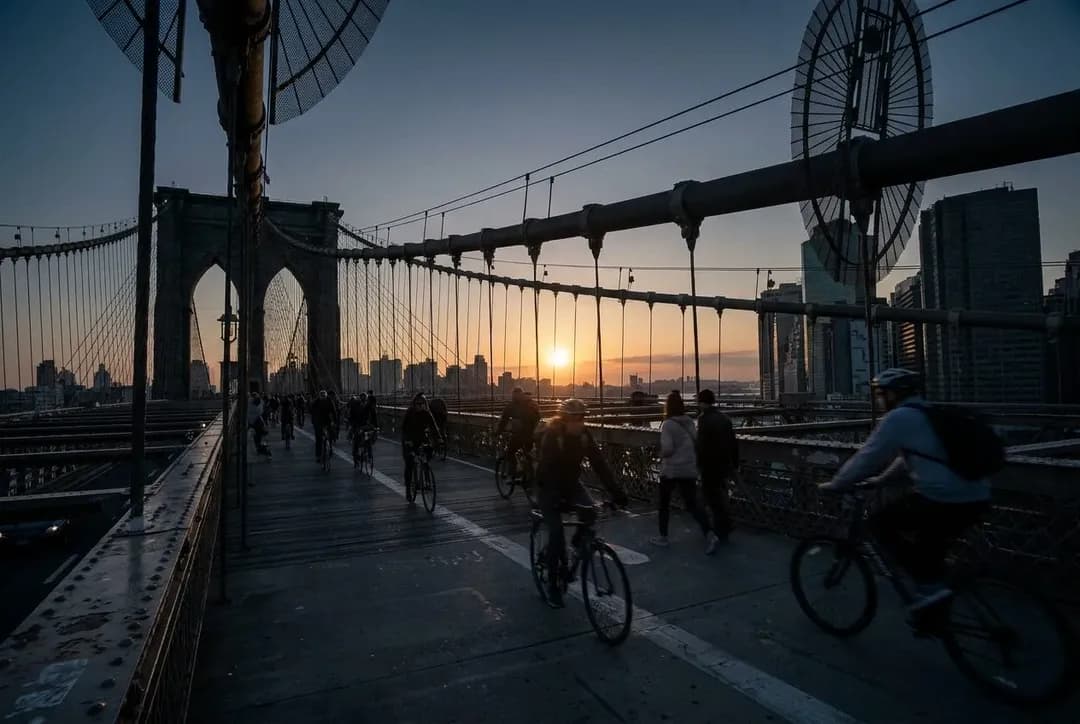
the brooklyn bridge walkway when the morning commuters own the span
Before the selfie-sticks arrive, the Brooklyn Bridge belongs to a different tribe. Between 6:30 and 8:00 a.m. on weekdays, the iconic pedestrian path hums with purposeful footsteps, bikes whirring past, and the rare satisfaction of crossing without dodging tourists.
There are two Brooklyn Bridges. The first is the postcard version: all slow shuffles, outstretched phones, and gridlock at the tower arches. The second exists in a narrow morning window, when the wooden planks echo with a different rhythm entirely. Commuters stream across in both directions, cyclists call out polite warnings, and the bridge does what it was always meant to do—move people from one borough to another with grace and efficiency. If you've only ever experienced the tourist crush, the early-morning crossing will feel like discovering a private entrance to a public monument. It's still free, still iconic, but suddenly it's yours.
The golden window
Weekday mornings between 6:30 and 8:00 a.m. deliver the highest ratio of commuters to tourists on the pedestrian path, and the difference is palpable. The air is cooler, the light softer, and the foot traffic flows with an almost choreographed efficiency. You'll see runners in their second mile, briefcase-toting regulars who've timed their crossing to the minute, and the occasional early-bird visitor who's figured out the secret. By 8:15, the first tour groups begin to trickle in; by nine, the bridge reverts to its daytime personality.
Summer 2026 mornings offer the added benefit of long light—sunrise arrives early enough that even the 6:30 departure feels generous, not punishing. The city on both sides is still shaking off sleep: office towers catch the first golden rays, the East River glints beneath you, and the hum of traffic below hasn't yet crescendoed into its midday roar. It's the version of New York that people imagine when they're somewhere else, remembering why they live here.
Lane etiquette and flow
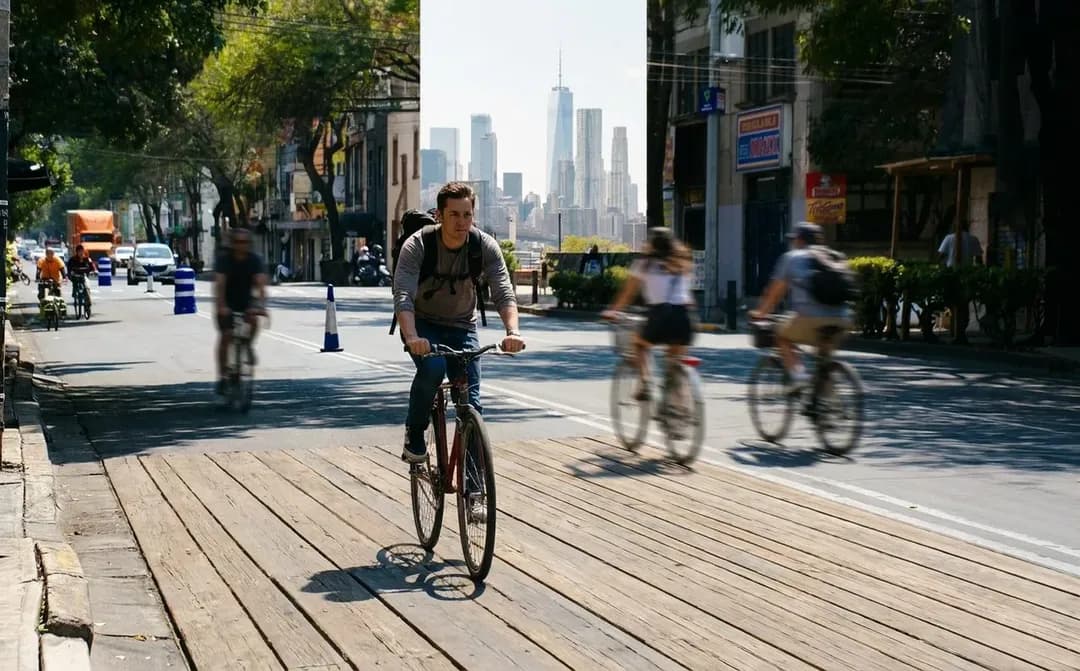
The bridge's pedestrian path is divided with intention, and morning commuters respect it. Cyclists use the marked lane on the bridge's north side, moving at a steady clip but rarely recklessly. Pedestrians keep to the center and south edge, and the unspoken rule is simple: walk with purpose, keep right if you're slow, and save the lingering for the designated overlooks. It's not unkind—just efficient. If you pause mid-plank to adjust a backpack or frame a shot, you'll feel the gentle pressure of bodies flowing around you, a reminder that this is a working bridge first.
The rhythm is almost meditative once you sync with it. Footsteps on wood, the whir of bike tires, the occasional ding of a bell. There's a collective energy that feels rare in a city where everyone is usually insulated by earbuds or screens. Here, for a few hundred yards suspended over water, you're part of a shared current. It's one of the finest free things to do in the city, and yet most visitors miss it entirely by showing up at noon.
Which direction to walk
The Manhattan-bound direction is busiest during morning hours, thick with Brooklyn residents heading into offices in the Financial District, Tribeca, and beyond. If you want the full commuter immersion, start in Brooklyn and walk west. The Brooklyn-bound side, by contrast, is quieter until evening, when the flow reverses. Walking against the dominant current—say, heading east toward Brooklyn in the morning—gives you more breathing room and better photo opportunities without the guilt of blocking anyone's path.
There's also something cinematic about walking toward Manhattan as the skyline grows larger, the towers sharpening into focus as you pass beneath the first Gothic arch. The reverse angle, toward Brooklyn, offers a softer panorama: brownstone neighborhoods, the distant rise of Park Slope, and the sprawling green of Prospect Park on clear days. Both directions reward the early riser; it's more a question of whether you want to move with the crowd or against it.
Where to pause without disruption
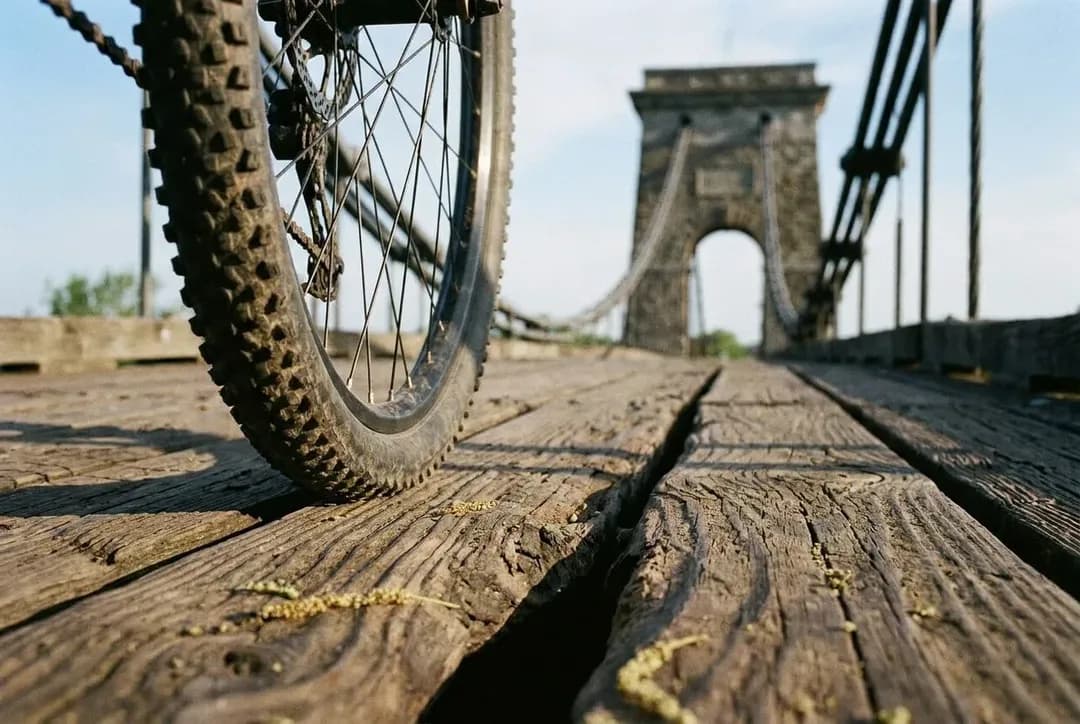
Even during commuter hours, there are moments worth savoring. The small alcoves near each tower base offer natural pausing points—step to the side, lean against the stone, and let the stream pass. These pockets are wide enough that you won't impede anyone, and the view through the cable lattice is arguably better than from the center span. The light in summer catches the suspension cables at oblique angles, turning them into harp strings against the sky.
If you're heading toward Brooklyn, the midpoint overlook on the south side is another safe harbor. It's marked by a slight widening of the walkway, and regulars know to drift there when they need to retie a shoe or take a call. The key is reading the room—or rather, the bridge. If the density picks up, keep moving. If there's space, claim a corner and watch the procession. You'll see the same faces week after week if you become a regular yourself: the woman in the navy blazer who always carries a thermos, the runner who nods at the tower before turning back toward Brooklyn.
What it feels like
There's a particular satisfaction to using the bridge as a tool rather than a destination. You're not performing for anyone, not curating an experience—you're simply moving through space in a beautiful, historic corridor. The wood under your feet has been worn smooth by more than a century of crossings. The Gothic arches frame the city like a Renaissance painting. And for twenty minutes, you're untethered from the subway, from traffic, from the claustrophobia of sidewalks hemmed in by scaffolding.
By late 2026, as the city continues to recalibrate its rhythms, this morning ritual feels even more essential. It's a reminder that infrastructure can be poetry, that commuting doesn't have to mean resignation. On a good morning, when the light is just right and the crowd flows without friction, the bridge offers a brief, unlikely utopia: strangers moving in concert, a shared route, a collective moment of not-quite-solitude that somehow feels better than being alone.
Practical notes
The Brooklyn pedestrian entrance is at Cadman Plaza East near Tillary Street and Adams Street; the Manhattan entrance is at Centre Street and Park Row, just east of City Hall. Nearest subway: Brooklyn (A/C at High Street; 2/3 at Clark Street; F at York Street); Manhattan (4/5/6 at Brooklyn Bridge–City Hall). The bridge is open 24 hours; aim for a 6:30–8:00 a.m. crossing on weekdays. Bring layers—it's windier on the span than at street level—and a water bottle. Wear comfortable shoes; the crossing is roughly 1.3 miles. Accessibility: the path has a gradual incline but is fully wheelchair accessible. Verify current conditions before heading out, especially in inclement weather.
Tags: #BrooklynBridge #NYCcommute #RightOnTime #MorningRituals #FreeThingsToDo #SummerInNYC #BrooklynToManhattan #PedestrianPath #CityAtDawn #NewYorkWalking #CommuterLife #BridgeLife #NYCinsider #EarlyMorningNYC #2026Travel
All trademarks are the property of their respective owners.
Ask Karpo for more information.
Keep reading
- Zombie Escape Room Near Me: PanIQ Room NYC After Dark
 Zombie Escape Room Near Me: Escape the Room NYC Flatiron
 Zombie Escape Room Near Me: BrainXcape NYC at Broadway