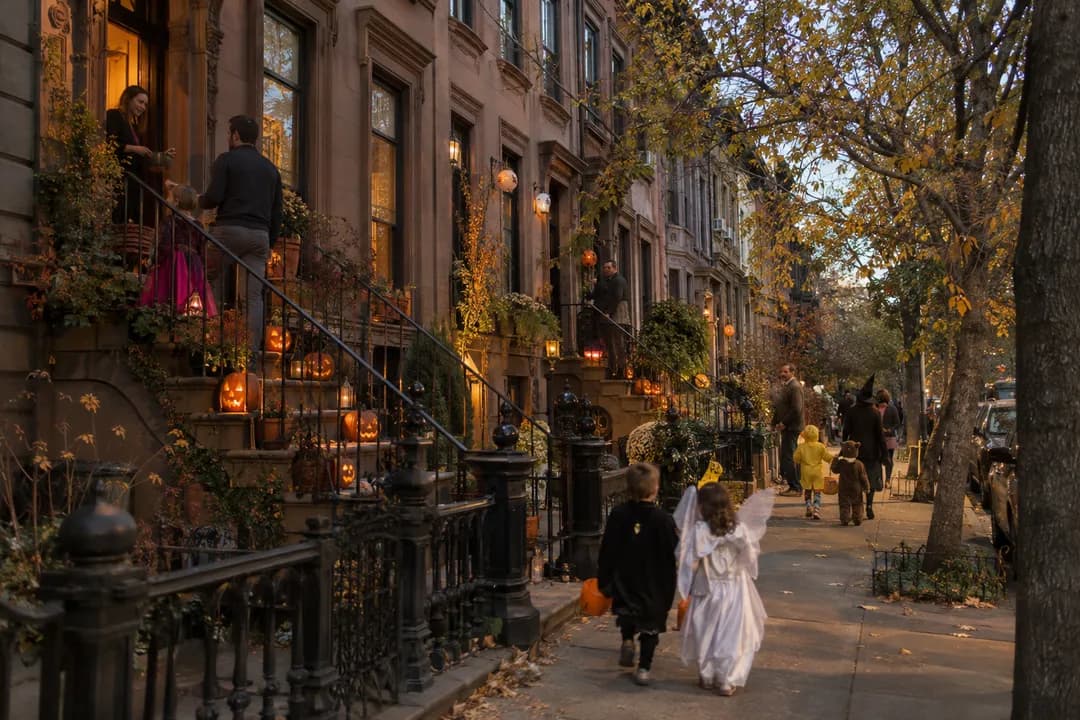
 Best Trick or Treating Neighborhoods Near Me: Park Slope
Neighborhood Guides

broadway junction's elevated platforms when three train lines converge at dusk
Brooklyn's sprawling elevated transfer station becomes an accidental observation deck at golden hour. Between the A, C, J, Z, and L trains, the staircases and crossovers offer unintentional slow-travel moments and unexpected vantage points over East New York.
Most riders treat Broadway Junction as pure function—a knot of elevated tracks to untangle as quickly as possible en route to somewhere else. But there's a specific quality to summer evenings here, when the transfer itself becomes the destination, or at least a pause worth noticing. The sprawling station hangs above East New York like a steel treehouse, all riveted girders and peeling paint, and if you're changing from the L to the A or lingering between trains, you're standing on one of the city's best accidental observation decks. It's not curated. It's not trying. That's exactly the point.
The architecture of in-between
Broadway Junction is a transfer hub in the most literal sense—five train lines (A, C, J, Z, and L) converging in midair, each platform stacked or cantilevered at slightly different elevations. The result is a three-dimensional puzzle of staircases, footbridges, and windswept landings. It's utilitarian infrastructure, built for throughput, not elegance. The paint scheme is MTA standard-issue: faded blue and cream, occasionally tagged. The platform shelters are transparent fiberglass panels streaked with weather.
But scale matters. The station stretches across multiple blocks, so even the connective tissue—the walkways, the overpass spans—becomes a kind of slow promenade if you let it. There's no shops, no buskers, no distractions. Just the hum of arriving trains, the clatter of turnstiles below, and the vastness of the city spreading out in all directions. For anyone who's learned to read beauty in New York's bones rather than its polish, this is a textbook case.

The climb to the highest vantage
If you're transferring from the L to the A or C, you're in for a vertical journey. The L runs at the lowest level; the Jamaica-bound A and C occupy the highest platform, and getting there requires climbing two staircases and crossing an overpass—a trek that takes roughly three to four minutes if you're not rushing. Most commuters attack it with grim efficiency, earbuds in, focused on shaving seconds. But if you're riding in summer 2026 with nowhere urgent to be, take the climb at a leisurely pace.
The highest platform level, serving the Jamaica-bound J and Z, offers the widest sightlines toward Brooklyn and Queens, especially from the eastern end. Up here, you're above the roofline of most surrounding buildings. To the south, rows of low-rise residential blocks stretch toward Canarsie and the shoreline. To the north and east, the streets of East New York unfold in a patchwork of bodegas, auto shops, churches with hand-painted signs, and the occasional new development rising like a cautious bet on the future. It's a neighborhood most Manhattan-centric city guide readers have never set foot in, and from this height, it reveals itself in aggregate—textured, sprawling, alive.
Golden hour on the westward platform
Timing matters. Between six-thirty and seven-thirty p.m. in summer, the westward platform view catches the sun setting behind the Manhattan skyline in the far distance. It's not a postcard vista—the skyline is small, hazy, a dozen miles off. But that's part of the appeal. You're seeing the city from the margins, from a vantage that flips the usual hierarchy. East New York is foreground; Manhattan is backdrop, almost incidental.
The light itself is the main event. Late June and July evenings drench the elevated tracks in amber and rose, turning the steel into something warm, almost tender. The fiberglass platform shelters glow. Shadows stretch long across the railbed. If a train pulls in while you're standing there, the way the low sun slices through the gaps between cars can feel like a minor revelation. It's the kind of moment that rewards an extra five minutes of waiting, even if the next train arrives sooner than expected.

The neighborhood from above
One of the underrated pleasures of elevated stations is the accidental intimacy they create. You're high enough to see into second-floor windows, to notice backyard gardens and rooftop setups, to track the rhythms of the street below without being part of them. At Broadway Junction, the surrounding blocks hum with the ordinary life of a working-class neighborhood: kids on bikes, corner conversations, laundromats doing brisk business, the occasional food cart sending up plumes of smoke.
East New York has a complicated reputation, much of it shaped by decades of disinvestment and the lazy shorthand of crime statistics. But spend ten minutes on these platforms and you'll see a neighborhood that's far more textured than any headline. There's pride here—in the meticulous upkeep of small front yards, in the murals that bloom on warehouse walls, in the sheer density of small businesses holding their ground. From the elevated perch, you're a temporary witness, not a participant, but that distance allows a kind of seeing that's harder at street level.
The liminal pleasure of transfer time
There's a particular breed of New Yorker who's learned to savor the in-between moments—the ferry ride that adds twenty minutes but delivers a view, the walk through a cemetery shortcut, the decision to take the Q instead of the 4 just for the Manhattan Bridge crossing. Broadway Junction belongs in that canon. It's not a destination. It's a hinge, a threshold, a place you pass through. But late-2026 New York is crowded and expensive and relentlessly optimized, and sometimes the best luxury is permission to linger in a space that asks nothing of you.
The trains come frequently enough that missing one doesn't cost much. The platform benches are sparse but functional. There's no one here trying to sell you anything or curate your experience. It's infrastructure in its purest form, doing its job, and if you happen to notice the way the evening light catches the tracks or the surprising expanse of sky visible between buildings, that's a bonus the MTA never promised.
What to pair with the visit
Broadway Junction isn't near much in the way of destination dining or boutique retail, and that's fine—it's not that kind of outing. If you're planning to make an evening of it, consider pairing the transfer with a meal in nearby Bed-Stuy or Crown Heights, neighborhoods a few stops west on the A or C. Or stay local: East New York has a growing number of Caribbean and Latin American restaurants along Atlantic and Pitkin Avenues, though specific storefronts turn over frequently enough that real-time research is wise. The point isn't to treat this as a checklistable experience. It's to build the habit of noticing what's already there, in the margins of the commute.
Practical notes
Broadway Junction station is located near the intersection of Broadway, Fulton Street, and Van Sinderen Avenue in East New York, Brooklyn. The complex is served by the A, C, J, Z, and L trains; enter via the station’s street-level entrances around Broadway, Fulton Street, and Van Sinderen Avenue. The elevated platforms are open 24/7, though evening light is best viewed in summer months between mid-June and early August. The station is ADA-accessible via elevators, though the highest platforms require navigating multiple levels. Bring a MetroCard, patience, and a willingness to stand still for a few extra minutes. No admission fee, no reservations, no crowds. Verify current service schedules via the MTA website, especially on weekends when track work may reroute trains.
Tags: #BroadwayJunction #TheLongWayHome #NYCTransit #EastNewYork #Brooklyn #ElevatedSubway #GoldenHourNYC #SlowTravel #CityObservation #UrbanInfrastructure #Summer2026 #UnseenNewYork #TransitPoetry #MTA #HiddenVantage
Sources consulted: Broadway Junction station · MTA Stations · East New York neighborhood · Brooklyn Rapid Transit history · New York Times - New York
All trademarks are the property of their respective owners.
Ask Karpo for more information.
Keep reading
- Best Trick or Treating Neighborhoods Near Me: Park Slope
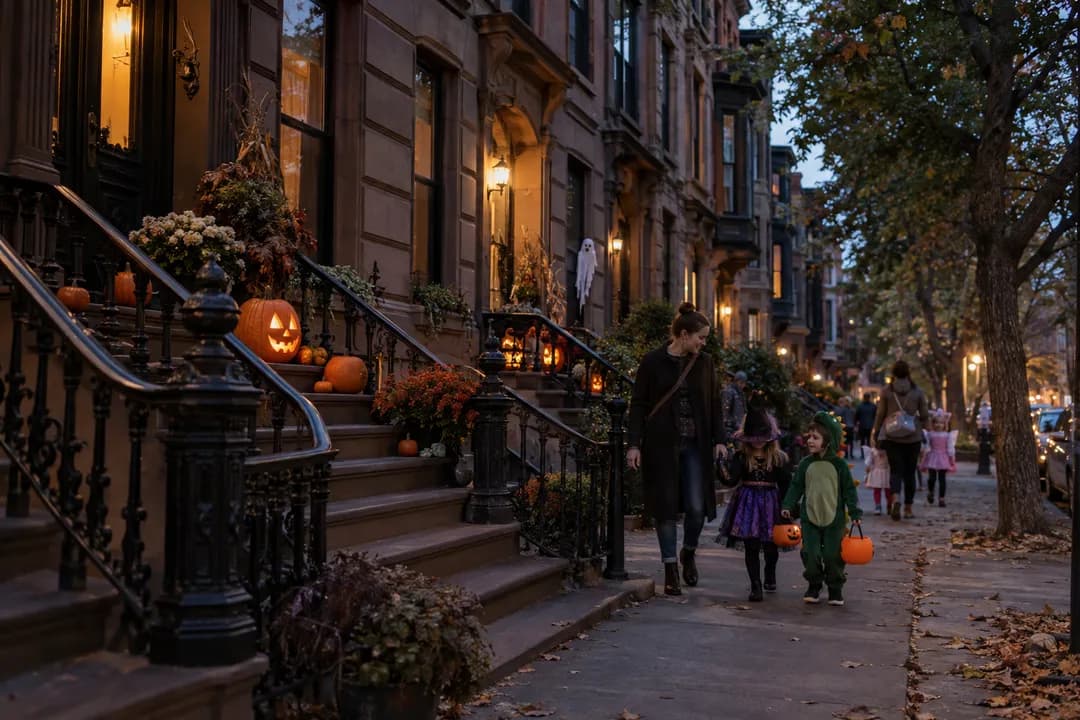 Best Trick or Treating Neighborhoods Near Me: Carroll Gardens
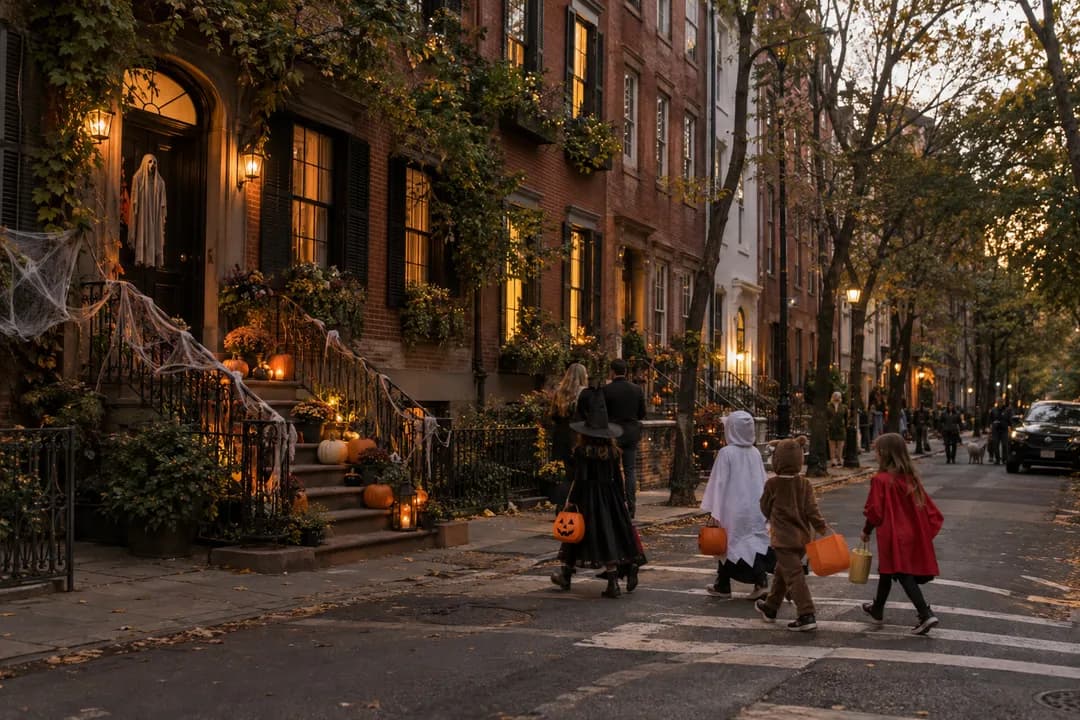 Best Trick or Treating Neighborhoods Near Me: West Village