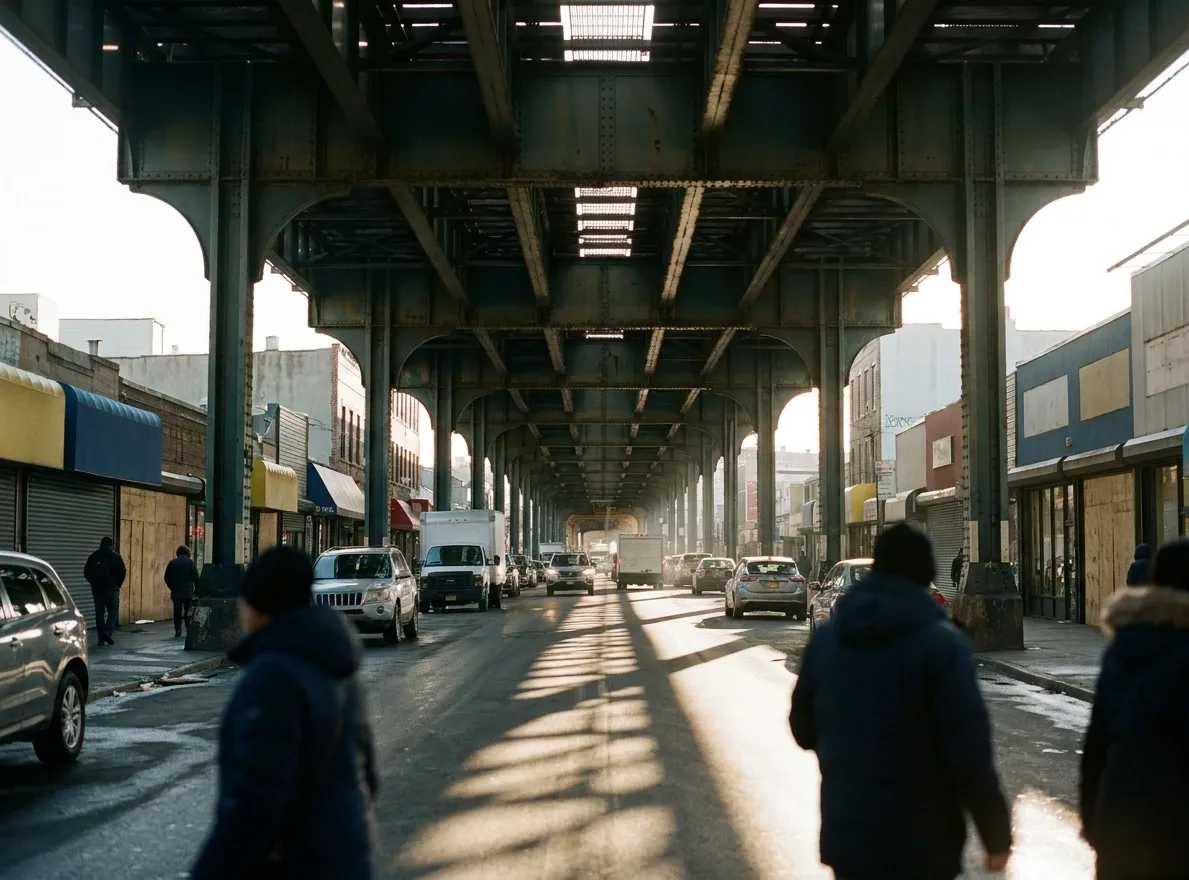
Roosevelt Avenue runs for miles under the elevated 7 line, and along the stretch through Jackson Heights and Corona it supports one of the densest street food economies in North America. Most coverage of it is about the evening - the taco carts, the birria, the two in the morning crowd. The morning version is quieter, cheaper and considerably more useful, because it exists to feed people on their way to a shift. If you are on the 7 before nine, breakfast is a two-minute detour and costs about the price of a coffee. The constraint is that it is over by mid-morning, which is why most visitors have never seen it.
The carts and counters along Roosevelt move around, keep short hours and are not listed anywhere useful, so the difference between a good stop and a wasted block is knowing which corner is working today. Tell Karpo which station you are getting off at and what time, and it will point you at what is actually open on the way.
The morning shift is a real thing
The commercial rhythm under the 7 is built around work. Carts appear before seven, aimed at people heading to construction, cleaning and kitchen jobs, and they sell fast, hot, portable food in quantities designed to last until lunch. By half past ten most of them have packed up and the daytime restaurants have taken over.
This is why arriving at eleven feels like the neighbourhood was oversold. The thing people write about is happening, just not at the hour most visitors show up.
Jackson Heights and Corona are not the same street
They sit on one continuous avenue and they run different food. Jackson Heights is layered - Mexican and Ecuadorian carts alongside a deep South Asian and Himalayan presence, which means the same block can offer breakfast tacos and momos before eight in the morning.
Corona, further east towards the park, is more consistently Mexican and Central American, and the density of carts climbs as you go. If you want a straightforwardly Mexican morning, staying on past 103rd Street is the move.
Cart, counter or grocery
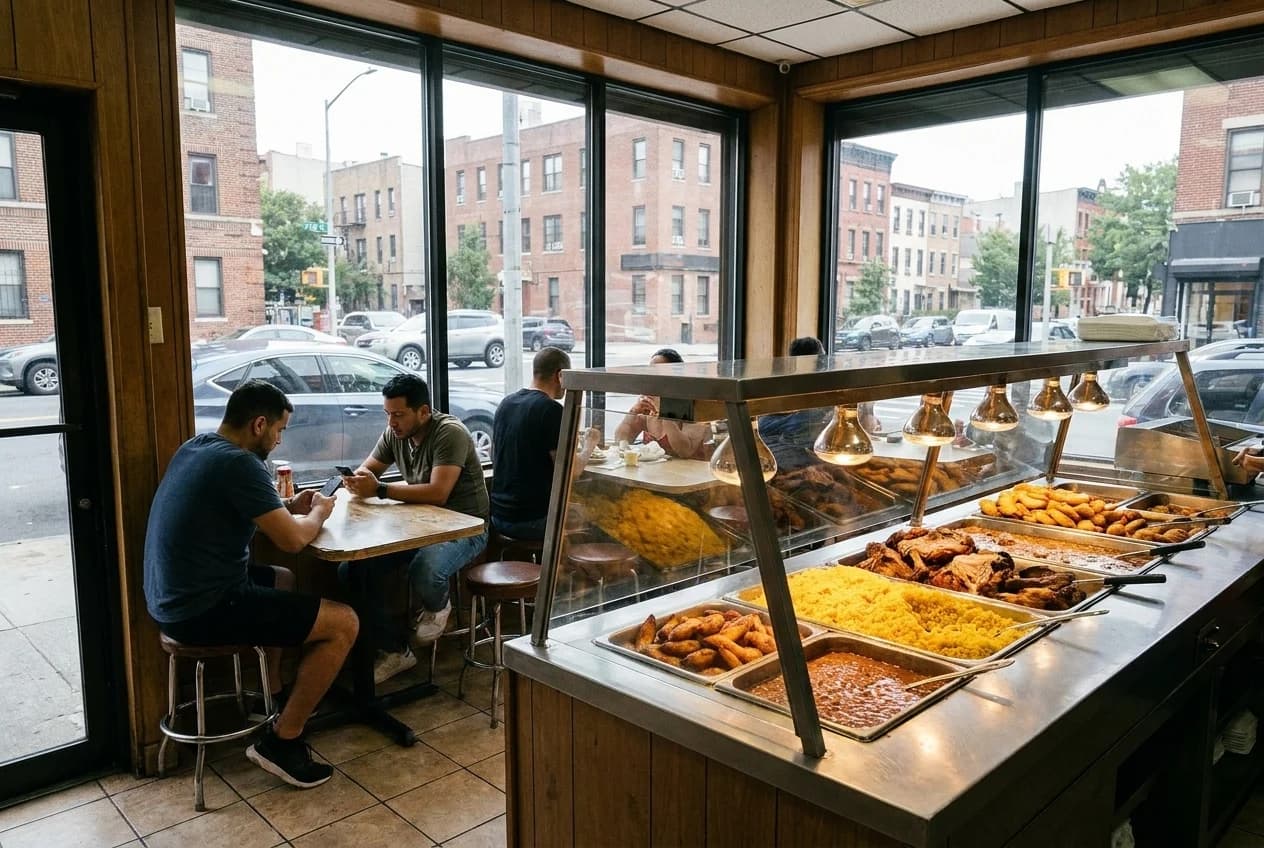
Three formats operate simultaneously. The cart is fastest and cheapest, works a fixed corner, and takes cash. The grocery counter has a griddle at the back and will make you a torta as easily as a taco. The small sit-down restaurant opens later and is the only one of the three with a table.
For a genuine breakfast taco on the way to a train, the cart and the grocery are the answer. The restaurant version is generally a lunch business that happens to serve eggs.
What to order along here
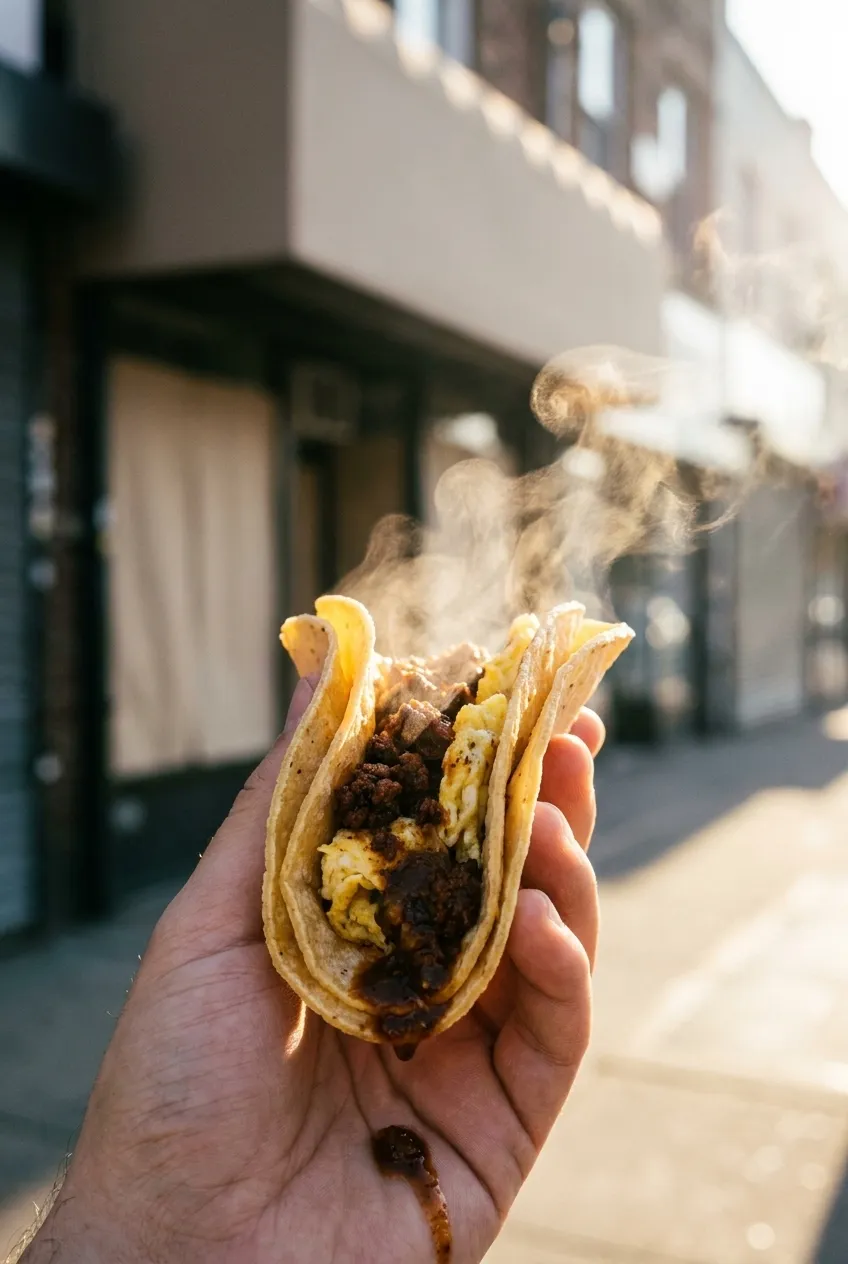
Egg with chorizo is the default and the safest bet. Egg with nopales is the one worth trying if you have not - cactus paddle, sliced and griddled, slightly tart and completely unlike anything else on the cart. Chicharron in salsa verde is the heaviest and the one that lasts until two in the afternoon.
Ask for it doubled if the tortilla looks thin, and take the salsa on the side if you are eating it walking. A single-tortilla taco with wet filling does not survive a flight of subway stairs.
Timing it against the train
The 7 is frequent, which makes this workable - missing one costs a few minutes rather than a quarter of an hour. The practical routine is to get off one stop before you need to, buy from a cart on the avenue, and walk the extra block to the next station while eating.
Express and local matters here. The express skips most of the stops through Corona, so if you are planning a food stop you want the local, and at rush hour the pattern changes in each direction. Checking which service you are on before you commit to a detour saves an annoying doubling back.
Cash, prices and what breakfast costs
Individual tacos on Roosevelt are among the cheapest hot food in New York, and two or three plus a drink still lands well under what a coffee and a pastry costs in Manhattan. Carts are cash and they will not have change for a large note at seven in the morning.
The groceries mostly take cards with a minimum. The genuinely useful habit is to carry small notes, which also makes it possible to buy one thing at three different carts, which is the correct way to use this avenue.
What else is open at that hour
The morning here is not only Mexican. Colombian and Ecuadorian bakeries run early and sell empanadas, pan de bono and coffee; the South Asian counters in Jackson Heights do samosas and chai from mid-morning; and there are juice carts working the same corners from about seven.
The most efficient version of a Roosevelt Avenue breakfast is a taco from a cart and a coffee from a bakery two doors down, both bought in under five minutes, eaten walking. It is the least ceremonious good meal in the city.
Tags: #BreakfastTacosNearMe #JacksonHeights #Corona #Queens #NYC #RooseveltAvenue #7Train #NeighborhoodGuide #StreetFood #NYCFood
All trademarks are the property of their respective owners.
Ask Karpo first
The best breakfast on the 7 line is bought standing up and finished before the platform. Ask Karpo what is open near your stop in the morning and how long the detour actually costs.