There's a particular species of urban walk that feels less like exercise and more like eavesdropping on a city's best conversation with itself. The Charles River Esplanade is that walk—three miles of paved path hugging the Boston side of the river, then crossing into Cambridge for the return view. It's the route you take when dinner reservations can wait, when the late-May sun hangs above the skyline until eight, and when you'd rather watch rowing crews slice upstream than sit in traffic on Storrow Drive. Start at the Hatch Shell. The city will unfold at walking speed, which is the only speed worth taking.
The Hatch Shell and the logic of starting here
The Hatch Memorial Shell sits on the Esplanade like a piece of civic furniture everyone's used but nobody thinks to mention. The concrete amphitheater—half-dome, all mid-century optimism—faces rows of lawn that slope toward the water. In late May 2026, before the summer concert season fills the benches, you'll find it quiet, open, vaguely expectant. Joggers loop past. A handful of people stretch on the grass or sit reading near the bandstand's curve. The Shell anchors the walk not because it's dramatic but because it's known: a landmark you can text someone without needing to explain which side of which street.
From here the path runs west, paralleling the river on your right and Storrow Drive's muted hum on your left. The urban design is shrewd—the Esplanade functions as buffer, promenade, and escape hatch all at once. You're technically in the city, but the water and the width of green reset the terms. Sycamores and oaks line sections of the path; benches appear every hundred yards or so, placed with the sort of generosity that suggests someone once walked this route themselves and thought about where you'd want to stop.
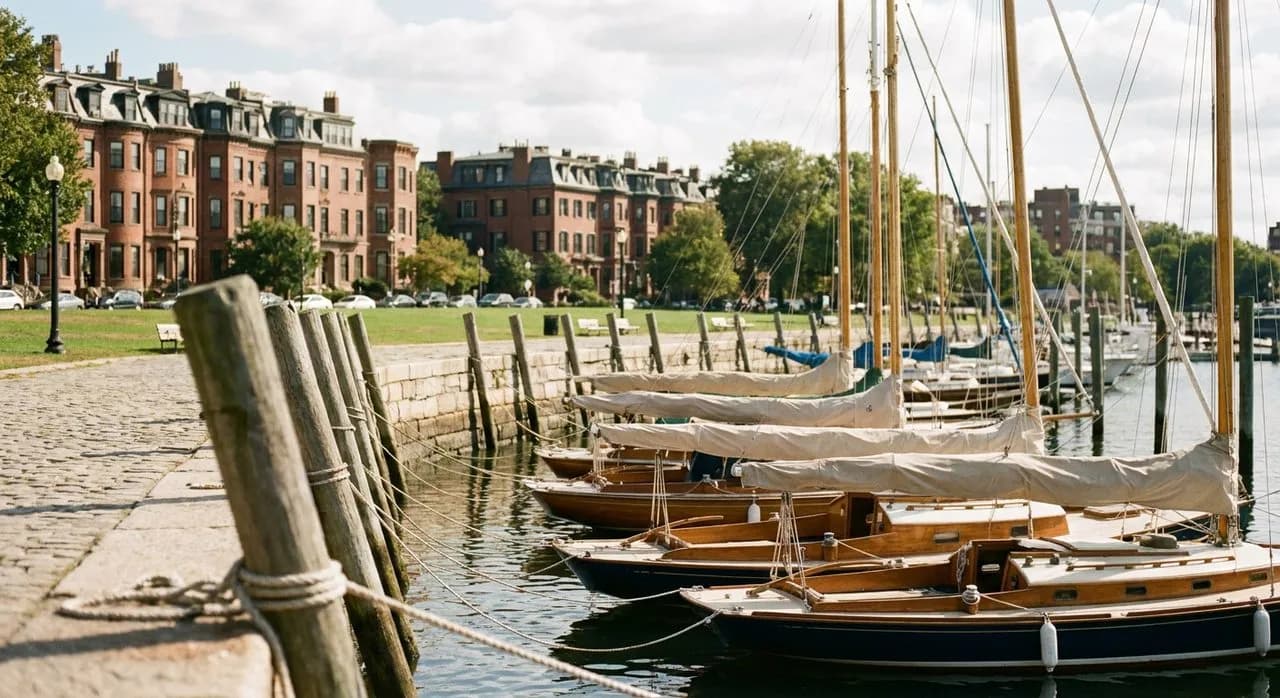
Sailboats, rowers, and the river's daily commute
The Charles is a working river in the best sense—not industrial, but busy with the kind of recreation that requires skill and upkeep. Sailboats tack across the basin, their sails catching the evening breeze that picks up around six. If you time it right, you'll see collegiate rowing crews gliding upstream in eights, oars feathering in unison, coxswains calling out rhythms you can't quite hear but can certainly see enforced. The movement is hypnotic and strangely soothing, a reminder that some people organize their entire day around being on this water at this exact hour.
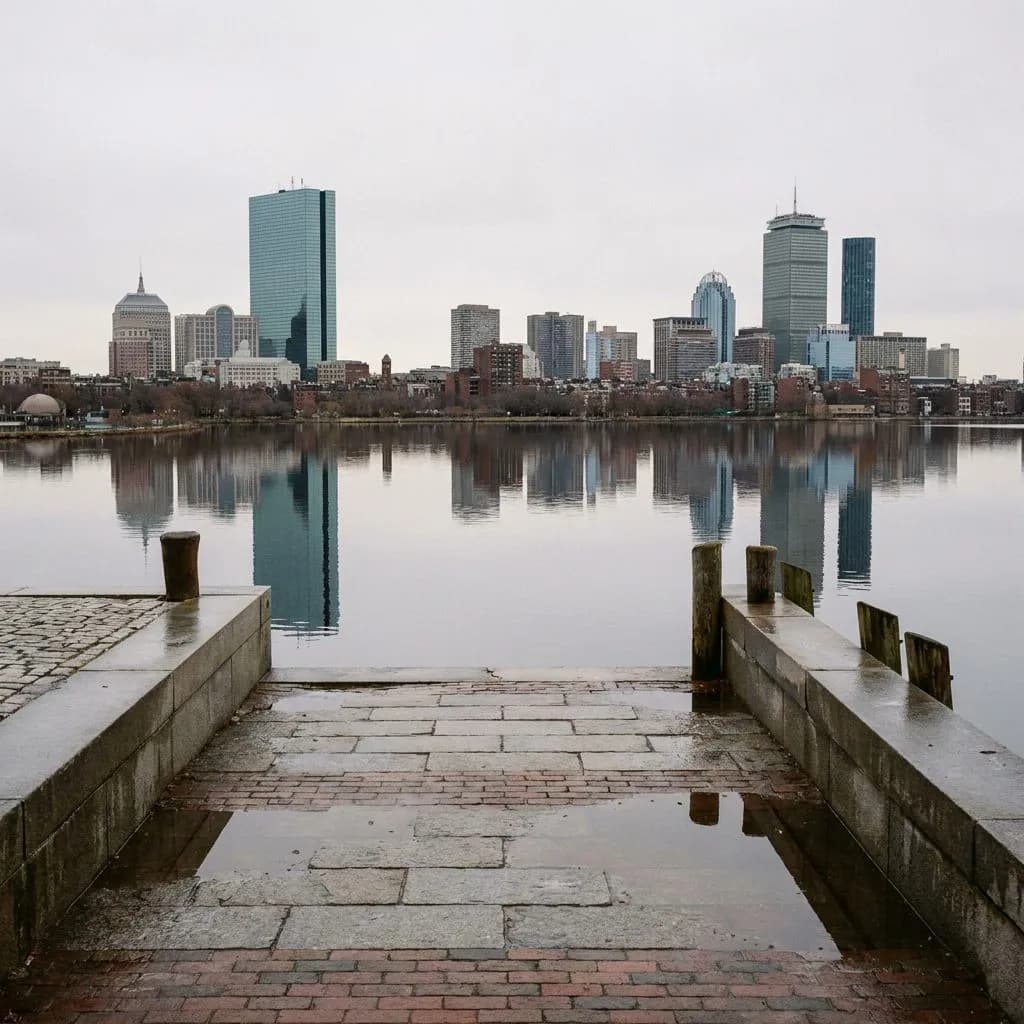
The river itself is wide here, more lake than stream, and the light in late May does favors. As the sun drops lower, the surface turns from blue to bronze to something softer—pewter shot through with gold. The skyline across the water begins to assert itself: the State House dome, the spire of Arlington Street Church, the new glass towers that rise behind Beacon Hill like an argument about taste that somehow settled into coexistence. You're not quite at the postcard view yet, but you can feel it coming.
Picnic culture and the unwritten etiquette of grass
All along the Esplanade, people claim patches of lawn with the solemnity of migratory birds returning to known territory. Blankets appear. Takeout containers multiply. Someone's brought a portable speaker—not loud, just present—and someone else has brought a paperback they're pretending to read while actually people-watching. The vibe skews young professional, graduate student, visiting parent trying to keep up. There's a pleasant anonymity to it, the kind of low-stakes mingling that happens when everyone's outside doing roughly the same thing but no one's obligated to talk.
The park benches, many facing the water, offer a statelier option. You'll pass couples mid-conversation, solo sitters staring at phones or into the middle distance, the occasional person sketching. No one's performing relaxation; they're just taking an hour. That ease is contagious. By the time you've walked a mile, your gait slows without you noticing. The city's still right there—Storrow's traffic, the T rumbling over the Longfellow Bridge to the east—but it recedes into backdrop.
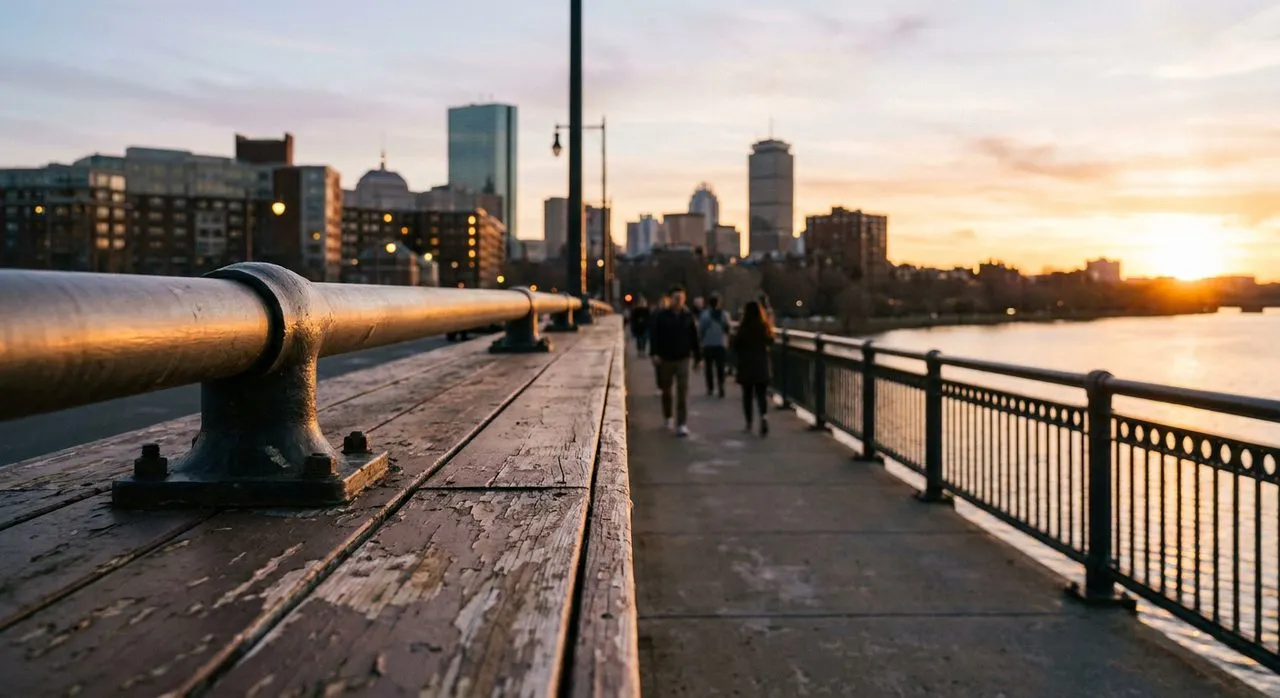
Crossing Harvard Bridge into Cambridge
Harvard Bridge—which, to Cambridge's eternal satisfaction, is actually closer to MIT—marks the walk's turning point. The span stretches more than half a mile, long enough that the act of crossing becomes its own chapter. Midway, you're suspended above the river with views in both directions: upstream toward the basin and the boat clubs, downstream toward the sea. The bridge deck is marked in "smoots," a unit of measure based on a 1958 fraternity prank involving an MIT pledge and a lot of patience. It's the sort of detail that makes you either smile or roll your eyes, depending on your tolerance for engineering-school whimsy.
On the Cambridge side, the perspective reverses. Now Beacon Hill and the State House dome are the view, caught in the slant light of evening. The skyline arranges itself into something postcard-legible, and if you've timed it for that late-May sunset around eight, the whole scene goes amber and rose. This is when people stop to take photos, and for once the impulse feels earned. The walk back along the Cambridge side of the river is quieter, less trafficked, the path narrower in places but no less maintained.
MIT, Kendall Square, and the question of dinner
The walk deposits you near MIT's campus, all modernist concrete and glass that looks better at dusk than at noon. If you're looping back, the Red Line is close—Kendall/MIT station will return you to the Boston side in minutes. But there's a case for continuing into Kendall Square, where the neighborhood's transformation from industrial no-man's-land to biotech hub has dragged in a decent roster of restaurants. You'll find everything from ramen to oyster bars to the kind of upscale-casual spots where the menu changes weekly and the wine list takes itself seriously.
Alternatively, walk back the way you came. The return trip, with the light fading and the river settling into dusk, has its own pull. The three miles don't feel like six—the rhythm's too steady, the scenery too varied. By the time you're back at the Hatch Shell, the amphitheater's benches are emptier, the lawn darker, and you've banked an evening that didn't cost anything but time. Which, in a city where everything's monetized and scheduled, is the quiet luxury of the whole enterprise.
Practical notes
Start at the Hatch Memorial Shell (47 David G. Mugar Way, Boston, MA 02114) on the Esplanade; nearest T station is Charles/MGH on the Red Line, about a ten-minute walk. The path is paved, flat, accessible for strollers and wheelchairs, and open year-round from dawn to dusk. Street parking along Beacon Hill is scarce and metered; consider public transit or ride-share. Bring water, sunscreen, and a light layer for the bridge crossing—wind picks up over the river. In late May, sunset is around 8 p.m.; start by 6:30 p.m. for optimal light. Restrooms are available at several points along the Esplanade. Dogs on leash are welcome. For the return trip, catch the Red Line at Kendall/MIT or walk back along the same route.
Tags: #CharlesRiverEsplanade #BostonWalks #TheLongWayHome #BeaconHill #CambridgeMIT #EsplanadeBoston #BostonSpring #UrbanHiking #RiversideWalks #BostonSunset #KendallSquare #CityStrolls #BostonOutdoors #Spring2026 #WalkableBoston
Sources consulted: Charles River Esplanade · Hatch Memorial Shell · DCR: Charles River Esplanade · Boston Parks · Time Out Boston
All trademarks are the property of their respective owners.