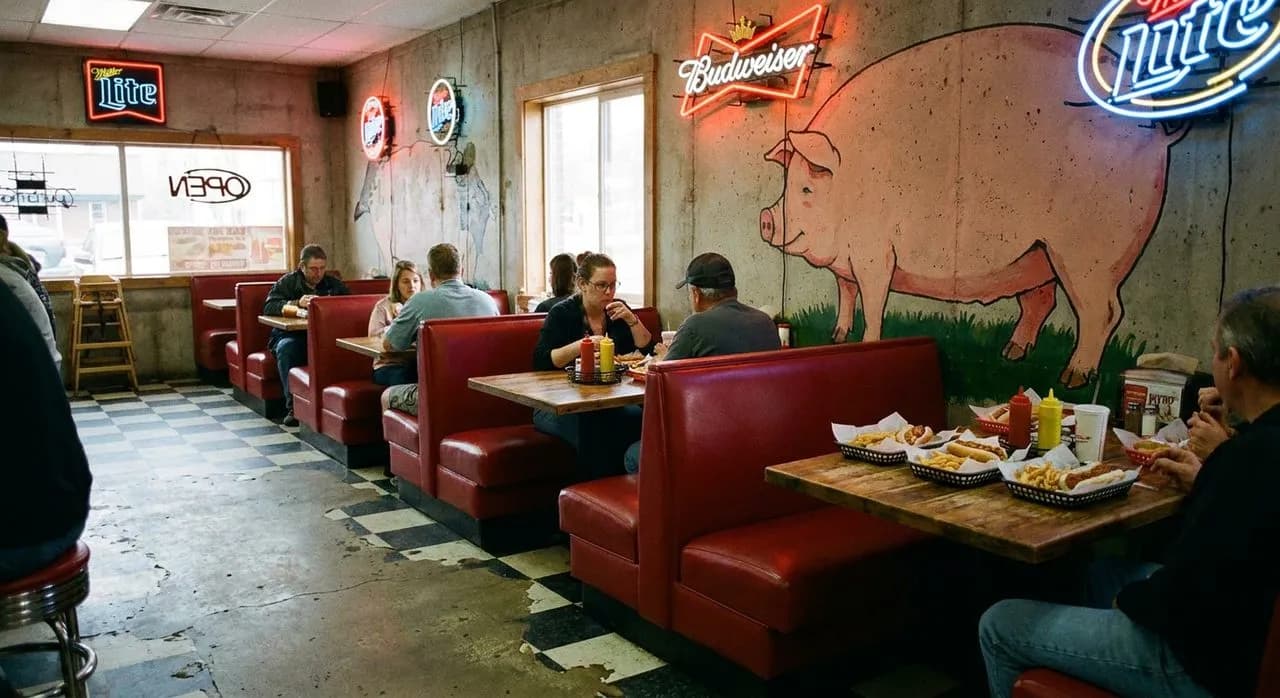
Rudy's Bar & Grill does not announce itself. The neon is modest, the Hell's Kitchen storefront narrow, and the interior dim in that particular way that suggests the overhead bulbs burned out sometime in the Clinton administration and no one saw fit to replace them. The red vinyl booths are cracked and patched, the air smells faintly of spilled beer and grilled meat, and somewhere behind the bar a pig in a tuxedo presides over the back wall in mural form. This is not atmosphere as curation. This is atmosphere as accretion, layered like varnish. You are here for the booths, for the pitcher pricing, and for the hot dogs that arrive at your table without your asking.
The booth selection calculus
Seating strategy at Rudy's hinges on two variables: proximity to the jukebox and sightlines to the door. The front booths offer people-watching but suffer from acoustic proximity to whatever selections the regulars have queued. The middle booths are serviceable but exposed, lacking the psychological shelter that makes a dive bar booth worth claiming in the first place.
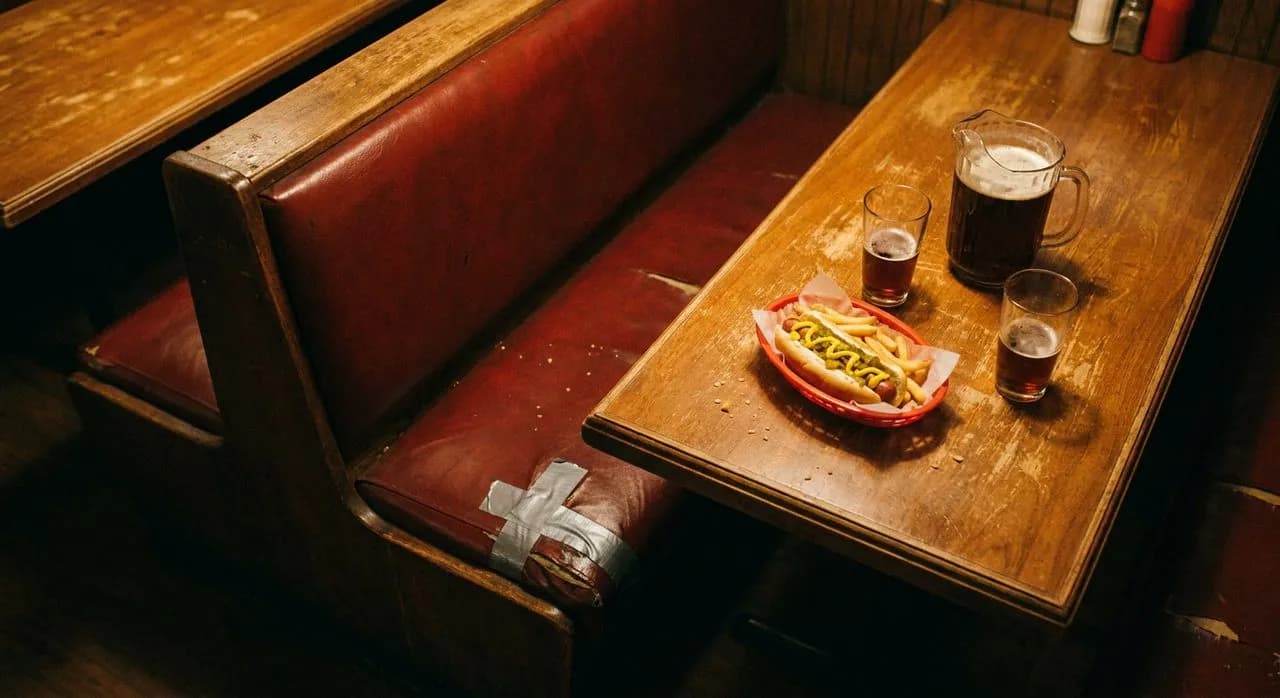
The booth second from the back on the north wall splits the difference. You have clear visibility of both the bar and the entrance, useful for tracking your server or spotting arriving friends without craning your neck. More importantly, you are far enough from the jukebox near the front that conversation does not require raised voices. The vinyl here is patched in three places with silver duct tape, a minor cosmetic compromise in exchange for the best seat in the house.
The complimentary hot dog rhythm
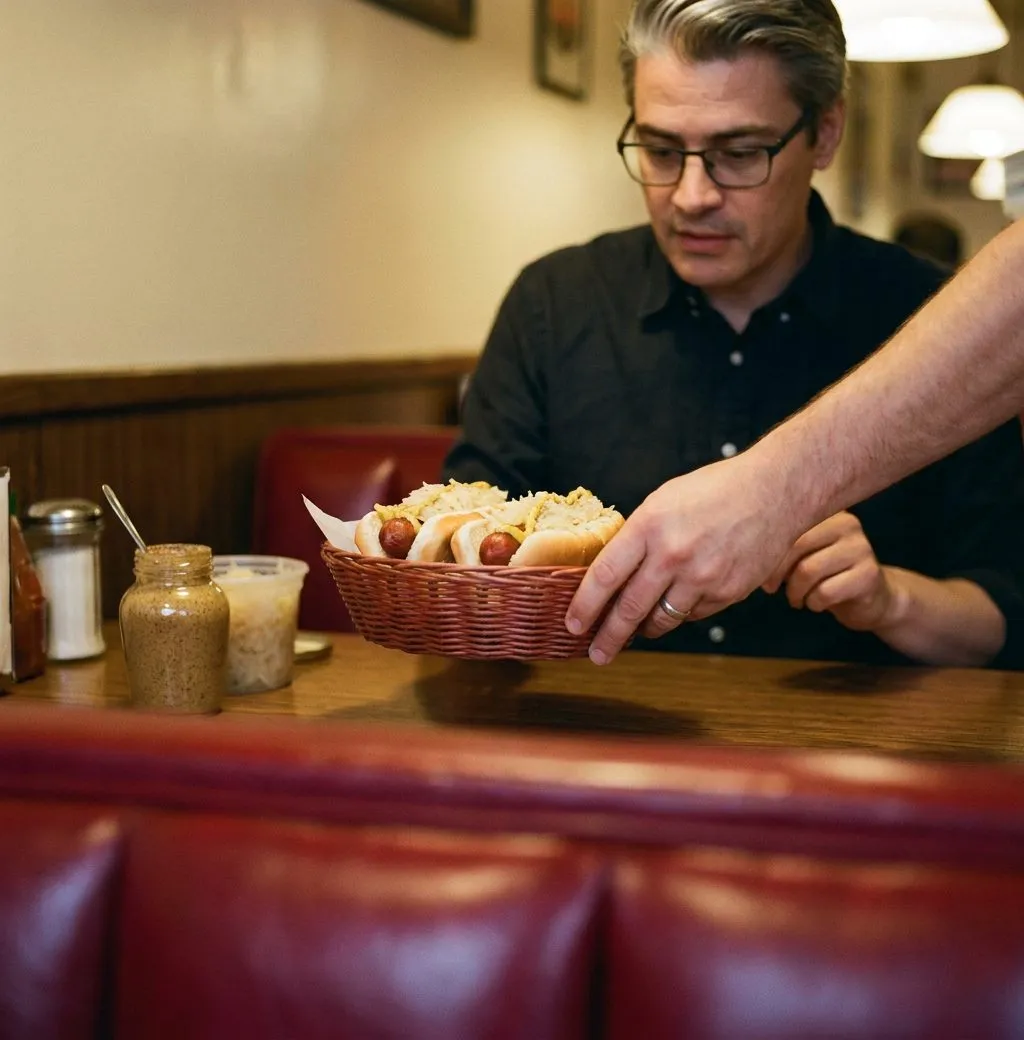
Rudy's has served free hot dogs since long before 'complimentary bar snacks' became a marketing bullet point. The ritual is simple: you sit, you order, and eventually—without prompting—a server deposits a paper plate bearing a grilled hot dog and a handful of condiment packets. No ceremony, no explanation. The timing is irregular but predictable in aggregate.
Hot dogs are delivered periodically during evening service, though the cadence depends on table turnover and how many hands are behind the bar. If you arrive between deliveries, you can request one at the bar directly, but the rhythm is irregular enough that patience is often the more reliable strategy. The dogs themselves are unremarkable—standard-issue franks, competently grilled—but that is beside the point. They are free, they are warm, and they arrive without your asking. In a city that itemizes everything, the gesture carries weight.
Pitcher economics and the long game
Rudy's does not traffic in craft cocktails or wine flights. The menu is beer, and the beer is ordered by the pint or the pitcher. For solo drinkers nursing a single glass, the distinction is academic. For anyone settling in with company or an intent to linger, the math shifts.
Pitchers run twelve to fifteen dollars depending on selection and contain roughly sixty ounces—enough to fill four generous pours. Ordering by the pitcher saves approximately eight dollars compared to four pint pours, a margin that compounds if you are splitting the cost. The savings are modest in absolute terms but meaningful in context, the sort of city guide intelligence that separates tourists from regulars. You are rewarded, in other words, for committing to the evening rather than hedging your exit.
The pig iconography
Rudy's leans into porcine décor with the commitment of a theme restaurant but none of the self-awareness. The back wall mural depicts a pig in formal wear, painted in a style that suggests either folk art sincerity or someone's very earnest fever dream. Smaller pig figurines and framed prints occupy the remaining wall space, their origins unknowable, their arrangement haphazard.
The effect is less kitsch than accidental shrine. No one working here tonight can tell you why the pig became the mascot, and no one particularly cares. It simply is, the way the duct tape is, the way the hot dogs are. By summer 2026, when the heat makes the vinyl stick to your thighs and the front door props open to let in whatever breeze Ninth Avenue can muster, the pig will still be watching from the back wall. Continuity, in a neighborhood that has shed most of its own.
What the booth holds
A booth at Rudy's accommodates four adults comfortably, six if everyone is friendly and no one orders appetizers that require elbow room. The tables are small, the sort that force you to stack empty glasses along the window ledge once the pitcher and hot dog plates claim their territory. This is not a hardship. The crowding is part of the appeal, the enforced intimacy that makes dive bars function as third places rather than mere drinking venues.
You will share this booth with strangers' initials carved into the wood trim and the ghost of a thousand spilled beers absorbed into the vinyl. You will lean back and feel the duct tape patches catch slightly on your jacket. You will watch the door and the bar in equal measure, tracking the rhythms of a room that has played out this exact scene for decades. The light stays dim. The jukebox plays. The hot dogs arrive. You adjust your expectations accordingly and find the evening improved for it.
Practical notes
Rudy's Bar & Grill is in Hell's Kitchen on Ninth Avenue at its known bar location, as dive bars keep their own schedules. The nearest subway stops are in the 40s along Eighth Avenue. Street parking in this stretch of Hell's Kitchen ranges from difficult to improbable; public transit is strongly advised. The interior is not wheelchair accessible—expect steps and narrow clearances. Bring cash for tips even if the bar takes cards, and bring patience for the hot dog rhythm. Most importantly, bring people willing to commit to the pitcher and the booth and the long, unstructured evening those two things enable.
Tags: #RudysBarAndGrill #HellsKitchen #NYCDiveBars #PullUpAChair #FreeHotDogs #PitcherPricing #BoothLife #NYCBars #HiddenNYC #OldSchoolNYC #DiveBarChronicles #NYCNightlife #Summer2026 #CityGuide #NinthAvenue
Please drink responsibly. Must be of legal drinking age.
Sources consulted: Dive bar · Hell's Kitchen Neighborhood Guide · NYC Subway Map · Time Out New York Bars
All trademarks are the property of their respective owners.