
Searches for bobby flay often reflect curiosity about bold, chile-forward Southwestern cooking rather than a specific restaurant reservation or confirmed appearance. In New York City, that culinary style—rooted in smoky peppers, citrus, and grilled proteins—appears across counter-service taquerias, market-hall stalls, and fast-casual formats that suit solo diners, dates, or two friends catching up on a weeknight. This guide treats the search trend as a flavor compass, not a celebrity itinerary: you'll compare transit access, dietary flexibility, realistic wait times, and backup options without assuming any chef endorsement, menu collaboration, or physical presence. Because menus rotate, vendors close early, and weekend market crowds spike unpredictably, the difficulty sits at low-medium; success depends on verifying hours, checking health grades, and having a plan B when your first choice is full or sold out. Use these comparisons to decide which format—sit-down taqueria, market counter, or grab-and-go—matches your appetite, schedule, and willingness to navigate midtown or downtown on an August evening in 2026.
Text Karpo your NYC neighborhood, budget, spice tolerance, dietary needs, and preferred meal time for a shorter Southwestern restaurant route with one market-hall backup.

Why Counter-Service and Market Formats Suit Southwestern Flavor Exploration
Southwestern cuisine—characterized by roasted poblanos, lime crema, grilled corn, and adobo marinades—translates especially well to counter-service and market-hall formats because components can be prepped in batches, assembled to order, and customized for heat tolerance or dietary restrictions. A taco or bowl counter lets you watch proteins char on a plancha, ask whether the salsa verde is mild or blistering, and swap black beans for pinto without the formality of a full-service menu negotiation. For curious eaters unwilling to waste a meal on untested spice levels, this transparency matters: you see portion sizes, smell the char, and adjust before committing. Market halls add another layer of flexibility—if your companion prefers Japanese or Italian, you can split up, order separately, and reconvene at a shared table, a strategy that works especially well for mixed-preference duos or solo diners who want the energy of a crowd without the pressure of a reservation.
That said, counter formats demand different skills than white-tablecloth dining. You'll need to read overhead menus quickly, decide on proteins and toppings under mild time pressure from the queue behind you, and carry your own tray to often-crowded communal seating. Dietary accommodations—gluten-free tortillas, vegan crema, low-sodium requests—vary by vendor; some counters stock alternatives as standard, others require advance notice or simply can't modify. The tradeoff is speed and cost: most market-hall Southwestern stalls serve a complete meal for fifteen to twenty-five dollars, and total elapsed time from order to first bite rarely exceeds twenty minutes, even on a busy Saturday lunch. If you value spontaneity and visible cooking over linen napkins and coursed pacing, this format delivers.
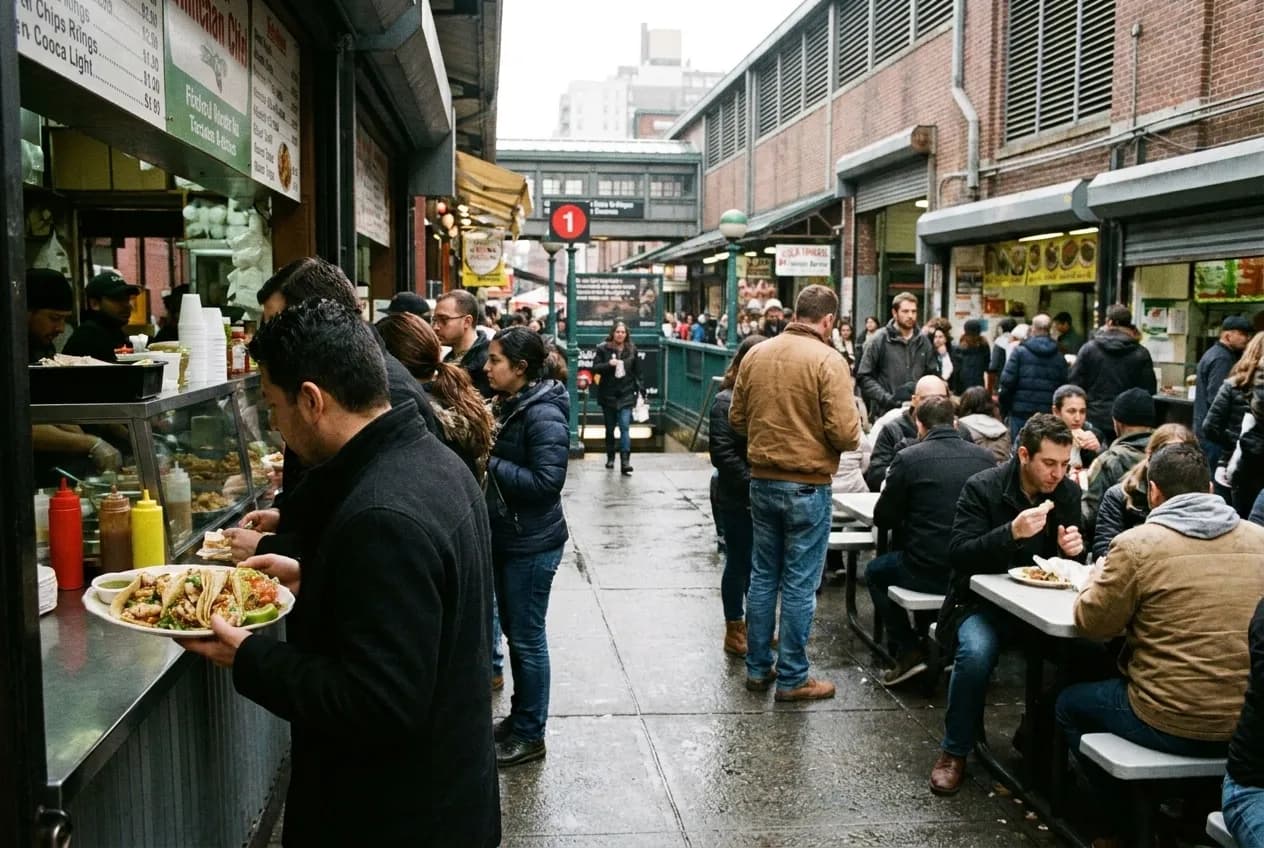
Chelsea Market as a Southwestern-Adjacent Comparison Anchor
Chelsea Market, located between Ninth and Tenth Avenues from 15th to 16th Streets in Manhattan, operates as a neighborhood market with concourse hours from 7 a.m. to 10 p.m. as of August 2026, according to its official website. The market houses dozens of food vendors, including Lobster Place for seafood, Amy's Bread for pastries, and Mokbar for Korean ramen, but Southwestern-specific stalls rotate and close without advance notice; always verify current tenants and menus on chelseamarket.com before your visit. The venue's strength lies in variety and transit access—the A, C, and E trains stop at 14th Street–Eighth Avenue, and the L serves 14th Street–Eighth Avenue, placing you within a five-minute walk. Communal seating fills quickly between noon and 2 p.m. on weekends, and stroller traffic can bottleneck the central corridor; plan for a weeknight dinner or an early-lunch arrival if you want elbow room and a seat near the windows.
Because Chelsea Market emphasizes artisan vendors and higher price points, expect to pay a premium compared to neighborhood taquerias in Jackson Heights or Sunset Park. A Southwestern-style bowl or taco plate may run eighteen to twenty-eight dollars depending on protein upgrades and sides, and not every stall accepts contactless payment or accommodates complex dietary swaps. The venue's appeal for a bobby flay–inspired search lies less in direct culinary lineage—no source confirms any Flay restaurant or partnership within Chelsea Market as of August 2026—and more in the opportunity to compare multiple flavor profiles, observe cooking techniques through open kitchen layouts, and pivot to a backup vendor if your first choice has a forty-minute wait or an ingredient you dislike. Treat it as a comparison lab, not a destination shrine, and you'll leave satisfied rather than disappointed by unmet expectations.
Verifying Health Grades, Hours, and Ingredient Transparency Before You Order
New York City requires restaurants to post letter grades—A for 0–13 inspection points, B for 14–27, C for 28 or more—in locations visible to passersby, per the Department of Health's letter-grading system in effect since 2010. Before you commit to a Southwestern counter or market stall, check the posted grade card near the entrance or search the vendor's name in the city's online inspection database at nyc.gov/health. An A grade signals consistent food-safety practices; a B or C, or a "Grade Pending" placard, suggests recent violations that may include improper holding temperatures, pest evidence, or cross-contamination risks. For dishes built on raw components—ceviche, pico de gallo, lime-marinated slaw—temperature control and ingredient turnover become critical, so a current A grade offers meaningful reassurance that your meal was handled safely from delivery to assembly.
Ingredient transparency varies widely. Some vendors list allergens, sourcing, and spice levels on printed menus or digital boards; others rely on verbal descriptions from counter staff who may not know whether the tortillas contain gluten or the crema is dairy-based. If you have celiac disease, a severe allergy, or religious dietary restrictions, arrive during off-peak hours when staff have time to consult ingredient lists or speak with the kitchen lead, and be prepared to walk away if answers are vague. Hours also shift without warning: a market stall that closes at 9 p.m. on weekdays may shut at 7 p.m. on Sundays, or pause service for private events. Always call ahead or check the vendor's Instagram for same-day updates, especially if you're traveling from an outer borough or coordinating with friends who have limited flexibility. The goal is to eliminate avoidable disappointment—wasted subway fare, missed dinner windows, or accidental allergen exposure—so that your curiosity about bold flavors translates into an actual, enjoyable meal.

Comparing Sit-Down Taquerias, Fast-Casual Chains, and Pop-Up Counters
Sit-down taquerias—independent restaurants with table service, printed menus, and liquor licenses—offer the most control over pacing and customization but require longer time commitments and often accept reservations only for parties of six or more. A solo diner or two-friend catch-up can usually walk in on a Tuesday evening and be seated within fifteen minutes, but Friday and Saturday nights may mean a forty-five-minute bar wait and louder ambient noise that makes conversation difficult. The advantage is access to full cocktail menus—mezcal flights, jalapeño margaritas, micheladas—and the ability to linger over multiple courses without feeling rushed by a queue. Prices typically range from twelve to twenty dollars per entrée, plus drinks and tip, pushing a two-person dinner toward seventy to ninety dollars. If your priority is a relaxed, multi-hour experience with complex mole or slow-braised barbacoa, a sit-down format justifies the cost and time.
Fast-casual chains—think Chipotle, Dos Toros, or regional equivalents—standardize recipes, portion sizes, and pricing, which reduces decision fatigue but also limits spontaneity and regional variation. You'll know exactly what a chicken burrito bowl costs and tastes like before you walk in, a predictability that suits risk-averse eaters or tight budgets. However, these chains rarely stock house-made salsas, offer seasonal specials, or accommodate off-menu requests, and the assembly-line format can feel transactional rather than exploratory. Pop-up counters and weekend market stalls occupy a middle ground: they often feature a single chef or small team experimenting with heirloom chiles, heritage-breed pork, or regional tortilla techniques, but they operate on unpredictable schedules and may sell out of signature items by 2 p.m. Follow vendors on social media, arrive early, and treat a pop-up visit as a bonus discovery rather than a guaranteed meal. The tradeoff matrix is clear—time versus spontaneity, cost versus customization, predictability versus novelty—and your choice should reflect your companion's patience, your own appetite for risk, and the day's schedule constraints.
Building a Realistic Backup Plan and Managing Expectation Gaps
A bobby flay search often carries implicit expectations—signature dishes, celebrity sightings, or a guaranteed "best of" experience—that no single NYC meal can reliably deliver. Bobby Flay's official biography confirms decades of work in Southwestern and Mediterranean cuisines, including past concepts like Mesa Grill and Bolo, but it does not list current New York City restaurant operations or market partnerships as of August 2026; any claim of active NYC venues requires independent verification from recent, credible sources. Instead of chasing a phantom endorsement, reframe your search as a survey of Southwestern techniques—how different kitchens balance heat and acid, which proteins take a char best, whether you prefer flour or corn tortillas—and plan two or three options within the same subway corridor. For example, if your first-choice market stall in Chelsea has a thirty-minute wait, your backup might be a taqueria six blocks south or a fast-casual chain two stops away on the A train, both verified open via Google Maps or a quick phone call.
Expectation gaps also emerge around portion sizes, spice intensity, and service speed. A market-hall taco plate may look smaller than a sit-down restaurant entrée but deliver equivalent calories through richer sauces and fried components; if you're genuinely hungry, order an extra side or plan a dessert stop. Spice levels labeled "medium" vary wildly—one vendor's medium may be another's mild—so start conservative, taste, and request additional salsa on the side rather than pre-mixing. Service speed at counter formats depends on kitchen staffing and order complexity; a simple two-taco order may arrive in five minutes, while a customized bowl with three proteins and four toppings can take fifteen. Manage your companion's expectations by discussing these variables in advance, agreeing on a maximum wait time, and designating a backup plan before hunger or frustration derail the outing. The goal is a meal that satisfies curiosity and appetite without the resentment that comes from unmet, unspoken assumptions—a modest but meaningful victory for any NYC dining expedition.
Tags: #NYCSouthwesternrestaurants #ChelseaMarketdining #counterservicetaquerias #markethallfood #restauranthealthgrades #subwaydiningaccess #dietaryaccommodationsNYC #tacocomparisonguide #weeknightdinnerNYC #solodineroptions
Sources consulted: Source 1: nycgovparks.org · Source 2: new.mta.info · Source 3: nypl.org · Source 4: a816-health.nyc.gov
All trademarks are the property of their respective owners.
Ask Karpo first
Ask Karpo to turn this NYC idea into a current plan for your date, budget, companion, transit preference, and energy level. Karpo can narrow the route and flag what to verify before you go.


