Amidst the sleek modern architecture and iconic skyline views of Roosevelt Island lies a quiet anachronism: Blackwell House. This unassuming clapboard farmhouse, dating back to the late 18th century, offers a surprising journey into New York City's agrarian past. It stands as the sole surviving structure from a time when the island was privately owned and farmed, providing a tangible connection to the Blackwell family who cultivated this land for generations. For those seeking a compact, genuine historical experience beyond the typical tourist paths, Blackwell House is a compelling and accessible destination.
Want to explore Roosevelt Island's hidden histories and plan your visit to Blackwell House? Text Karpo "Blackwell House" for a custom itinerary and real-time updates.
Unearthing Roosevelt Island's Pre-City Past
Before it became a municipal island known for hospitals, correctional facilities, and later, a residential community with breathtaking Manhattan vistas, Roosevelt Island was Blackwell’s Island, a privately owned and farmed estate. The Blackwell family held ownership from the late 17th century until 1828, and within this rural landscape stood their family home. Blackwell House is not merely an old building; it is the last remaining structure on the island from this entire period, making it an invaluable relic of NYC's colonial and early American history.
The house itself, a simple clapboard residence, anchors a different narrative for Roosevelt Island, one that predates its governmental acquisition and subsequent institutional development. Its survival provides a unique opportunity to visualize the island as it once was—a working farm rather than an urban outpost. This historical continuity allows visitors to step away from the contemporary bustle and consider the centuries of transformation that have shaped this distinctive piece of New York City.
A Glimpse into 18th-Century Domesticity
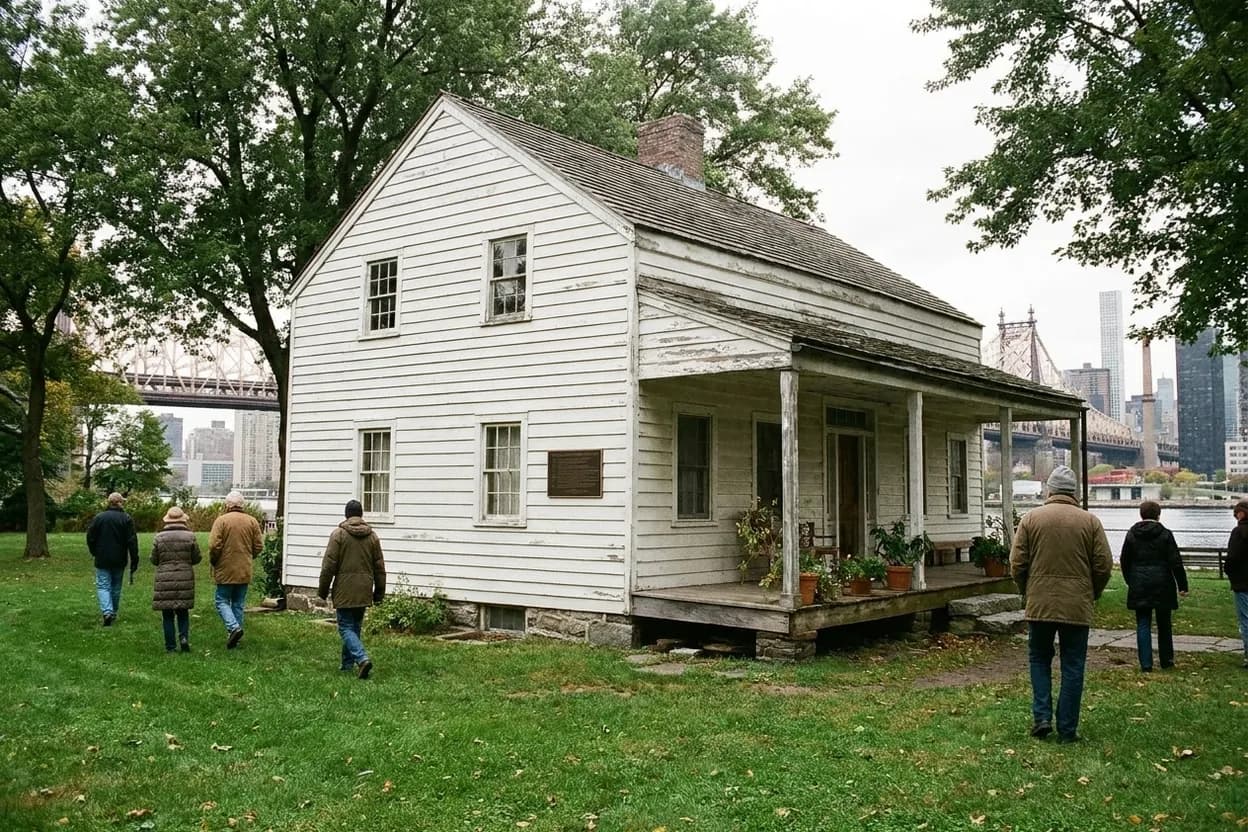
Built between 1796 and 1804, Blackwell House offers a window into the domestic architecture of the immediate post-Revolutionary War era. Its design is characterized by a two-story main block complemented by a one-story kitchen wing, reflecting the practicalities and aesthetic sensibilities of a prosperous farming family of the period. This understated design contrasts sharply with the grander mansions often associated with early American wealth, presenting a more grounded, authentic picture of daily life.
Architectural details further enrich the experience of observing the house. The front porch, adorned with slender Ionic columns, and a Greek Revival pedimented west doorway addition, add subtle flourishes to the otherwise simple structure. These elements are not just decorative; they offer specific points of interest for visitors keen to appreciate the architectural nuances of the late 18th and early 19th centuries, providing a tangible connection to the design trends of the time.
More Than Just a Landmark: A Community Hub
Blackwell House is not merely a static historical artifact; it is an active participant in Roosevelt Island's contemporary life. Described by preservation and local history sources as now functioning as a community center, the building hosts various exhibits and events, bridging its past with the present. This ongoing use ensures that the house remains a vibrant part of the island's fabric, offering more than just an exterior viewing opportunity.
The house's adaptability, from private residence to community space, underscores its enduring significance and value. While its primary historical importance lies in its origins, its current role as a venue for local gatherings and cultural displays allows new generations to engage with its history in dynamic ways. It serves as a reminder that historic preservation can involve active integration into modern life, rather than mere isolation.
Recognized History: National Register Listing
The historical significance of Blackwell House has long been formally recognized, cementing its place in the national narrative of preservation. The National Park Service confirms that Blackwell House was officially listed on the National Register of Historic Places on February 25, 1972. This designation provides a precise marker of the building’s formal recognition and acknowledges its importance to the nation’s cultural heritage.
Beyond its National Register listing, the house has also been documented by the Historic American Buildings Survey, a testament to its architectural and historical value. Such documentation ensures that detailed records of its structure and evolution are preserved for future study and appreciation. These recognitions elevate Blackwell House beyond a local curiosity, positioning it as a nationally significant historical site.
Planning Your Compact History Stop
Visiting Blackwell House is best approached as a compact history stop, rather than a sprawling museum visit. Its modest scale, as a late-18th-century clapboard farmhouse with a two-story main section and one-story kitchen wing, means visitors should anticipate an understated domestic building, not a grand estate. This allows for a focused and efficient exploration, ideal for those incorporating it into a broader Roosevelt Island itinerary.
For a quick exterior appreciation, focus on the specific architectural details mentioned in historical accounts: the front porch with its slender Ionic columns and the Greek Revival pedimented west doorway. These features provide clear visual cues to its historical period and architectural style, enhancing a brief but meaningful observation. Consider this stop as an anchor for a short, self-guided heritage walk, as the Roosevelt Island Historical Society notes it as the first New York City Landmark on their tours.
Beyond the Farmhouse: Island Context
While Blackwell House offers a distinct historical experience, its location on Roosevelt Island places it within a broader context of dramatic urban transformation. The island itself, once a pastoral farm, evolved into a municipal center for hospitals and correctional facilities, and is now a thriving residential community. Blackwell House stands as a direct link to the island's earliest identity, providing a stark contrast to the modern skyline it now faces.
Integrating a visit to Blackwell House with other Roosevelt Island attractions—such as the Franklin D. Roosevelt Four Freedoms Park or the Renwick Ruin—creates a comprehensive narrative of the island’s layered history. This allows visitors to trace the island's journey from private farmland to public institution to contemporary urban space, with the farmhouse serving as a powerful starting point for understanding its long and varied past.
Practical notes for Your Visit
Blackwell House is prominently situated on Roosevelt Island, making it an accessible exterior-view stop within the island's public landscape. However, current interior access, including regular open hours, specific event schedules, or potential reservation requirements, should be verified directly. As of July 23, 2026, the provided sources indicate it functions as a community center and hosts events, but a definitive public visiting schedule or admission cost could not be confirmed.
Before heading out, it is advisable to check the official websites of the Roosevelt Island Historical Society or the Roosevelt Island Operating Corporation. These organizations are the most reliable sources for up-to-date information regarding potential interior access, guided tours, or special events that might allow a deeper exploration of this unique 18th-century farmhouse. This verification will ensure your visit aligns with current operational details.
Tags: #RooseveltIsland #BlackwellHouse #NYCHistory #HistoricSites #IslandWalks #EastRiver #Farmhouse #18thCentury #NYCExploration #UrbanHistory #CulturalHeritage #AskKarpo #BeforeYouGo #CommunityCenter
Sources consulted: Source 1: nps.gov · Source 2: rihs.us · Source 3: nylandmarks.org · Source 4: untappedcities.com · Source 5: crystalbridges.org · Source 6: en.wikipedia.org · Source 7: en.wikipedia.org · Source 8: rooseveltislanddaily.news · Source 9: rihs.us · Source 10: correctionhistory.org
All trademarks are the property of their respective owners.
Ask Karpo first
Tell Karpo your date, group size, budget, and starting neighborhood. We’ll check current access, timing, transit, and the cleanest plan for Blackwell House before you head out.