Searching fast food near me in Koreatown returns the same national signs as anywhere else in Los Angeles, and they are the least interesting thing in the neighbourhood. What Koreatown actually has is a dense layer of small counters, hatches and mini-mall units doing one thing quickly and continuously — a format that is genuinely faster than a drive-thru, considerably cheaper, and organised around the hours of people who work shifts rather than around a lunch rush.
Fast in Koreatown means a counter that makes one thing and makes it all day, not a drive-thru. Tell Karpo what you feel like and it will find the specialist rather than the nearest sign.
The one-thing counter
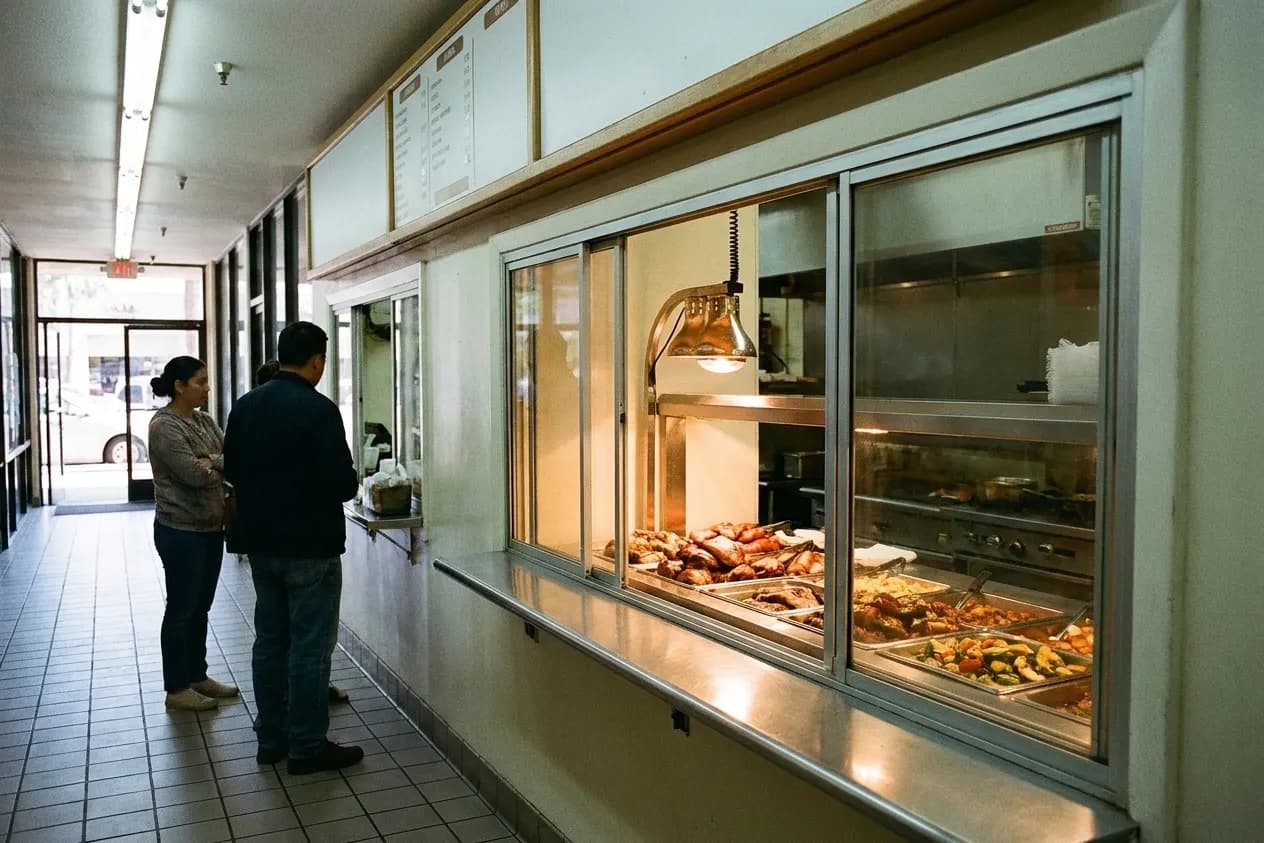
The organising principle here is specialisation. A counter that makes only fried chicken, or only kimbap, or only hotteok, or only bunsik-style snacks, has a line built for exactly that and can hand it over in under two minutes. This is why the food is fast without being pre-made: the prep is deep and the menu is shallow. The corollary is that ordering off-menu, or ordering the one non-specialist item, gets you the worst thing the counter makes.
Where the counters actually are
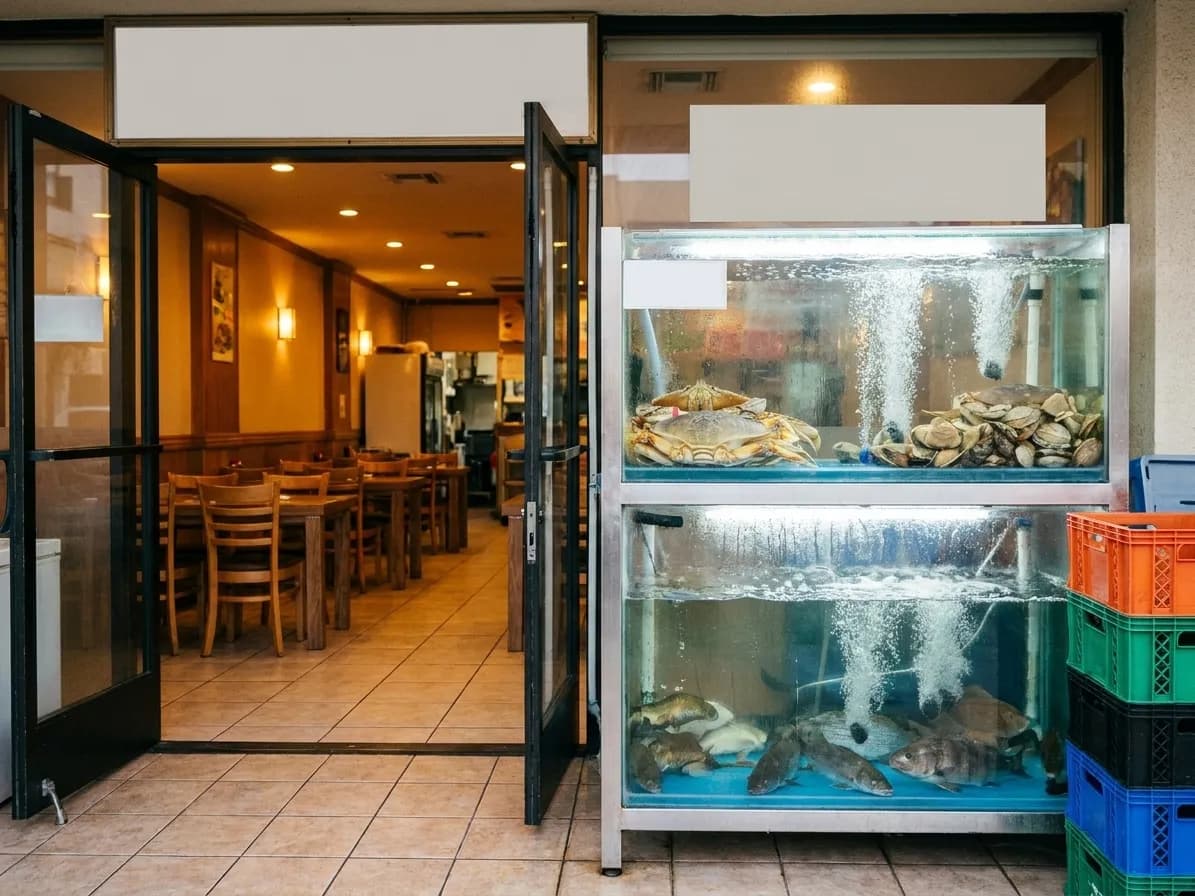
Vertically and inward. Koreatown's commercial density does not sit on the street frontage the way it does in most American neighbourhoods — it stacks into second floors, basements and the interior corridors of mini-malls, behind doors that look like nothing from the pavement. A food court inside an unremarkable strip building may hold six counters. This is the single biggest reason visitors conclude there is less here than there is.
The formats worth knowing
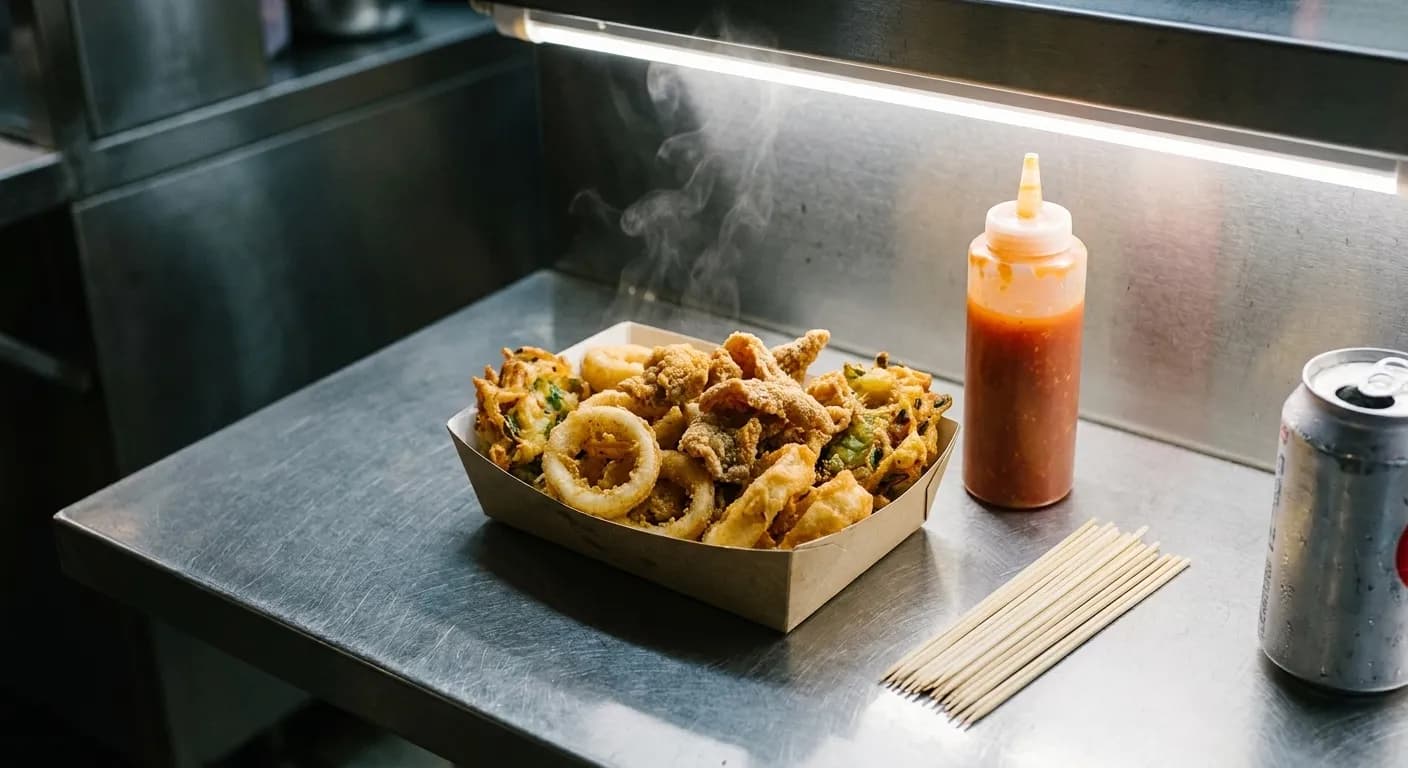
Kimbap counters, which sell rolls by the piece and are the neighbourhood's best grab-and-go. Fried chicken shops, where the wait is longer because it is fried to order and the payoff is proportionate. Bunsik counters doing tteokbokki, fish cake and blood sausage, which is the closest thing here to a street-food economy. Porridge and soup shops that serve a full hot meal in five minutes. And the market delis inside the large Korean supermarkets, which are the most under-appreciated cheap lunch in central Los Angeles by a wide margin.
The hours are the real advantage
Koreatown runs later and starts earlier than most of the county. Counters that serve at 11pm on a Tuesday, and supermarket delis that are producing at seven in the morning, make this the most dependable part of Los Angeles for eating outside normal hours without resorting to a lane. If your schedule is irregular, the neighbourhood is worth learning for that reason alone.
How to order if you have not before
Point, and be willing to not know. Many of these counters have limited English and picture menus, and the transaction is designed to be fast rather than consultative. Bring some cash, because a number of the smallest units are cash-preferred. Expect side dishes to arrive without being ordered and to be refillable at sit-down places. And do not tip at a counter the way you would at a table — the format does not expect it, though the tablet may ask.
The chains, fairly
The national chains do have a role here: they are open when a specific counter is not, they are legible when you are tired, and they take a card. That is a real service. It is just a shame to use it as the default in a neighbourhood where two minutes of walking gets you something better for less. Hours and units change constantly in these malls, so check before making a trip for one counter.
A first route through the neighbourhood
If you have never eaten here and want a plan rather than a wander, a good first pass is three stops in ninety minutes: a kimbap or snack counter for something to eat walking, a supermarket food hall for a proper hot plate at a low price, and a fried chicken shop or a dessert café to finish. That covers the three formats the neighbourhood does better than anywhere else in Los Angeles, and it costs less than one mid-range restaurant meal.
Do it on foot within a few blocks rather than driving between stops — the density is the point, and this is one of the few parts of the county where walking between three food stops is genuinely pleasant. Park once on a side street or take the train, and treat the corridors along the main boulevards as the route.
What to know about the supermarket food halls
The large Korean supermarkets in this neighbourhood contain food courts that are, dollar for dollar, among the best lunches in central Los Angeles and are almost entirely unknown to people who do not shop there. Several counters under one roof, seating, parking attached, and prices set for people doing their weekly shop rather than for diners.
They are busiest at weekend lunchtimes and calm on a weekday afternoon. The prepared food sections of the same shops are worth knowing separately — banchan by weight, marinated meat ready for a grill, fresh rice cakes — which turns a quick stop into dinner at home for a fraction of a restaurant bill.
Tags: #LosAngeles #LA #SoCal #HiddenGems #LocalFinds #OffTheBeatenPath #Koreatown #FastFood #LAEats #LAGuide #ExploreLA #LALocal #LAWeekend #LANights
Sources consulted: la.eater.com · latimes.com · laist.com
All trademarks are the property of their respective owners.
Ask Karpo first
Karpo is a proactive AI assistant that lives in iMessage. Say what you are hungry for and it will name the counter that only makes that.