Nearly every disagreement about the best pizza in San Francisco is really a disagreement about which style is being judged. Neapolitan is a narrow, rule-bound thing: a specific dough hydration, a sixty-to-ninety-second bake at around four hundred and eighty degrees, and a soft centre that will not hold its own weight. Wood-fired is a heat source, not a style, and plenty of the city's best wood-fired pizza is not remotely Neapolitan. Sorting the two apart makes the whole landscape legible.
Style matters more than rating here. Ask Karpo which pizzerias near you fire which way, and what is worth ordering.
What Neapolitan actually commits a kitchen to
A very hot oven, a soft wheat flour, a long slow ferment, and a bake short enough that the crust chars in spots before the centre sets. The result is a pizza that is floppy in the middle by design. If you are eating a Neapolitan pizza with a knife and fork and the middle is wet, the kitchen has not failed — that is the product. The complaint that it is soggy is a complaint about the entire category.
It also commits the kitchen to serving it immediately. A Neapolitan pizza deteriorates fast, which is why the good rooms will not do takeaway, or will do it while telling you not to. A place happy to box one for a twenty-minute journey is either not really making Neapolitan or does not mind that you will eat a worse version of it.
The San Francisco variant nobody names
There is a genuine local style here and it does not have a settled name: a long-fermented sourdough base, wood-fired but baked slower and cooler than Neapolitan, with a crust that has real structure and a distinct sour note from the starter. It is the most characteristic pizza the city makes and it is the reason so many people who love pizza here are unmoved by strict Neapolitan.
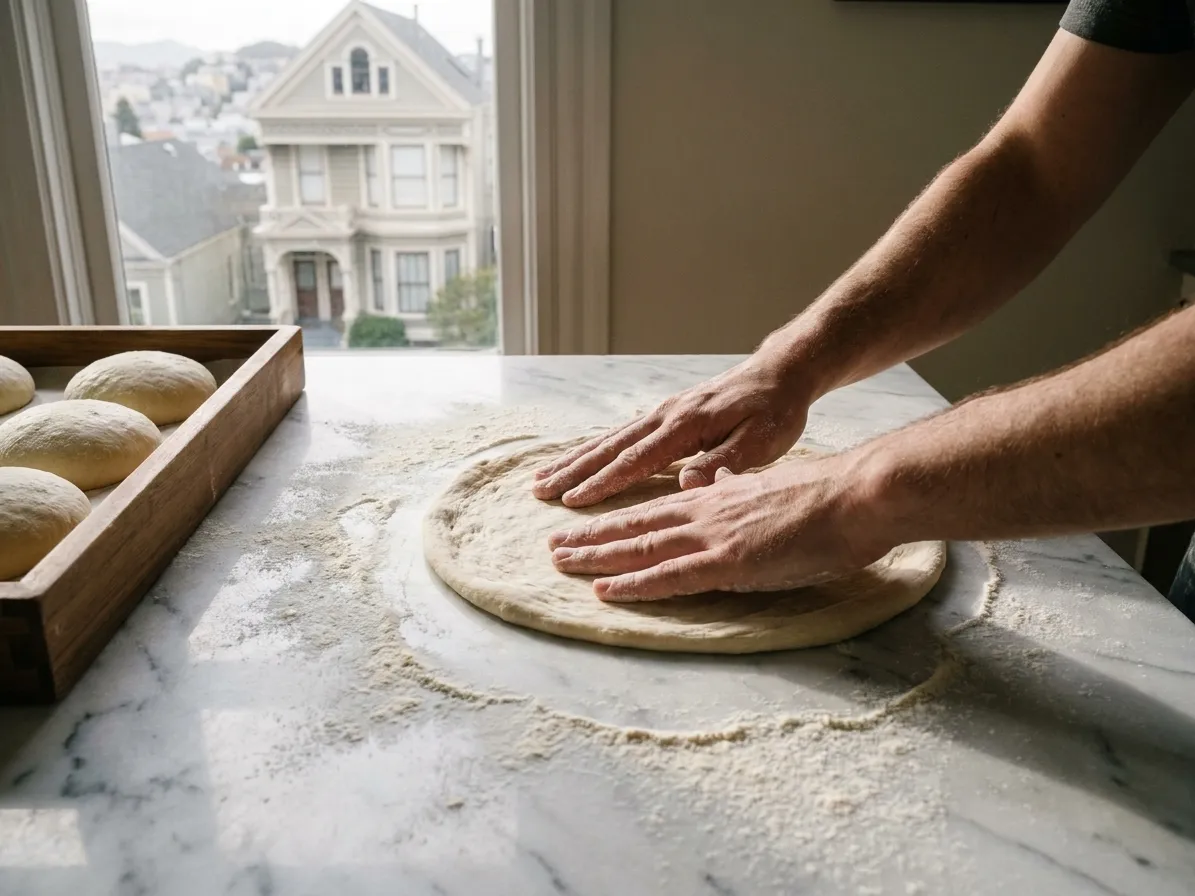
This style is a direct descendant of the city's bread culture, and the pizzerias making it are frequently run by people who came out of bakeries rather than out of Italian kitchens. That shows in the crust, which is treated as the main event rather than as a vehicle. If you have wondered why pizza here tastes different from pizza in New York or Naples, this is the answer.
Reading an oven from the dining room
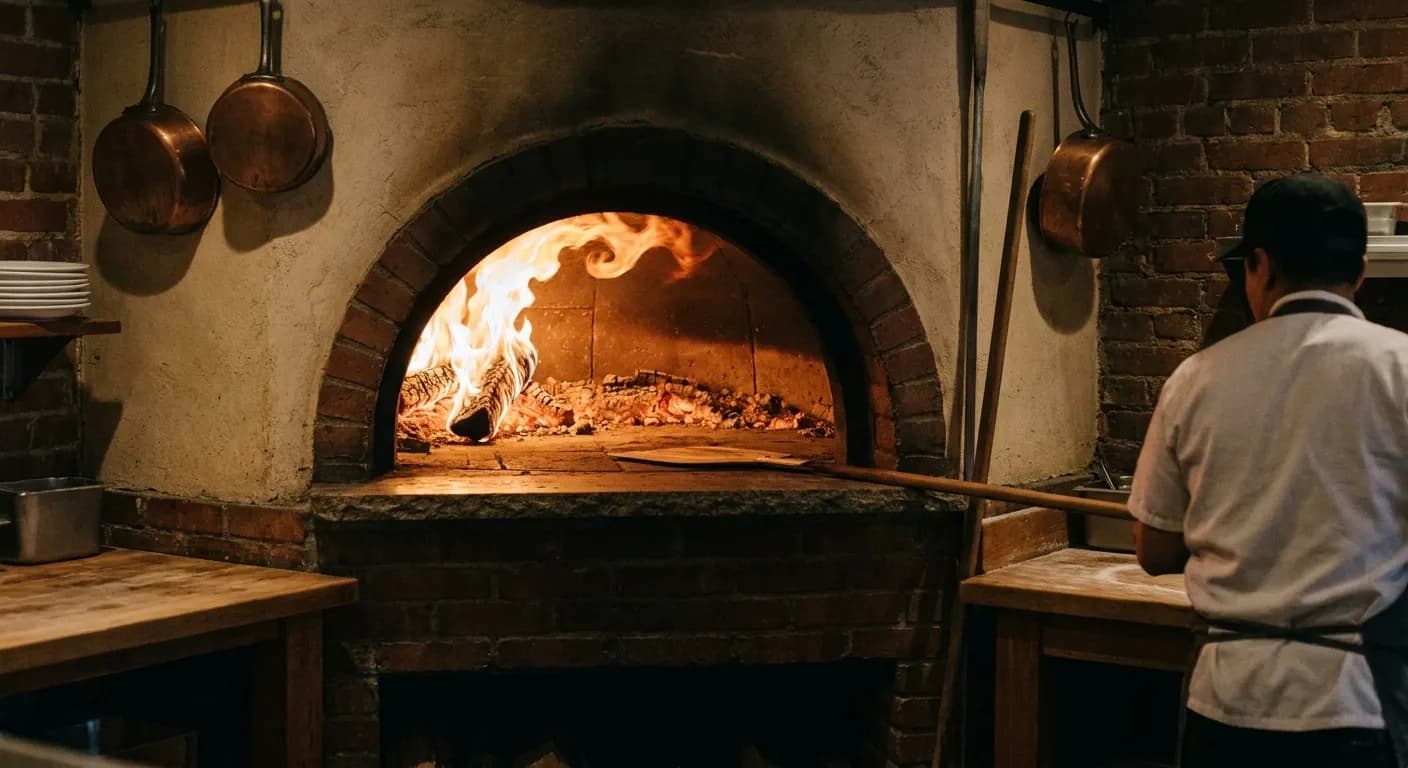
A few tells. A dome oven with a visible fire on one side and a bare floor on the other is running Neapolitan temperatures if the pizzas are coming out in under two minutes. If they are taking four to six minutes, it is a cooler wood-fired bake and you should expect a crisper, sturdier base. A deck oven with no visible flame is gas or electric, which is not a criticism — several of the best pizzas in this city come out of gas decks.
The other tell is the turn. Neapolitan pizzas are turned constantly with the peel because one side faces the fire; a pizza that goes in and sits still is being baked by radiant heat at a lower temperature. Watching the pizzaiolo for thirty seconds tells you more about what is coming than the menu will.
What to order in each style
For strict Neapolitan, order the simplest thing on the list. The margherita is the test and the whole point — the format cannot carry much weight, and heavy toppings turn the soft centre into a problem. Anyone loading a Neapolitan base with four toppings is fighting the dough.
For the local sourdough style, do the opposite. That crust can carry weight, and the kitchens making it are usually produce-driven and seasonal, so the interesting pizza is the one with the vegetable nobody else is using this month. Ordering a plain margherita in one of those rooms is passing on the actual cooking.
The practical constraints
Wood-fired rooms in this city are small, hot and loud, and most of the good ones take a limited number of bookings or none at all. Turning up at six is a completely different experience from turning up at eight. Several of them also run out of dough, which is not a marketing device — a long ferment means the day's supply was decided thirty-six hours ago and cannot be extended.
Cost has drifted up sharply and it is worth being honest about why. A wood oven needs a licence, a chimney, a supply of seasoned hardwood, and someone competent standing in front of it all night. A twenty-six-dollar margherita is not a markup on an eight-dollar product; it is a small room with high fixed costs selling thirty covers. Whether that is worth it is a fair question, but the pricing is not arbitrary.
Where to go if you just want good pizza
The honest answer is that the style debate matters much less than the freshness one. A competent slice from a busy oven beats a revered pizza that sat for ten minutes, every time, in any style. If a room is turning over fast enough that your pizza was made after you ordered and reached you within ninety seconds, you are going to eat well regardless of what the oven is.
And the corollary: the single best predictor of a bad pizza in this city is a heat lamp. Everything else — the flour, the oven, the fermentation schedule, the arguments — is downstream of whether the thing in front of you came straight off the peel.
Tags: #SanFrancisco #PizzaSF #Neapolitan #WoodFired #SourdoughPizza #BestPizzaSF #SFRestaurants #PizzaLovers #SFEats #NorthBeach #MissionDistrict #BayArea #DinnerSF
All trademarks are the property of their respective owners.
Ask Karpo first
Ask Karpo which pizzerias near you in San Francisco are firing tonight, what style they bake, and whether there is a wait.