A banh mi is one of the great value propositions in American food and Los Angeles has an enormous supply of them. It is also a dish where the price range has widened uncomfortably in the last few years — the same sandwich now costs anywhere from six dollars at a counter in a strip mall to eighteen at a restaurant with a design consultant. The gap is almost never justified by what is inside, and knowing what to look at instead of the price is the whole skill.
The difference between a good banh mi and a bad one is entirely in the bread, and you cannot see it through a listing. Ask Karpo which counters near you bake their own and what they actually charge.
The bread is the whole thing
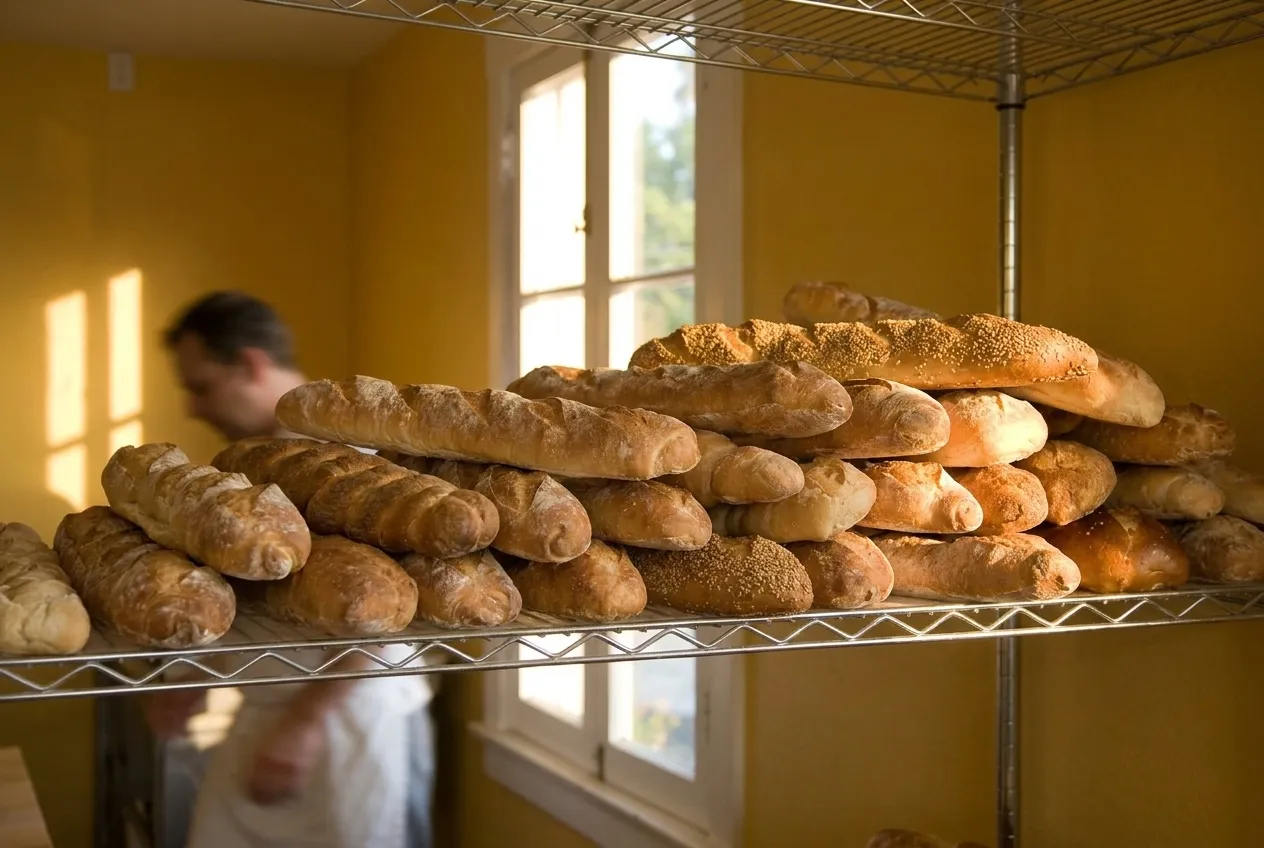
A Vietnamese baguette is not a French one. It is made with a proportion of rice flour, which produces a much lighter, airier crumb and a thin shatteringly crisp crust — the whole structure is designed to be light enough that the filling is the main event rather than a garnish inside a heavy loaf.
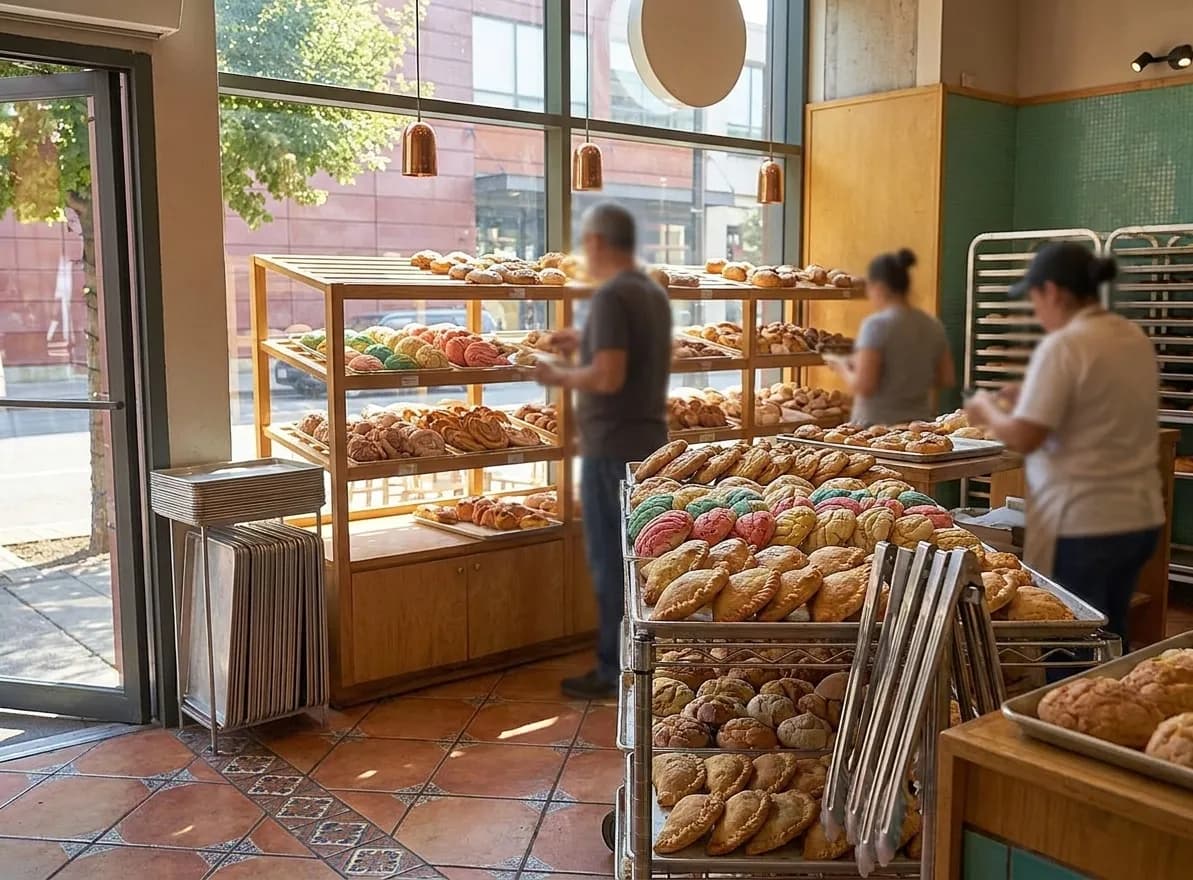
That crust has a very short life. A properly made Vietnamese baguette is at its best within a couple of hours of baking and is noticeably worse by the afternoon. This is why the best banh mi counters are attached to bakeries, or are supplied by one nearby several times a day, and it is why a sandwich bought at eleven in the morning is frequently better than the identical one at four.
The test, then, is simple and physical: the sandwich should crackle audibly when it is squeezed and should shed crust flakes when you bite it. If it compresses silently, the bread is old or it is the wrong bread, and nothing else on the ingredient list will rescue it.
What should be inside, and what the price should be
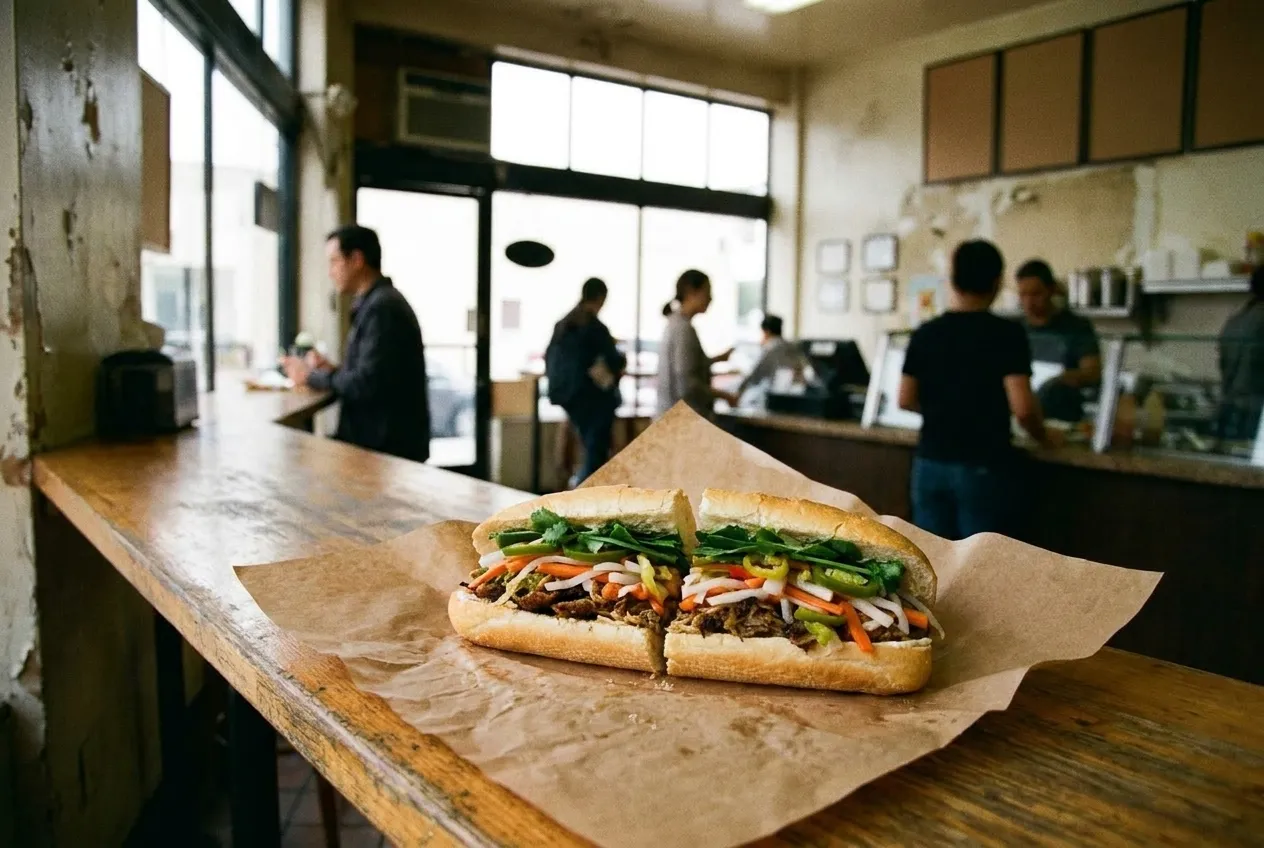
The standard build is pate and a mayonnaise-butter spread, a protein, then pickled daikon and carrot, cucumber, coriander and chilli. The classic is the cold cuts version, dac biet, which layers several Vietnamese charcuterie items. Grilled pork, grilled chicken, meatballs in tomato sauce, sardines and a tofu or mushroom version are all common.
At a proper counter in Los Angeles this should be a single-digit sandwich, or just over. Fifteen dollars should buy you a sandwich and a drink with change, or two sandwiches at a good bakery counter. If a single banh mi is costing you fifteen dollars on its own, you are paying for a room, not for a sandwich, and the bread is very rarely better.
Where the counters are
Three geographies matter. Chinatown, just north of downtown, has long-established counters and is the closest option to the core of the city. The San Gabriel Valley — Alhambra, San Gabriel, Rosemead and out along Valley Boulevard and Garvey Avenue — has the density and the bakeries, and it is where a short drive genuinely improves the sandwich.
And then there is Little Saigon, in Westminster and Garden Grove in Orange County, roughly thirty-five miles southeast of downtown. That is the centre of gravity for the whole cuisine in Southern California and the place where the bakeries are baking all day rather than once in the morning. It is a real drive, and it is the correct destination when you are buying for a group rather than for yourself.
Ordering for a group, cheaply
Banh mi is one of the few genuinely good foods that scales down in price when you buy more of it: most counters run a discount at five or ten sandwiches, and a mixed order of ten for a group is frequently the cheapest way to feed that many people well anywhere in Los Angeles. Order them made fresh rather than from the pre-made stack if you are collecting for later, ask for the chilli on the side if anyone is uncertain, and eat them within about two hours. Beyond that the pickles start to soften the bread from the inside and you have a different and considerably sadder sandwich.
The rest of the counter
A banh mi counter is almost never only a banh mi counter, and the rest of the case is where the value gets better. Most will also sell che, the layered sweet drinks and puddings in plastic cups; Vietnamese iced coffee made with a phin filter over condensed milk; spring rolls both fried and fresh; and frequently a small number of rice or noodle plates from a steam table. A sandwich, a che and a coffee is a complete lunch for under fifteen dollars at almost any counter in the San Gabriel Valley or Little Saigon, which is close to unbeatable in Los Angeles County. The pandan and coconut versions of che are the ones to start with.
Practical notes
Vietnamese baguettes are made with a proportion of rice flour for a light crumb and a thin crisp crust; they are at their best within a couple of hours of baking, so morning sandwiches beat afternoon ones. Test: the sandwich should crackle when squeezed and shed crust flakes when bitten. Standard build is pate and a mayonnaise-butter spread, a protein, pickled daikon and carrot, cucumber, coriander and chilli; dac biet is the mixed cold-cuts version. Expect single digits at a counter — $15 should buy a sandwich and a drink with change, or two sandwiches at a bakery counter. Clusters: Chinatown north of downtown, the San Gabriel Valley along Valley Blvd and Garvey Ave through Alhambra, San Gabriel and Rosemead, and Little Saigon in Westminster and Garden Grove roughly 35 miles southeast. Most counters discount orders of five or ten. Eat within about two hours before the pickles soften the bread.
Tags: #BestVietnameseFood #LosAngeles #BanhMi #CheapEats #StudentFood #Chinatown #SanGabrielValley #LittleSaigon #Alhambra #Rosemead #GardenGrove #BackToSchool #LAEats #Bakery
All trademarks are the property of their respective owners.
Ask Karpo first
The banh mi that is worth eating is the one that came out of an oven a couple of hours ago, and no listing tells you that. Ask Karpo which counters near you bake their own bread, what they charge, and whether a group order is cheaper than everyone buying separately.