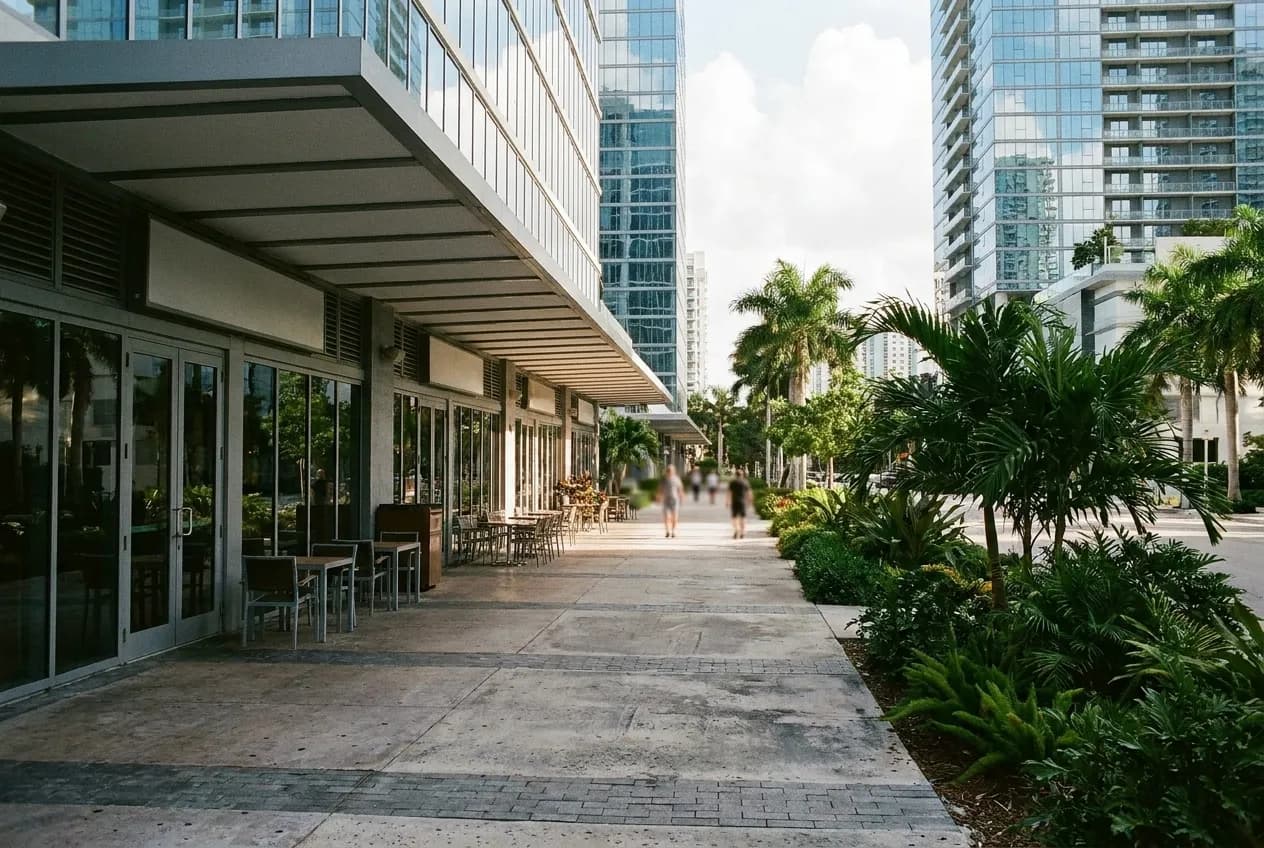
In Vietnam, pho is breakfast. It is sold from six in the morning from shopfronts and carts, eaten before work, and by early afternoon most of the good places have sold out and closed. In the United States it became a dinner dish, largely because that is when American restaurants make money. And in Brickell, a neighbourhood of forty thousand people living in towers over a small grid of retail podiums with a weekday working population several times that, it has become something else again: a lunch dish, eaten in an hour, at a desk-adjacent table.
Brickell's kitchens run on a tower clock rather than a restaurant one, which is not the same thing. Tell Karpo when you want to eat and get what is actually open.
Why the hour changes the bowl
A broth that has been simmering since the previous evening and is served at seven in the morning is a different product from one held at service temperature through a midday rush. Pho broth is made by simmering beef bones with charred ginger and onion, star anise, cinnamon and cloves for many hours, then straining it clear. It is at its best early in its service life and it flattens as it is held.
In a lunch-driven room, the broth goes on in the morning and gets held through the peak, which means the bowl at half past eleven is meaningfully better than the bowl at half past one. That is the single most actionable fact in this article. If you have flexibility, take an early lunch. Brickell's tower population all breaks at the same time, so an eleven-thirty table is both a better bowl and a shorter wait.
How to judge a Brickell bowl
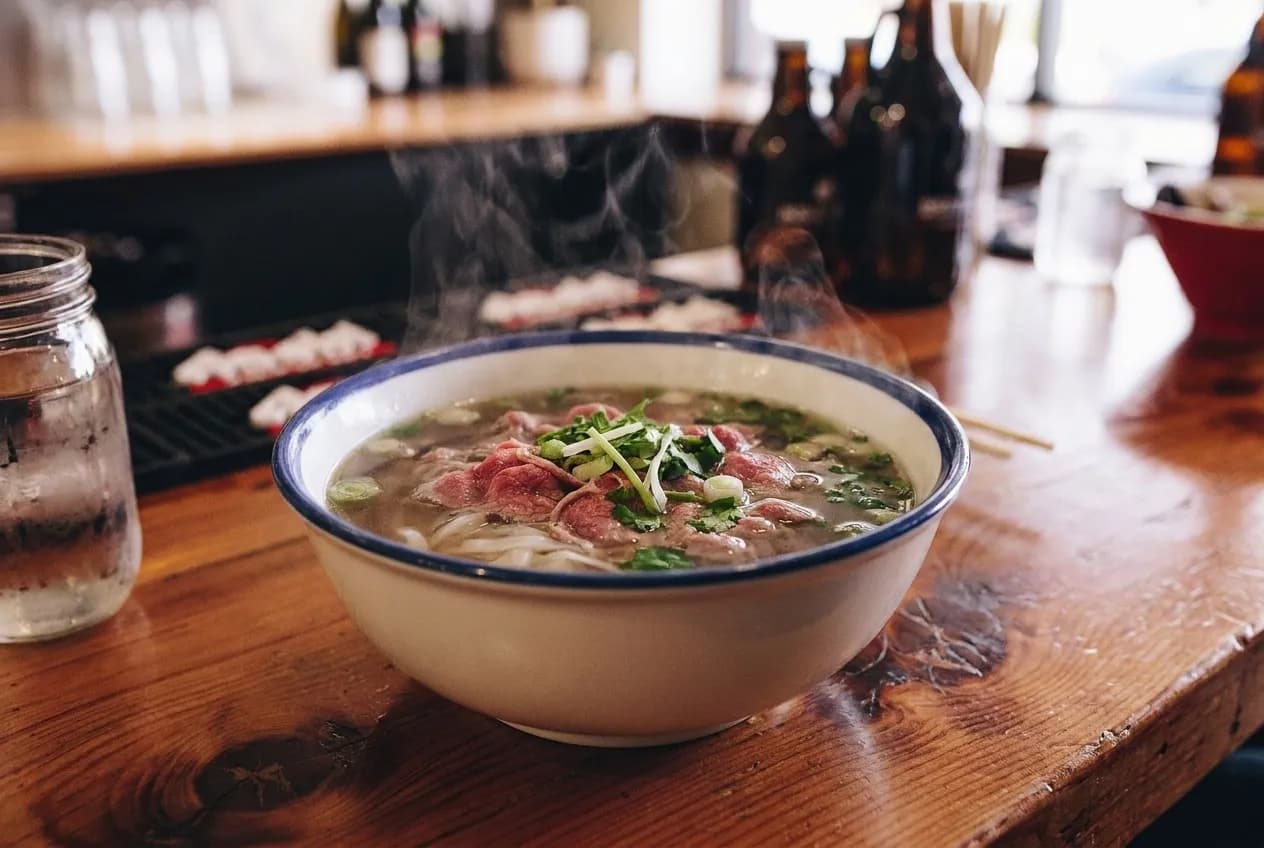
The broth is the whole dish and there is nowhere to hide. It should be clear rather than cloudy - cloudiness means it was boiled too hard rather than simmered. It should smell strongly of star anise and charred onion before you taste it. And it should taste of beef rather than of salt; a flat, brown, saline broth is the signature of a shortcut, usually a base or a bouillon.
Order pho tai to test a kitchen. Rare beef sliced thin and added raw so it cooks in the broth at the table tells you two things at once: whether the broth arrives hot enough to actually cook it, and whether the beef is any good. If the meat arrives already grey, the broth was not hot enough, which usually means it has been sitting. Pho dac biet, the combination bowl with brisket, tendon and tripe, is the fuller meal once you know the room is good.
The condiments question
Taste the broth before you add anything. This sounds obvious and almost nobody does it. Hoisin and sriracha go into a small dish for dipping the meat, in the southern Vietnamese-American convention that most Miami restaurants follow, rather than being squeezed into the bowl - though squeezing them in is also a real practice and not a crime. What matters is that you tasted first, because a good broth needs neither and a bad one is not rescued by both.
The herb plate - Thai basil, beansprouts, culantro, lime, sliced chilli - should be added gradually rather than all at once, because a fistful of cold beansprouts drops the broth temperature enough to change the dish. Tear the basil rather than adding it whole. Lime last and sparingly. And eat it fast; the noodles keep cooking in the bowl and go soft within about ten minutes.
What Brickell does well and what it does not
The neighbourhood's Vietnamese and pan-Asian rooms are convenient, reliable and designed - podium-level, air-conditioned, priced for a professional lunch crowd. They are a good option in the middle of a working day and they are not where the best Vietnamese food in Miami-Dade is. That is south-west toward Kendall and out along the western arterials, in strip-mall restaurants cooking for people who eat this food weekly.
The honest comparison is fifteen to twenty-five minutes' drive and a third off the price. If pho is the specific objective and you have an hour, drive. If you are in Brickell already and want a good bowl without a project, the neighbourhood delivers - just take the early lunch rather than the late one, and expect to pay a premium for the podium.
The rest of the Brickell week
The neighbourhood's rhythm is worth knowing because it affects everything. Monday and Tuesday are quiet enough to walk into anything. Thursday is Brickell's real weekend night and the outdoor tables are full by half past seven. Sunday drops off sharply and several kitchens close early or entirely - which catches people out, because the residential density suggests otherwise.
Parking is a garage decision rather than a street one; Brickell City Centre and Mary Brickell Village both validate with a purchase. The free Metromover loops the whole district on elevated track and connects to Metrorail at Brickell station, which makes driving here largely unnecessary if you are coming from downtown.
Practical notes
Eat pho early in the service rather than late - eleven-thirty beats half past one for both the broth and the wait. Judge on clarity, aroma and whether it tastes of beef. Order pho tai to test a kitchen. Taste before adding condiments; add herbs gradually; eat within ten minutes before the noodles soften. Prices in Brickell run fourteen to twenty dollars a bowl, roughly a third more than the south-west. Sunday closures are common; Thursday is the busy night. Use a validated garage or the free Metromover. And if pho is the whole point of the trip, drive twenty minutes south-west instead.
Tags: #BestVietnameseFood #Brickell #Miami #Pho #PhoTai #PhoDacBiet #Kendall #MiamiEats #BrickellCityCentre #Metromover #VietnameseFood #HiddenGems #MiamiLunch #BrickellRestaurants
All trademarks are the property of their respective owners.
Ask Karpo first
The difference between a great bowl and a flat one in this neighbourhood is often two hours rather than two restaurants. Ask Karpo which Brickell kitchens are open at the hour you want, which are early in their service, and whether it is worth the drive south-west instead today.