For a long time the vegan option at a ramen shop was a courtesy — the same noodles in a thin vegetable stock, priced the same and worth less. That has changed here faster than almost anywhere, and the best ramen in Los Angeles without meat in it is now made by kitchens that have stopped trying to approximate tonkotsu and started building something on its own terms. The result is a different bowl rather than a lesser one.
The good vegan bowls are built, not substituted. Ask Karpo which noodle shops near you actually make one.
How a serious vegan broth is built
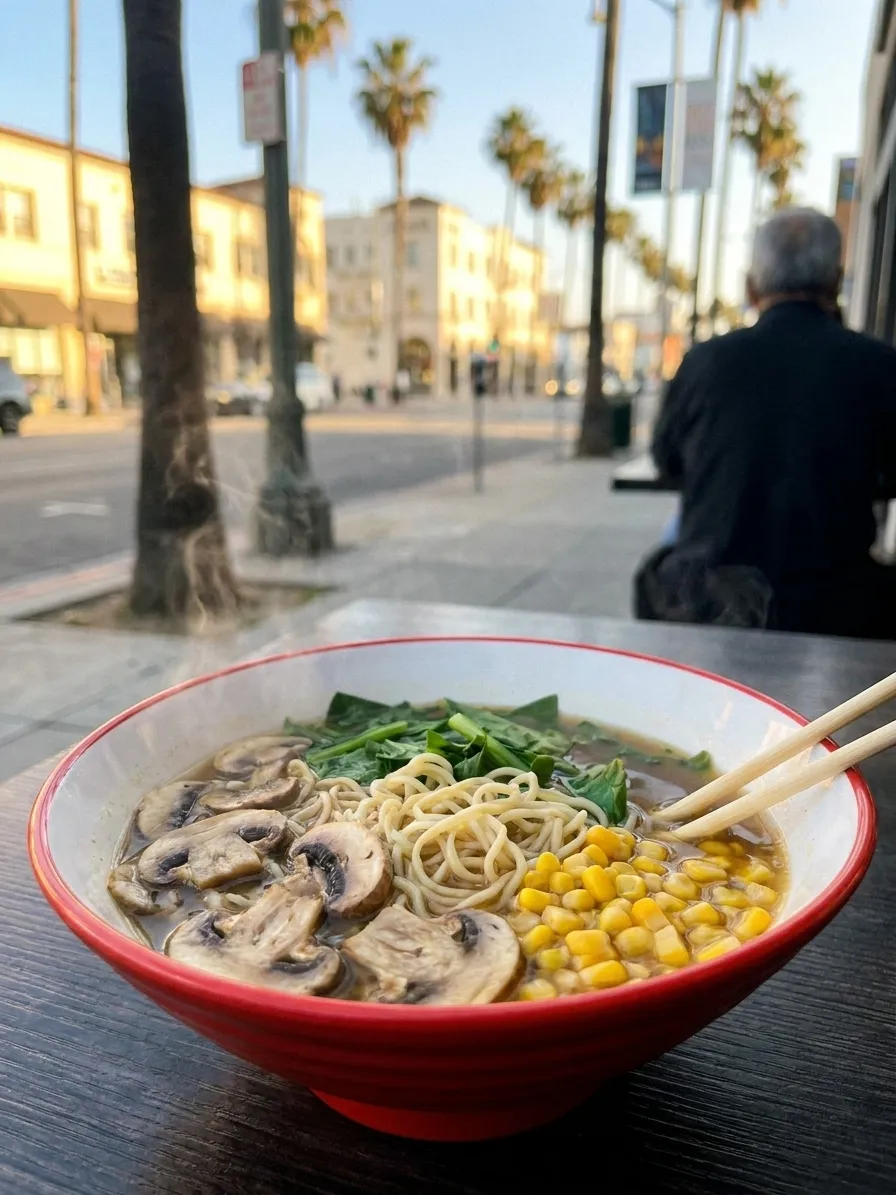
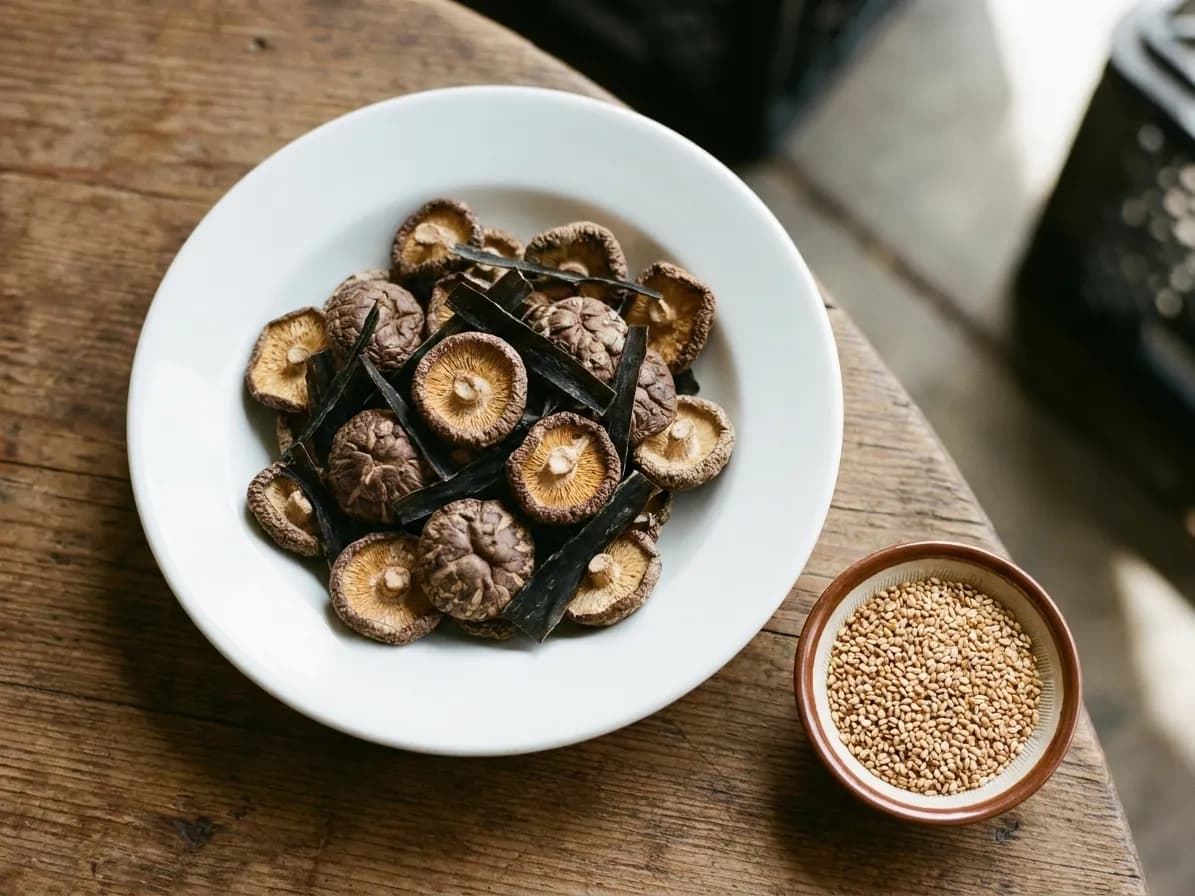
Three layers, roughly. A base of kombu and dried shiitake for glutamates, which is where the savoury depth comes from. Roasted vegetables — onion, garlic, carrot, sometimes corn cobs or cabbage cores — for sweetness and body. And a fat, usually a flavoured oil made with garlic, chilli, sesame or mushroom, which is what gives the broth the coating richness that a watery vegetable stock lacks.
That third element is the one that separates a good vegan bowl from a disappointing one, and it is the easiest to check. If the surface of the broth has visible beads of aromatic oil and the liquid clings slightly to the noodles, someone has thought about it. If it looks like clear soup, it will taste like clear soup.
Soy milk, nuts and the creamy versions
A number of kitchens here build a thick, opaque broth using soy milk, cashew or sesame paste, which produces something genuinely close to tonkotsu in texture without pretending to be it. Done well this is excellent; done badly it is chalky. The tell is whether the richness tastes like it came from an ingredient or from a thickener.
The other approach is the miso-forward bowl, which is the most reliably good vegan ramen in the city because miso brings fermentation, salt and body all at once. If you are trying a shop's vegan option for the first time and there is a miso version, order that one — it is the hardest to get wrong and the most likely to show what the kitchen can do.
The details that get overlooked
Check the noodles. Many contain egg, and a shop that has thought about the vegan bowl will have sourced an eggless noodle rather than hoping nobody asks. Check the toppings too — the marinated egg is obvious, but menma is sometimes cooked with dashi and the chilli oils sometimes contain fish.
Asking is straightforward and the good shops here answer precisely, because enough customers have asked over enough years that they know. A vague answer generally means the vegan bowl is a menu item rather than a project, which tells you what you need to know before ordering.
Where these bowls are
The eastside and the areas with the strongest plant-based restaurant density — Silver Lake, Echo Park, Highland Park — hold most of the dedicated vegan noodle shops. Little Tokyo and the surrounding downtown blocks have several traditional shops that have added serious vegan bowls rather than token ones. And the westside has a cluster driven by straightforward demand.
The San Gabriel Valley is the underrated one. The Buddhist vegetarian tradition in Chinese cooking has been doing sophisticated meatless broths and mock preparations for a very long time, and while it is not ramen, several rooms there make noodle soups that outperform most vegan ramen on exactly the criteria that matter.
What to order alongside
The vegetable sides at these shops are usually better than at a conventional ramen counter, because the kitchen is already thinking about produce. Pickles, marinated mushrooms, seaweed salads and agedashi-style tofu are all common and all worth ordering. A bowl plus two small plates is a more interesting meal than a bowl alone and costs a few dollars more.
Gyoza are the item to check on. Vegetable gyoza are widespread and range from excellent to filler, and the difference is usually whether they are made in-house. If they arrive uniform and pale they came in frozen, which is not a scandal but is not worth eight dollars either.
Setting the expectation correctly
The best vegan ramen in this city is very good and it does not taste like pork bone broth. Approaching it as a substitute guarantees mild disappointment; approaching it as a mushroom-and-kombu noodle soup with a sesame oil finish means judging it on what it is, which is where it performs well.
It is also worth saying that the category has improved because vegan customers stopped accepting the courtesy version and shops responded. That is a straightforwardly good outcome, and it means the useful thing you can do at a shop with a mediocre vegan bowl is to say so politely. A surprising number of the excellent ones exist because somebody did.
Dedicated shops versus one option on a menu
A shop that makes only vegan bowls has to make them well, because there is nothing else to order. A conventional counter with one vegan option is running a second broth for a minority of customers, which is expensive, and the outcome depends entirely on whether the owner cares. Both models produce excellent bowls here; the variance is much higher in the second.
The practical read is to look at how the vegan bowl is described. A full description with named ingredients — the mushrooms, the oil, the miso — signals a deliberate build. A single line saying vegetable broth at the bottom of the menu usually signals what it sounds like, and in that case the vegetable sides are the better order.
Tags: #LosAngeles #RamenLA #VeganRamen #PlantBased #VegetarianLA #LittleTokyo #SilverLake #LAEats #NoodleShop #BestRamenLA #SoCal #VeganEats #MisoRamen
All trademarks are the property of their respective owners.
Ask Karpo first
Ask Karpo which ramen shops near you in Los Angeles make a proper vegan bowl, whether the noodles are eggless, and how late they serve.