New York's famous attractions are famous for good reasons and they are also the ones every visitor has already decided to do. Underneath them sits a layer of institutions that are genuinely strange — not quirky-in-a-listicle strange, but strange in the sense that you will describe them afterwards and be doubted. Three of them are worth building an afternoon around, and one of them can be visited at four in the morning.
The strange small institutions in New York keep strange small hours — three days a week, one afternoon on Sunday, closed the month they decide to rehang. Text Karpo which of these you want to see and get whether it is actually open today, how long it takes to get there, and what else odd is within a ten-minute walk of it.
A museum in an alley, open through peepholes
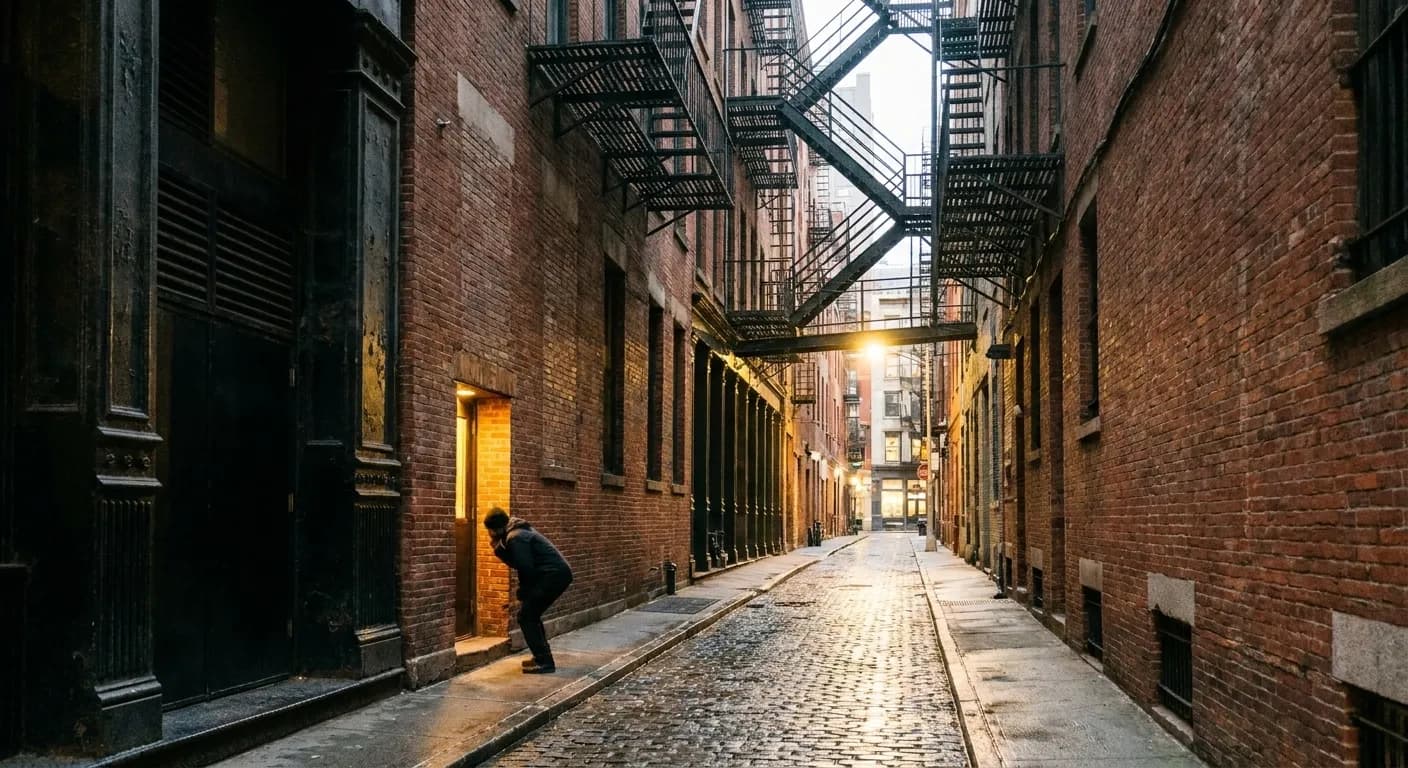
Mmuseumm is at 6 Cortlandt Alley in Tribeca, between Franklin Street and White Street, and it has operated since 2012 as what it calls a modern natural history museum — a very small space displaying ordinary objects with the seriousness usually reserved for artefacts. It is open Fridays and weekends from eleven to six.
The genuinely unusual part: the displays are visible to the public twenty-four hours a day through peepholes embedded in the doors. That is not a gimmick so much as a solution — the museum is too small to staff continuously, so it made itself viewable when closed. It is the only institution in New York you can meaningfully visit at three in the morning, and Cortlandt Alley at that hour is worth the walk on its own.
The whole city, at 1:1200
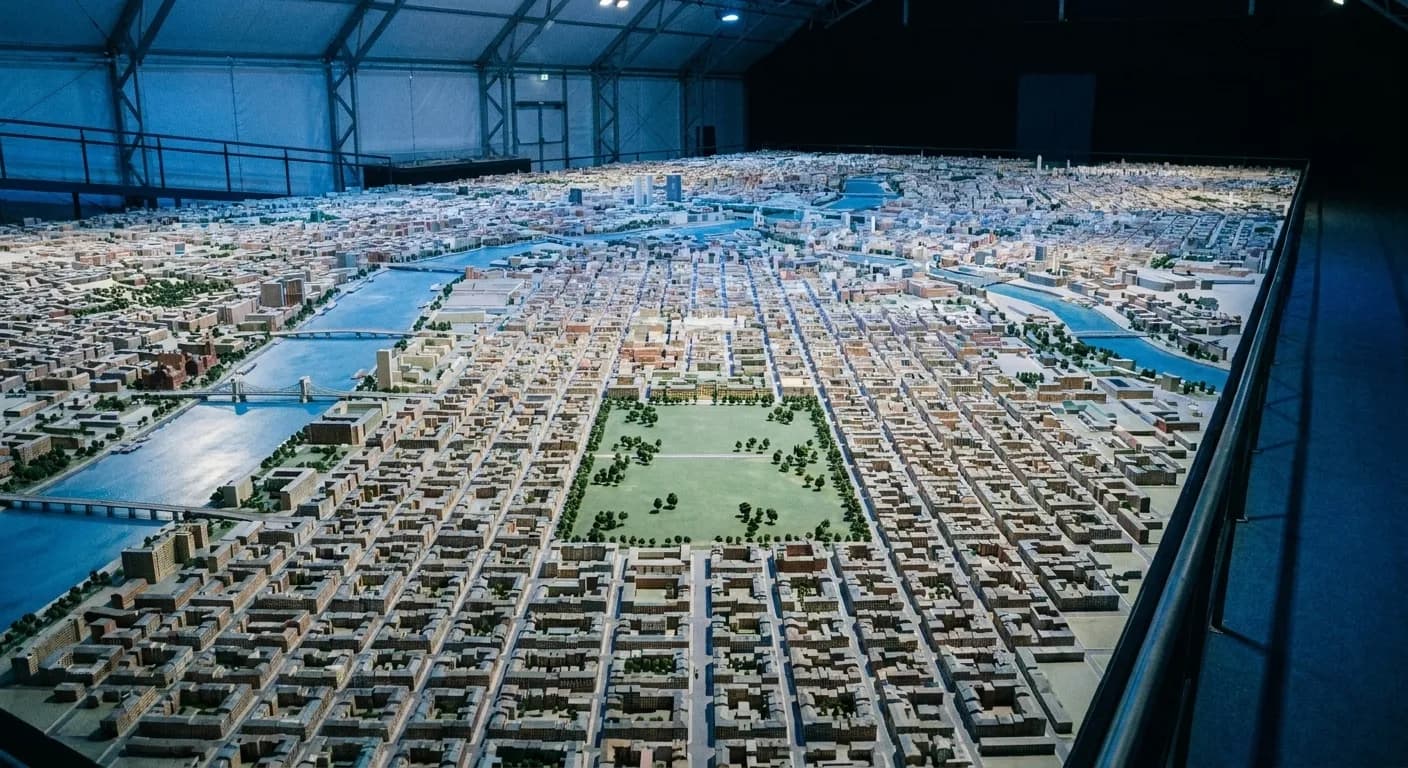
The Panorama of the City of New York, at the Queens Museum in Flushing Meadows, is a scale model of all five boroughs built for the 1964 World's Fair — every building, every bridge, every block, laid out across a room you walk around on a ramp above it. It is the single best way to understand the shape of this city that exists, and it takes about twenty minutes to change how you think about where you live.
Find your own building. It is on there. That is the moment the thing stops being an exhibit and becomes personal, and it is also the moment you realise how small the part of New York you actually use is.
A world-class Spanish collection almost nobody visits
The Hispanic Society Museum and Library at 613 West 155th Street in Washington Heights holds one of the most significant collections of Spanish art outside Spain, and it is open Tuesday to Saturday from ten to half four and Sunday from one to four, closed Mondays. On an average weekday you may share the main hall with a handful of people.
The disbelief this generates is the reliable part. Something of this quality in Manhattan should have a queue around the block, and it does not, largely because it is at 155th Street rather than on Museum Mile. That is the entire reason it is on this list — it is not obscure because it is minor, it is obscure because of an address.
What these three have in common
Each of them is a serious institution that failed to become famous for a structural reason rather than a quality one: too small to staff, too far uptown, built for a World's Fair and left in place afterwards. New York produces this category constantly, because the city generates more cultural institutions than its attention can cover.
The practical implication is that the filter you should use is not 'is this well known' but 'is this open'. Small institutions here keep small hours, and the difference between a great afternoon and a wasted one is entirely a matter of checking the day of the week before you travel.
How to combine them
Do not try to do all three in a day. They are in Tribeca, Flushing Meadows and Washington Heights — three corners of the city that do not connect conveniently, and the day would be three transit legs with twenty minutes of museum in between. Pick one and give it a proper afternoon with a meal in the neighbourhood attached.
The exception is Mmuseumm, which takes fifteen minutes and is viewable at any hour. That one is a stop rather than a destination, and it pairs with anything else you are doing in Lower Manhattan, including at the end of a night out.
How to find more of these yourself
Two heuristics work. First, look at institutions with a library or a society in the name rather than a museum — that naming usually indicates something founded as a scholarly body that happens to have a public collection, and those are consistently the emptiest good rooms in the city. Second, look above 125th Street and outside Manhattan generally, because geography rather than merit is what determines visitor numbers here.
The failure mode is treating obscurity as a virtue in itself. Plenty of small New York museums are small because they are not very good. The three above are the opposite case — genuinely first-rate things that an accident of address or scale has kept quiet, which is the only kind of hidden gem worth the trip.
Tags: #bestthingstodoinnyc #hiddengemsnyc #mmuseumm #panorama #queensmuseum #hispanicsociety #washingtonheights #tribeca #flushingmeadows #oddmuseums #nycculture #cortlandtalley #newyorkcuriosities #freethingstodo
All trademarks are the property of their respective owners.
Ask Karpo first
Half the most interesting institutions in New York are open three days a week and closed the day you turn up. Ask Karpo which of the small odd museums near you is open right now, what it costs, and which two of them can be done in the same afternoon without crossing the city twice.