San Francisco is quietly living through a takeout sushi renaissance. Counters run by chefs with serious pedigrees are packing bamboo boxes that rival sit-down omakase, corner markets are slicing bluefin next to the snack aisle, and the city's parks have become the best dining rooms in town. The fish has never been better; the only thing that can ruin it now is the ride home.
Because takeout sushi is a physics problem as much as a food one. Some formats shrug off a twenty-minute Muni ride; others are ruined by the walk to the car. Here's what travels, what doesn't, and where to buy the boxes worth carrying carefully.
What Survives the Ride (and What Doesn't)
The enemies of traveling sushi are time, temperature, and moisture. Cut rolls, pressed sushi, chirashi bowls, and inari are built to endure all three — the rice protects the fish, and nothing depends on split-second texture. Delicate nigiri suffers most: the magic of a just-formed piece is body-temperature rice against cool fish, and every minute in a box flattens that contrast. Handrolls are the extreme case — crisp nori goes chewy within minutes of meeting rice, which is why they're an eat-immediately food.
- Best travelers: cut rolls, chirashi and other donburi, pressed sushi, inari, onigiri.
- Handle with care: nigiri — fine for a short trip, sad after a long one.
- Eat on the spot: handrolls. The nori clock starts the second they're made.
- Carry boxes flat, keep them out of direct sun, and never leave sushi in a hot car.
- Skip the fridge if you're eating within the hour — cold rice turns hard and dull.
Aji Kiji: The Box Everyone Is Chasing
The standard-setter is Aji Kiji on Kearny Street in the FiDi, where a chef with Michelin-starred sushi experience packs bamboo boxes — the flagship omakase box runs about fifty dollars for ten nigiri, a maki, and pickles, with cheaper chirashi and maki options too. The catch is availability: boxes routinely sell out within hours, so treat it as a morning mission, not an afternoon impulse.
The Display-Case School: Ebiko and Yoeechee
Ebiko in SoMa proves great takeout doesn't require a treasure hunt: its display case is constantly restocked with chutoro, salmon, tuna, and tamago over rice, topping out around seventeen dollars for the seven-piece daily omakase set — and its North Beach location adds seats if the park plan falls through. Over on Fillmore Street, Yoeechee stepped into the neighborhood gap Aji Kiji left when it moved downtown, packing premium boxes of chirashi, sashimi, and omakase sets — including a bara chirashi dotted with tamago and charred unagi. Supplies still run out, but the lines are gentler.
The Richmond Trifecta
The Richmond District is the city's best takeout-sushi neighborhood, full stop. Hokkaido Sashimi Marketplace on Geary doubles as a Japanese convenience store, with chirashi bowls and onigiri in the grab-and-go fridge, inari made to order, and rolls topping out around thirteen dollars. On Clement Street, Oishinbo makes everything to order — plump unagi rolls, snow crab and avocado, spicy scallop — so call ahead and time your pickup. And a few doors down, Wako, a respected omakase restaurant, sells Thursday-through-Sunday lunch takeout: bamboo boxes of maki, nigiri, and salmon or tuna donburi from a kitchen that usually charges omakase prices.
Corner-Store Sushi Done Right
Some of the city's most charming takeout sushi hides next to snack shelves. Super Mira, the Japantown market on Sutter Street, sells bluefin tuna nigiri, futomaki, and onigiri stuffed with things like marinated scallops and miso beef — the selection changes daily and supply is limited, which is half the fun. In the Mission, Basa Seafood Express on 24th Street is the budget hero: a fish market whose poke trays run under eight dollars, alongside solid rolls and nigiri. Neither has ambiance. Both have regulars who would riot if they closed.
The Park Picnic Strategy
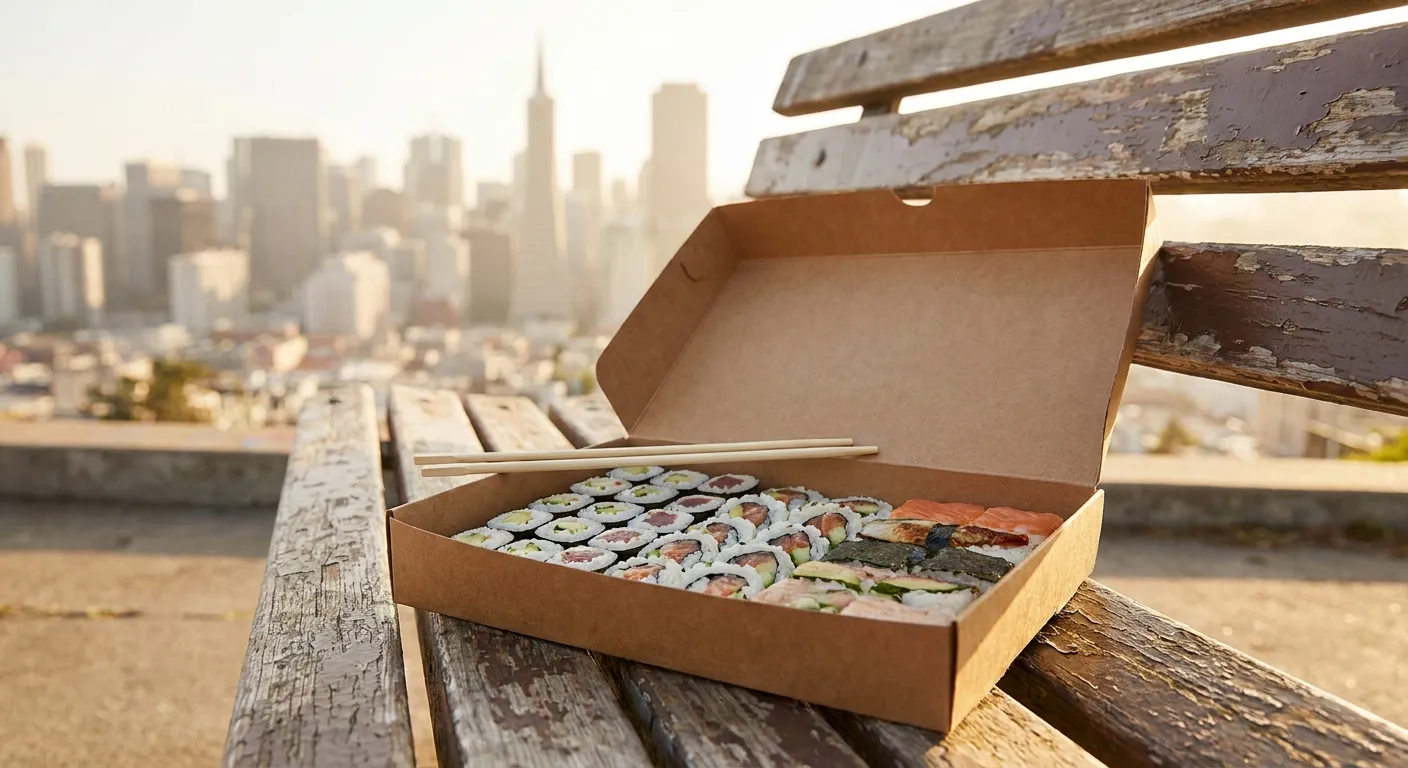
Sushi in a park is the cheapest great dining room in San Francisco, but sequencing matters. Buy last, after any other errands, and pick a park within about fifteen minutes of your counter — Richmond boxes want Golden Gate Park, Japantown hauls fit the Peace Plaza or Lafayette Park's lawns, and SoMa cases pair with the Embarcadero waterfront. If rolls are the order, Saru Handroll Bar on Polk Street packs its maki in tidy partitioned boxes that ride well to nearby Russian Hill slopes. Bring soy from the shop, eat the nigiri first while the rice still has life, and save the rolls for round two.
One local caveat: San Francisco weather is part of the plan. The fog belt can turn a Golden Gate Park picnic cold by mid-afternoon even in summer, so westside sushi picnics are best as midday missions, while the Embarcadero and Mission-side parks hold their sun later. The upside of a cool city is real, though — your fish is far happier on a sixty-degree bench here than it would be anywhere warmer.
Takeout Sushi FAQs
How long does takeout sushi keep?
Treat it as a same-day food — ideally within a couple of hours of pickup, kept cool and out of the sun. Refrigeration keeps raw fish safe a bit longer but punishes the rice, which hardens below room temperature. If you must chill it, let the box sit out briefly before eating so the rice can recover.
Why does takeout nigiri taste different from counter nigiri?
Temperature contrast. At a counter, nigiri arrives with body-temperature rice under cool fish, and that gap is most of the magic. In a box, both drift toward the same temperature and the piece flattens out — still good fish, less alchemy. It's why boxes built around rolls, chirashi, and pressed formats travel better than nigiri-heavy ones.
What should I order if I can't pick up until evening?
Skip the sell-out counters — the famous boxes are usually gone by early afternoon — and go where things are made to order, like Oishinbo on Clement, or where cases restock through the day. Rolls and donburi are the safest evening formats. Ask Karpo before you head out, and it'll point you to whichever counter still has boxes at your hour.