The best tacos in New York sit along transit corridors, not restaurant rows. They cluster under elevated lines in Queens, along wide commercial avenues in the Bronx, and down the numbered streets of Sunset Park. The geography follows work patterns: where people catch trains before dawn, where they transfer between shifts, where they walk home after midnight. These taquerias open when commuters need them, which means the good hours are early morning and post-shift late night, not the dinner window when most guides tell you to show up.
Open the Karpo app now to find which taquerias are open along your route, whether the counter's running breakfast or late service, and how long the current queue is.
Roosevelt Avenue and the 7 Line
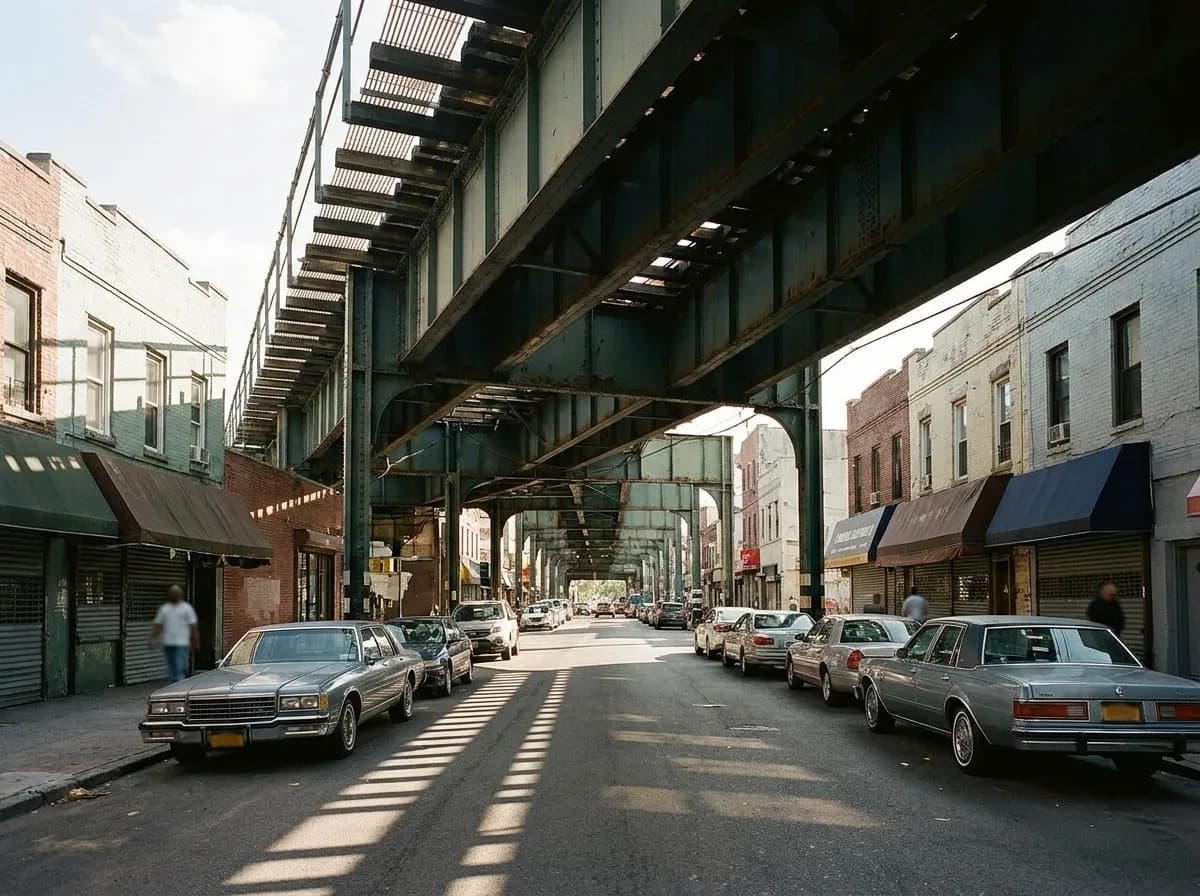
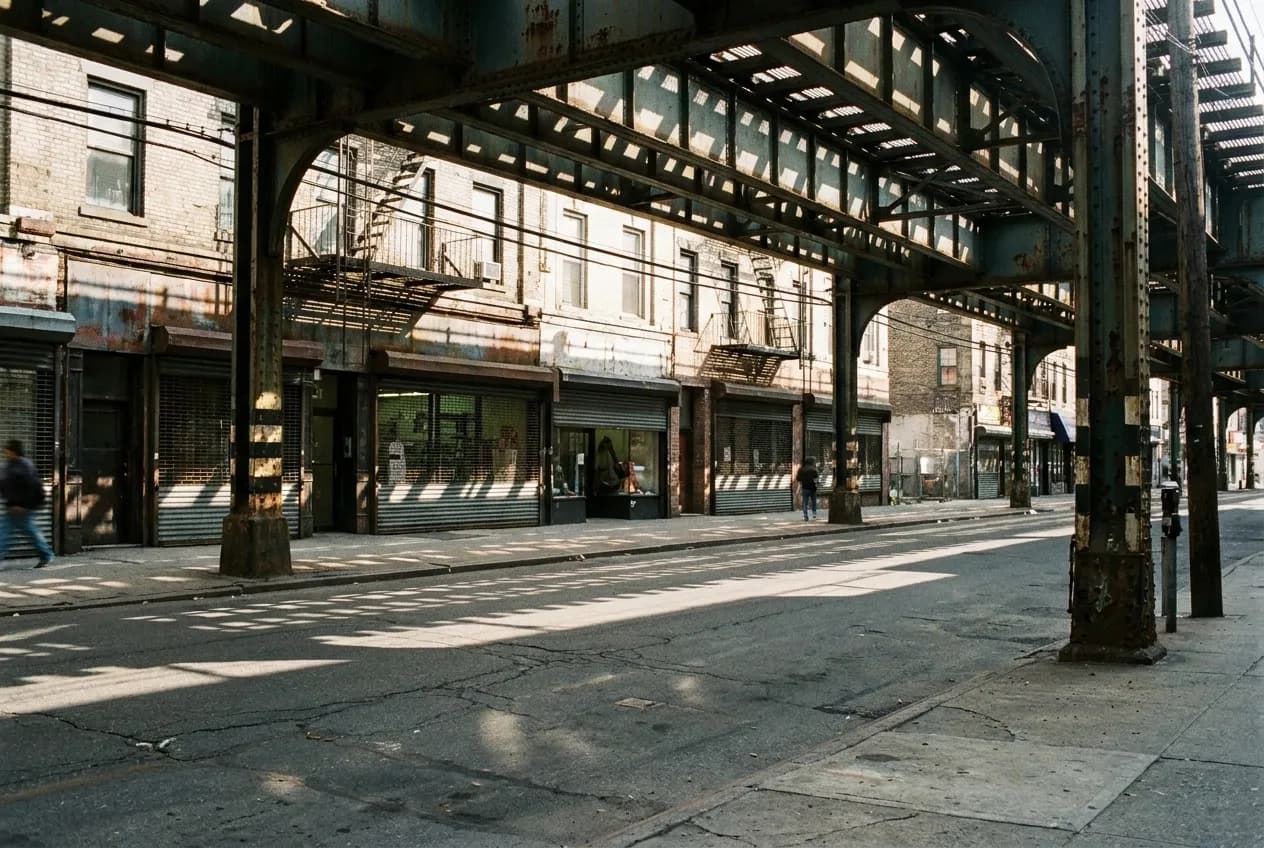
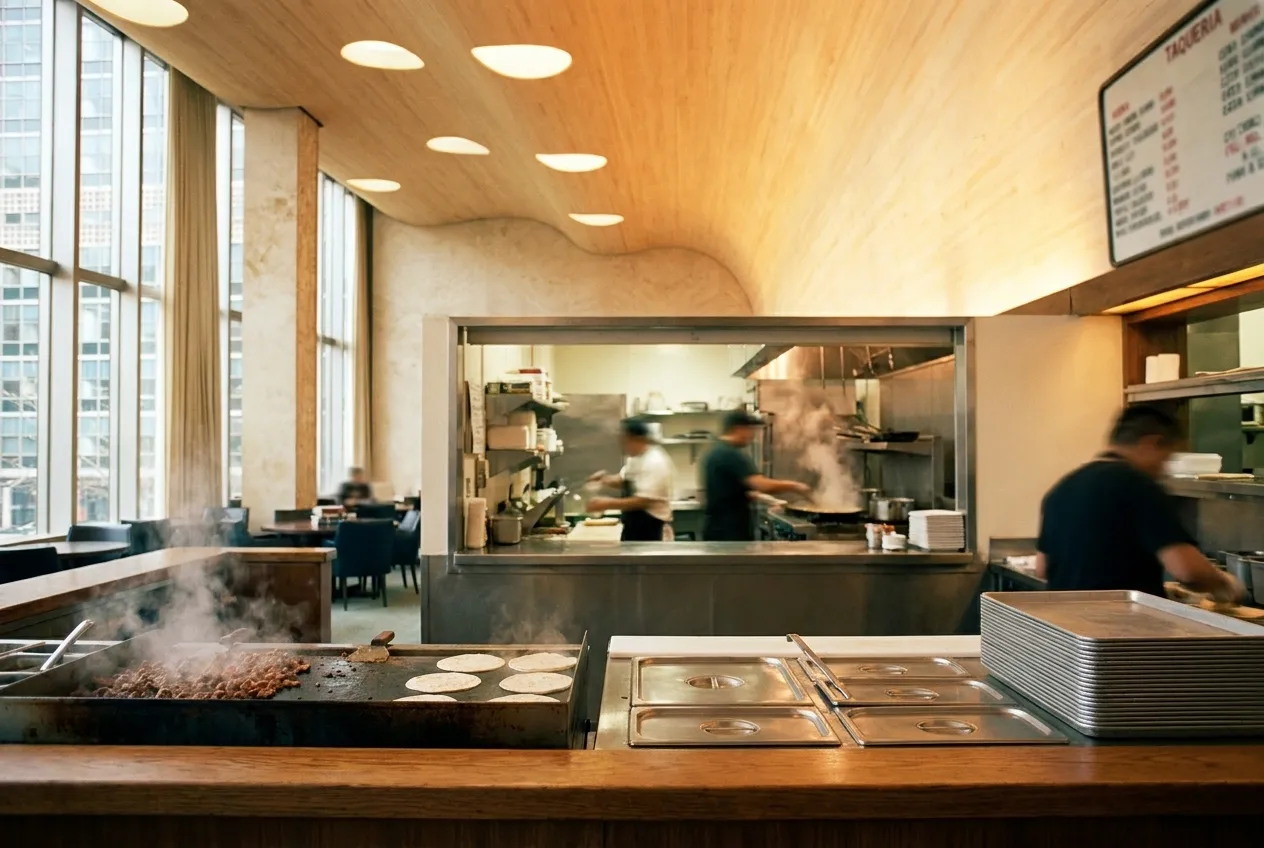
Roosevelt Avenue runs under the elevated 7 train from Junction Boulevard out to 103rd Street in Corona, and the taqueria density is highest at the transfer points. The blocks around 82nd Street, 90th Street and Junction see the most foot traffic between five and seven in the morning, when construction crews and kitchen staff are moving toward Manhattan shifts. The format at most counters is identical: a flat-top griddle visible from the street, a woman working masa, a steam table with four or five guisados. You order at the window, pay cash, and eat standing or walk.
The corridors between 90th and 103rd hold the longest operating hours. Some counters stay open until two or three in the morning, catching the late-night service and bar workers on their way home. The trade-off is that these late counters often run out of certain fillings by midnight. If you want barbacoa or lengua, the morning window is more reliable. The afternoon gap, roughly noon to four, is real: many places close or go to a limited menu while the main cook takes a break.
Sunset Park Along Fourth and Fifth Avenues
Fourth Avenue and Fifth Avenue through Sunset Park in Brooklyn run parallel for thirty blocks, and the taqueria clusters sit every four or five blocks between 36th Street and 60th Street. The density reflects the neighborhood's work patterns: early-morning openings for the workers heading to construction and restaurant prep jobs in Manhattan, late-night service for the people coming back. The format skews slightly more formal than Roosevelt Avenue. More places have seating, even if it's just a narrow counter along the wall. The menu breadth is wider: you'll see more seafood options, more weekend-specific specials like pozole or menudo.
Fifth Avenue between 44th and 50th is the most consistent stretch. The blocks are walkable, the hours overlap enough that if one place is closed another is open, and the quality variance is narrow. The peak times are six to nine in the morning and ten at night to one in the morning. The midday window is quieter, but the counters stay open. If you're coming from Manhattan, the R train to 45th Street or the N to 59th Street drops you into the middle of the corridor. Walk north or south and you'll pass four or five solid options within ten minutes.
The Bronx: Westchester Avenue and Southern Boulevard
Westchester Avenue from the 6 train at Hunts Point Avenue out toward Castle Hill holds a string of taquerias that open before six and stay open past midnight. The format here leans toward larger operations: places with full kitchens, table service, and menus that go beyond tacos into tortas, quesadillas, and full platters. The timing still follows the shift logic. The morning rush is five-thirty to eight, the evening push starts around nine and runs until midnight. The afternoon is slower, but these spots don't close.
Southern Boulevard between 149th Street and Tremont Avenue holds a similar density, with a slightly different format. More takeout windows, more places where you order through a slot and wait on the sidewalk. The advantage is speed: you're in and out in five minutes. The hours are longer on the southern end near 149th, where the transit connections are denser. The 2 and 5 trains bring in workers from deeper in the Bronx and upper Manhattan, and the counters stay open to catch both ends of the shift. If you're coming from Manhattan, take the 6 to Hunts Point or the 2 to 149th and walk east.
Timing: Shift Hours, Not Dinner Hours
The rhythm at these taquerias follows work schedules, not restaurant schedules. The first wave is five to eight in the morning: workers grabbing breakfast before a shift, often in a hurry. The counter moves fast, the fillings are limited to whatever's ready, and the format is optimized for speed. You'll see more egg-based options, more simple protein tacos, fewer complex guisados. The midday window, ten to two, is the slowest period. Some places close entirely, others run a reduced menu or a single cook. If you show up at noon expecting the full spread, you'll be disappointed.
The evening window starts later than you expect. Most places don't hit full speed until eight or nine at night, when the first wave of workers is coming home. The counter picks up again, the menu expands, and the kitchen is running at full capacity. The late-night window, ten at night to two in the morning, is when the quality is most consistent. The cooks have been working for hours, the rhythm is settled, and the crowd is people who know the place. If you can only make one trip, go late. The food is better, the selection is fuller, and the counter moves at a pace where you can actually see what you're ordering.
Reading the Counter Before You Order
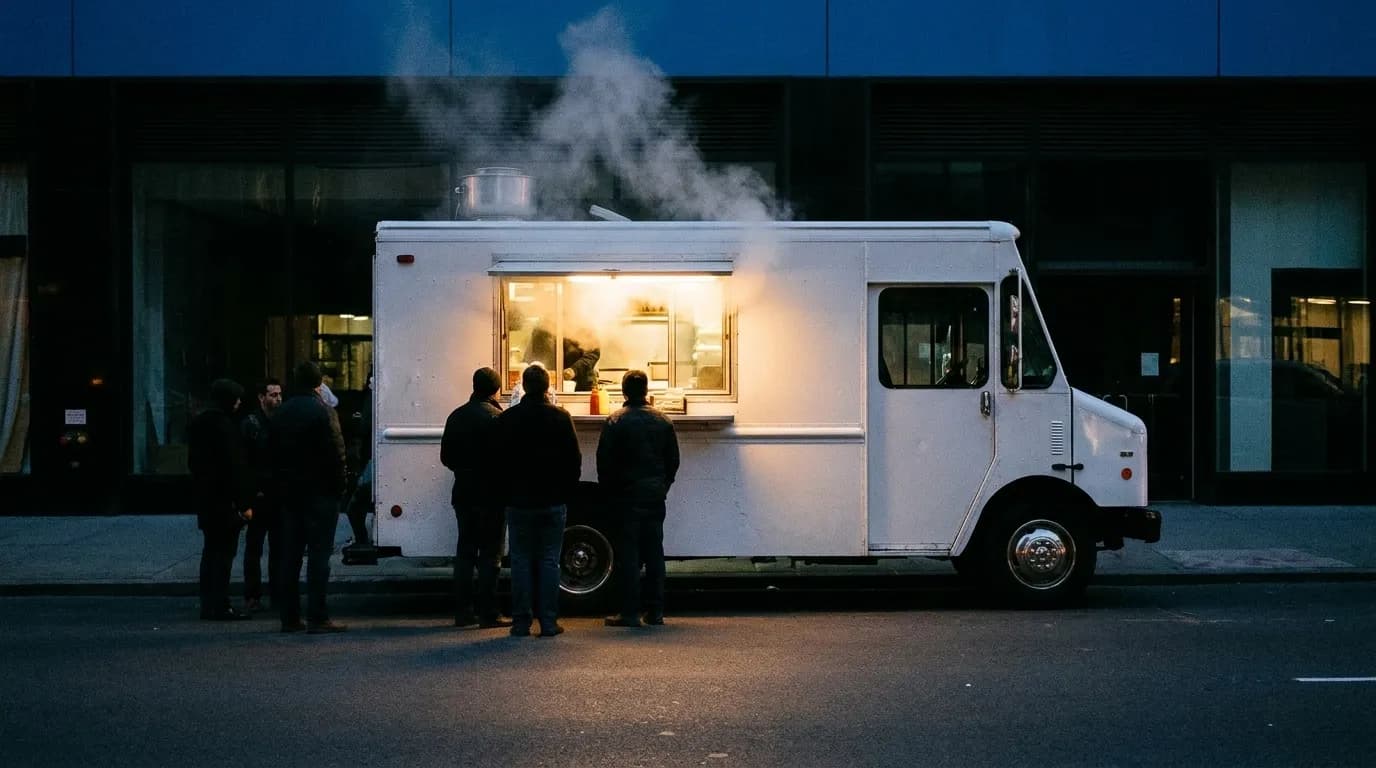
You can tell what kind of place you're walking into before you order. Look at the griddle first. If it's a flat-top and you can see the cook working it from the sidewalk, the format is fast and the menu is limited. If the griddle is out of sight or there's no griddle at all, the place is running a steam table with pre-cooked fillings. That's not a quality judgment, it's a format judgment: the steam-table places have more variety, the griddle places are faster.
Check the line. If there's a queue of ten people and they're all ordering in Spanish, the place is good. If the queue is mixed and people are taking photos, the place has been written up and the quality may or may not hold. If there's no line at all during a peak hour, walk past. Look at what people are eating. If everyone's holding the same thing, that's the move. If you see a lot of variation, the menu is deep and you have room to explore. Don't ask for recommendations. Order what you see other people eating, pay cash, and eat standing. You'll know in three bites whether to come back.
Tags: #BestTacosInNYC #NYCTacos #QueensTacos #BronxTacos #SunsetParkFood #RooseveltAvenue #NYCCommuters #TaqueriaGuide #HiddenGemsNYC #LateNightEatsNYC #NYCStreetFood #7Train #WorkingClassEats #NYCFoodGeography
Please drink responsibly. Must be of legal drinking age.
All trademarks are the property of their respective owners.
Ask Karpo first
Open the Karpo app to see which taquerias along these corridors are open right now, whether they're running morning or late-night service, and how to route yourself from where you are to the nearest counter with no line. Karpo tracks live hours and current wait times, so you're not walking fifteen minutes to find a closed gate.