A taco truck that holds the same corner on the same nights for three years running is making a promise. The regularity is not convenience for the operator. It is a reputation staked on a specific piece of asphalt, a known set of hours, and the understanding that if the food slips, the corner will empty. In Los Angeles, where trucks outnumber sit-down taco shops in many neighborhoods, the ones that never move are the ones that never have to.
Open the Karpo app right now to see which trucks are set up in your neighborhood tonight, what time they pull in, and whether the line is moving or stalled.
The logic is simple. A truck that rotates locations is hedging. It chases foot traffic, office parks at lunch, bar closings at midnight, street fairs on weekends. A truck that parks the same spot is betting that people will drive to it, which means the food has to be worth the drive. The corner itself becomes the brand. Regulars know the cross streets, the hours, the fact that it is always there. Newcomers see the line and know immediately that this is not a random stop.
This is the single most reliable filter in a city with hundreds of trucks. Ignore the wrap graphics, the menu size, the Instagram handle painted on the side. Look at whether the truck is there every Tuesday and Friday night, same corner, same time. If it is, someone is paying commissary fees, fuel, and labor to hold that spot because the return justifies it. If it is not, you are rolling dice.
How the Setup Predicts What to Order
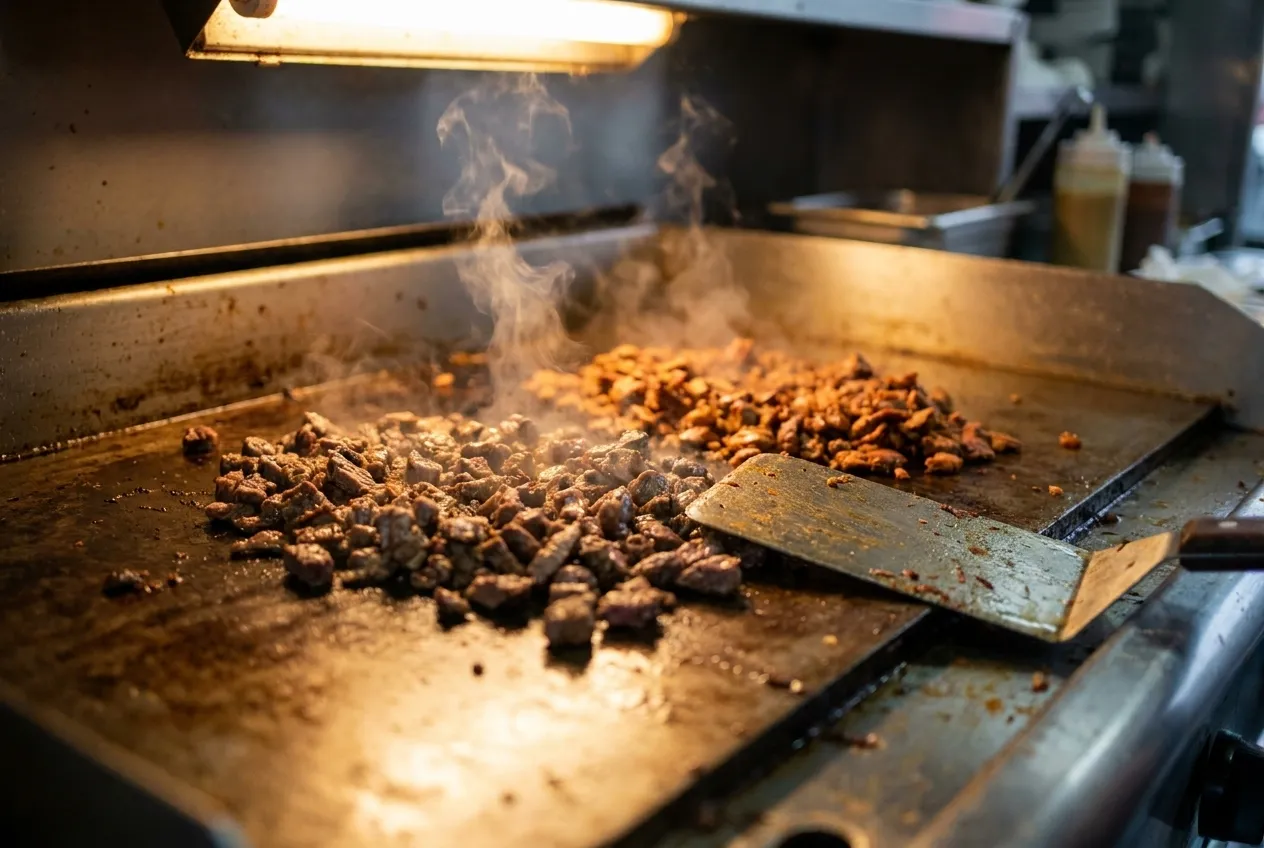
The grill tells you what the truck does well before you see the menu. A flat-top griddle with a wide surface area and a trompo spit turning next to it means al pastor and asada are the priority. If the trompo is spinning and the meat is bronze at the edges, order al pastor. If the trompo is off or looks dry, the truck is not moving enough volume to keep it fresh, and you want asada or chicken instead.
A setup with two or three pots over open flame, visible from the order window, means you are looking at a truck that does guisados: stewed meats, birria, barbacoa, lengua. These take hours to cook and hold well, which is why they show up on trucks that park long shifts. If you see steam rising from covered pots and smell cumin or dried chiles, order the stewed option. It is what they started cooking at two in the afternoon.
Trucks with a single flat-top and no other visible cooking equipment are running a limited menu, usually asada, pollo, and maybe carnitas. This is not a negative. A truck that only does three proteins and holds a corner for years is doing those three proteins extremely well. The constraint is the point. Order whatever is hitting the grill most often, which you can judge by watching the line ahead of you.
The salsa bar setup matters as much as the grill. A truck with four or five salsas in squeeze bottles, plus a separate station for radishes, limes, grilled onions, and cilantro, is set up for high volume and expects customers to dress their own tacos. A truck that hands you tacos already dressed with one salsa and no option to customize is either moving too fast to offer choices or has a specific vision for how the taco should taste. Both models work. The first gives you control. The second tells you the cook has opinions.
What the Line Composition Tells You at Different Hours
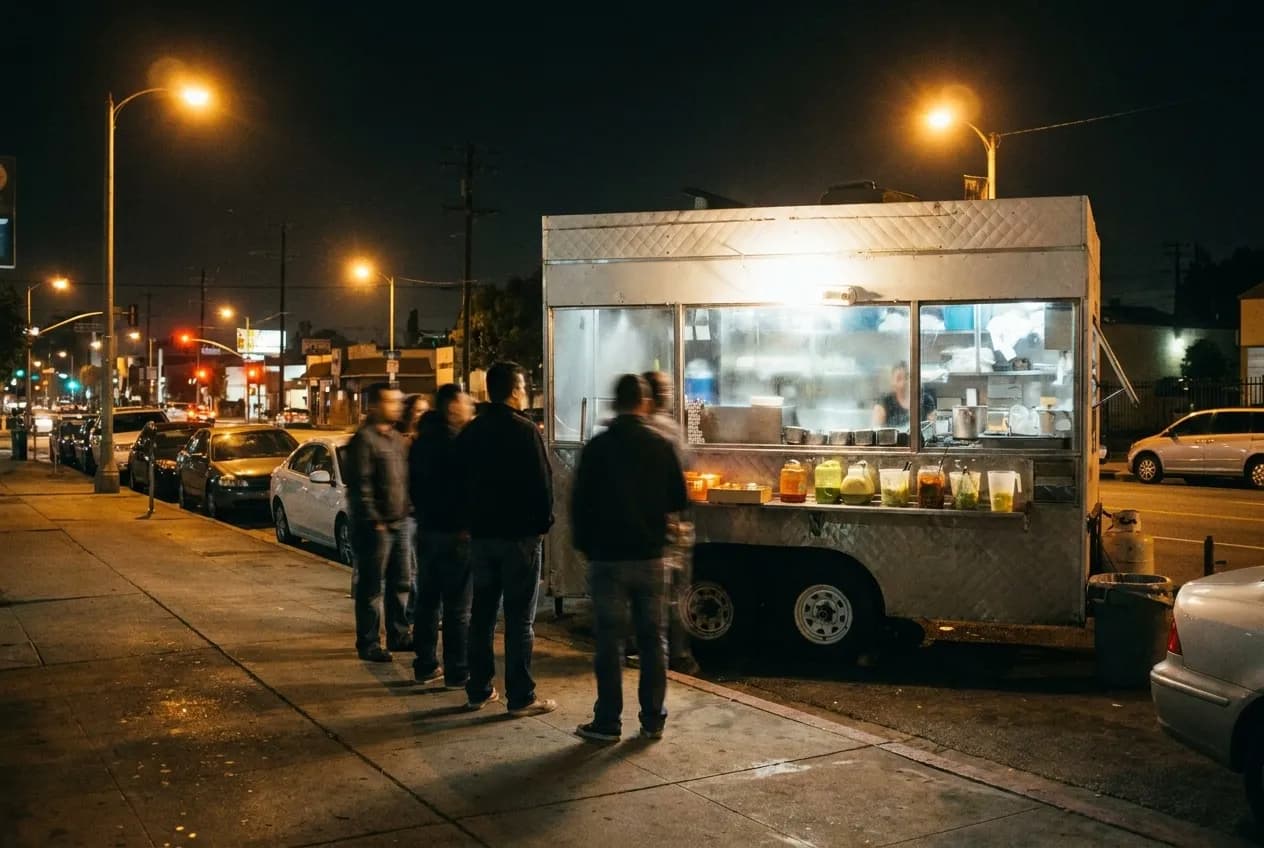
The 11pm line is families, couples, and people in work clothes who stopped on the way home. This is the truck's core customer base, the reason it can hold the corner. The line moves steadily because these customers know what they want and order in multiples: six tacos, eight tacos, a dozen for the household. The truck is cooking at full speed, the grill is hot, and the meat coming off it is the freshest it will be all night.
The 1am line is bar crowds, late shifts getting off work, and people who tried somewhere else first and it was closed. The line is louder, slower, and more likely to include customers who have never been here before and are reading the menu for the first time. The truck is still cooking, but the pace has changed. Proteins that were prepped earlier are running low, and the cook may eighty-six an item mid-shift. If you arrive at 1am and the al pastor looks thin on the spit, order something else.
The line length is not the wait time. A line of twelve people at a truck with a wide flat-top and two cooks working in sync will clear in ten minutes. A line of five people at a truck with one cook working a small grill will take fifteen. Watch how fast the line moves before you commit. If it is stalled, it is because the truck is understaffed, the grill is too small, or the customers ahead of you are ordering complicated modifications. A good truck moves a long line faster than a mediocre truck moves a short one.
The presence of regulars is the tell. If you see customers walking up without looking at the menu, ordering in Spanish, and receiving their food in half the time it takes everyone else, you are in the right place. Regulars do not waste time at bad trucks. They also do not tolerate trucks that move locations unpredictably, because they have built the stop into their weekly routine.
How to Handle Cash, Salsa Bars, and the Wait Without Getting It Wrong
Most trucks are cash-only, and the ones that take cards often have a minimum or a broken reader. Carry cash in small bills. A twenty is fine. A fifty will slow down the transaction and irritate the person behind you. ATMs near popular truck corners charge high fees because they know you have no alternative. Plan ahead.
Order at the window, pay immediately, then step aside. Do not stand at the window waiting for your food. The next person in line needs to order. The truck will call out your order number or your name when it is ready. If you did not hear your number, check the pickup window or ask. Do not assume your order is delayed just because you have been waiting five minutes. The truck is cooking dozens of orders simultaneously.
The salsa bar is self-service, which means you are responsible for knowing what you are putting on your taco. The red salsa is usually hotter than the green, but not always. The orange or brown salsa is often the hottest. If you do not know, ask someone in line or take a small amount of each on the side of your plate and test before you commit. Trucks do not remake tacos because you added the wrong salsa.
Limes are squeezed over the taco after you add salsa. Cilantro and onions go on before salsa if you want them to stick. Radishes are for eating between tacos, not on them, though you can do what you want. Grilled onions, if available, go directly on the taco before anything else. These are not rules. They are the sequence that makes the taco work structurally.
Eat standing near the truck or at your car. Trucks do not have seating because they are not restaurants. Some corners have a low wall or a parking block where people sit. Most do not. If you cannot eat standing up, plan to take the food home, but understand that tacos do not hold well. They are best in the first three minutes.
How to Read the Street and Decide in Ten Seconds
You pull up to a corner with two trucks. One has a line of fifteen people and a trompo spinning. The other has three people and no visible grill activity. You go to the one with the line. The line is the signal. It means the food is worth waiting for, the truck has been here long enough to build a following, and the volume is high enough that the ingredients are turning over fast.
If the truck is dark or the grill is off, it is closed. Trucks do not take breaks. They either operate or they leave. If you arrive and the truck is gone, it means the night is over, the truck sold out, or it is not the right day. Trucks that hold corners reliably will be there the same nights every week. If you miss it once, you know when to come back.
The best trucks in Los Angeles are not hidden. They are visible, consistent, and surrounded by people who know exactly what they are getting. The corner is the credential. The hours are the handshake. The line is the proof. Everything else is just a taco.
Tags: #BestTacosInLosAngeles #LATacoTrucks #LosAngelesTacos #TacoTruckLife #LatNightEatsLA #StreetTacosLA #LATacoScene #HiddenGemsLA #LosAngelesStreetFood #TacoTruckTips #LAFoodTrucks #AuthenticTacosLA #LateNightLosAngeles #LosAngelesEats #TacoTuesdayLA
Please drink responsibly. Must be of legal drinking age.
All trademarks are the property of their respective owners.
Ask Karpo first
Open the Karpo app to see which taco trucks are operating within a mile of you right now, what time they opened tonight, and whether the line is worth joining or if you should route to the next closest corner. Karpo tracks the trucks that hold their spots, so you are not guessing.