Every guide to tacos in Los Angeles is a ranked list of addresses, and after the third one you notice they mostly disagree. That is because they are ranking things that are not competing with each other. Los Angeles serves at least six distinct regional Mexican taco traditions, sometimes on the same block, and asking which is best is like asking whether a bagel beats a croissant. What actually helps is being able to tell which one you are standing in front of, and knowing what each is supposed to do well.
Los Angeles is enormous and the style you want may be nine miles away, which is forty minutes of your evening. Tell Karpo which of these you are after and where you are, and it will find the closest version rather than the most written-about one.
Tijuana style: the beef and the flour-optional question
The Baja tradition that dominates much of the LA street scene. Carne asada grilled over charcoal or gas, chopped fine on a board, served on a corn tortilla that is often doubled and sometimes brushed with fat and crisped on the grill. The salsa bar is elaborate and the guacamole is thin and pourable rather than chunky.
The identifying detail is the grill setup: a Tijuana-style operation has an open flame with meat over it and a chopping board beside it, in view. If the beef is coming out of a steam tray, it is a different and lesser thing wearing the same name.
Al pastor: judge the trompo, not the taco
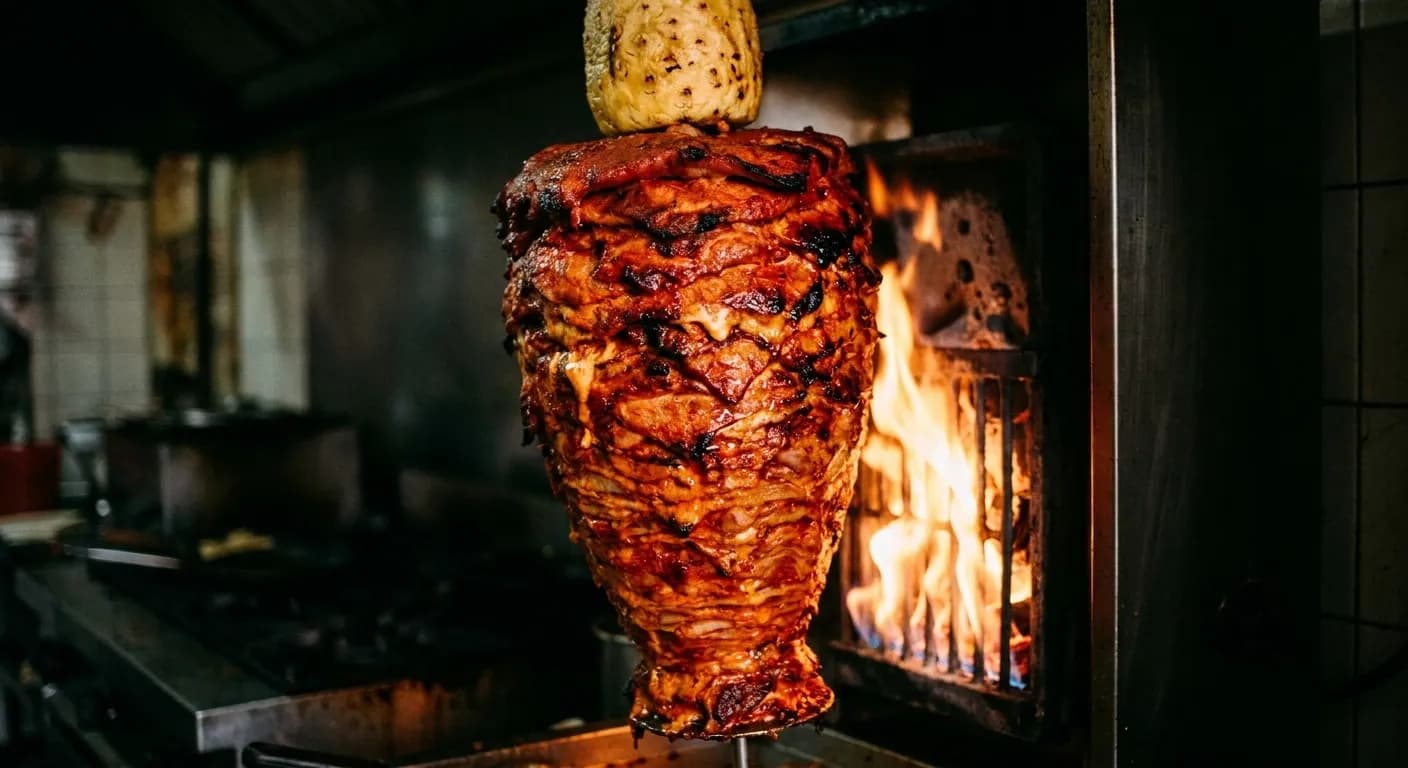
Central Mexican, by way of Lebanese shawarma, and the most visually distinctive: a vertical spit stacked with chilli-marinated pork, an onion and a pineapple on top, cooked by a flame at the side and shaved to order. The pineapple is not a garnish, it is a tenderiser that has been dripping down the spit all evening.
The test is whether the spit exists at all. A great many places sell al pastor cooked on a flat griddle, which produces a perfectly nice pork taco and not this dish. If there is a trompo turning in the window, that is the order. If there is not, order something else.
Birria: the wet one, and what happened to it
Traditionally goat from Jalisco, stewed for hours in a chilli broth and served as a stew with tortillas alongside. What Los Angeles largely serves now is the Tijuana adaptation - beef, the tortilla dipped in the red fat from the top of the pot and griddled until crisp, usually with cheese, and a cup of consommé to dip.
Both are legitimate and they are not the same dish. If you want the original, look for birria de chivo served in a bowl. If you want the version that went viral around 2019, look for the red griddled quesabirria. Places that do the first well often regard the second with some weariness.
Oaxacan, Yucatecan and the ones people miss
Los Angeles has the largest Oaxacan population outside Mexico, concentrated around Koreatown and Mid-City, and the cooking there is a genuinely different tradition - tlayudas, moles, string cheese, chapulines, and a taco that is more likely to involve a complex sauce than a grill.
The Yucatecan presence is smaller and worth seeking out for cochinita pibil: pork marinated in achiote and sour orange, wrapped and cooked slowly until it collapses, served with pickled red onion and habanero. It is the least grill-dependent taco on this list and the one that most rewards a place that has been doing it for thirty years.
Trucks, stands and storefronts do different jobs
The format tells you as much as the region does. A truck runs a short menu, a hot grill and a fast queue, and it is at its best from about eight in the evening onwards. A sidewalk stand with a folding table and a comal is usually doing one thing - often al pastor or suadero - and doing it for a neighbourhood rather than for visitors.
A sit-down storefront can hold a stew for hours, which is why birria, cochinita and the Oaxacan moles are more often found in rooms with chairs. Matching the format to the dish is most of the skill: chasing a great birria from a grill truck is looking for the wrong thing in the right place.
How to order across styles in one evening
The efficient approach in a city this spread out is to pick one neighbourhood and eat across its formats rather than to drive between famous names. Boyle Heights, East LA and the corridors through Highland Park and Lincoln Heights all support a stand, a truck and a storefront within a few blocks.
Order one taco at each stop rather than three. They are small, they are two to three dollars, and the entire point of a city with this much variety is breadth. Four stops and eight tacos is a better evening than one stop and a plate, and costs about the same.
Salsa is information
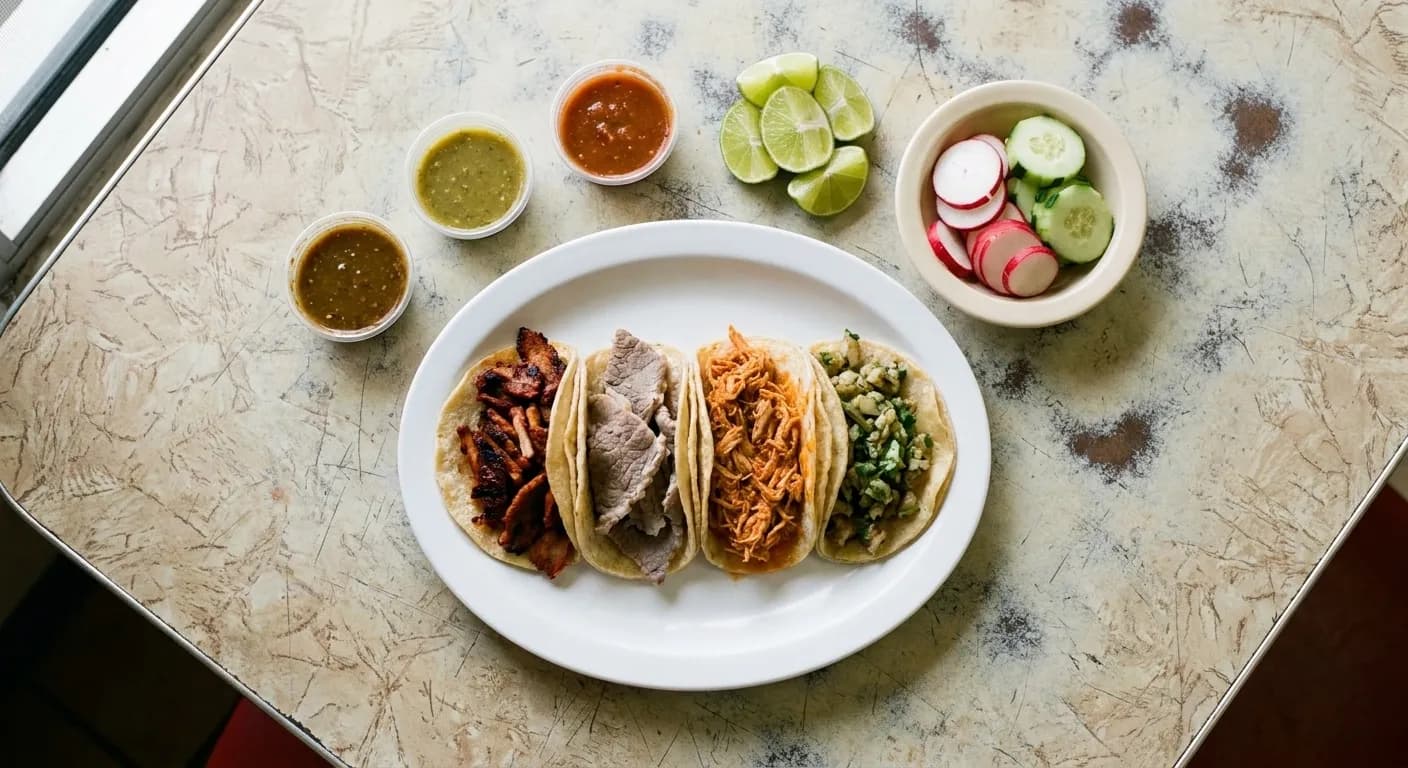
The salsa selection tells you what kind of operation you are at faster than the meat does. A serious stand puts out two or three, made that day, usually a red and a green with different heat levels and often a charred one. Squeeze bottles of a single uniform red sauce are a supply decision rather than a cooking one.
The convention is to try a little before committing. Nobody minds, and the green is not reliably milder than the red - a raw serrano salsa verde can be considerably hotter than a toasted chile de árbol. Ask which is hotter if it matters; it is a normal question and you will get a straight answer.
Tags: #BestTacosInLosAngeles #AlPastor #Birria #TijuanaStyle #LosAngeles #LAFood #TacoGuide #Oaxacan #LATacos #StreetFood
All trademarks are the property of their respective owners.
Ask Karpo first
Los Angeles does not have a best taco, it has six traditions doing different jobs. Ask Karpo which one is near you tonight and whether the format matches the dish you actually want.