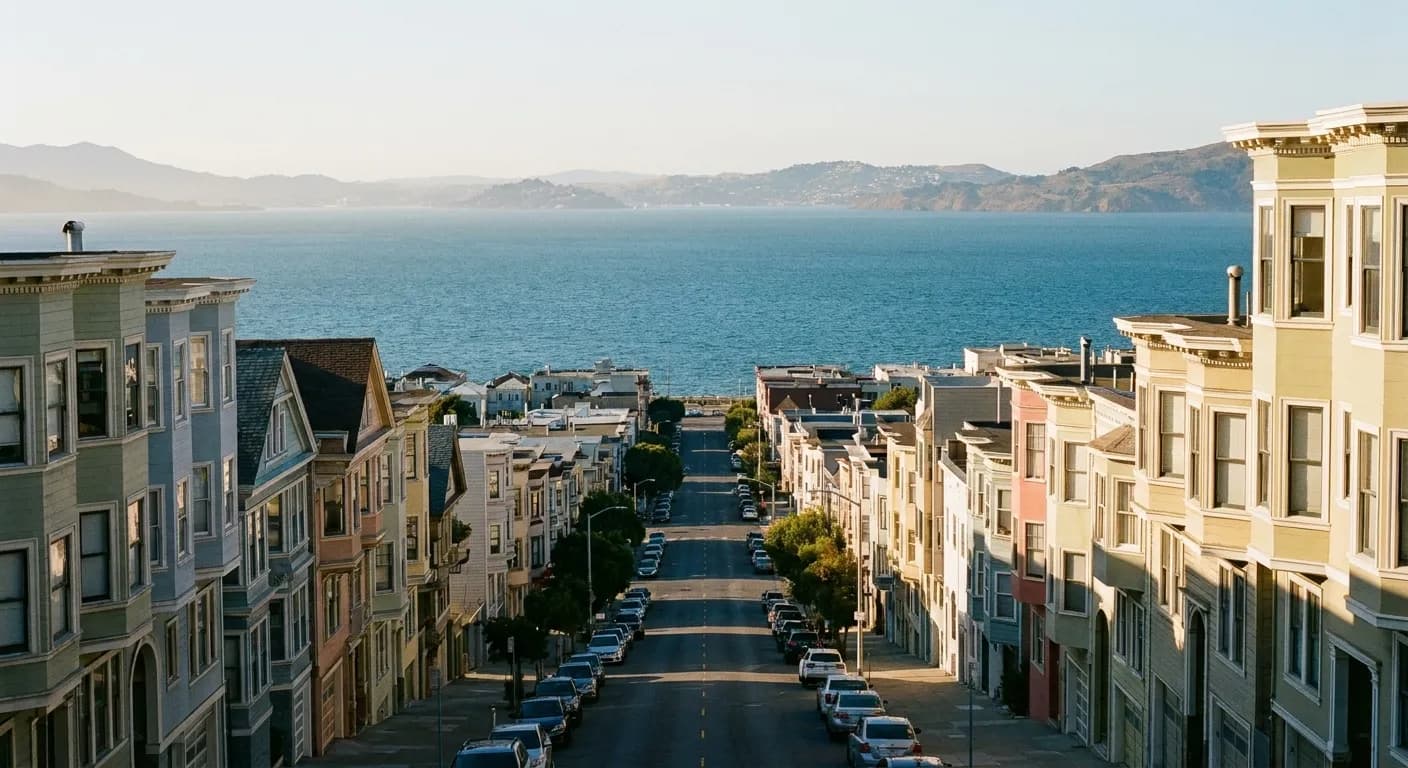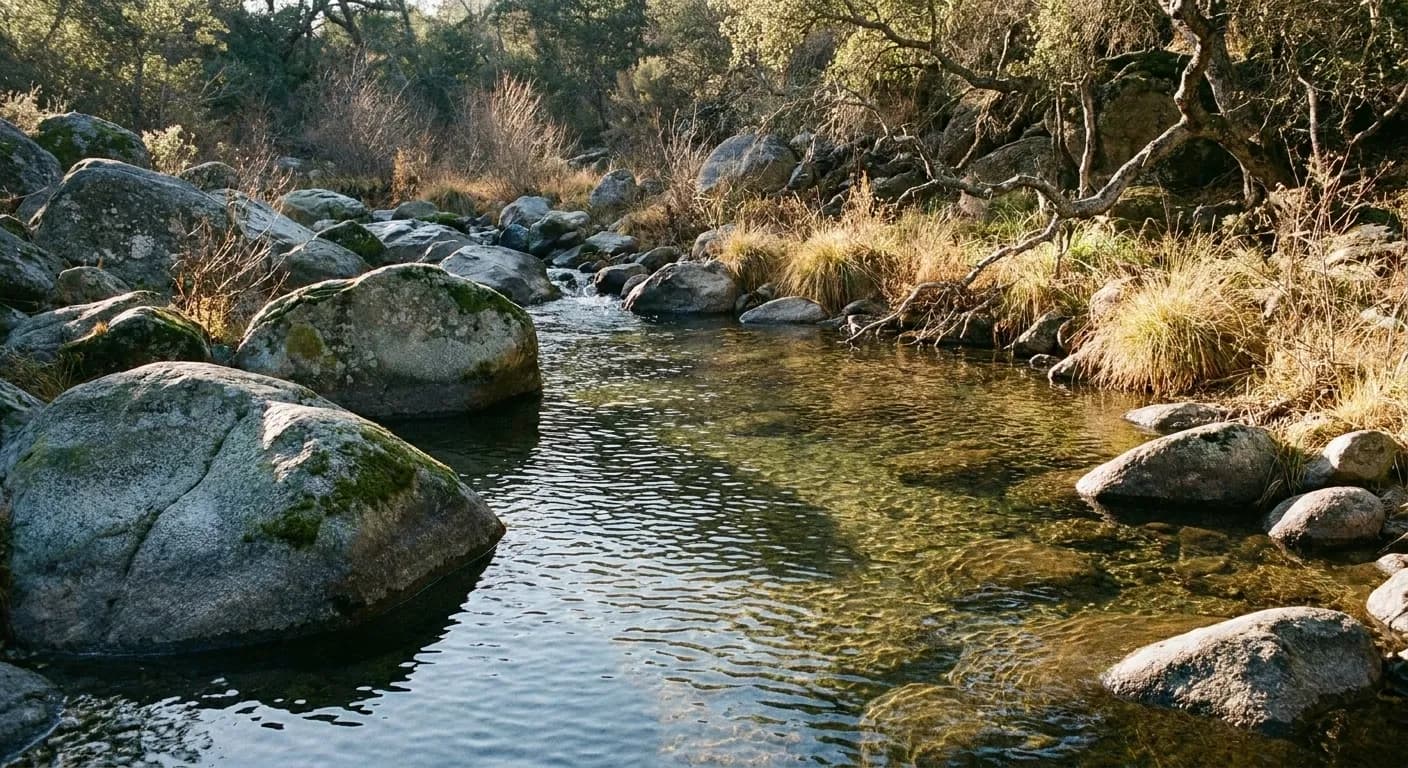
Almost everything written about waterfalls and nature near San Francisco was written for March. That is the correct month for it, and it is the reason autumn visitors keep driving an hour to look at a damp cliff. Northern California's waterfalls are rain-fed and seasonal, which means by September most of them are a geological feature rather than a waterfall. The swimming holes, which are creek- and spring-fed, are a completely different story and are at their most usable right now.
Autumn changes which of these are worth the drive and which are dry rock. Ask Karpo what is actually running near you before you set off.
The seasonal mechanics, briefly
This region gets essentially all of its rain between November and April. Waterfalls peak roughly two to four weeks after a heavy storm and are reliably impressive from late January through April. By June most of the coastal-range falls are a trickle, and by September the smaller ones have stopped entirely. This is normal rather than a drought story, and it repeats every year.
Swimming holes work on different physics. The deeper pools in the coastal creeks and the rivers to the north hold water long after the flow drops, and the water is at its warmest and clearest in late summer and early autumn precisely because the flow is low. September and early October are the best swimming weeks of the year here, which is the opposite of the intuition most people arrive with.
What is realistically reachable
Marin is the closest option and the most accessible without a car, with a network of trails through redwood and oak that stays green in the canyons long after the ridges have gone gold. The falls in that area are seasonal and mostly finished by now; the trails, the views and the shade are not, and they are free.
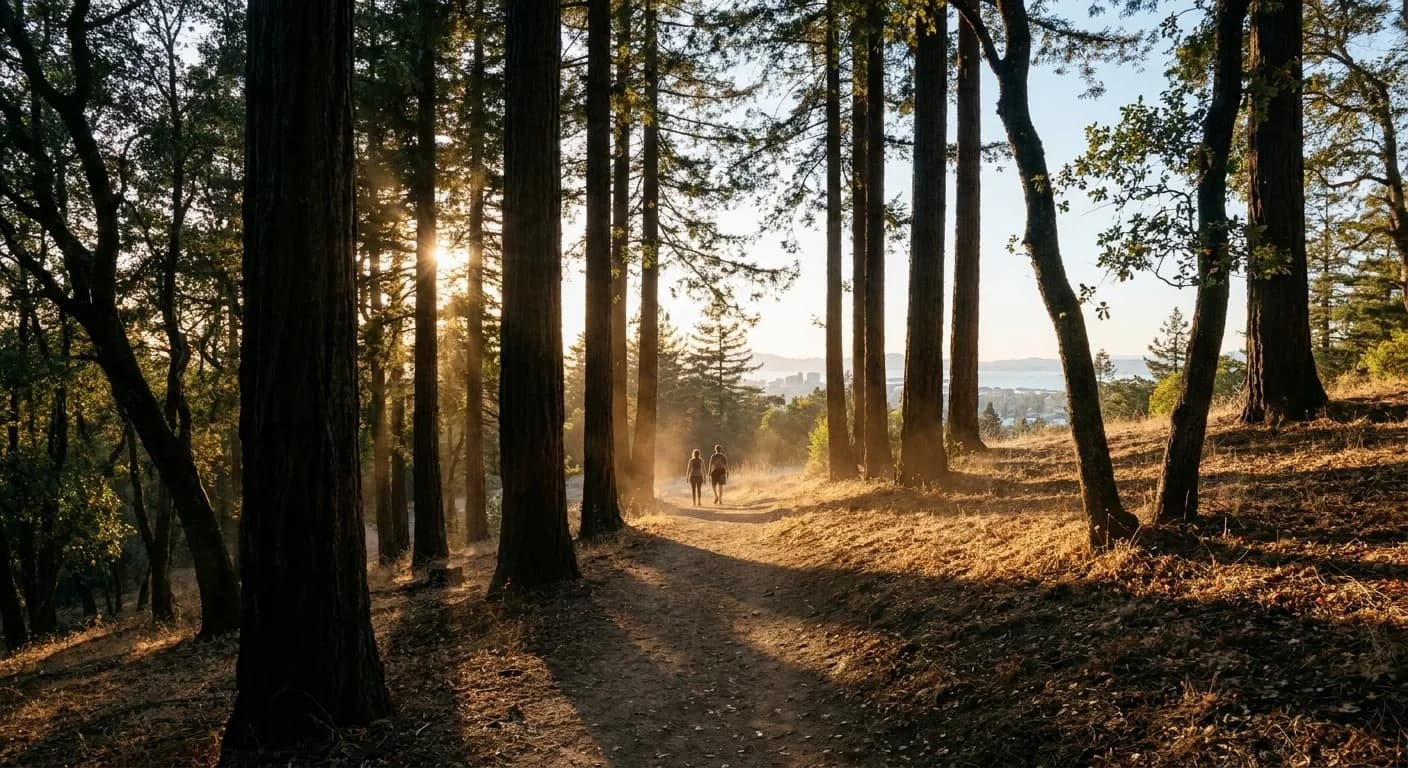
Further out, the Russian River and the creeks feeding it hold swimmable water into October in a normal year, and there are public access points that cost nothing. The Santa Cruz mountains to the south have the other cluster — deep, cold pools in redwood canyons that stay usable late because the canopy keeps the water cold and the flow steady.
Free versus paid access
This is the part worth planning around. Many of the best-known spots sit inside state or regional parks that charge for parking, and on a warm weekend the lots fill by mid-morning and then turn people away entirely. The free access points tend to be the roadside pullouts and the trailheads outside the park boundaries, which require more walking and reward it with far fewer people.
Arriving before nine is the single highest-leverage decision for any of these trips in warm weather. It is the difference between parking and not parking, and between having a pool to yourself and sharing it with forty people. The second-best option is arriving after four, when the day crowd leaves and the light is better anyway.
Safety, without the hand-wringing
Cold water is the real risk rather than depth. Creek and river water here sits well below what feels safe to jump into on a hot day, and the shock is what causes problems. Getting in slowly rather than jumping is the whole of the advice, and it is worth actually following.
Jumping from rocks is how people get hurt at every one of these spots, because the depth changes between June and October as the flow drops. A pool that was safe to jump into in May may be three feet deep now. Nobody can tell you this from a photograph, which is why the rule is to get in and check with your feet first, every time, regardless of what anyone else is doing.
Autumn has its own advantages
The crowds collapse after Labor Day while the weather stays warm through October, which in most years makes the six weeks after summer the best window of the year for this. The water is clearer than at any other time because the sediment has settled. And the poison oak, which is the actual hazard on most of these trails, is turning red and is far easier to identify and avoid than it is in spring.
The trade-off is fire season, which is a genuine constraint rather than a theoretical one. Trail and park closures happen at short notice, and checking the day before rather than the week before is the difference between a trip and a drive. Air quality can also make a strenuous hike a bad idea on a day that looks fine from the city.
Building the day
These trips work best as half-days rather than expeditions. An early start, two or three hours out, a swim, and back before the afternoon traffic builds is a better shape than trying to fill a whole day, and it leaves the evening intact. The failure mode is the ambitious itinerary with three stops, which reliably becomes one stop and two hours in a car.
If you do not have a car, the ferry and bus combinations into Marin are genuinely workable for the trail-based version of this, and they drop you at the bottom of the good walks rather than the top. It is slower and it removes the parking problem entirely, which on a warm weekend is not a small thing.
Whatever the shape, check the conditions the night before rather than trusting a page written last spring. Flow, access and closures all move faster than the internet does out here, and a two-minute check has saved more of these days than any amount of planning.
Tags: #SanFrancisco #BayAreaOutdoors #SwimmingHoles #Waterfalls #Marin #SantaCruzMountains #HikingSF #FreeThingsToDo #AutumnBayArea #RussianRiver #NatureNearSF #WeekendSF #Outdoors
All trademarks are the property of their respective owners.
Ask Karpo first
Ask Karpo which creeks and trails near San Francisco are still worth the drive right now, whether the parking is free, and whether anything is closed.