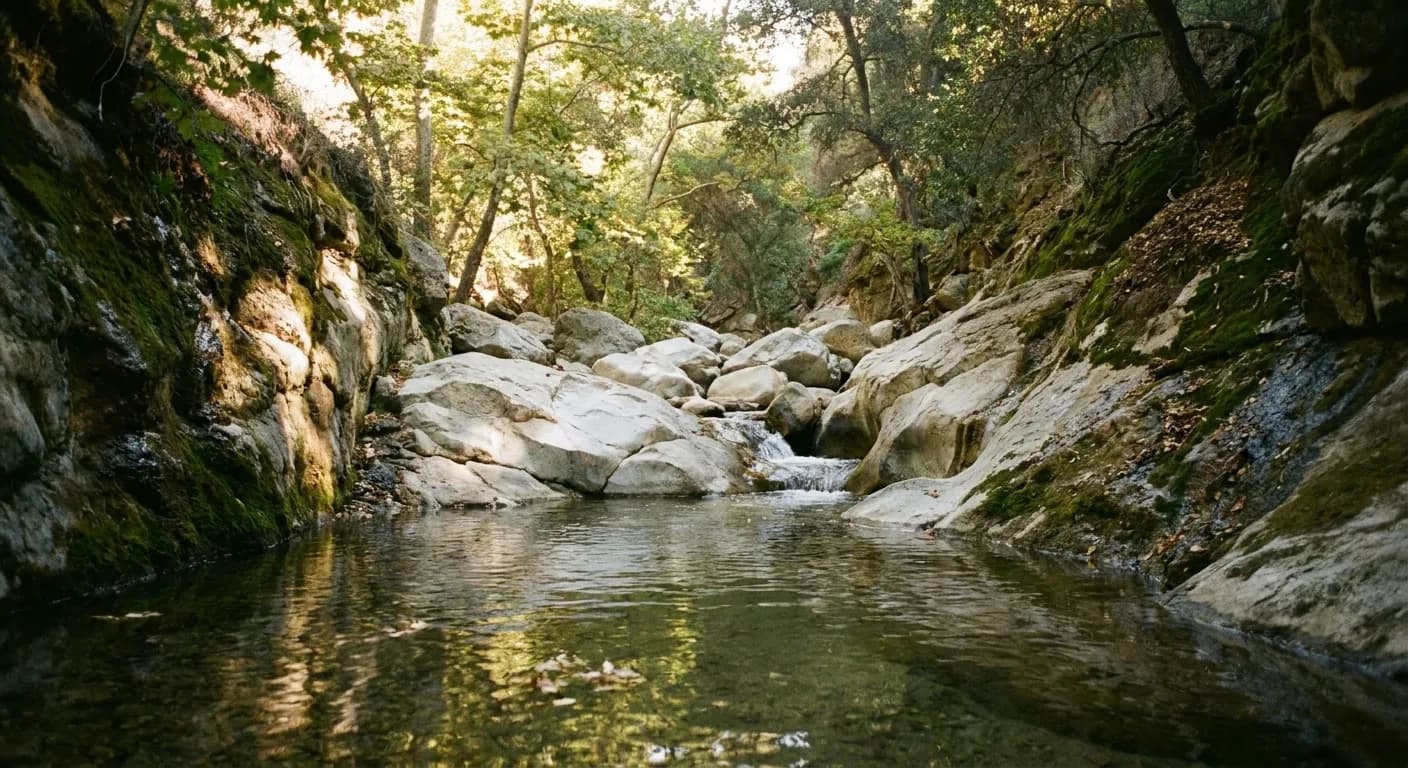
The seasonal reality of waterfalls and nature near Los Angeles is that most of the falls within two hours of the city are rain-fed and stop running by early summer. By autumn a good number of them are a stain on a rock. This is not a failure of the guides so much as a failure to date them — the photographs that make these places famous were taken in March, and the trail is exactly as long in October with nothing at the end of it.
Half of these are dry by autumn and the guides do not say so. Ask Karpo what is actually running before you drive.
Which water is seasonal and which is not
The distinction that matters is rain-fed versus spring-fed. The falls in the front range of the San Gabriels, the ones in the Santa Monica Mountains, and most of the canyon falls reachable on a short hike are rain-fed and effectively finished by June. The spring-fed sources higher in the range, and the creeks that run off snowmelt at elevation, hold water considerably longer.
The other reliable category is the pools rather than the falls. Deep canyon pools in the shaded upper reaches of the San Gabriels retain water long after the flow has dropped, and because they sit under canopy they stay cold and clear. In a normal year these are swimmable into October, which makes autumn a better swimming season here than a waterfall season.
Access is the real constraint
Much of this sits inside the Angeles National Forest, which requires a parking pass displayed in the vehicle at most trailheads. It is inexpensive and it is enforced, and the ticket costs more than the annual pass. This catches out a very large number of people every weekend and it is entirely avoidable.
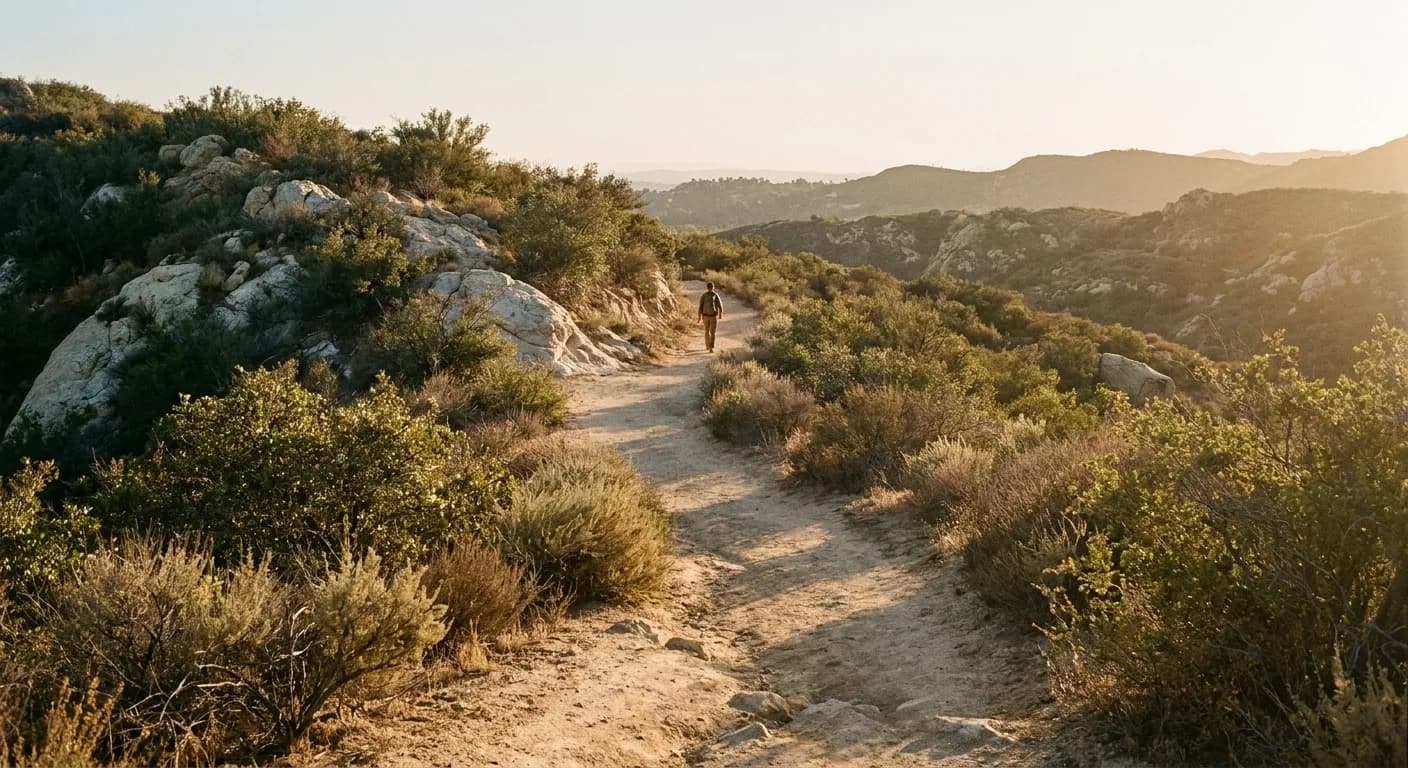
Beyond that, closures are frequent and unpredictable. Fire damage, storm damage, road washouts and active fire restrictions all close trails and access roads at short notice, sometimes for years. The single most useful habit for any of these trips is checking the forest service's current closure notices the day before rather than trusting a page written two seasons ago.
Fire season changes the calculation
Autumn is peak fire season here, and that is a practical constraint rather than a background worry. Red flag warnings close trails outright. Air quality can make a strenuous hike genuinely inadvisable on a day that looks clear from the city. And the burn scars from recent fires create debris-flow risk in the canyons during the first rains, which is exactly when the falls come back.
None of this is a reason not to go. It is a reason to check on the morning rather than the week before, and to have a second destination in mind. The people who get the most out of these canyons are the ones with three options and a willingness to switch, not the ones committed to a specific photograph.
Realistic autumn options
The higher elevations of the San Gabriels are the best bet for water and are also fifteen to twenty degrees cooler than the basin, which in September is the entire point. The Santa Monica Mountains are dry by now for water but excellent for walking, with ocean views and a canopy that makes the middle of the day tolerable.
Further afield, the eastern Sierra and the desert oases are genuinely spectacular in autumn and are a full day or an overnight rather than a morning. The San Bernardino and San Jacinto ranges to the east hold water later than the San Gabriels do and are less crowded, at the cost of a longer drive.
Timing the day
Leave before six. This sounds excessive and it is the difference between parking at the trailhead and parking a mile down the road, and between hiking in shade and hiking in full sun. The popular canyon trailheads fill by eight on a warm weekend, and several have hard capacity limits enforced by the road being full.
The alternative is going late — arriving at four, walking in as the canyon cools, and being out before dark. This is pleasant, uncrowded and requires a head torch and an honest assessment of how long the return takes. Sunset comes fast in a canyon, roughly forty minutes earlier than in the open, which is the most common way people end up walking out in the dark unprepared.
Water safety, briefly and seriously
The pools are cold year-round and colder than they look on a hot day. Get in slowly. Do not jump into anything without checking the depth with your feet first — the water level drops through the season and a pool that was deep in May may not be now. And be aware that several of these canyons have had drownings, generally involving jumping, alcohol, or both.
The other risk is the return. Canyon hikes descend on the way in, which means the tired portion of the day is the uphill one in the afternoon heat. Carrying twice the water you think you need is the single most common piece of advice given about hiking here, and it is given repeatedly because people keep not doing it.
Poison oak is the low-grade hazard that actually affects the most people, and it lines almost every shaded creek in this region precisely where you would step to get to the water. In autumn it turns red and is far easier to identify than in spring, which is a genuine argument for the season. Learning to recognise it takes about a minute and saves a fortnight.
Tags: #LosAngeles #SwimmingHoles #Waterfalls #AngelesNationalForest #SanGabriels #HikingLA #NatureNearLA #HiddenGems #SoCalOutdoors #AutumnLA #DayTrips #ExploreLA #Outdoors
All trademarks are the property of their respective owners.
Ask Karpo first
Ask Karpo which canyons and trails near Los Angeles are open and still running water right now, and whether you need a parking pass.