Stone crab is the one seafood in Florida that most people eat without knowing what they are eating. The claws arrive cold and pre-cracked with a pot of mustard sauce, and almost nobody asks the obvious question, which is where the rest of the crab is. The answer is unusual enough to change how you think about the price.
Claw prices move weekly with the catch and the season boundaries are fixed by law rather than by restaurants. Ask Karpo whether stone crab is in season right now and what the going rate looks like this week.
The crab goes back in the water
Stone crab is harvested by removing one or both claws and returning the live animal to the sea. The claw regenerates over subsequent moults. That is the entire basis of the fishery and it is why this is one of the few wild shellfish harvests generally regarded as sustainable.
The practice is regulated — there are rules on claw size, on how the claw must be removed, and on the season — and survival rates depend heavily on the fishermen doing it correctly. It is not a perfect system and the mortality is not zero, but it is a fundamentally different proposition from harvesting the whole animal.
It also explains the price. You are buying a body part that had to be large enough to take, from an animal that will need a year or more to regrow it, landed within a fixed season. The economics are closer to a slow-growing crop than to a fishery.
The season is a legal boundary
Florida stone crab season runs 15 October to 1 May. Those dates are fixed and they are not a restaurant convention — outside them, harvesting is closed and anything sold as stone crab is either frozen from the previous season or imported.
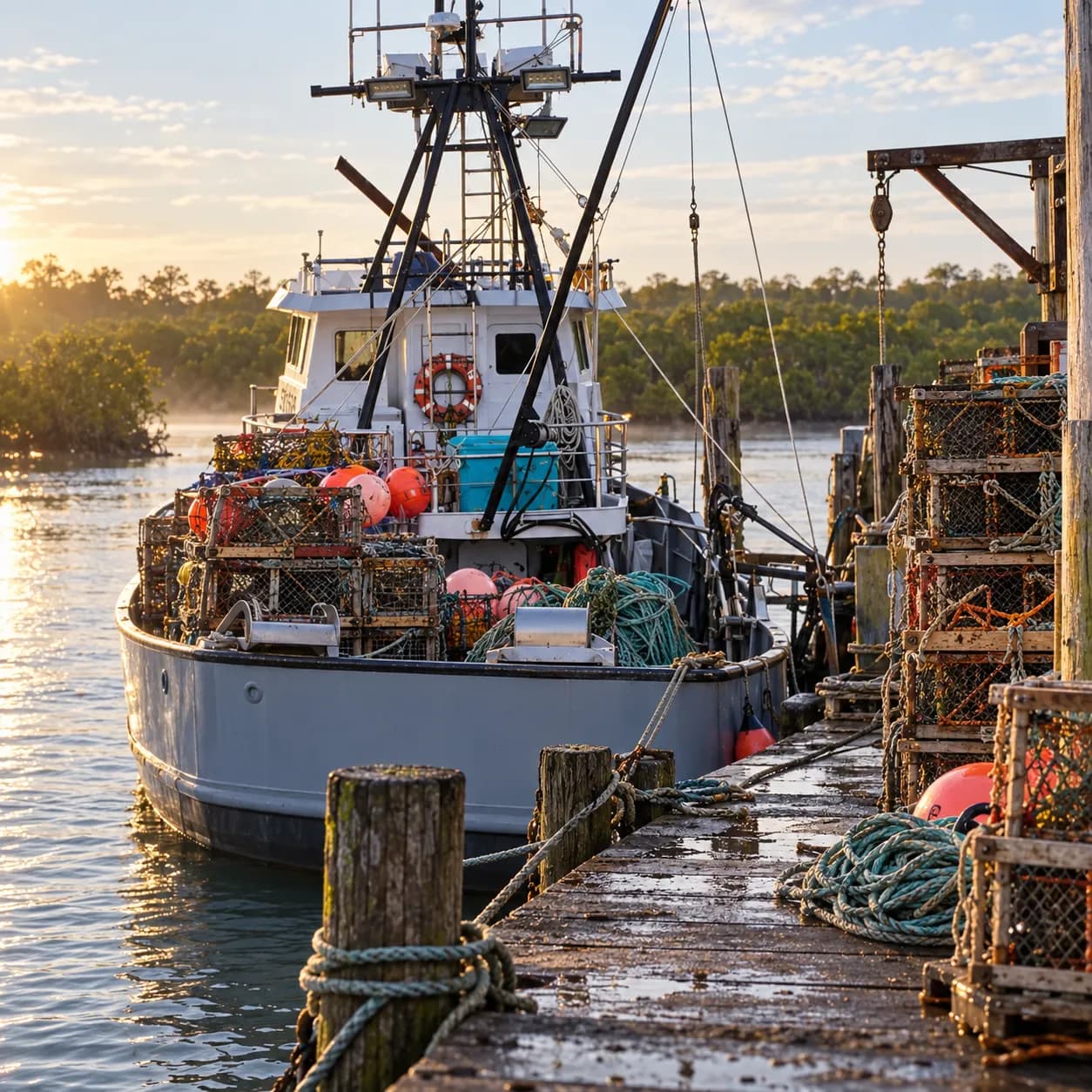
That has a direct consequence for planning a Miami trip. If eating stone crab is on your list, it has to happen between mid-October and the end of April. In July, the restaurants that specialise in it are either closed or serving something else.
Within the season, the early weeks are the best value. Mid-October through November has the most generous supply and the softest prices, before the winter visitor crowd arrives. January and February are peak demand and peak price at the same time.
Why they are served cold
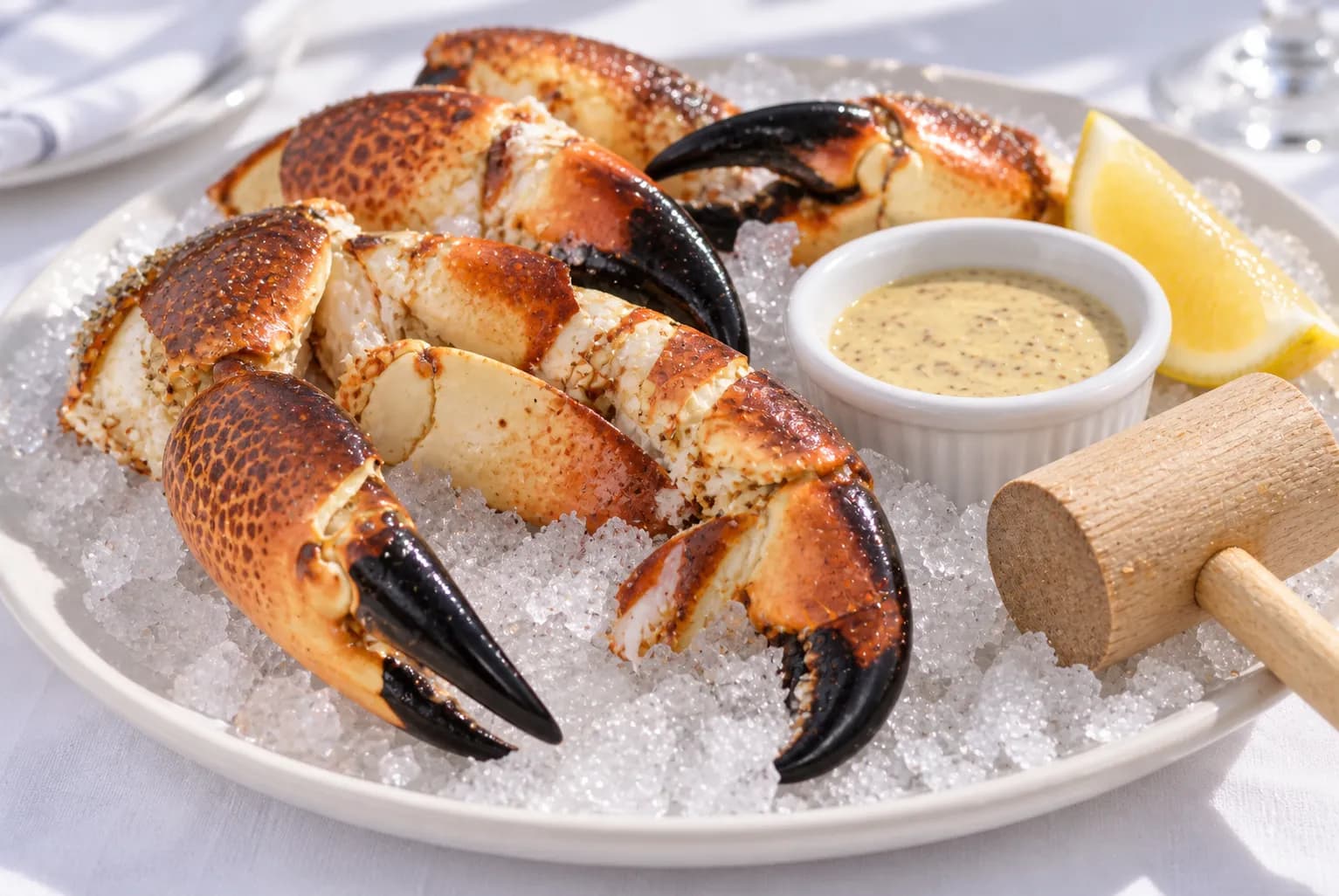
Claws are cooked immediately on the boat or at the dock and then chilled, and they are served cold. This is not a stylistic choice and reheating them is actively worse — the meat firms up and loses the sweetness that is the whole point.
People who expect a hot seafood boil are consistently thrown by this, and it is worth knowing in advance. Drawn butter is generally available and is the wrong condiment for a cold claw. The mustard sauce — creamy, sharp, mustard-forward — is the traditional accompaniment and it is what makes the dish work.
The claws come pre-cracked. A mallet on the table is for finishing the job rather than for starting it, and hitting a claw hard enough to shatter the shell into the meat is the standard beginner error.
Where to buy it, and the price gap
There is a very large difference between restaurant and market pricing, and it is worth understanding before you commit. A dining-room order of large claws can run well over three hundred dollars for a substantial plate; the same claws bought over a market counter cost a fraction of that.
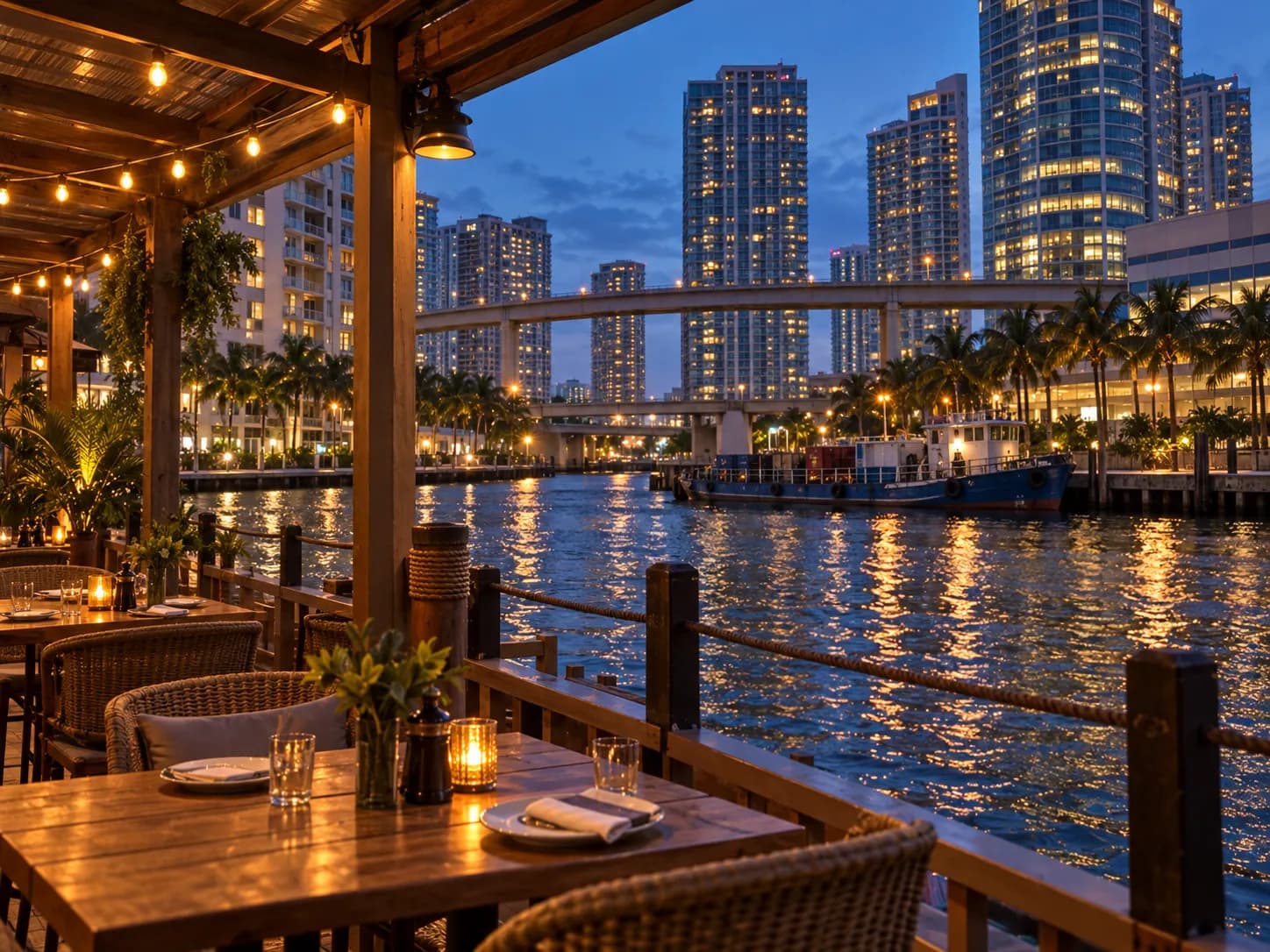
Miami has several working fish markets that sell claws in season directly. La Camaronera at 1952 West Flagler Street is one, and the markets along the Miami River are others. Garcia's Seafood Grille at 398 Northwest North River Drive operates as both a market and a restaurant and sells claws in season.
The famous dining-room version at the south end of Miami Beach is a genuine experience and is not principally a way to buy crab efficiently. Both are legitimate. Deciding which one you actually want before you go is the useful step.
Sizes and what to order
Claws are graded — medium, large, jumbo, and sometimes colossal — and the price steps up sharply with each grade. The meat-to-shell ratio improves as they get bigger, but the flavour does not, and a medium claw eaten in season is not a lesser piece of seafood than a jumbo one.
For most people the sensible order is a plate of mediums or larges rather than the top grade. The jumbos are a display item as much as a meal, and the money saved buys a considerable amount of everything else.
Six to eight medium claws is a reasonable portion per person as a main course, fewer if you are also eating other things. They are rich and the mustard sauce is heavy.
Practical notes
Florida stone crab season runs 15 October to 1 May; outside those dates anything sold is frozen or imported. Claws are harvested from live crabs that are returned to the water to regenerate them, which is why they are priced the way they are. They are cooked and chilled at landing and served cold and pre-cracked — reheating them ruins the texture, and the traditional accompaniment is mustard sauce rather than drawn butter. Buy from a market rather than a dining room if the goal is the crab itself: La Camaronera at 1952 West Flagler Street and Garcia's at 398 NW North River Drive both sell in season. Mid-October to November is the best value; January and February are the most expensive.
Tags: #stonecrab #bestseafoodmiami #seafoodnearme #miamiseafood #stonecrabseason #joesstonecrab #miamiriver #miamifoodguide #sustainableseafood #miamieats #fishmarketmiami #floridaseafood #miamirestaurants #mustardsauce
All trademarks are the property of their respective owners.
Ask Karpo first
Stone crab has a fixed legal season and a price that moves week to week with the catch, so the useful question is always what this particular week looks like. Ask Karpo whether the season is open right now, what claws are running at, and whether a market counter or a dining room makes more sense for the meal you actually want.