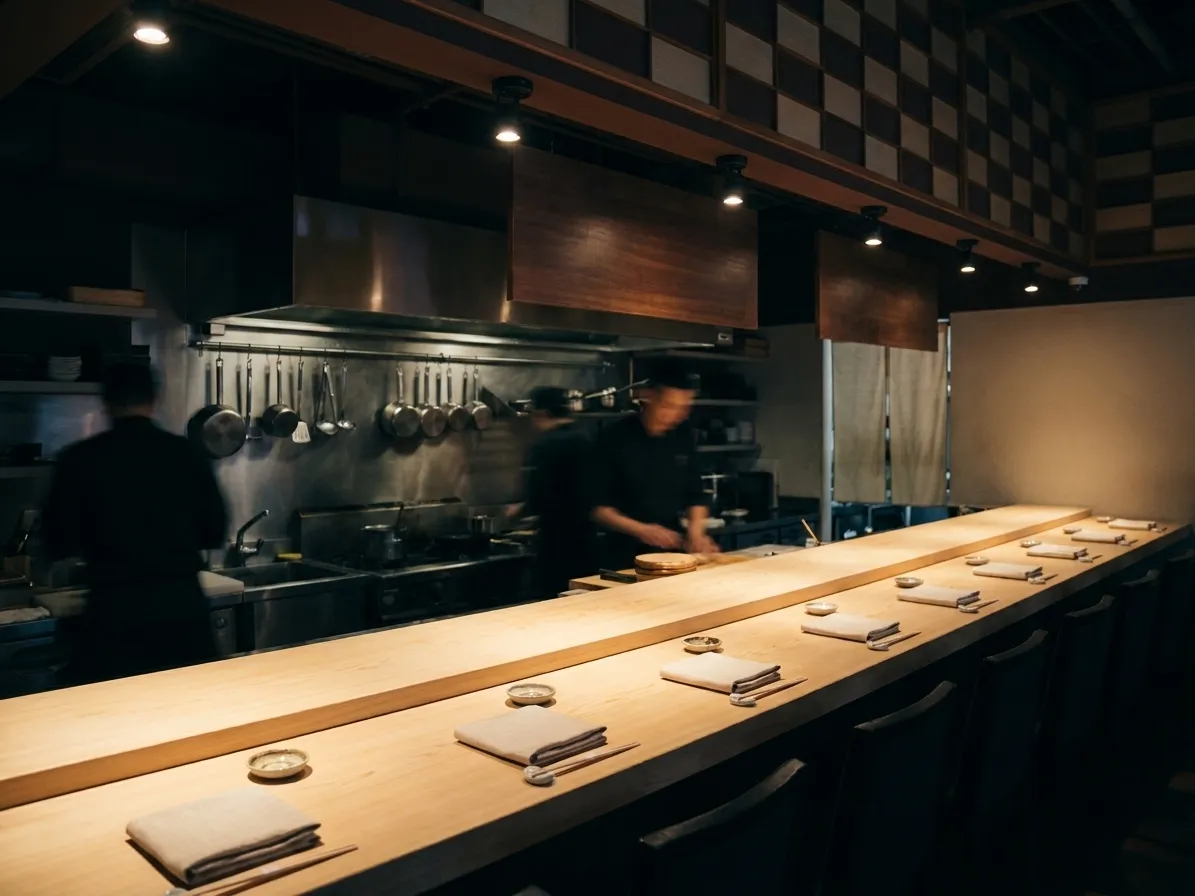
The tasting menu has had an unfortunate decade. At the top of the market the format has drifted well past two hundred dollars a head before wine, which has convinced a lot of people that a set menu is a special-occasion decision requiring a month's notice and a discussion about money. That is true of a specific tier and not of the format. In Los Angeles there is a substantial and growing group of restaurants serving six to twelve courses for under a hundred dollars, frequently at a counter, frequently in a strip mall, and quite often doing more interesting cooking than the rooms charging triple.
Counters of this kind seat between eight and twenty people and book out unevenly - impossible on a Saturday, wide open on a Tuesday. Tell Karpo which nights you can do and what you want to spend, and it will find the seats that are actually available.
Why the sub-$100 tier exists here
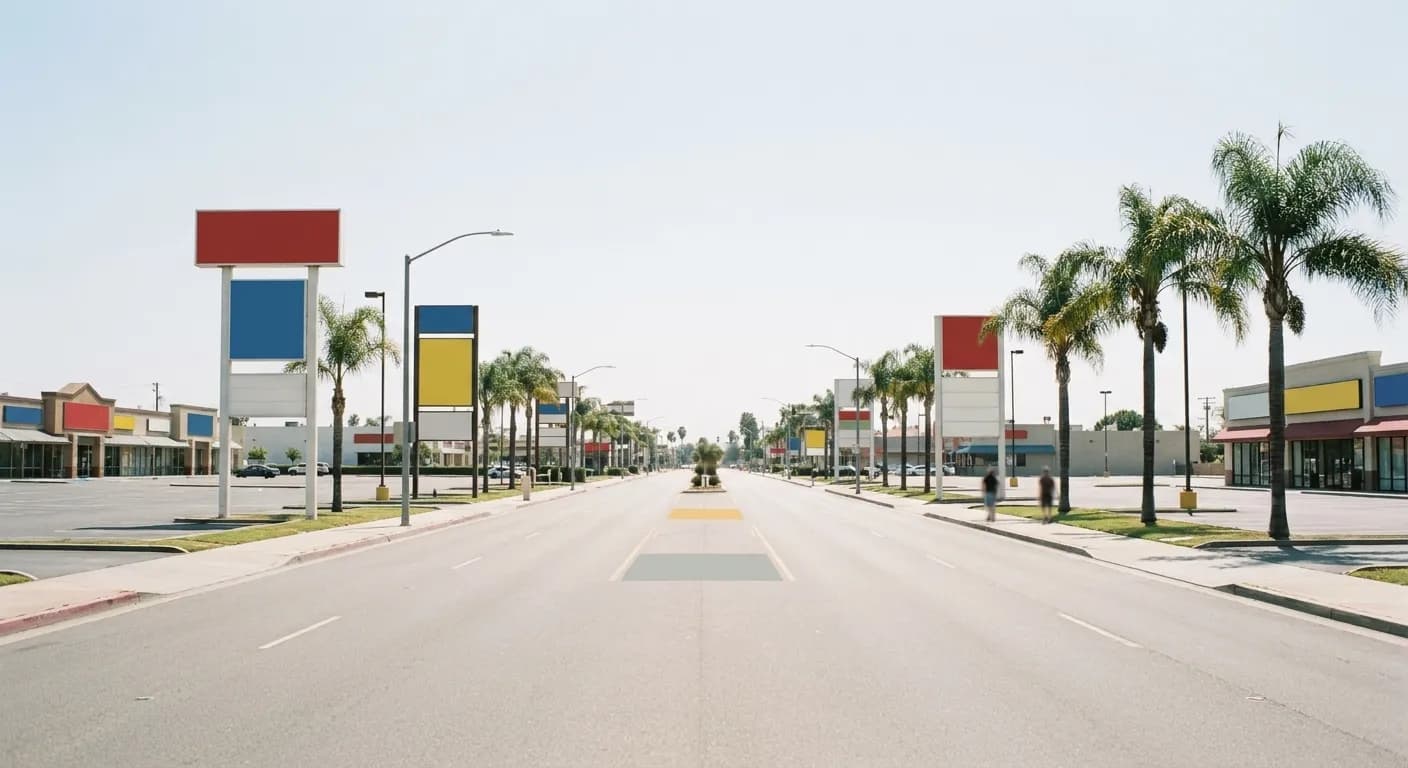
Two structural reasons. Los Angeles has an enormous supply of small commercial units - strip malls, converted storefronts - where a ten-seat counter is economically viable in a way it is not in a city of large ground-floor spaces. And it has a deep bench of cooks who have worked in expensive kitchens and want their own room without investors.
The result is a format that trades comfort for cooking. You get a counter rather than a dining room, one seating or two, and a menu that changes when the market does.
Omakase is the largest category
Sushi counters make up the bulk of this tier, and the range within it is wide. The lower end, in the sixty-to-eighty-dollar band, generally means a shorter count of pieces, some of the fish frozen rather than fresh, and a faster seating. That is not a criticism - it is a legitimate product and frequently very good.
The distinctions worth asking about are how many pieces, how long the seating is, and whether the rice is seasoned to order. The last one is the real dividing line between a counter that is doing the job and one that is assembling it.
The non-Japanese counters
Beyond sushi there is a scattering of counters doing set menus in other traditions - modern Californian, Mexican, Korean, Levantine, Filipino - usually six to eight courses, usually under a hundred, usually in a room that holds fewer than thirty people.
These tend to be where the actual invention is happening, because a chef with twenty covers and a fixed menu can cook things that would be impossible to execute a la carte. They are also the most likely to change entirely between visits.
What the price does and does not include
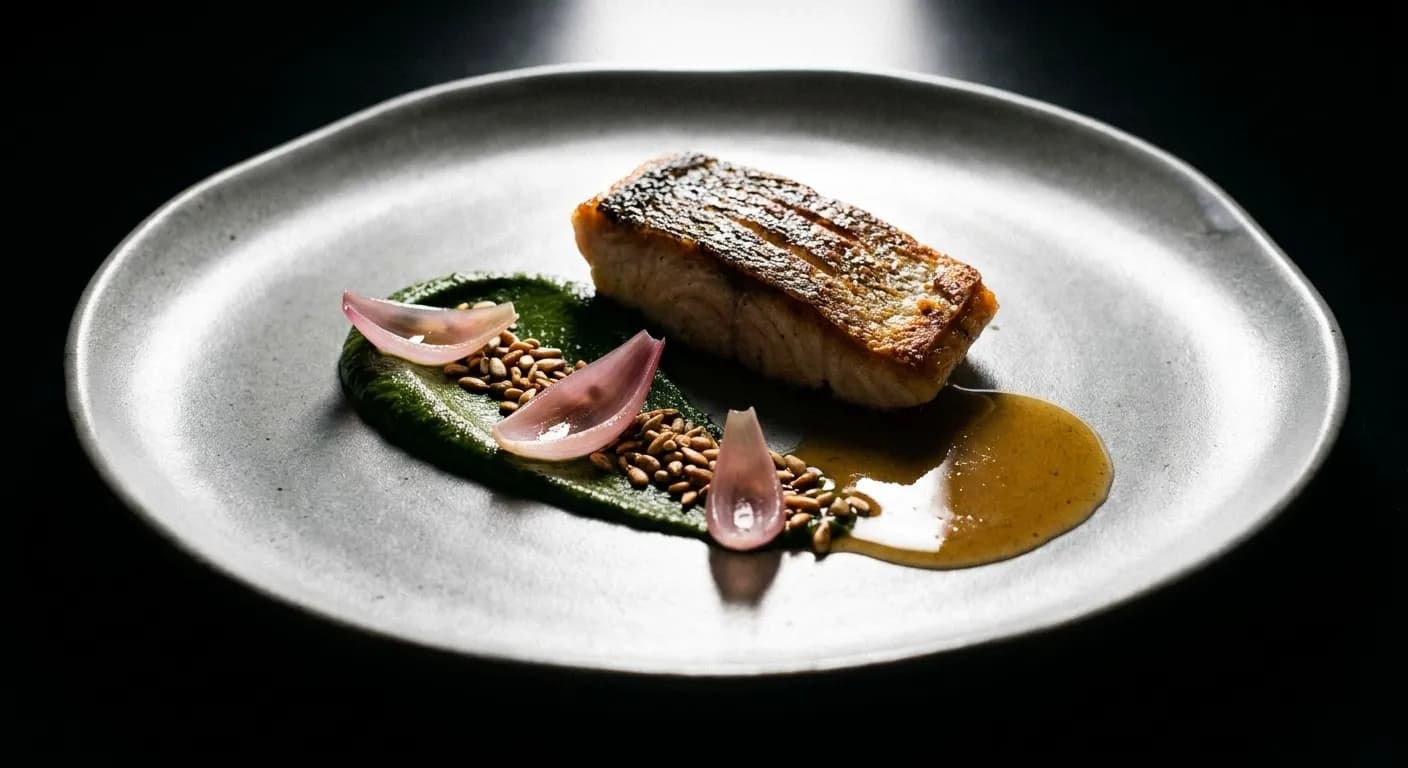
The advertised number is rarely the number. Add tax, add a service charge which in Los Angeles is increasingly built in at eighteen to twenty per cent, and add drinks, and a ninety-dollar menu becomes a hundred and thirty before wine. That is worth doing the arithmetic on in advance rather than at the table.
The genuine money-saver is skipping the pairing. A pairing frequently costs as much as the menu; a single glass chosen with the staff's help costs a fraction and works nearly as well across a short menu.
Booking, and where the seats actually are
Weekend seats at anywhere with a following go instantly and are effectively unavailable. Weeknight seats at the same restaurants sit open, and the food is identical. If your only constraint is which day, this tier is dramatically easier to access than its reputation.
Early seatings are the other lever. A five-thirty or six o'clock counter is routinely available when the eight o'clock has been gone for a month, and at a counter the early seating is often better because the chef is fresher.
Where to look geographically
The concentration is on the Westside for sushi - Sawtelle and the surrounding blocks in particular - with a second cluster in the strip malls of the South Bay and Torrance. The non-Japanese counters skew to the Eastside, downtown and Koreatown.
The through-line is that almost none of this is in a neighbourhood you would call a dining destination. The rent is the entire explanation.
What you give up at this price
It is worth being clear about the trade rather than pretending there is not one. Under a hundred dollars you are generally getting a hard stool, a two-hour turn, a small bathroom, a wine list of fifteen bottles, and a room with the acoustics of a shop unit. The service is one or two people doing everything.
What you are not giving up is the cooking, which is the point. If the evening you want involves comfort, space and a long unhurried table, this tier will disappoint regardless of how good the food is - and that is a reason to spend the money elsewhere rather than a criticism of the format.
How to behave at a counter
A counter is a different social contract from a table. You are close to the person cooking, the pacing is theirs rather than yours, and a long phone conversation or a two-hour late arrival affects everyone in the room rather than just your party.
The good version is easy: arrive on time, eat each course when it lands rather than photographing it for three minutes, and ask questions. Most chefs at this price point are working the counter specifically because they want the conversation.
Tags: #BestRestaurantsNearMe #LosAngeles #TastingMenu #Omakase #Sawtelle #ChefsCounter #LAFood #FineDiningLA #Restaurants #LAEats
All trademarks are the property of their respective owners.
Ask Karpo first
A tasting menu in Los Angeles does not have to mean two hundred dollars. Ask Karpo which counters near you have seats this week and what the real total comes to.