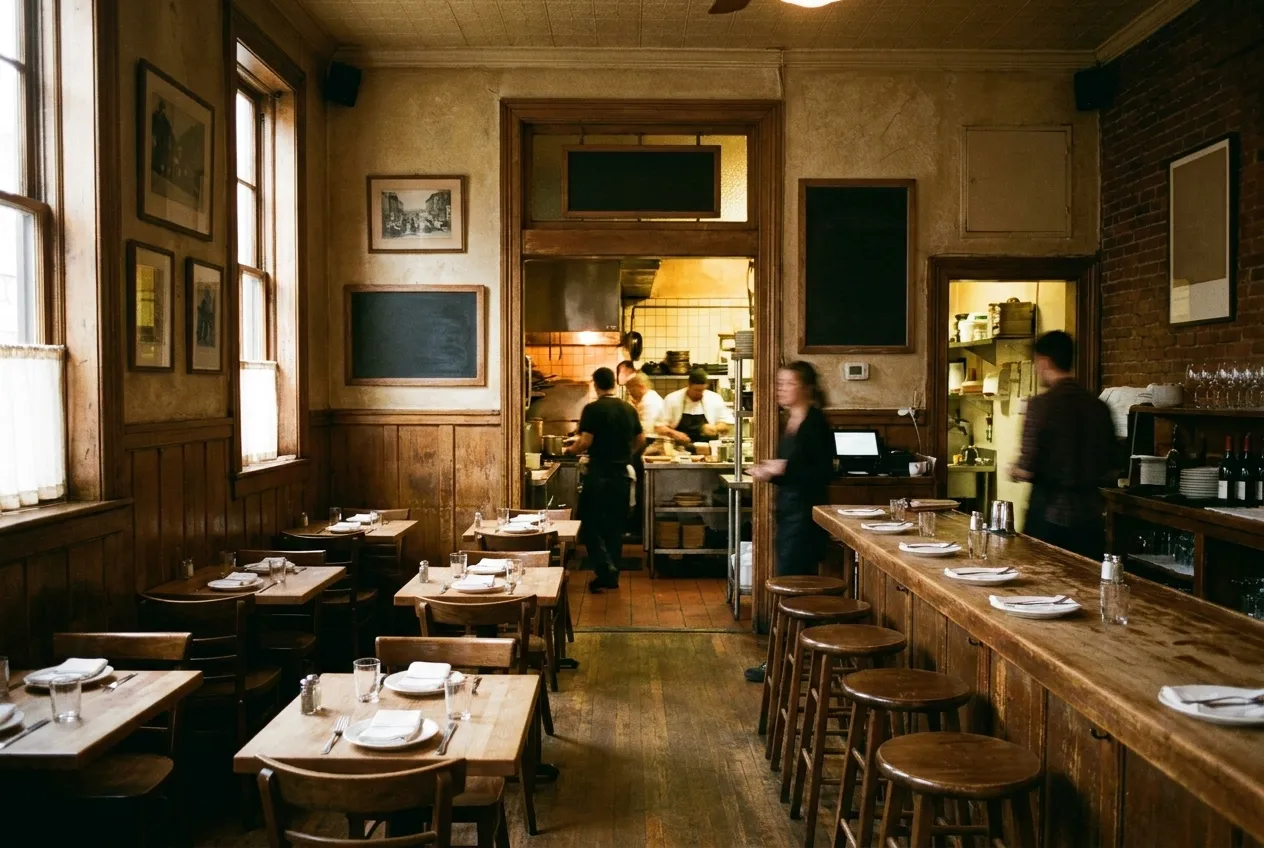
If you have watched San Francisco restaurant openings over the past decade you will have noticed the rooms shrinking. Twenty-five seats instead of eighty. A counter instead of a dining room. Four nights a week instead of seven. One seating at six and one at eight-thirty, both prix fixe, both booked weeks ahead. This reads like a stylistic preference for intimacy and it is not. It is what the arithmetic of opening a restaurant in this city now permits, and understanding the arithmetic explains almost everything about how to eat here.
Small rooms with two seatings and rolling reservation windows need a different booking strategy from ordinary restaurants. Tell Karpo your dates and get what is genuinely reachable.
The arithmetic
Three costs dominate. Commercial rent in the desirable corridors is among the highest in the country, so every square foot of dining room has to earn. Labour is expensive by design - a high minimum wage plus mandated healthcare contributions, which is good policy and a real number on the profit and loss. And build-out costs, permitting and the time to get a licence in this city are famously long and expensive, so the capital required before a single plate goes out is very large.
The rational response to all three is to shrink. A small room needs fewer staff, less rent and less capital. A fixed menu means less waste, tighter purchasing and a kitchen that can be run by fewer people. Two seatings at set times means the room turns predictably rather than hopefully. Four nights a week means the labour cost only exists when the revenue does. Every one of those decisions is a cost decision that has been mistaken for an aesthetic one.
What this means for booking
Small rooms with fixed seatings sell out differently from large ones with rolling tables. There is no six-forty-five if the seatings are six and eight-thirty; there is no walking in at nine because the second seating started at eight-thirty and the kitchen closes after it. And because capacity is a quarter of what an equivalent restaurant would have had fifteen years ago, demand concentrates rather than spreads.
The practical technique is to know when the reservation window opens. Most of these rooms release tables on a rolling basis - a fixed number of days ahead, at a fixed time of day. That is the moment to be online, and taking an unfashionable slot rather than holding out for eight o'clock is what actually gets you in. The second technique is the counter: many small rooms hold counter seats for walk-ins, and arriving at opening on a weeknight works far more often than people expect.
The prix fixe question
A fixed menu is the most visible consequence and the one diners most often resent. It is worth being fair about it. For the kitchen it means buying exactly what will be used, prepping precisely, and running a smaller brigade - it is the single largest cost saving available. For the diner it means less choice, a higher upfront price, and no option to have a light meal.
What you get in exchange is usually a better version of the food than an à la carte kitchen of the same size could produce, because everything on the menu is being made in the same quantity every night and the kitchen gets very good at it very fast. The honest advice: if you want choice and flexibility, the neighbourhood restaurants in the Richmond and the Sunset still work the old way and are cheaper. If you want the cooking these small rooms are doing, accept the format.
Where the openings cluster
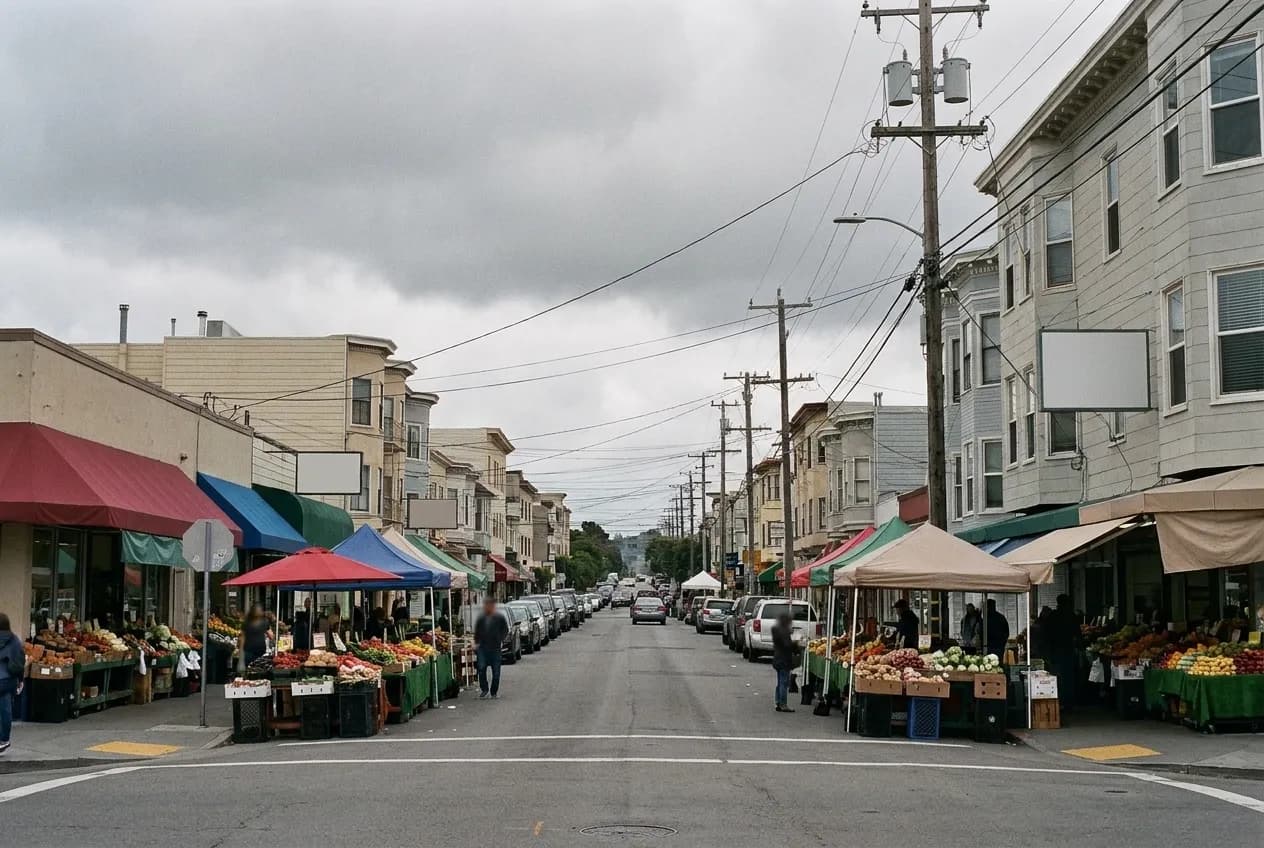
The Mission remains the densest neighbourhood for new small rooms, because it has the customer base, the foot traffic and a stock of small units. Hayes Valley and the Divisadero corridor are the other two, both flat, walkable and full of people who eat out constantly. The Richmond and the Sunset get fewer openings but cheaper ones, and they skew toward neighbourhood restaurants rather than destination rooms.
SoMa and the Financial District are the opposite case: a large weekday lunch trade and very little evening or weekend demand, which produces lunch-focused businesses and a lot of closures at weekends. A new opening there is usually solving a different problem from a new opening in the Mission, and reading the neighbourhood tells you which.
The pop-up pipeline
One genuinely distinctive feature of this city is that a large share of its new restaurants begin as pop-ups - a chef renting someone else's kitchen on a dark night, or running out of a bar, or doing a residency for six months. It is a rational response to the capital problem: test the concept and build an audience before signing a lease.
For a diner this is the best value in San Francisco. Pop-up pricing is lower, the cooking is frequently more ambitious because the chef is trying to prove something, and the eventual restaurant will be harder to book and more expensive than the residency was. Following the pop-up circuit is the closest thing this city has to an inside track, and it costs nothing but attention to a few social feeds.
Practical notes
Find out when a room's reservation window opens and be there for it; take an off-peak slot rather than waiting for a better one. Ask about counter seats held for walk-ins, and try arriving at opening on a weeknight. Expect fixed seatings, often six and eight-thirty, and expect the kitchen to close after the second one. Many small rooms run four or five nights a week - verify the day. Sunday and Monday have the highest closure rate in the city. Neighbourhood restaurants in the Richmond and the Sunset still do à la carte and cost less. And watch the pop-up circuit, which is where most of the next generation of these rooms is currently cooking at half the price.
Tags: #BestRestaurantsNearMe #SanFrancisco #NewOpenings #PrixFixe #MissionDistrict #HayesValley #Divisadero #PopUps #SFDining #SmallRooms #Reservations #InnerRichmond #OuterSunset #SFEats
All trademarks are the property of their respective owners.
Ask Karpo first
Small rooms with two seatings and rolling release windows are the hardest bookings in this city and the easiest to miss by a day. Ask Karpo what has opened near you recently, when its reservation window opens, and whether it holds counter seats for walk-ins on a weeknight.