Every list of the best restaurants near me in Los Angeles is really a list of openings, because this city replaces its dining room stock faster than almost anywhere else in the country. What the lists rarely tell you is the thing that decides whether your night is good: how old the restaurant is. A room in week two and the same room in month four are not the same restaurant. The menu has been cut, the service has found a rhythm, the kitchen has stopped cooking the dishes that photographed well and started cooking the ones that sold. Reading a new place by its age is the most reliable filter there is, and nobody uses it.
The hard part about a new opening is not finding it — it is knowing whether the kitchen has settled yet. Tell Karpo which part of LA you can get to and how much patience you have for a shakedown night, and it will point you at the rooms that are past the wobble.
Weeks one to three: the shakedown
The first three weeks are a stress test being conducted in public. Kitchens in this window are usually running a menu that is too long, with a line cook count that is too low, and a front of house that has not yet learned where anything is. Tickets back up between 7:30 and 9. Dishes come out of order. Something on the menu will be unavailable and the server will not know until they have gone to ask.
None of that means the food is bad — often the cooking in this window is the most ambitious it will ever be, because nothing has been value-engineered yet. It means the evening carries risk. If you are going in the shakedown window, go early, go at the bar or counter rather than a table, order fewer things than you want, and treat it as a look rather than a plan. Do not bring six people, and do not bring anyone you are trying to impress.
Months two to six: the window worth chasing
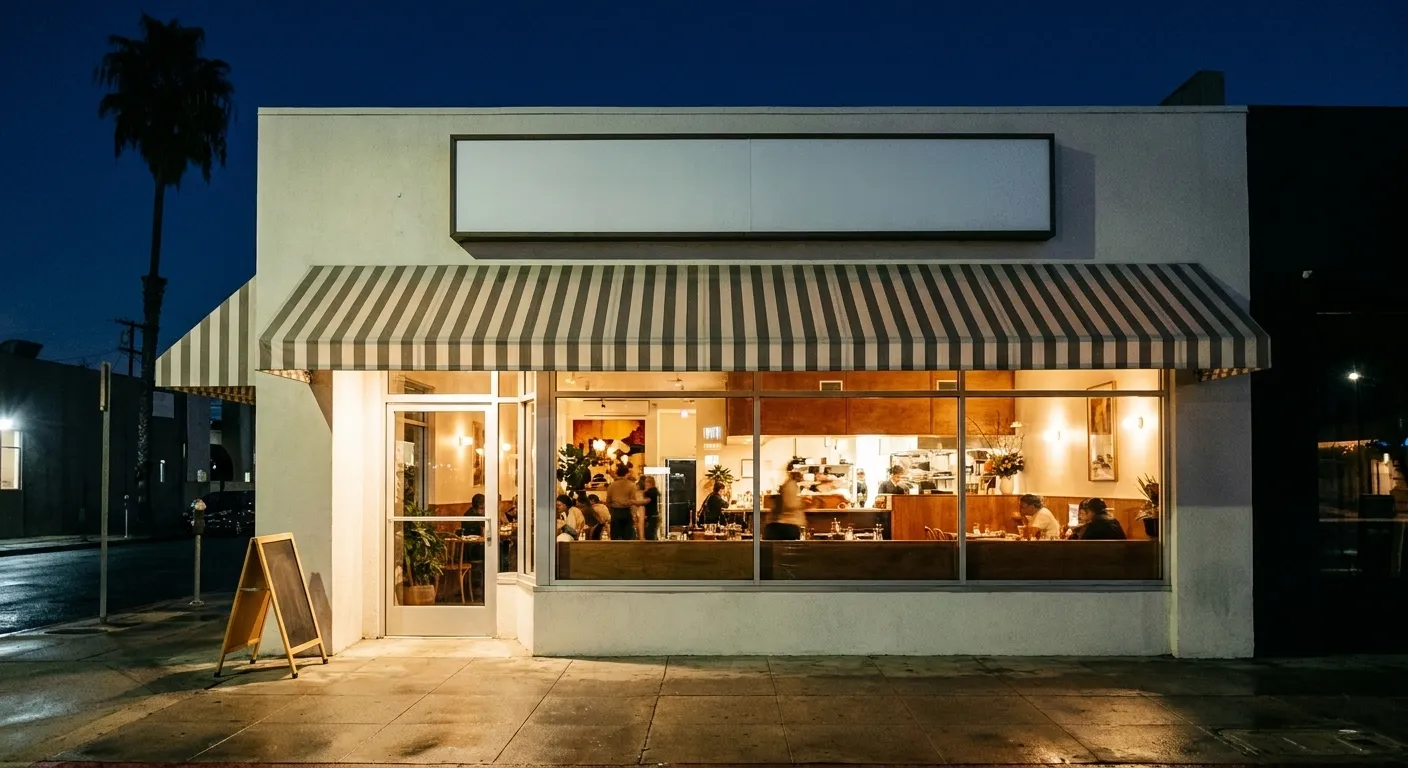
This is the sweet spot and it is short. By the second month the menu has usually lost its weakest quarter, the kitchen has hired the extra hands, and the room is still cooking with the intensity of a place trying to prove something. Prices have not drifted up yet. The chef is frequently still on the line rather than in a second project. If you only take one rule from this piece, it is that a Los Angeles restaurant between roughly its eighth week and its sixth month is the best version of itself.
It is also, awkwardly, the hardest window to book, because it overlaps with the review cycle. The practical route in is the unglamorous one: the first seating of the evening, a Monday or Tuesday, the counter, or the walk-in list at opening. Los Angeles is unusually forgiving here compared with New York or San Francisco, because a large share of the city's new rooms hold back counter seats and patio tables for walk-ins.
Month nine and after: what settles, and what slips
Past about nine months a new restaurant becomes a restaurant, and two things happen at once. Consistency improves — the version of the dish you get on a Tuesday in the rain is now the same as the Saturday version, which is genuinely hard and genuinely valuable. At the same time the specials get less strange, the wine list gets safer, and the opening chef may have moved to the next site while a sous runs the pass.
That is not a reason to avoid an older room, but it changes what you should order. In a settled kitchen, order the dish the restaurant is known for rather than the newest thing on the menu, because the known dish is the one that has been cooked ten thousand times. In a young kitchen, do the opposite.
How to tell the age without looking it up
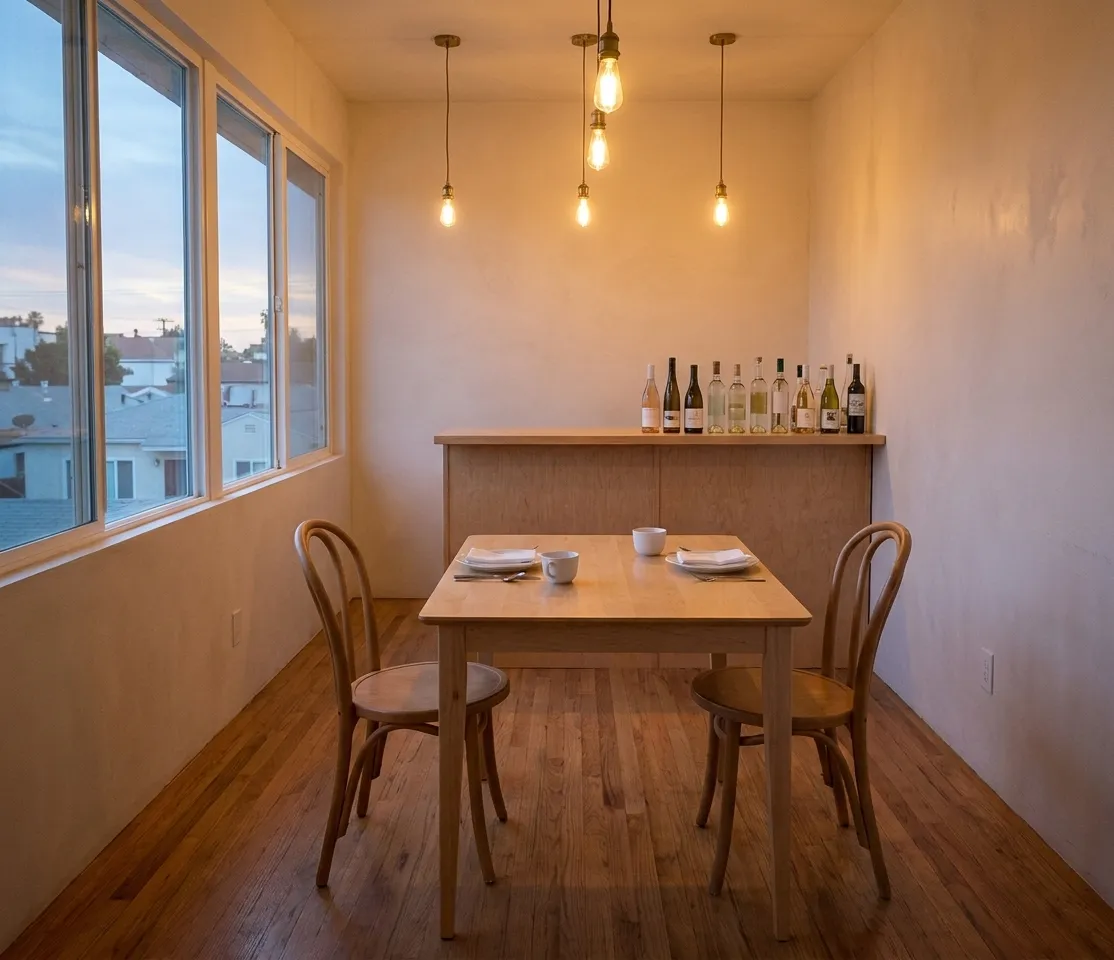
You can usually read a room's age from the doorway. Unpainted patch marks and bare walls, a menu printed on plain paper without a header, staff wearing their own clothes rather than a uniform, no PoS integration on the card reader, a wine list of a dozen bottles — that is a first-month room. Laminated menus, a house cocktail with a name, merchandise by the host stand, and a second location mentioned on the check are the signs of a place past its first year.
The other tell is the reservation grid. A room that opened recently releases tables in a rolling two- or three-week window and shows almost nothing available; a settled room opens a full month at once and keeps a handful of slots at every hour. If you are looking at a grid with scattered single-seat times at 5:15 and 9:45 and nothing else, you are looking at a restaurant in its best months.
Where the openings are clustering right now
Geography moves in this city in waves, and the current wave is inland and eastward. Virgil Village, Frogtown, Cypress Park and the stretch of Sunset between Silver Lake and Echo Park have absorbed most of the interesting small openings, largely because the rent maths still works on a forty-seat room there. West Adams has become the other centre of gravity, and Koreatown continues to open at a rate no other neighbourhood matches, mostly rooms that never appear on citywide lists at all.
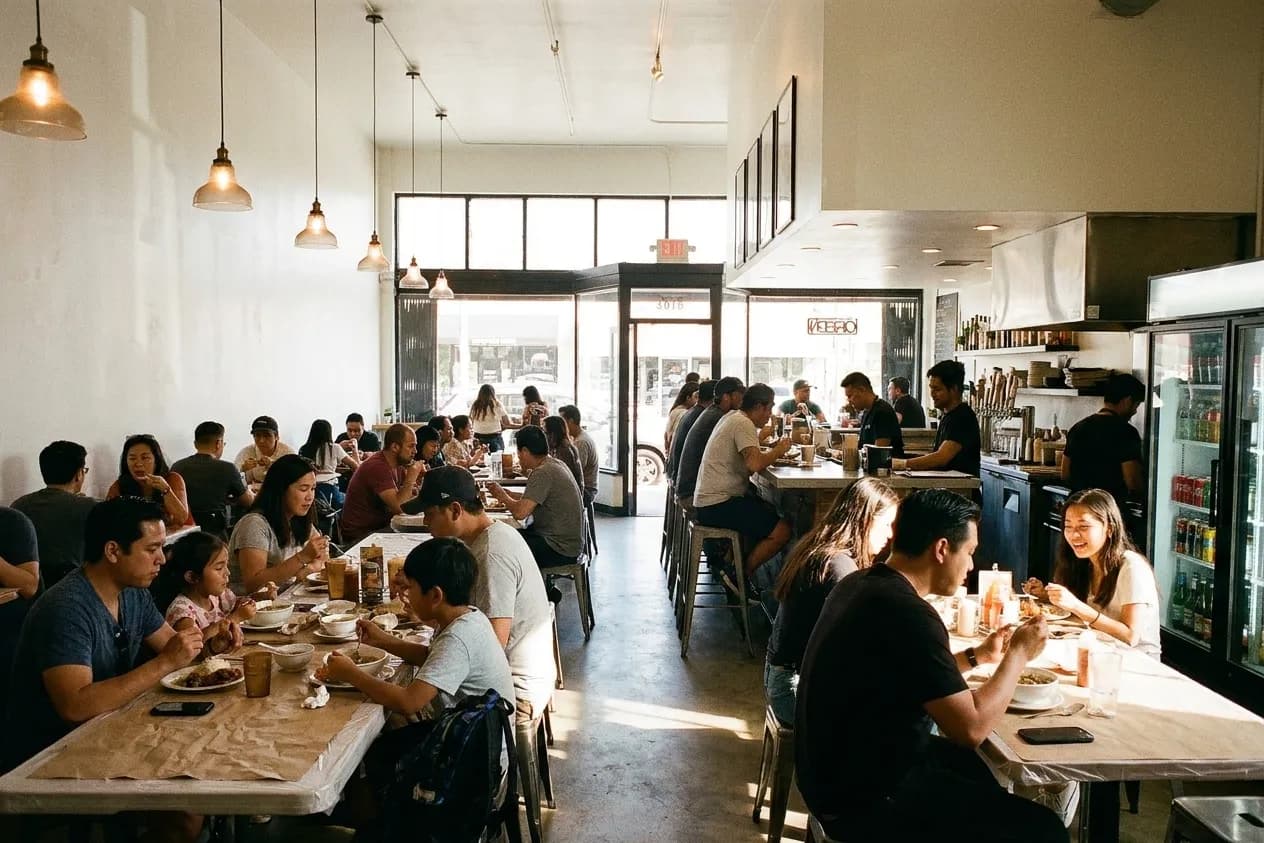
What has slowed is the big-format restaurant — the two-hundred-seat rooms with a designer and a publicist. The economics of that model in Los Angeles have been hard since the pandemic, and what has replaced it is the small room with a short menu, counter seating, and a wine list rather than a full bar. That is good news for anyone eating: small rooms fail less quietly and cook better.
Tags: #LosAngeles #LARestaurants #NewInLA #WhereToEatLA #LADining #LAFoodie #SilverLake #EchoPark #WestAdams #Koreatown #NewOpenings #DinnerInLA #LAEats #RestaurantOpening
Sources consulted: eater.com · laist.com · resy.com
All trademarks are the property of their respective owners.
Ask Karpo first
Opening dates slip, soft-launch menus change weekly, and half the rooms worth trying have not been written up anywhere yet. Ask Karpo what has actually opened near you in the last few months, whether the kitchen is past its shakedown, and which of them will seat you tonight without a reservation.