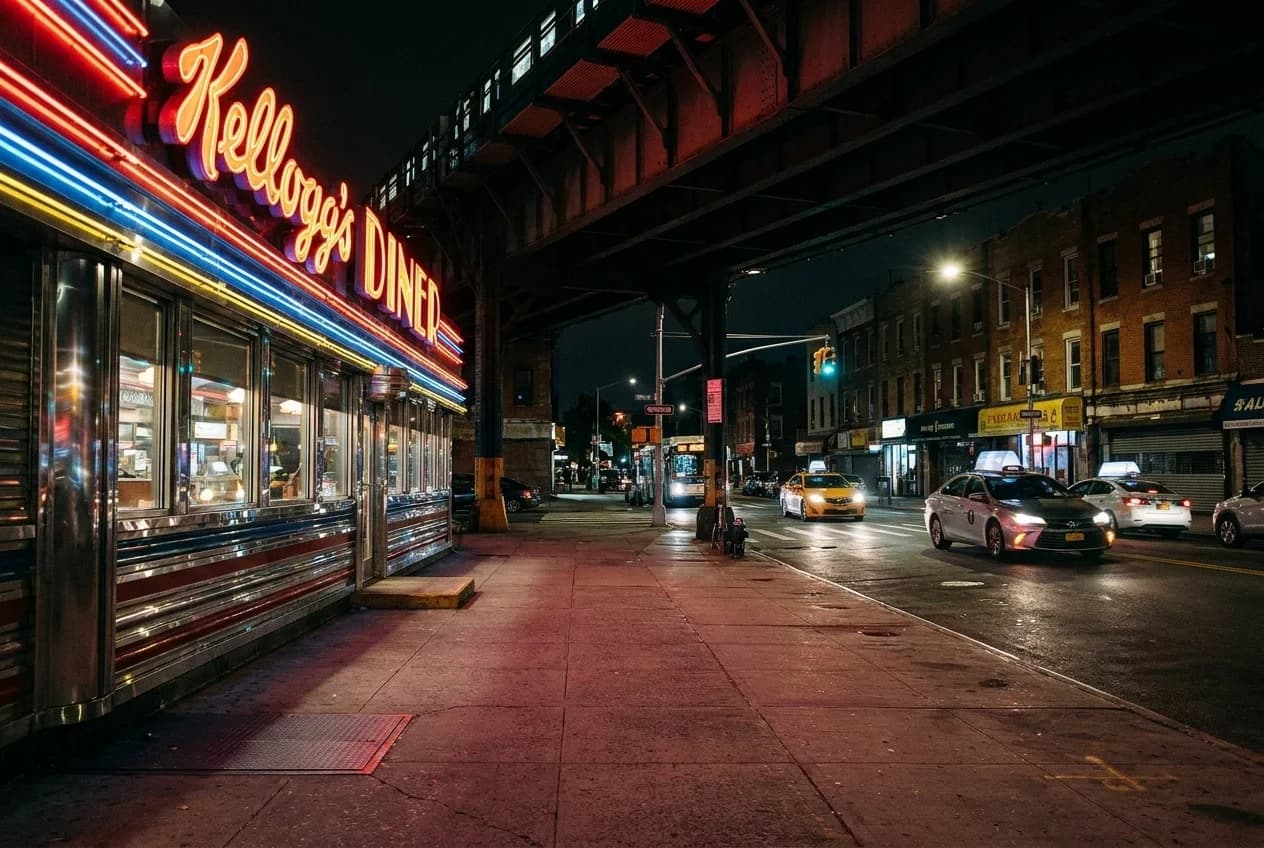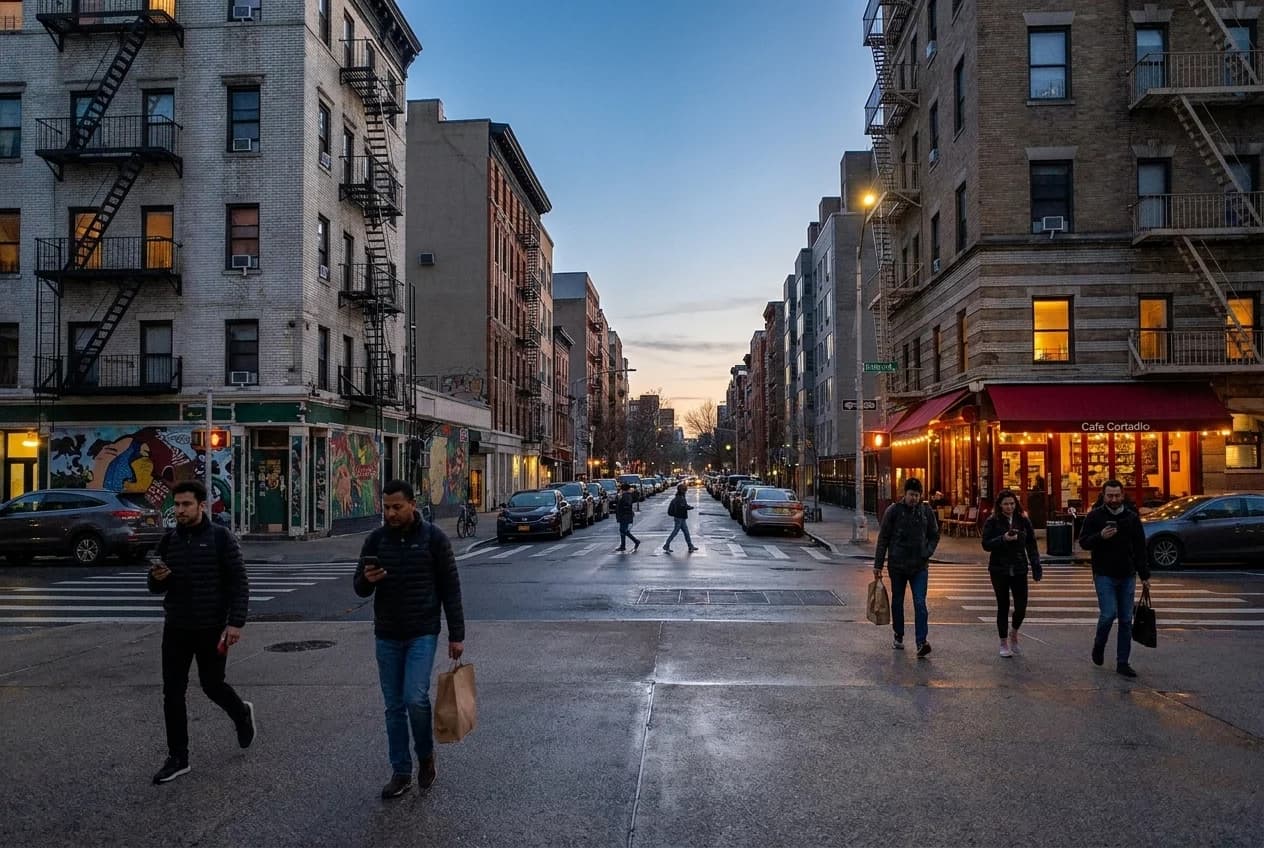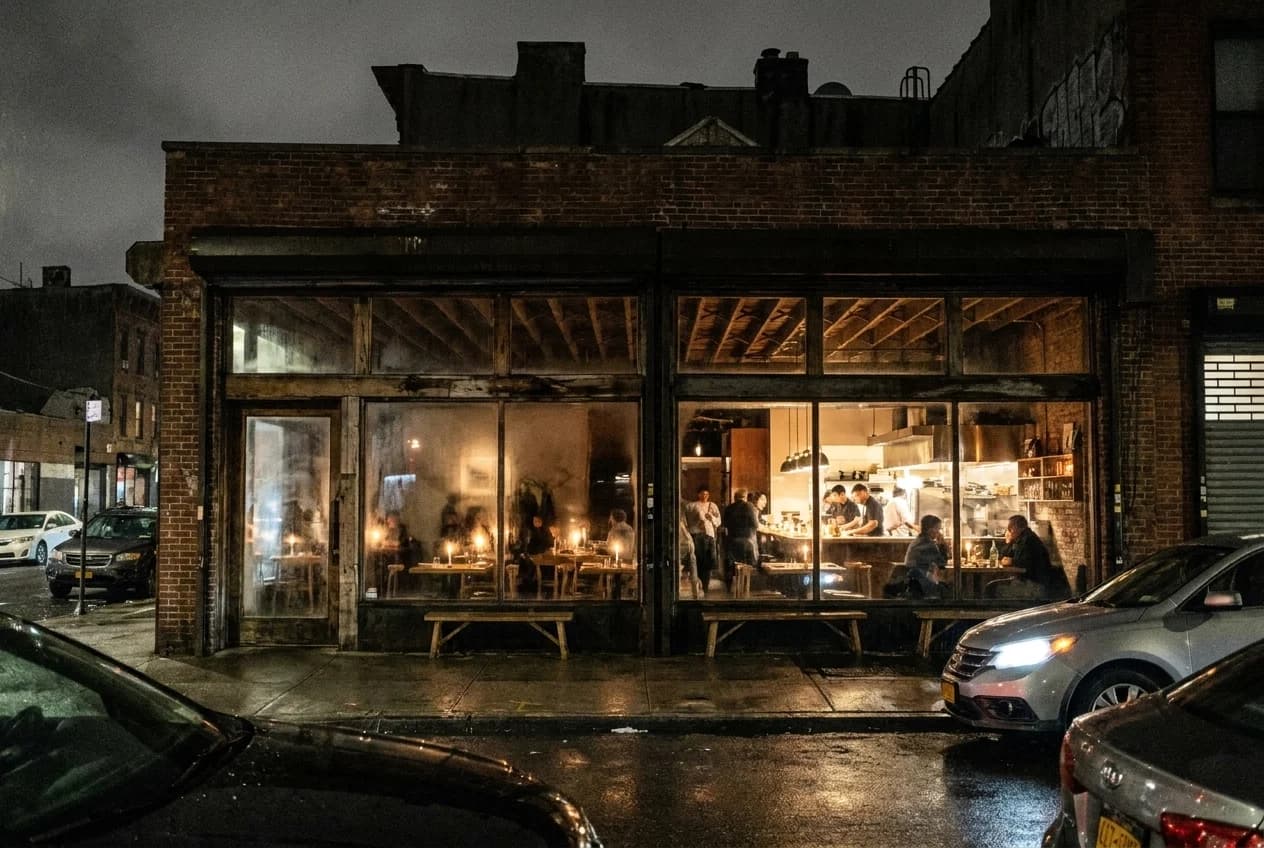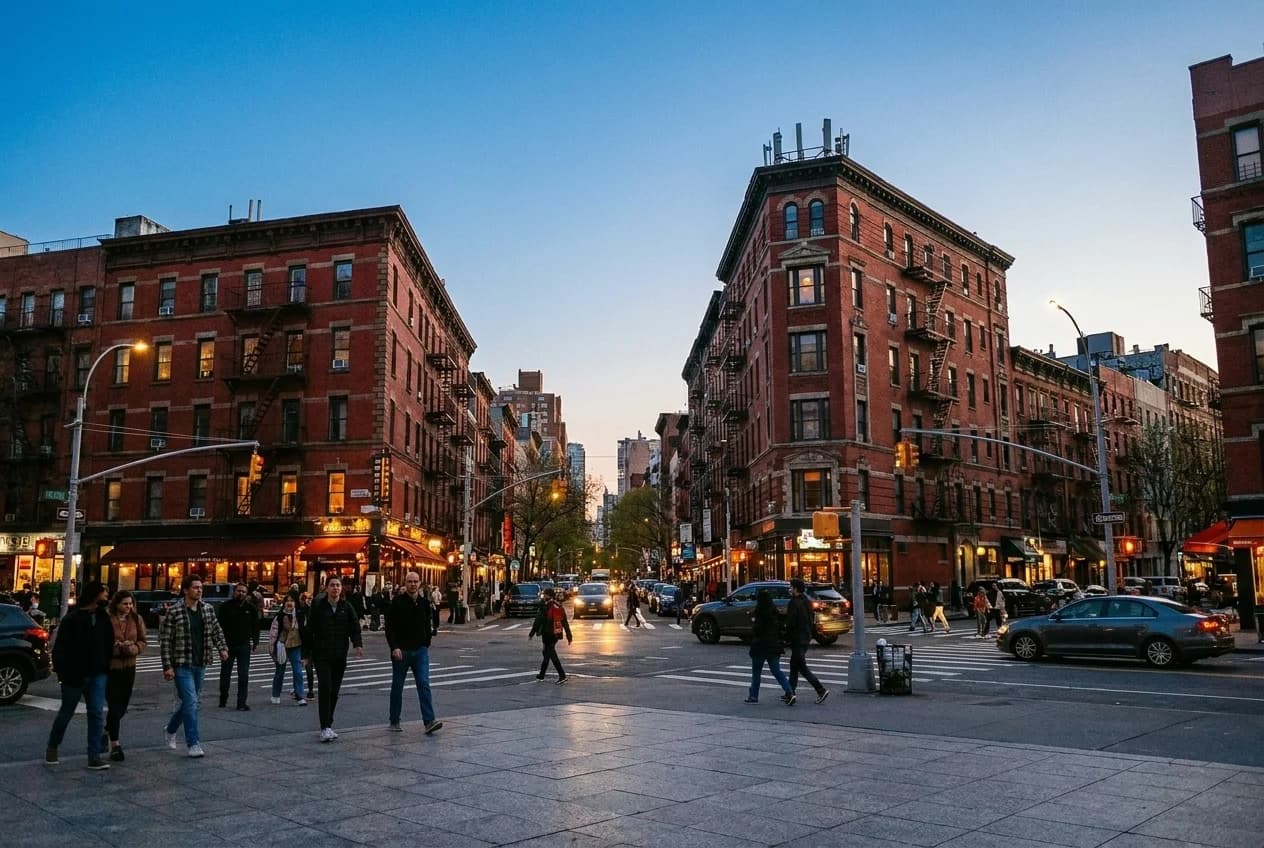
When you search best restaurants near me in the East Village, the algorithm surfaces what opened last month and what paid for placement this week. It does not surface the dining rooms that have held the same address since 2005 or 1983, the ones that watched the neighbourhood turn over three times and stayed open because they solved a problem no successor could. Longevity in this neighbourhood is not an accident of rent control or a failure to evolve. It is evidence that a kitchen still does one thing better than the twenty newer rooms that opened within five blocks. The question is whether that one thing still matters to you, and whether the restaurant still executes it at the standard that earned it two decades.
Karpo maps every block in the East Village with current hours, closing days, and the seating rules regulars know. Ask which long-tenured room fits your hour and your price ceiling tonight.
The Moroccan room that never wavered
Cafe Mogador opened at 101 St Marks Place in 1983. The menu has not changed in more than forty years. The merguez sausage, the spicy tomato sauce under the Moroccan eggs, the lamb shank tagine with preserved lemon and olives arrive in the same proportions and with the same acidity they did when the restaurant opened. This is not nostalgia cooking. It is a kitchen that identified a narrow lane—affordable North African brunch and lunch within walking distance of Tompkins Square Park—and never left it.
The dining room is small, the tables are tight, and weekend brunch runs from nine in the morning until four in the afternoon with waits that stretch past forty-five minutes by eleven. Midday meetings happen in the afternoon window between two-thirty and five, when the crowd thins and the lamb shank is still available. The couscous is served hot in a shallow bowl, the grains separate, the broth pooling at the edges. The café au lait arrives in an oversize bowl, the espresso strong enough to cut the steamed milk. The staff has turned over many times, but the service posture has not: efficient, unbothered, accustomed to long stays at a single table.
Mogador expanded to a second location in Williamsburg in 2008, but the St Marks original remains the address where regulars conduct studio visits and finish manuscripts at corner tables. The resistance to menu expansion and the refusal to modernise the interior—the same mismatched chairs, the same tile floor—are not signs of stagnation. They are proof that the restaurant knows what it does and sees no reason to widen the mandate.
The bistro that survived the bistro glut
Lucien opened at 14 First Avenue in 1998, at the end of a five-year stretch that saw ten French bistros open in the East Village. Most closed within a decade: Jules on St Marks, Casimir on Avenue B, Flea Market on Tompkins Square, Resto Leon on East 12th. Lucien survived because it was more ambitious from the start and never coasted on the steak frites and roast chicken that every other bistro offered.
The bouillabaisse arrives in a shallow bowl crowded with scallops, giant shrimp, mussels, littlenecks, and half a lobster standing upright in a dense Pernod-spiked broth. The signature salad is a heap of different lettuces lightly dressed in a sweet vinaigrette with fried artichokes buried at the bottom. The wine list runs deep into Alsace and the Rhône, the bottles marked up less aggressively than the food.
The dining room fills early with a younger crowd of fashionistas and art hangers-on, the walls now covered in signed celebrity photographs and the furniture visibly worn. The waiters still wear black peg pants and pocket t-shirts. Founder Lucien Bahaj died in 2019, but the kitchen has not drifted. A modest dinner for two with a bottle of pinot gris runs close to three hundred dollars with tax and tip, which makes Lucien expensive by any standard, but the execution has not slipped. The bistro glut ended because most of those rooms were interchangeable. Lucien was not.
The Jewish dairy lunch counter that predates the Yiddish theatres' closure
B and H Dairy was founded at 127 Second Avenue in 1938, when this stretch of Second Avenue still hosted half a dozen Yiddish-language theatres. The theatres are gone. The dairy restaurant remains, one of the few meatless kosher kitchens left in the city. The menu is short: cheese blintzes, egg sandwiches, borscht, matzo ball soup, challah French toast, and a handful of fish dishes, though the restaurant still calls itself vegetarian.
Seating is at a long lunch counter or at tiny tables pressed close together. The blintzes arrive hot, the cheese filling runny, the sour cream served on the side in a small bowl. The soups are made daily, the matzo balls dense and substantial, the borscht served cold in summer and hot in winter. Prices have barely moved: a full breakfast with coffee runs under fifteen dollars, a bowl of soup under ten. The restaurant closes at six every evening and is shut on Saturdays for Shabbat.
The staff is small, the service unhurried, the regulars possessive of their counter seats. B and H has not expanded, has not opened a second location, has not updated the menu or the décor. It survives because it does one thing—affordable kosher dairy meals in a neighbourhood that no longer has many—and because the people who need that thing know where to find it.
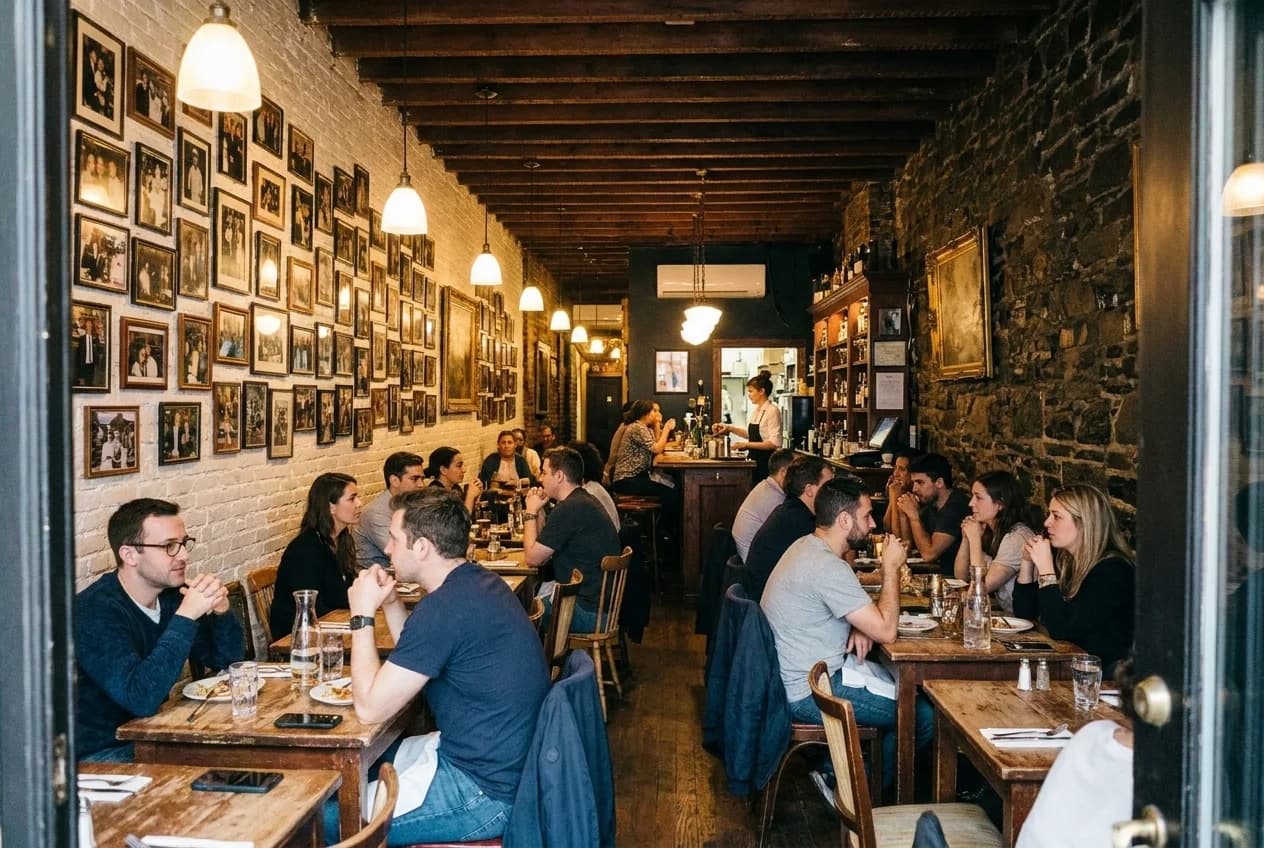
The pierogi room that never stopped making them by hand
Veselka opened at 144 Second Avenue in 1954 as a newsstand and candy store serving coffee to the Ukrainian working families of the neighbourhood. By the late 1960s it had transformed into a full-service restaurant, and by the 1980s it had become the East Village's defining Ukrainian coffee shop. The dining room has expanded twice since then, absorbing neighbouring storefronts, but the menu core has not changed: pierogi, borscht, stuffed cabbage, kielbasa, blintzes, and challah French toast.
The pierogi arrive in plates of seven or eight, boiled and then pan-fried, the potato-and-cheese filling firm, the onions caramelised on top. The borscht is served hot or cold depending on the season, the sour cream swirled in at the table. The kielbasa is grilled to order, the casing snapping when you cut it, served with sauerkraut and rye bread. Prices remain low: a full plate of pierogi with soup runs under twenty dollars, a full breakfast with coffee under fifteen.
Veselka restored full 24-hour service on Fridays and Saturdays in April 2026 after years of shortened pandemic hours, and runs to midnight most other nights. The dining room fills with students, artists, late-shift workers, and the remaining Ukrainian families who have lived in the neighbourhood for decades. The restaurant has not chased trends, has not opened a second Manhattan location, and has resisted the pressure to modernise the menu. It survives because it still does what it did in 1954: serve affordable, filling Eastern European food to people who need it at any hour.
The first Japanese room in a neighbourhood that now has three dozen
Sapporo East opened at 245 East Tenth Street in 1983, when it was nearly the only Japanese restaurant in the East Village. The only other was Mie, on Second Avenue and Twelfth Street, which closed decades ago. Sapporo East remains, serving bargain sushi, ramen, udon, teriyaki, tempura, and katsudon in a narrow dining room with a sushi counter along one wall.
The chirashi bowl is the signature dish: a lacquered bowl of sushi rice topped with nine or ten pieces of sashimi, served with miso soup and a small salad for under twenty dollars. The ramen arrives in a deep bowl with a rich pork broth, the noodles cooked to order, the chashu pork tender and fatty. The tempura is light, the batter thin, the vegetables and shrimp fried just before service. The restaurant is open seven days a week, lunch and dinner, and does not take reservations.
Sapporo East survived the arrival of three dozen newer Japanese restaurants—ramen specialists, sushi omakase counters, izakayas, hand-roll bars—because it never tried to compete with them. It remained a neighbourhood spot with neighbourhood prices, the kind of room where you can eat a full meal for under twenty-five dollars and be in and out in forty-five minutes. The sushi is not cutting-edge, the ramen is not the best in the city, but the restaurant knows its lane and has stayed in it for more than forty years.
The Sicilian pastry shop that opened before Sinatra died
Veniero's opened at 342 East Eleventh Street in 1894, which makes it the oldest business in this article by decades. The interior is all white marble and brass fixtures, the display cases filled with Sicilian pastries: cannoli, sfogliatelle, miniature tarts filled with yellow custard and dotted with fruit, ricotta cheesecake, biscotti, rainbow cookies. Frank Sinatra was a regular when the neighbourhood was still Italian.
The pastries are sold by the piece or by the pound, the miniature tarts weighed on a scale behind the counter. The cannoli are filled to order, the shell crisp, the ricotta filling sweetened but not cloying. The cheesecake is dense, the crust thin, the top unbaked and pale. The espresso is pulled by baristas who have worked there for years, served in small white cups at a stand-up counter near the front window.
Veniero's also operates a small café in the back room, open until eleven most nights, where you can sit with a pastry and a cappuccino at a marble-topped table. The café does not take reservations and does not serve lunch or dinner, only pastries and coffee. The shop is open seven days a week, closing later on weekends to catch the post-dinner crowd. Prices have risen—a single cannoli is now over five dollars—but the pastries are still made in-house, and the café remains one of the few places in the neighbourhood where you can sit with an espresso after ten at night.
The noodle bar where David Chang started
Momofuku Noodle Bar opened at 171 First Avenue in 2004, when David Chang was an unknown cook with a small kitchen and no reputation. The original concept was simple: ramen, steamed pork buns, and a rotating menu of whatever Chang wanted to cook that week. The room seated fewer than thirty people at communal tables and a small counter, and the line stretched down the block within months of opening.
The pork buns became the signature dish almost immediately: two soft steamed buns filled with sliced pork belly, hoisin sauce, cucumber, and scallions. The ramen was rich and porky, the noodles made in-house, the toppings changing with the season. The soft-serve ice cream—added almost as an afterthought—became a destination in itself, flavoured with cereal milk or miso or whatever the kitchen was experimenting with that week.
Chang has since built a restaurant empire with locations across the country and the world, but the original Noodle Bar remains at its First Avenue address, still serving ramen and buns to a neighbourhood crowd. The menu has evolved—more dishes, more refinement, higher prices—but the core remains recognisable. A bowl of ramen now costs close to twenty dollars, and the pork buns are no longer the cheapest thing on the menu, but the restaurant still operates as a neighbourhood spot rather than a flagship. It survives not because it was first, but because it never stopped being good.
Practical notes
Cafe Mogador is at 101 St Marks Place, open daily. Weekend brunch waits peak between eleven and one. Lucien is at 14 First Avenue, open daily for dinner starting at five-thirty, no lunch service. B and H Dairy, 127 Second Avenue, is open daily except Saturday, eight in the morning to six in the evening. Veselka, 144 Second Avenue, is open 24 hours Friday and Saturday, to midnight most other nights. Sapporo East, 245 East Tenth Street, serves lunch and dinner seven days, no reservations. Veniero's, 342 East Eleventh Street, is open daily from eight in the morning to eleven at night, later on weekends. Momofuku Noodle Bar is at 171 First Avenue, open daily for lunch and dinner. Most of these rooms accept cash, and several offer lower checks at off-peak hours.
Tags: #EastVillage #BestRestaurantsNearMe #LongRunningRestaurants #CafeMogador #Lucien #BAndHDairy #Veselka #SapporoEast #Veniero #MomofukuNoodleBar #MoroccanFood #FrenchBistro #JewishDairy #UkrainianFood #JapaneseFood
Please drink responsibly. Must be of legal drinking age.
All trademarks are the property of their respective owners.
Ask Karpo first
Ask Karpo which East Village restaurant that has held its address for twenty years fits your budget and your hour tonight. Karpo knows which ones are closed Saturdays, which ones stop serving lunch, which ones still run under twenty dollars for a full meal, and which corner has the shortest wait at seven on a Friday. Search by cuisine, by price ceiling, or by the block you are standing on right now.