Ask anyone in New York where to eat in Astoria and you will be given a Greek answer, usually within four blocks of the same three streets. That answer is not wrong - the Greek corridor is genuinely one of the best eating strips in the city - but it describes about a quarter of the neighbourhood. Astoria also holds one of the largest Egyptian communities in the United States, a long-standing Brazilian presence, and a scattering of Balkan bakeries and grills that most Manhattan diners have never heard of. They are on different streets, they keep different hours, and they are the reason locals do not think of Astoria as a Greek neighbourhood at all.
Astoria is bigger than it looks on a map and the four food corridors do not overlap, which means the wrong turn costs you twenty minutes on foot. Tell Karpo what you feel like eating and which train you are coming off, and it will point you at the right corridor rather than the most-reviewed street.
Steinway Street, and what Little Egypt actually is
The stretch of Steinway Street north of Astoria Boulevard is the centre of Egyptian and broader Arab life in Queens, and it operates on a completely different clock from the rest of the neighbourhood. The cafes fill late, the shisha terraces run past midnight, and the busiest hours on a summer weeknight are between ten and one.
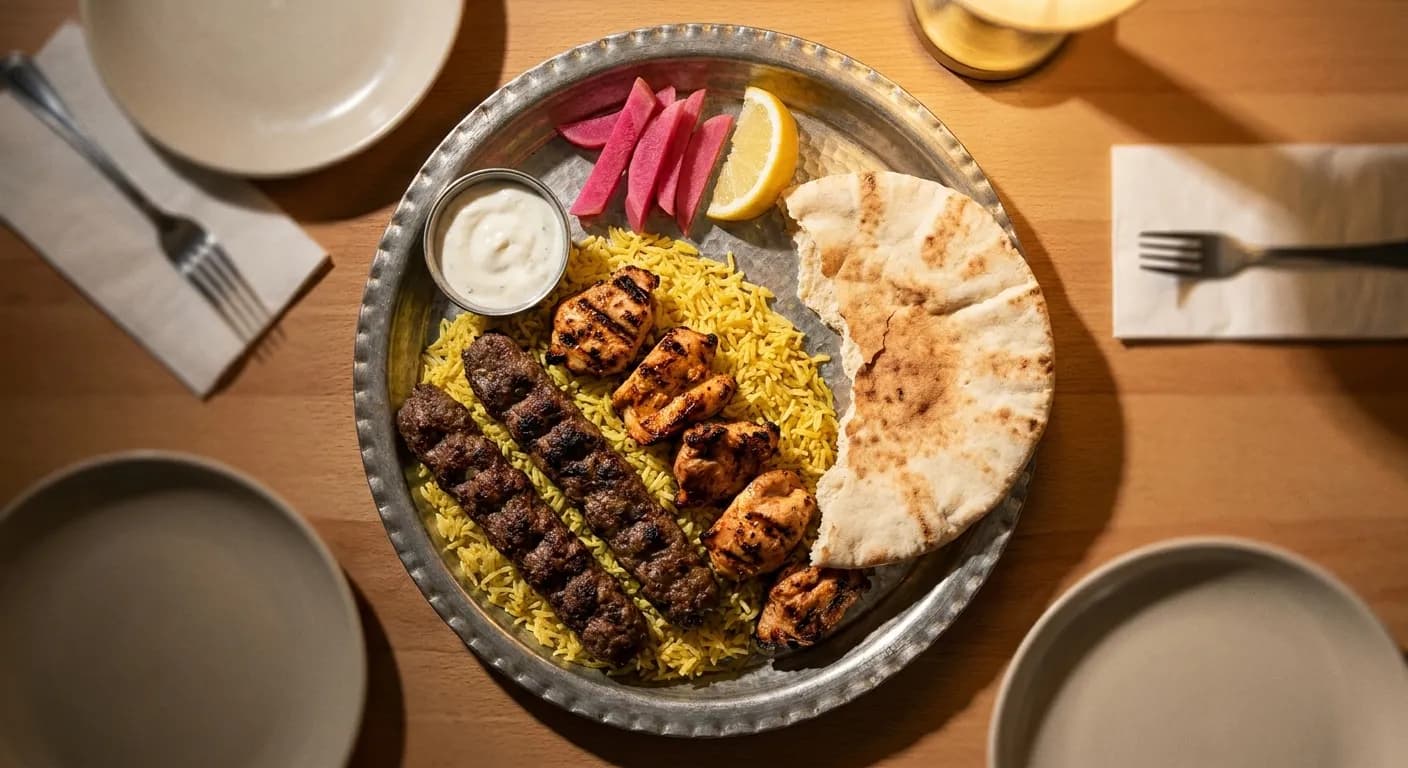
What to eat there is grilled - kofta, chicken, mixed grills served with rice and bread for a table - along with the fuul and taameya that turn up at breakfast and again very late. The pastry shops on the same blocks are a separate errand and worth building in, because the baklava and the basbousa are made on site rather than shipped in.
Going at the right hour matters more here
A Steinway Street cafe at six in the evening is a quiet room with two people in it, and the same room at eleven is full. If you arrive early and conclude the street is dead, you have simply come at the wrong time - the schedule is built around after-dinner rather than dinner.
During Ramadan the pattern shifts again and the entire corridor becomes a night-time district, with queues after sunset and kitchens running until dawn. It is one of the more remarkable food nights in New York and it is almost never listed as an attraction.
The Brazilian pocket and what it looks like now
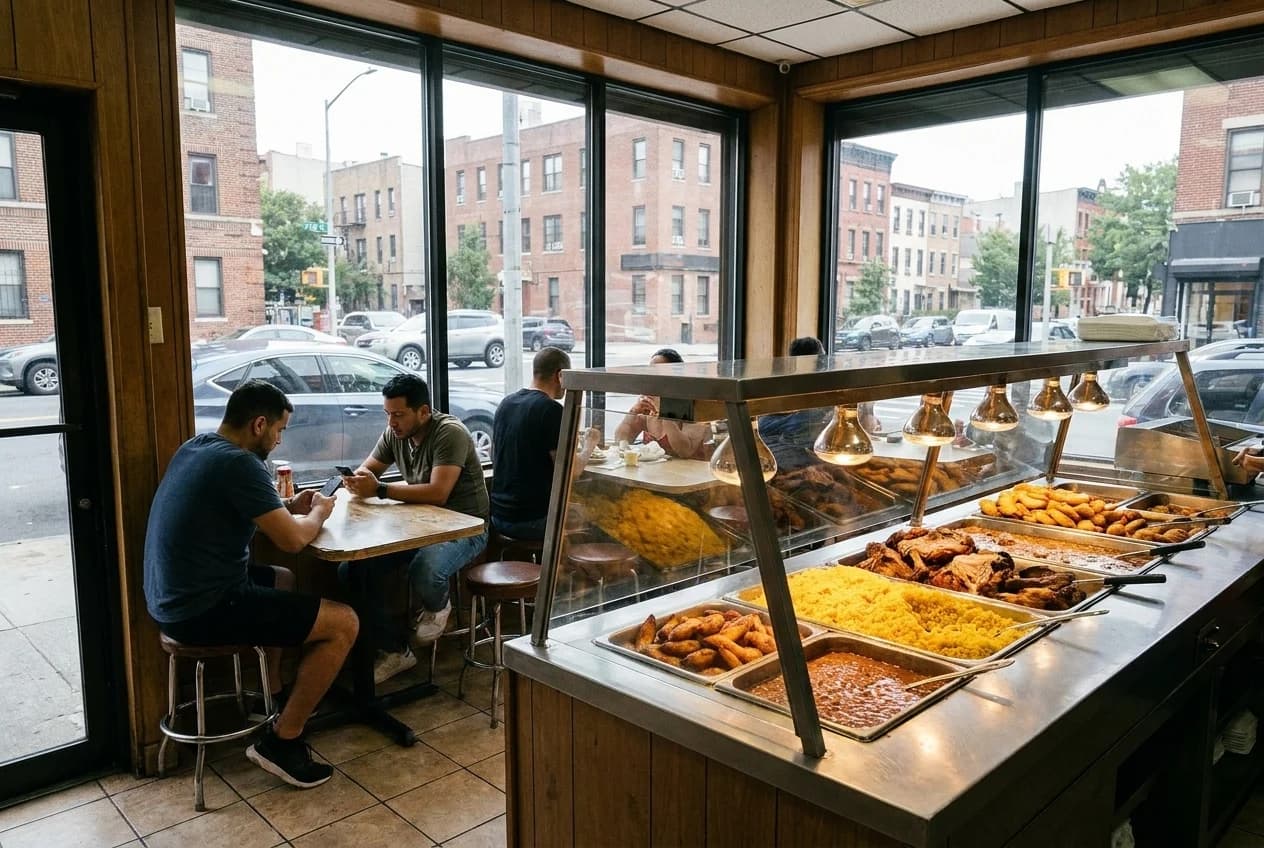
Astoria's Brazilian community has been present for decades, concentrated historically around the mid-30s avenues, and while it is smaller than it once was the food infrastructure remains - churrascarias, buffet-by-the-kilo lunch counters, and bakeries selling pao de queijo and coxinha over the counter from mid-morning.
The por-quilo lunch buffet is the format to understand: you take a plate, you serve yourself from a spread of rice, beans, farofa, grilled meat and salads, and you pay by weight. It is the best-value hot lunch in the neighbourhood and it does not survive past mid-afternoon.
Balkan bakeries and the burek question
Scattered through the neighbourhood, mostly along Broadway and the streets around it, are a handful of Balkan bakeries and grills that came with Bosnian, Serbian and Albanian arrivals. The thing to order is burek, sold by weight from a coiled tray - meat, cheese, spinach or potato in filo, cut to whatever size you ask for.
The grills do cevapi, small hand-rolled beef sausages served with flatbread, chopped onion and ajvar. It is a five-minute meal that costs very little and it is the single most underused lunch in Astoria.
How the four corridors sit on the map
The useful mental model is a rough grid rather than a single high street. The Greek core runs along Broadway and Ditmars towards 31st Street, Little Egypt sits on Steinway north of the boulevard, the Brazilian remnant clusters in the mid-30s avenues, and the Balkan places are dotted along Broadway and the numbered streets crossing it.
The walk between the furthest two is around twenty-five minutes, which is exactly long enough that choosing badly wastes an evening. Pick the corridor before you pick the restaurant.
Trains, and why the N and W change your plan
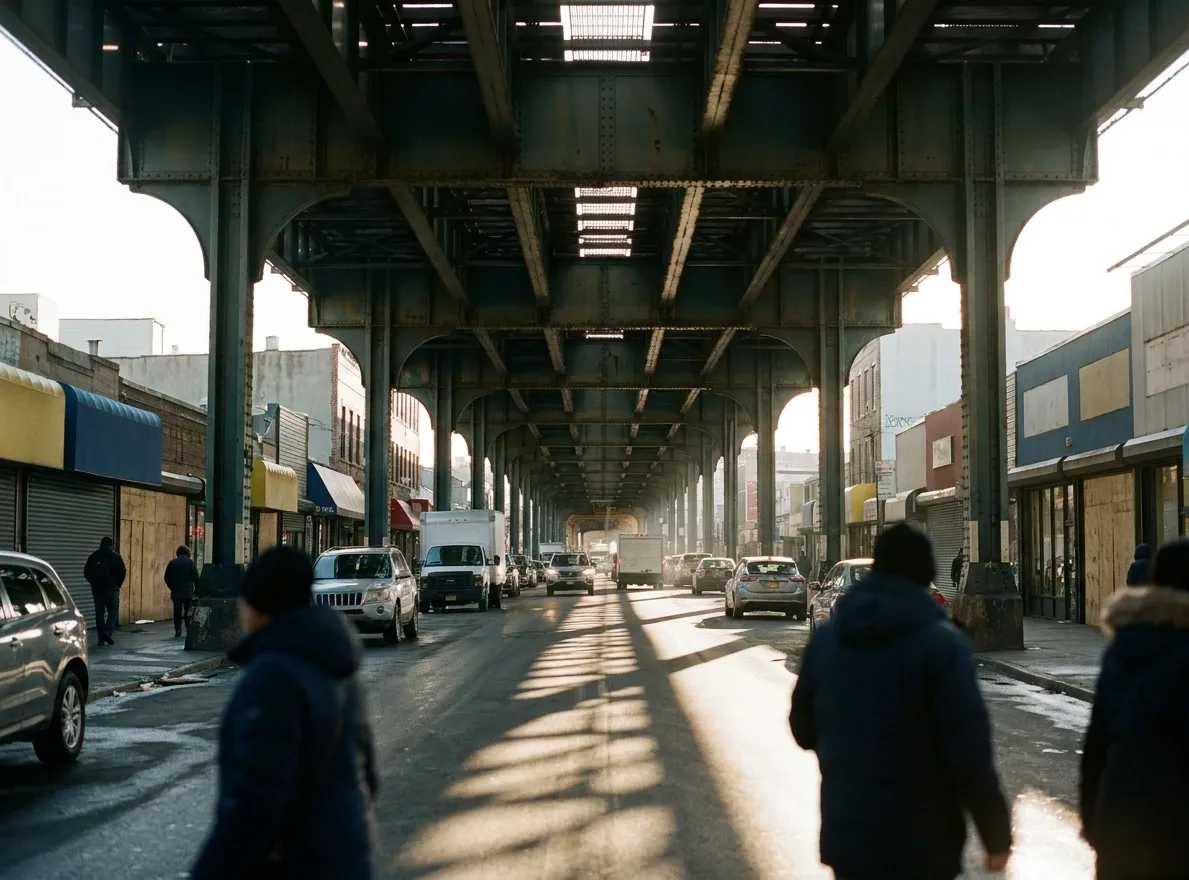
Astoria is served by the N and W along 31st Street, which means the elevated line is the spine of everything and the neighbourhood is much longer than it is wide. Almost every restaurant worth going to is within about ten minutes' walk of a station on that line, but they are different stations.
Ditmars is the top of the Greek end, Astoria Boulevard puts you at the mouth of Steinway, and 30th Avenue is the most central if you are not sure. Getting off one stop early is a common and easily avoided way to add fifteen minutes to a hungry walk.
Eating across two corridors in one evening
The neighbourhood rewards splitting a night rather than committing to a single table. A plate of cevapi or a wedge of burek at seven, a proper grill on Steinway at nine, and pastry and coffee afterwards is an entirely normal Astoria evening and costs less than one sit-down dinner in Manhattan.
The one constraint is direction. Work north and east across the night - Broadway, then Steinway, then the late cafes - rather than doubling back, because the last leg of the evening is the one you want to be closest to the train.
Tags: #BestRestaurantsNearMe #Astoria #Queens #NYC #LittleEgypt #SteinwayStreet #BalkanFood #BrazilianFood #NeighborhoodGuide #NYCFood
All trademarks are the property of their respective owners.
Ask Karpo first
Astoria is four neighbourhoods sharing a postcode and only one of them gets written about. Ask Karpo which corridor suits what you feel like eating tonight.