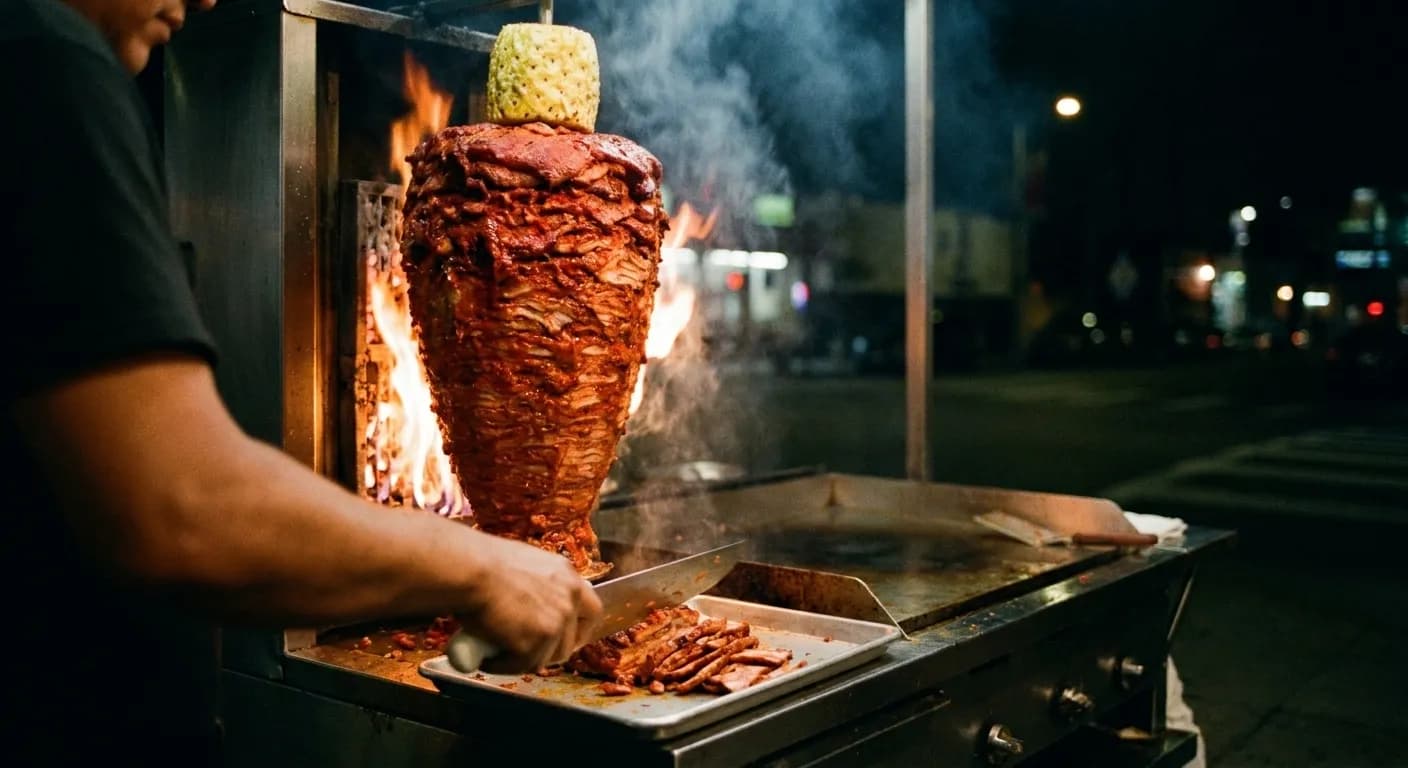
There is a decent argument that Los Angeles is the best city in the United States for eating extremely well for very little money, and the reason is structural rather than cultural. This is a horizontally sprawling city with cheap commercial space in unglamorous locations and one of the most diverse immigrant populations in the world. The result is that the best restaurants in Los Angeles at the twenty-five dollar mark are not a budget version of the expensive ones. They are frequently better.
The best cheap food here is in strip malls with no signage worth reading. Ask Karpo what is genuinely good within ten minutes of you.
The strip mall is the format
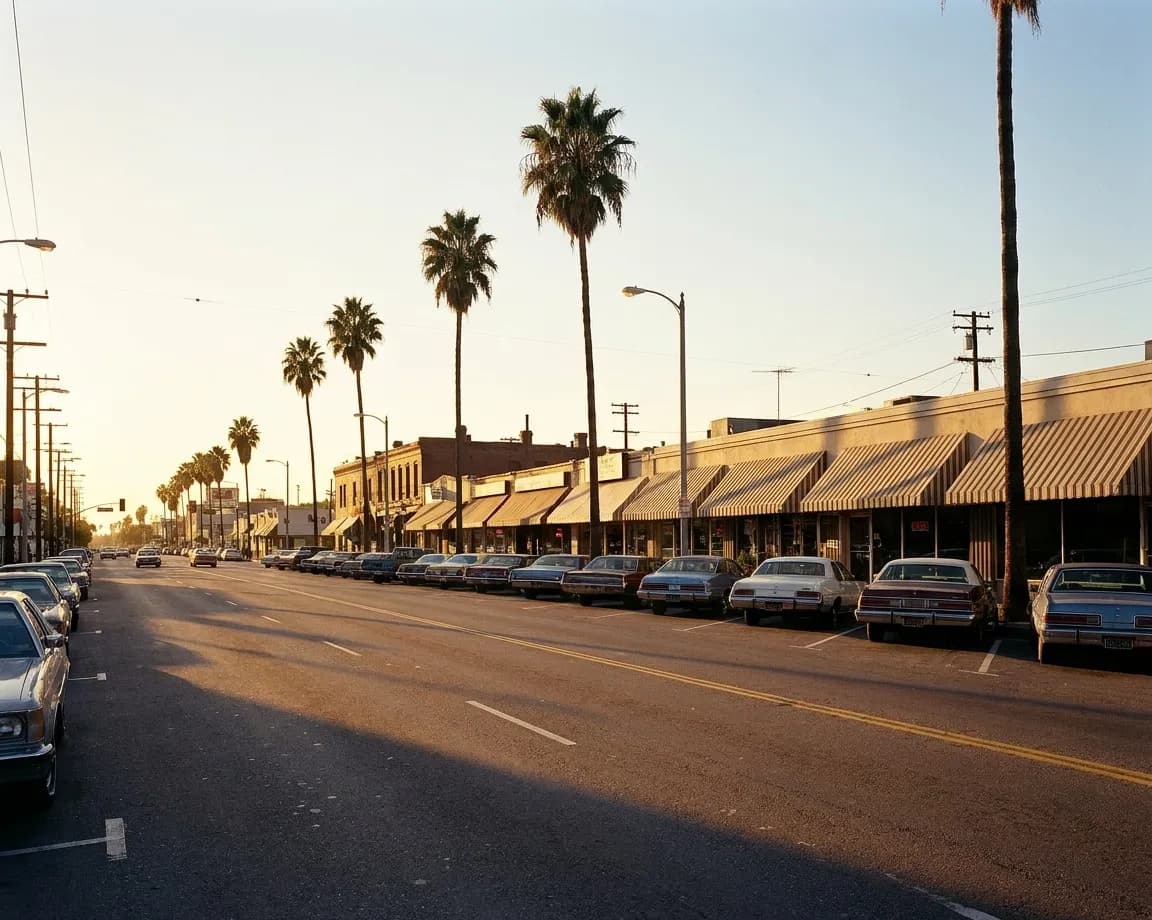
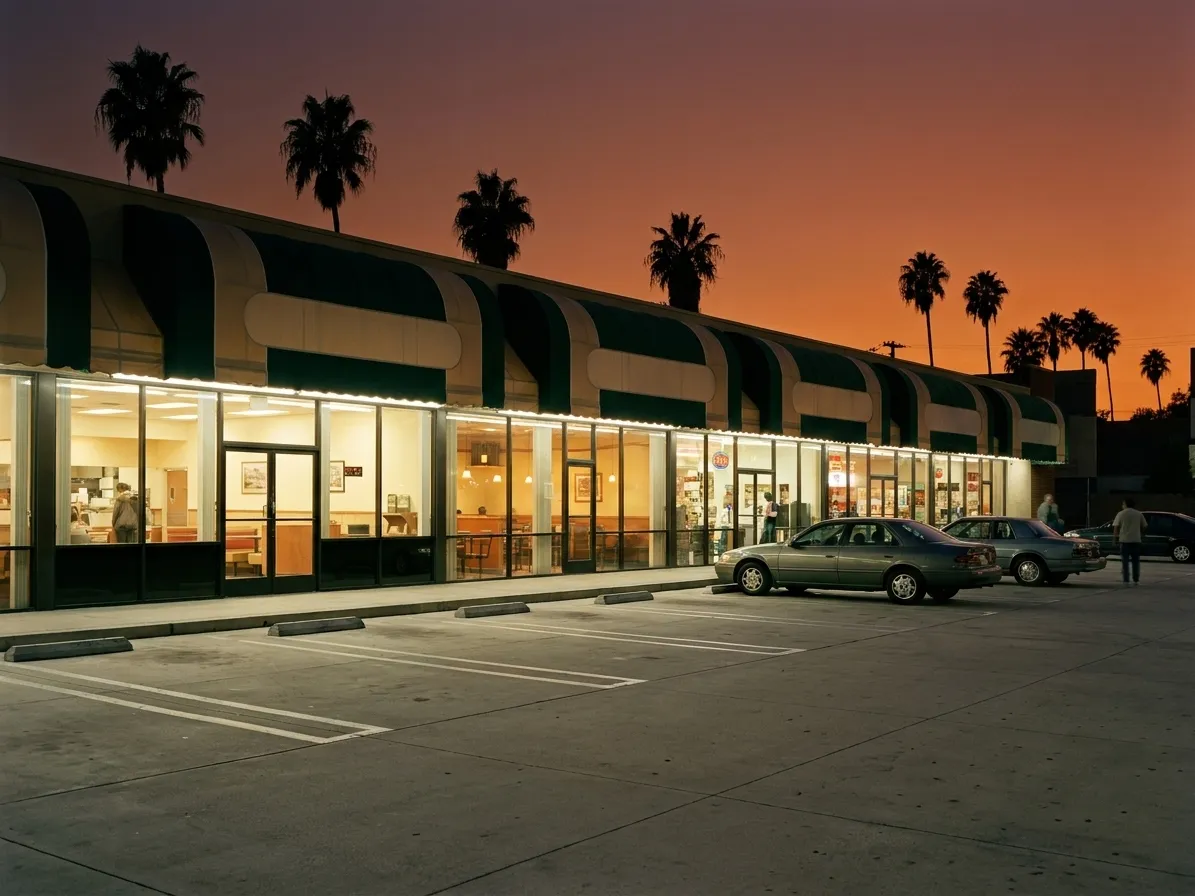
Understanding Los Angeles dining means accepting that the strip mall is the city's most important restaurant format, not an unfortunate compromise. Cheap rent on a boulevard-facing unit with parking means a family can open a restaurant serving one regional cuisine extremely well without needing a design budget or a location anyone would call desirable. That is the entire mechanism behind the San Gabriel Valley's Chinese food, Koreatown's Korean food, the Thai restaurants of East Hollywood and the Oaxacan and Salvadoran cooking spread across the mid-city.
The practical consequence is that appearance carries no information here. A room with fluorescent lights, laminated menus and a car park is as likely to be exceptional as terrible, and in Los Angeles more likely than in most cities to be exceptional.
The cuisines that dominate the low end
Mexican food is the obvious one and covers the widest range — from three-dollar tacos to a proper Oaxacan sit-down meal comfortably under twenty-five. Thai food in East Hollywood and the Valley is a second pillar and is frequently the best value cooking in the city. Korean in Koreatown works because the banchan structure means a modest main becomes a large meal. Armenian and Persian cooking in Glendale and the Valley delivers enormous kebab plates well under budget. Central American, particularly Salvadoran and Guatemalan, is spread across the mid-city and is systematically under-priced relative to how good it is.
What you will notice is that nearly none of this is the food that appears in national coverage of Los Angeles restaurants. That coverage tracks the expensive end, which is fine, but it means the version of this city's food culture that travels is roughly the least representative slice of it.
Market halls, the shortcut for anyone new
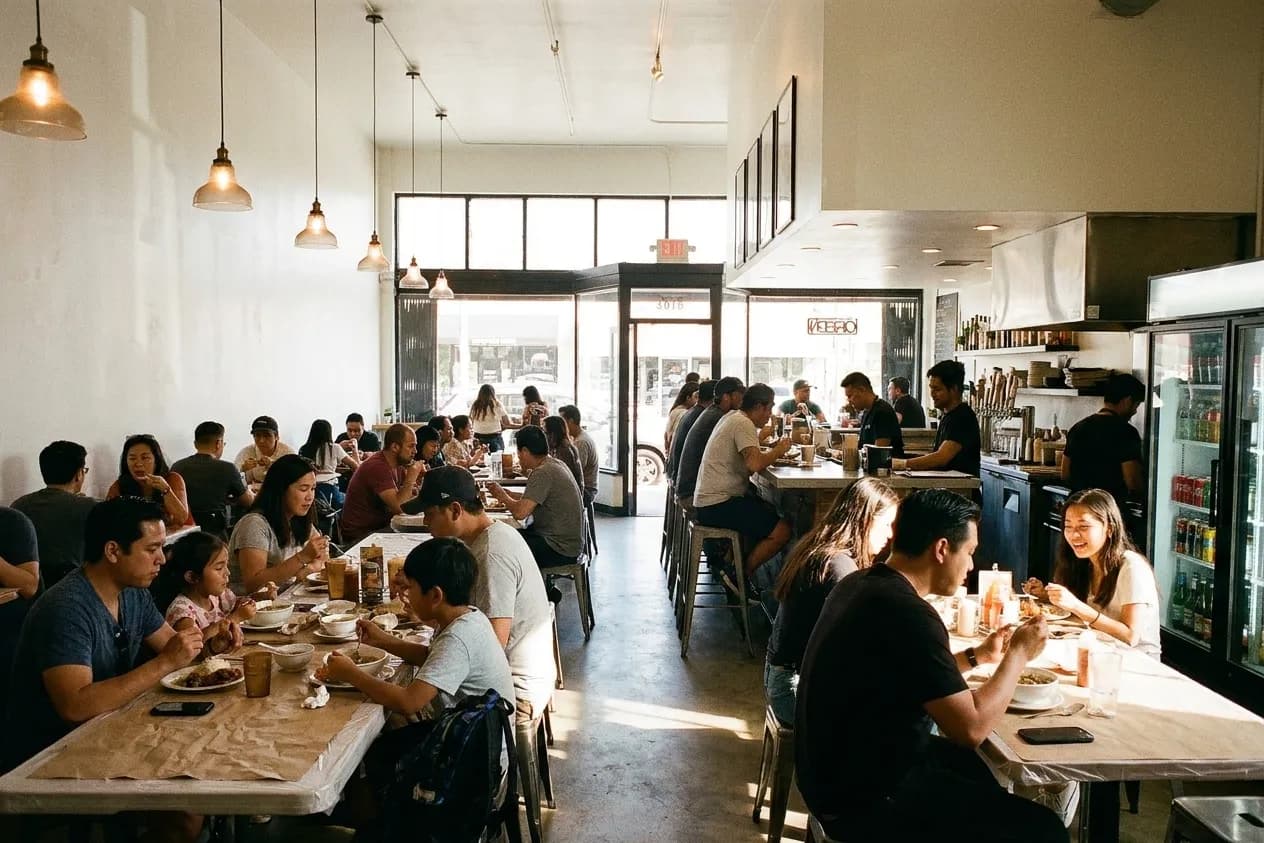
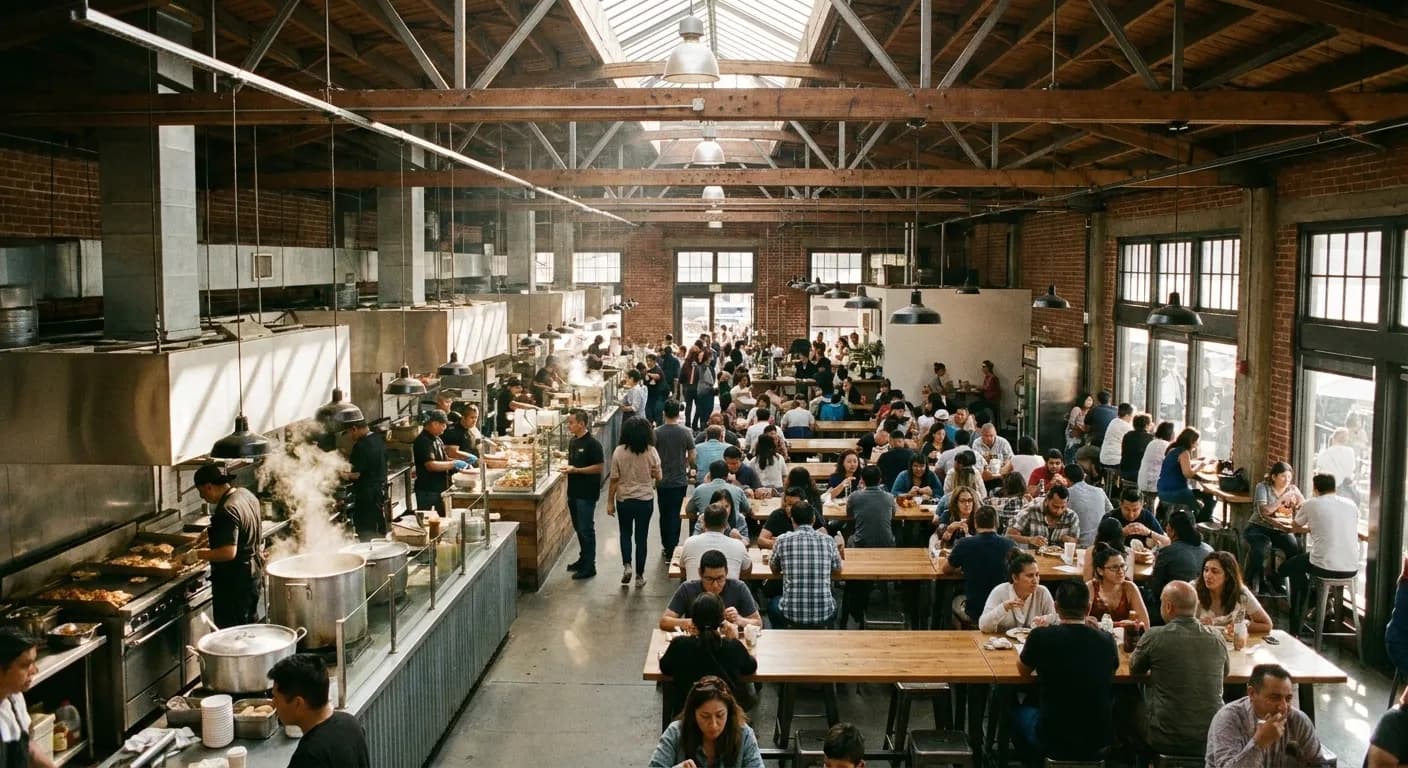
If you do not know where to start, the historic downtown market halls solve the problem in one stop. A dozen or more independent stalls under one roof, most of them well under twenty-five dollars, covering several cuisines, with communal seating and no commitment to any single one. Grand Central Market is the best known and remains genuinely good despite its fame, and Mercado La Paloma near USC is quieter, cheaper and arguably better. For a visitor with one afternoon, this is the highest-information meal available in the city.
Where the budget actually goes
Two things blow a twenty-five dollar budget in Los Angeles and neither is the food. The first is drinks — a cocktail is eighteen dollars and a beer is nine at anywhere with a full bar, which doubles a cheap dinner instantly. The overwhelming majority of the restaurants described above either have no licence or sell beer at grocery-store-adjacent prices, which is part of why the total stays low. The second is delivery, where the combined effect of marked-up menus, fees and tip regularly adds fifty per cent, and where the food itself is frequently ruined by a twenty-minute drive in a hot car.
There is a third, less obvious one: parking. In a handful of neighbourhoods — parts of downtown, Hollywood, the Westside — a valet or a garage adds ten to twenty dollars to the meal. Strip-mall restaurants have free parking outside the door, which is not a coincidence and is worth a couple of dollars a head in the comparison.
The geography, which is the actual skill
Eating cheaply and well in Los Angeles is largely a question of being willing to drive to the right places, and the right places are rarely where visitors stay. The San Gabriel Valley — Alhambra, San Gabriel, Monterey Park, Rowland Heights — is the densest concentration of regional Chinese cooking outside Asia and is priced for the community that lives there rather than for tourists. Koreatown is central, walkable by LA standards and open later than almost anywhere else in the city. The east San Fernando Valley runs an enormous span of Armenian, Persian, Thai and Mexican food at low prices.
Meanwhile the Westside, Hollywood and the beach cities are where you will pay the most for the least, because the rent is highest and a large share of the trade is people who do not know the alternatives. This is the inverse of how most cities work, where the centre is expensive and the suburbs are cheap. In Los Angeles the good cheap food is in the middle-distance suburbs, and the twenty-minute drive is the price of admission.
How to choose without knowing anything
The heuristics that work in this city are simple. Prefer a restaurant that does one regional cuisine specifically over one that does a country generally. Read the specials board rather than the menu, particularly if it is handwritten in a language other than English. Go where the car park is full at an odd hour, because that is a room with a committed local following rather than a passing trade. And if the menu has more than about forty items, be suspicious — depth in one thing beats breadth in everything, and that principle has never let anyone down in Los Angeles.
Tags: #LosAngeles #LAEats #CheapEatsLA #BestRestaurantsLA #StripMall #Koreatown #SGV #GrandCentralMarket #BudgetLA #LAFood #Under25 #TacosLA #ThaiTown #FoodGuide #EatLikeALocal
All trademarks are the property of their respective owners.
Ask Karpo first
Ask Karpo what you can eat well for under twenty-five dollars near you in Los Angeles right now, what the one dish to order is, and whether there is parking.