For a long time the honest answer about vegan ramen was that it was a substitution — the same bowl with the pork removed and something thin in its place. That has genuinely changed in San Francisco, and the shops doing it properly are not doing it by subtraction. They are building a separate broth from scratch, and in at least one case charging less for it than for the pork version.
The gap between vegetarian and vegan in a ramen bowl is usually one ingredient and it is rarely on the menu. Ask Karpo which rooms near you do a genuinely vegan version and what to specify.
The bowls built from their own broth
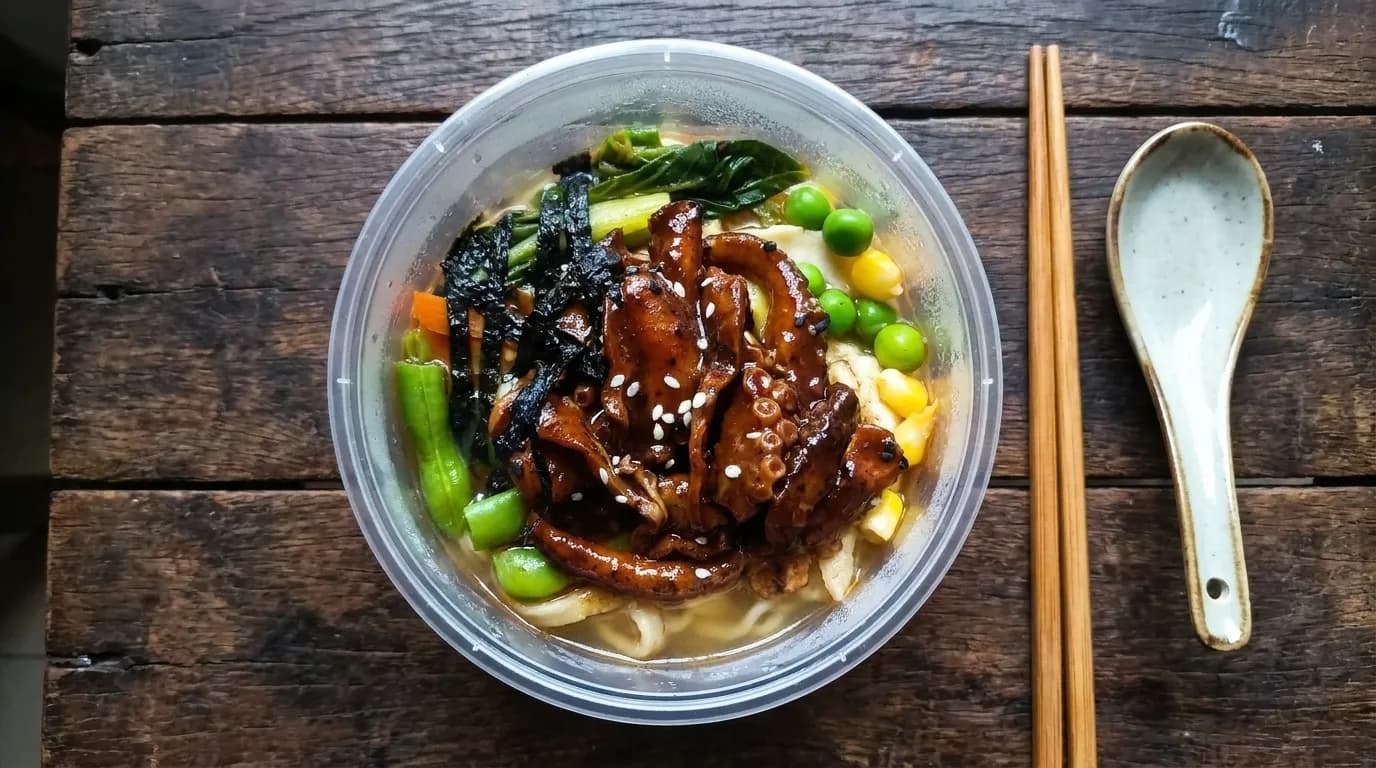
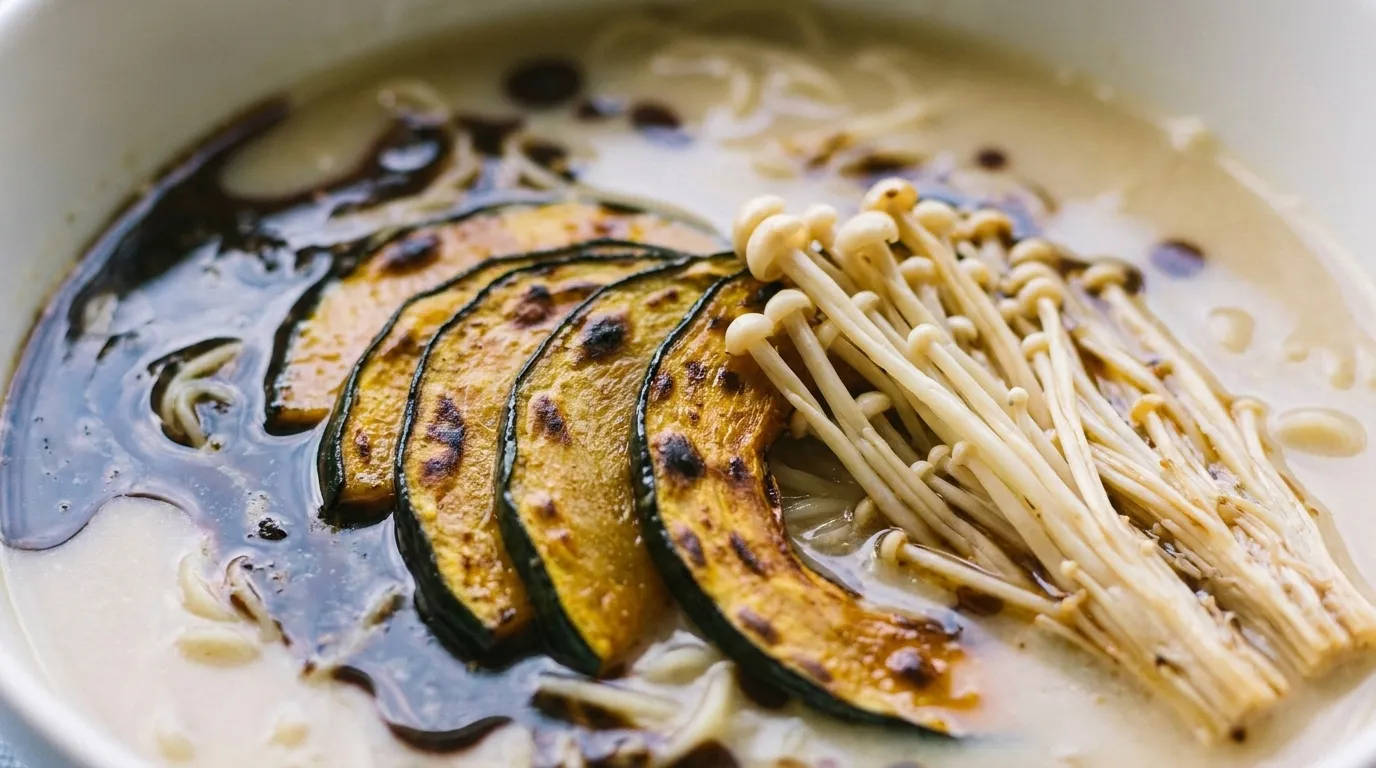
Hinodeya's Zen ramen, at around fifteen dollars, is the clearest example of doing it properly: a vegan dashi made with shiitake and white soy sauce, topped with kale, acorn squash and inari. Dashi is the foundation of the whole cuisine, and a vegan dashi built on mushroom and soy rather than fish is a genuine reconstruction rather than an omission — which is why the bowl tastes like something rather than like a gap.
Torraku takes the price in the other direction. Its vegan ramen is fourteen dollars at both the Potrero Hill and Lombard Street rooms, built on a miso broth with add-ons including tofu, bamboo and bean sprouts, and it consistently tops the city's vegan ramen rankings. Fourteen dollars is below what most standard bowls in San Francisco now cost, which quietly makes it one of the better-value lunches in the city regardless of diet.
The butter question
Nojo Ramen Tavern in Hayes Valley makes the most interesting vegetarian bowl on this list and it comes with a trap. The veggie miso ramen is built on seasoned ground soybean with a genuinely meaty texture, fresh corn, Japanese greens, scallion, and a slick of garlic oil and butter. The butter is the whole issue: as served, the bowl is vegetarian, not vegan, and you have to ask for it without.
This is the single most useful habit for anyone eating vegan ramen anywhere. The broth is usually the thing people check, and the failure is almost always elsewhere — butter, an egg that arrives by default, a fish-derived seasoning in the tare, a topping added without thought. Ask about the finishing fat and the egg specifically, rather than asking whether the bowl is vegan, and you will get a more reliable answer.
Where the seasonal versions are
Nojo also runs a seasonal vegan curry ramen, topped with crisp lotus root, pumpkin, red peppers, edamame, broccolini and vegan soy croquettes. Seasonal vegan bowls are worth watching for a structural reason: a kitchen that changes its vegan option with the season is treating it as a dish rather than as an accommodation, and the difference in care is immediately obvious in the bowl.
Marufuku serves a vegetarian ramen that is made vegan on request by leaving out the egg, and Ken Ken Ramen runs a vegan broth with vegan noodles heaped with vegetables — worth knowing because noodles themselves are not automatically vegan, and a shop that has thought about the noodle has usually thought about everything else too.
It is worth saying why this category improved so quickly in San Francisco specifically. A city with a large, long-standing vegetarian population produces enough weekday demand for a vegan bowl that a shop can justify developing a second broth rather than treating it as a courtesy. That is a volume effect rather than a cultural one, and it is why the same chain of restaurants often does this properly here and not elsewhere.
How to order well
Go to the shops that build a vegan bowl on purpose rather than the ones that will assemble one if asked. The difference is not politeness, it is depth: a purpose-built vegan dashi has had the same development time as the pork broth, and a hastily assembled one has had none. Every shop above is in the first category, which is why the list is short.
Two practical notes. Vegan bowls tend to be lighter, so a side — gyoza, rice, an extra topping — is more often necessary than it is with tonkotsu, and most of these kitchens have vegan versions of those too if you ask. And say the specific word: no butter, no egg. Vegan as a single word gets translated differently in different kitchens, and naming the ingredient removes the ambiguity entirely.
One more thing worth knowing if you are cooking-curious rather than just hungry. The reason a good vegan ramen tastes like more than vegetables is layering: dried mushroom for depth, kombu for background salinity, roasted or charred vegetables for the caramelised note that pork bones normally supply, and a finishing oil for the fat. When a bowl falls flat, it is almost always the last of those that is missing rather than the broth itself.
That also explains why the price sits where it does. A vegan bowl skips the expensive protein and spends the saving on mushrooms, kombu and time, which is why a fourteen-dollar vegan ramen can be a genuinely complete dish rather than a cheaper one. It is one of the few places on a menu where the lower price is not buying you less.
Practical notes
Hinodeya: Zen ramen, around $15, vegan dashi with shiitake and white soy, kale, acorn squash and inari. Torraku: $14 vegan miso in Potrero Hill and on Lombard Street, add tofu, bamboo, bean sprouts. Nojo in Hayes Valley: veggie miso with ground soybean — ask for no butter — plus a seasonal vegan curry ramen. Marufuku: vegetarian made vegan by omitting the egg. Ken Ken: vegan broth and vegan noodles. Always specify butter and egg rather than just saying vegan.
Tags: #SanFrancisco #SFRamen #VeganRamen #VegetarianSF #PlantBased #Hinodeya #Torraku #NojoRamen #HayesValley #PotreroHill #SFEats #BestRamenSF #VeganSF #NoodleBowl
All trademarks are the property of their respective owners.
Ask Karpo first
Looking for ramen in San Francisco that is vegan without being an afterthought? Ask Karpo which shops near you build their own vegan broth, what each bowl costs, and exactly what to ask them to leave out.