There is no ramen in Little Haiti and it is not an oversight. The neighbourhood's commercial ground floor is occupied by businesses serving its own residents - Haitian kitchens, bakeries, botanicas, barbershops - and the food economy there is griot, tassot and pate kode. What has happened instead, in the industrial blocks immediately north and west, is more interesting: a stretch of cheap warehouse space has become the part of Miami where a small, strange, single-dish restaurant can actually afford to open. If you are looking for noodles here, that belt is where to look.
The warehouse belt keeps irregular hours and several rooms are closed early in the week. Tell Karpo which evening you are heading up and get what is open.
Why the belt exists
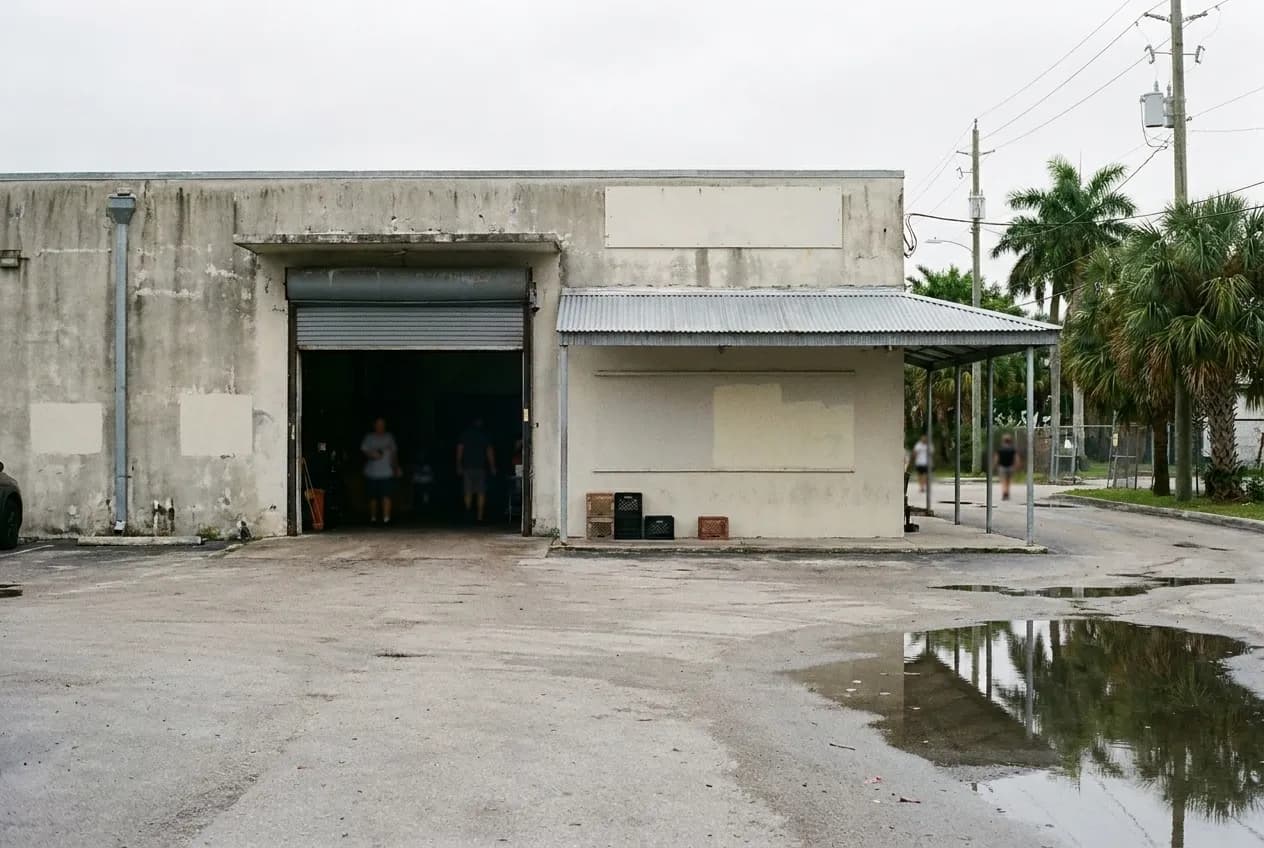
Rent is the whole story. In the Design District proper, ground-floor retail is priced for luxury brands. Two or three blocks north and west - through Buena Vista into what estate agents now call Little River - the building stock changes to single-storey warehouses and light industrial units, and the rent falls by a large multiple. That is the difference between needing eighty covers a night and being able to survive on thirty.
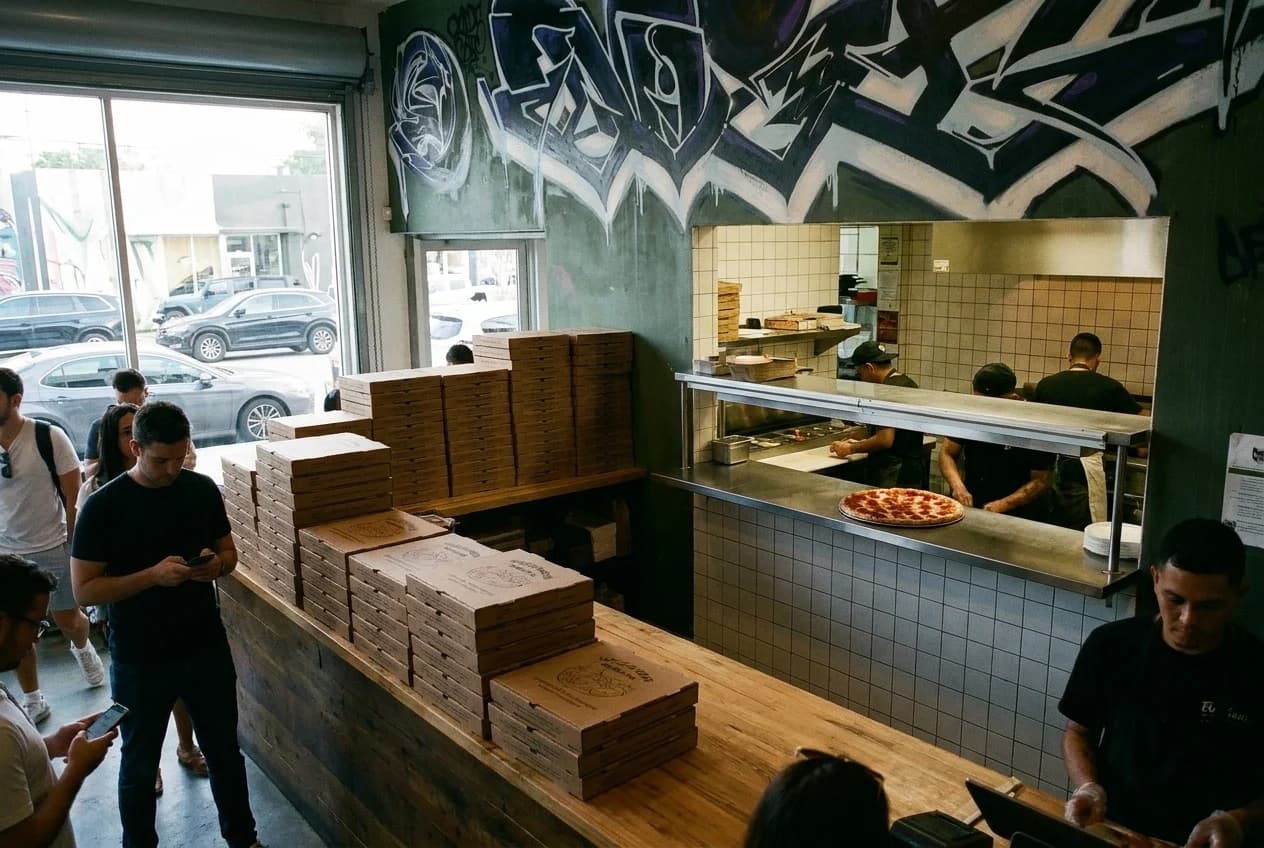
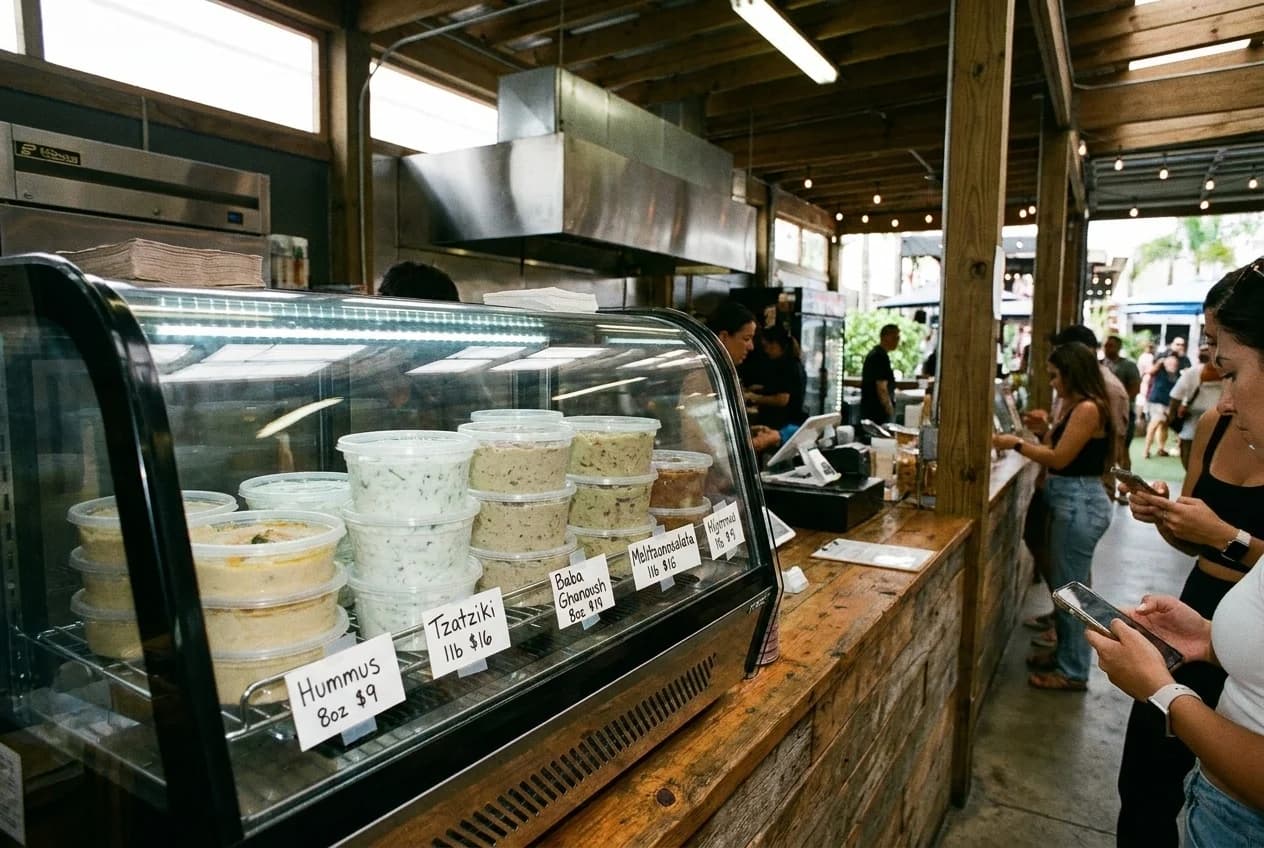
The restaurants that result are a specific type: small, owner-operated, short menus, often four or five nights a week, frequently doing one thing. Boia De on NE 2nd Avenue is the emblem of the pattern - a very small room in a strip mall doing cooking that would cost far more per head in a district storefront. A noodle shop fits that model precisely, which is why this belt rather than Little Havana or Coral Gables is where to expect one.
What the pattern predicts
Once you understand the economics you can predict the geography without a listings site. Single-dish restaurants, chef-owned rooms, natural wine bars, roasteries and bakeries cluster where cheap floor space meets enough passing population to fill thirty seats. In Miami that currently means Little River, the northern edge of the Design District, Allapattah and parts of the Upper East Side along Biscayne.
It also predicts the hours. A thirty-seat owner-operated room cannot staff seven days, so most of these places run four or five nights, frequently closed Monday and Tuesday, and often with a single evening service rather than lunch and dinner. Turning up on a Monday expecting a warehouse-belt restaurant to be open is the most common way to waste the trip, and it is entirely avoidable by checking.
Where the ramen actually is
For ramen specifically, the reliable supply in Miami sits south and east of here - Brickell, downtown, Wynwood, Midtown and the Design District proper - aimed at a lunch and early-dinner trade, with a second scattering in the south-west toward Kendall where the older Japanese restaurants are. From Little Haiti that is ten to twenty minutes by car, which in Miami terms is close.
The Design District and Midtown are the nearest, and they are the right answer if you want a bowl tonight without a project. Wynwood is a few minutes further and has more choice. Kendall and the south-west are further again and cheaper, and that is where the longest-established rooms are. None of it is walkable from Little Haiti, but none of it is far.
How to judge a bowl once you get there
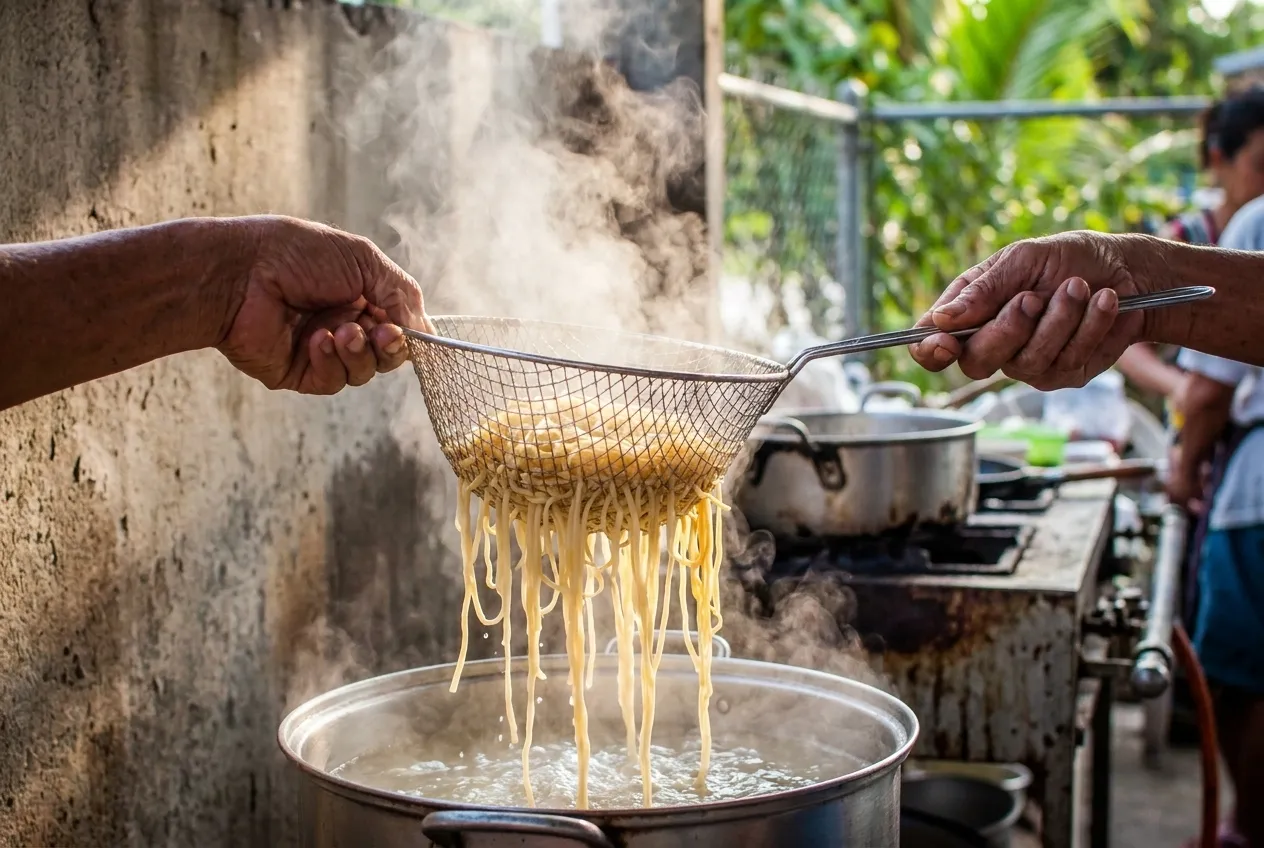
Ramen varies on two axes. The broth - tonkotsu is pork bone boiled hard until it emulsifies into something opaque and rich; chintan is the clear-broth family, lighter and much harder to make well. And the tare, the concentrated seasoning ladled into the bowl before the broth, which is where most of the flavour comes from: shio is salt-based and most delicate, shoyu is soy-based and standard, miso is heaviest.
Order the lightest thing on the menu to judge a kitchen. Richness is easy; delicacy is not, and a clear broth with shio tare exposes everything. Check the egg - the yolk should be jammy at the centre with the marinade visibly penetrating the white - and eat the noodles early, because they keep cooking in the bowl and go soft within about ten minutes.
What to eat if you stay
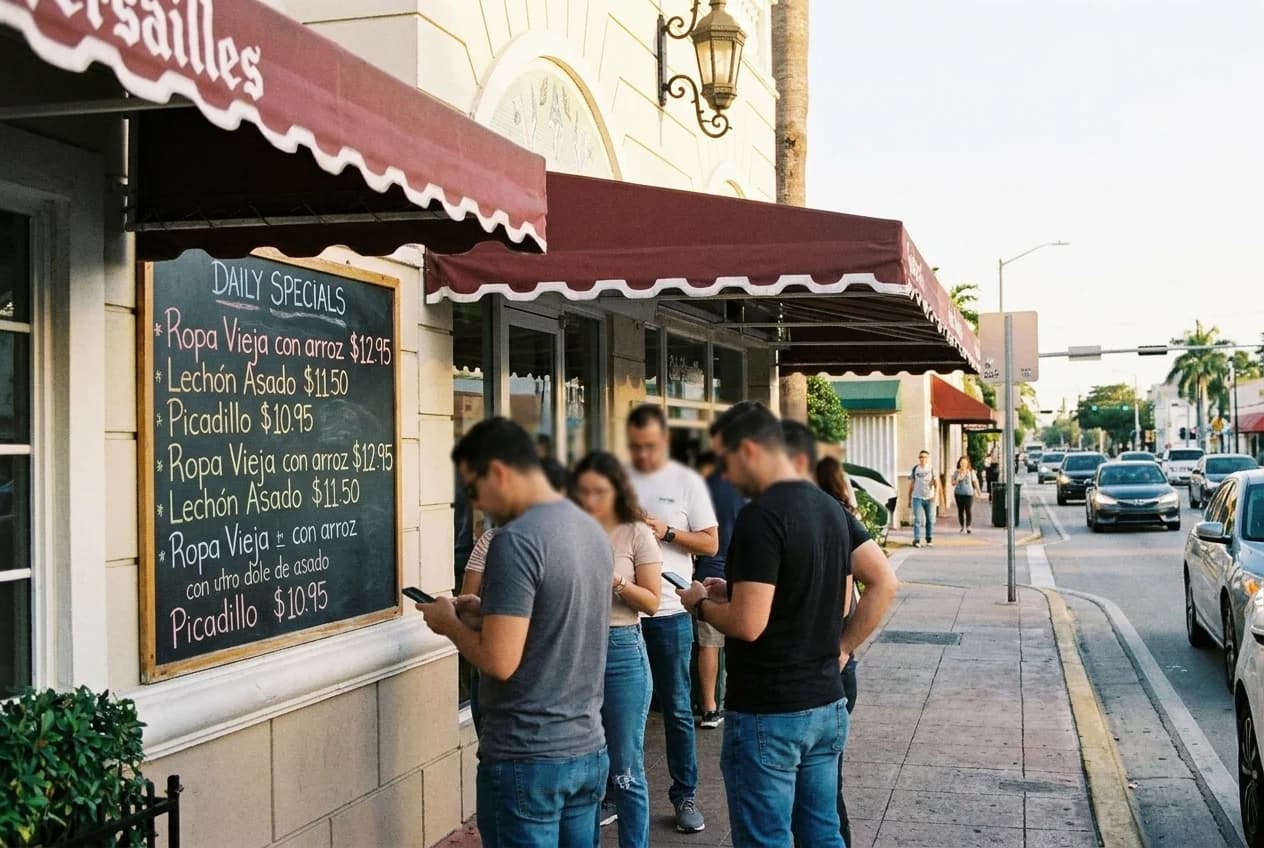
The honest recommendation for anyone actually in Little Haiti is to eat what the neighbourhood is good at. Griot - pork shoulder marinated in sour orange and green herb, braised then fried until the edges crackle - with pikliz, the fierce vinegar and scotch bonnet pickle that comes with it. Diri ak djon djon, rice cooked in black mushroom liquor until it turns slate grey. Legim, a long-cooked vegetable stew that reads as a side and eats as a main.
It is cheaper than any ramen in the county, it is one of the best-value hot meals in South Florida, and it is available approximately nowhere else in the United States at this quality. If the craving is specifically for a noodle soup, the drive is fifteen minutes. If it is for something hot, deep and restorative, walk instead.
Practical notes
Little Haiti kitchens run lunch through early evening and mostly close by nine. The warehouse-belt restaurants north and west run four or five nights a week, frequently closed Monday and Tuesday, often evening-only - check before driving. Ramen is ten to twenty minutes away in the Design District, Midtown, Wynwood or Brickell, and cheaper again in the south-west. Prices: ramen sixteen to twenty-four dollars a bowl; a full Haitian plate twelve to eighteen. Parking is easy and free on the industrial streets up here, which is not true south of the Design District. And judge a ramen kitchen on its lightest bowl rather than its richest.
Tags: #BestRamenInMiami #LittleHaiti #LittleRiver #Miami #Ramen #Tonkotsu #Shio #DesignDistrict #Midtown #Wynwood #Griot #Pikliz #HiddenGems #WarehouseRestaurants
All trademarks are the property of their respective owners.
Ask Karpo first
The warehouse belt's whole character is small rooms with irregular hours, which is exactly the information a static list gets wrong. Ask Karpo what is open up here tonight, where the nearest ramen actually is from where you are standing, and whether the Haitian kitchen round the corner is still serving instead.