A ranked list of the best ramen in Los Angeles is a slightly dishonest document, because the top of it is not a competition. A sixty-hour pork bone broth, a cold dipping noodle, a numbing sesame tantanmen and a fully customisable bowl are not better and worse versions of the same thing. Sorted by what is actually in the bowl, the city's shortlist becomes obvious and the ordering mistakes stop.
Ramen counters in this city run tight lunch windows and long queues that move in fits. Ask Karpo which of these is seating near you before you commit to the drive.
Tonkotsu, and how long is long
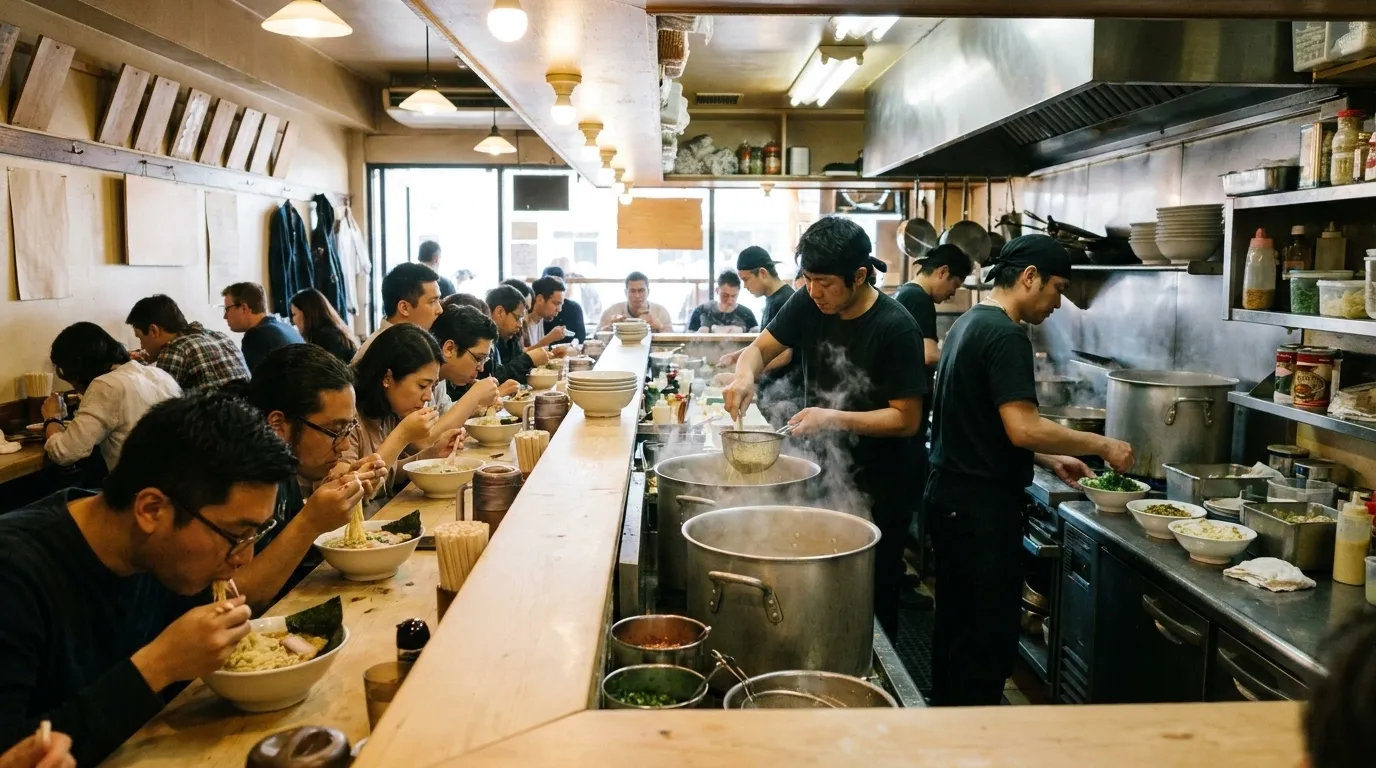
Tsujita LA Artisan Noodle is the reference point for pork-bone broth here, simmered for something in the region of sixty hours until it is opaque and genuinely heavy. Daikokuya has been the Little Tokyo standard since 2002 with a rich, unapologetically fatty version of the same idea. Ramen Tatsunoya works in a Kyushu style — koku tonkotsu on a fifteen-hour simmer — and Ramen Nagi builds from twenty-four hours.
The numbers are worth reading properly. Longer is not automatically better; it is a different result. A sixty-hour broth is thicker, sweeter and more coating; a fifteen-hour Kyushu-style bowl is cleaner and more drinkable, and easier to finish. If you have ever had a bowl of tonkotsu that defeated you halfway, the answer is not to give up on the style — it is to order the shorter simmer.
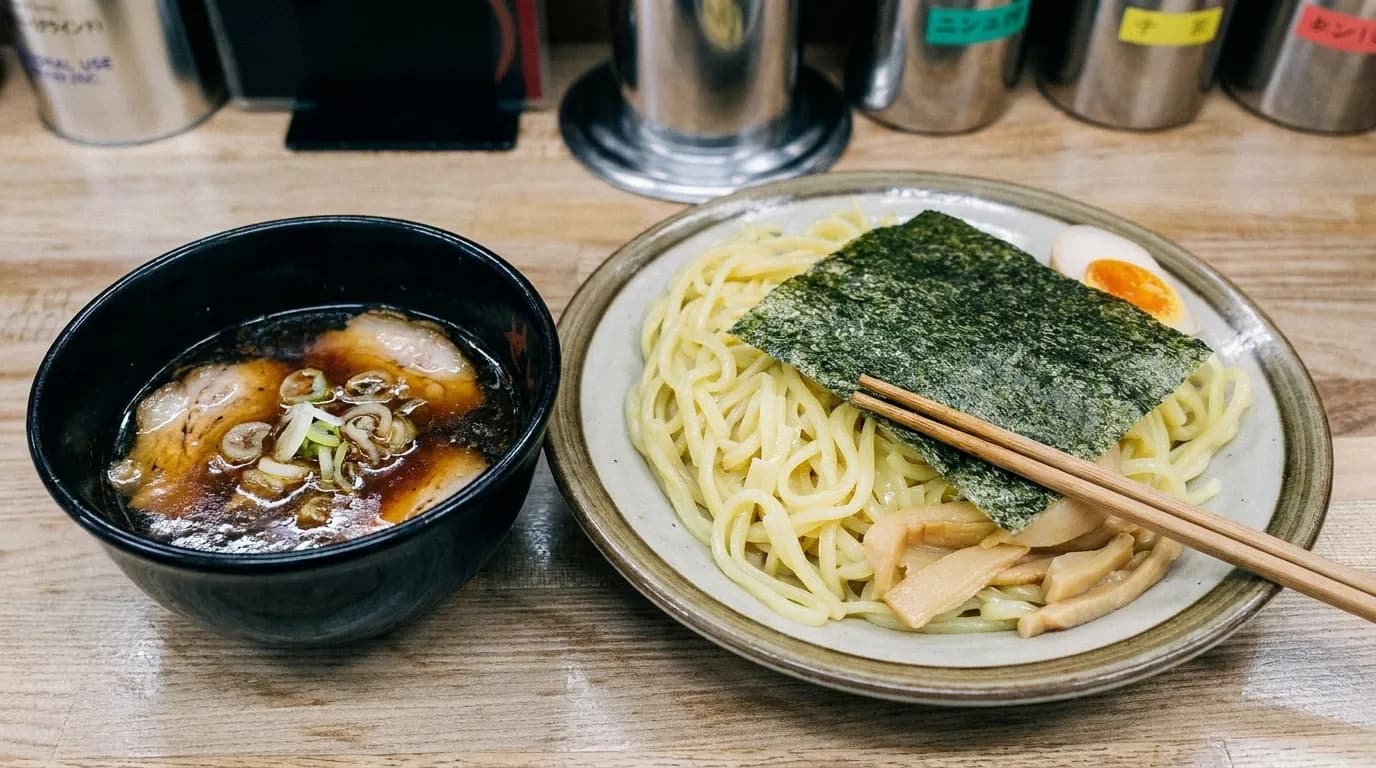
Tsukemen: order this at Tsujita
Tsujita's genuine signature is the tsukemen — noodles served cold and separate alongside a small bowl of very concentrated broth for dipping. It is the order regulars make and the one visitors skip because it looks like a deconstructed version of the thing they came for. It is not. It is the format the broth was reduced for.
Tsukemen also solves the Los Angeles problem: it is far better in warm weather. A bowl of hot pork-fat broth in August is a commitment; cold noodles with an intense dip is the same flavour without the endurance. If you are eating ramen in this city between roughly May and October, tsukemen should be the default and hot tonkotsu the exception.
Tantanmen, and the number you are choosing
Killer Noodle does spicy tantanmen with a heat scale running up to twenty, and the scale is the thing people misread. It is not a dare — it is a menu, and the middle of it is where the dish is best balanced. Tantanmen is built on sesame and numbing spice rather than pure heat, and at the top of the range the numbing overwhelms everything the bowl is actually made of.
The practical advice is to order lower than your instinct on the first visit, specifically because you can taste the sesame and the pork at a moderate number and cannot at a high one. Nobody who works there is impressed by a twenty, and the people ordering it a second time are almost all ordering it lower.
Toppings are the other place people spend badly. The chashu, the egg and the extra noodles are all worth it in the right bowl and redundant in the wrong one — a sixty-hour tonkotsu is already rich enough that extra pork fat adds little, while a lighter Kyushu-style broth carries an extra slice easily. Spend the money on the thing the broth is missing rather than on more of what it already has.
Customisation, and when it helps
Ramen Nagi hands you the controls — broth richness, noodle firmness, garlic, spice, fat — on top of a twenty-four-hour tonkotsu. JINYA works from a twenty-hour broth across multiple locations with a similarly wide menu. Customisation is genuinely useful and it is also the fastest way to make a good bowl worse if you change three things at once.
The single variable worth changing on a first visit is noodle firmness, because it is the one where the default is a compromise. Firmer noodles hold their texture through a heavy broth and a slow eater; the standard setting is calibrated for someone who finishes quickly. Leave the broth and the fat alone until you have had the house version once, so you know what you are adjusting away from.
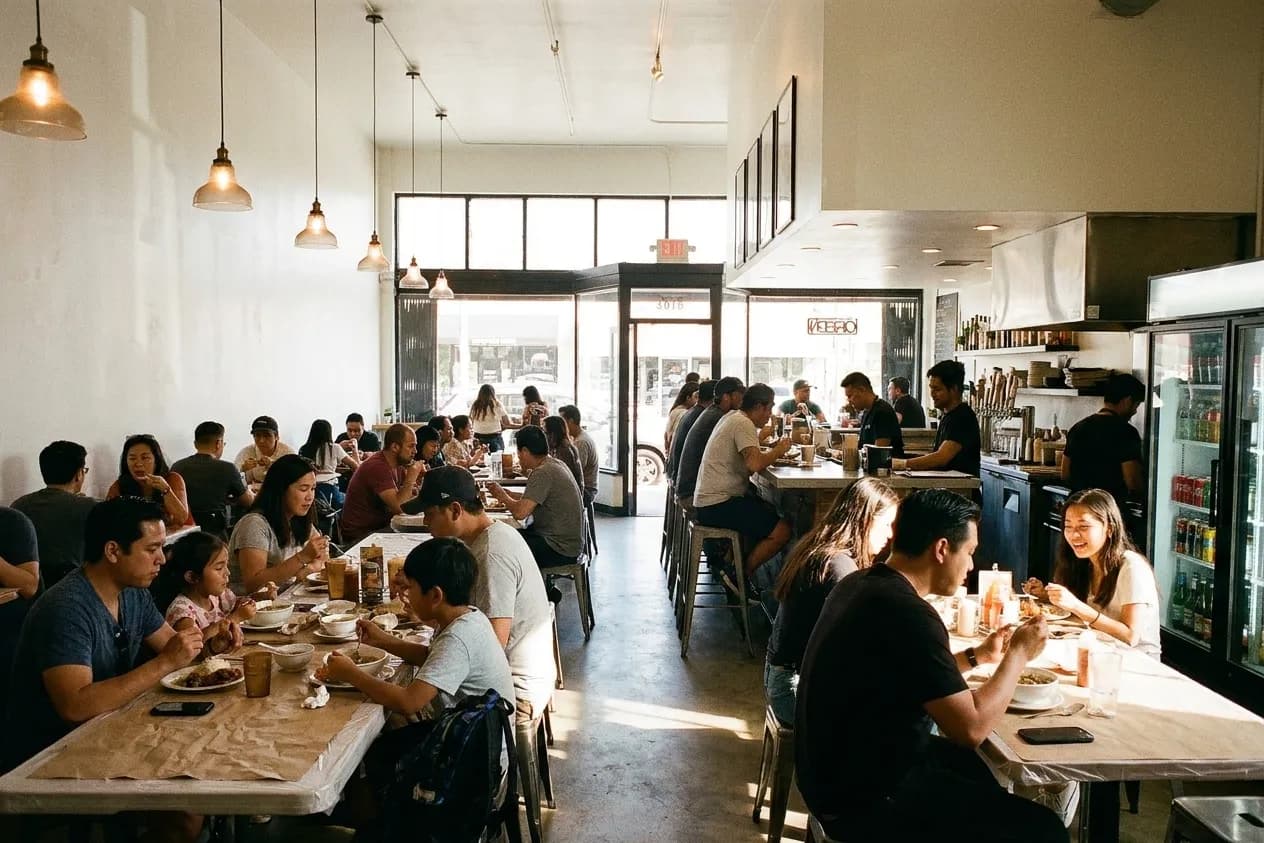
A last word on queues, because they are the real cost of ramen in this city. The well-known rooms run hard lunch rushes and the wait is worst between about midday and half past one; the same counter at 11:30am or 2:15pm is often walk-straight-in. Ramen also does not hold — a bowl that sits for ten minutes while you find a seat is a materially worse bowl, so a room with space is worth more here than in almost any other category.
Geography helps as well. Sawtelle carries the highest concentration of ramen in the city and therefore the longest waits; Little Tokyo is denser in history and slightly easier at peak; and the Arts District and Pasadena rooms are the ones people forget exist. If the counter you wanted has thirty people outside it, the honest move is a different neighbourhood rather than a different hour.
Finally, eat it immediately. Ramen is assembled to be eaten at the counter within a couple of minutes, and every extra minute softens the noodle into something the kitchen did not intend. Takeaway ramen is a compromise even when the shop packs the broth separately, and it is the single biggest reason people conclude a famous bowl was overrated.
Practical notes
Tsujita: roughly sixty-hour tonkotsu, but order the tsukemen. Daikokuya: Little Tokyo since 2002, rich and fatty, the classic. Ramen Tatsunoya: Kyushu-style koku tonkotsu on a fifteen-hour simmer, the most drinkable of the group. Killer Noodle: tantanmen with a scale to twenty — order in the middle. Ramen Nagi and JINYA for customisation, and change only the noodle firmness the first time. In warm months, dipping noodles beat hot broth almost every time.
Tags: #LosAngeles #LARamen #BestRamenLA #Tonkotsu #Tsukemen #Tantanmen #LittleTokyo #Sawtelle #Daikokuya #Tsujita #RamenNagi #LAEats #JapaneseFood #NoodleBowl
All trademarks are the property of their respective owners.
Ask Karpo first
Not sure which Los Angeles ramen counter matches what you actually want to eat? Ask Karpo which broths are near you, which rooms are seating right now, and whether the queue is worth joining at this hour.