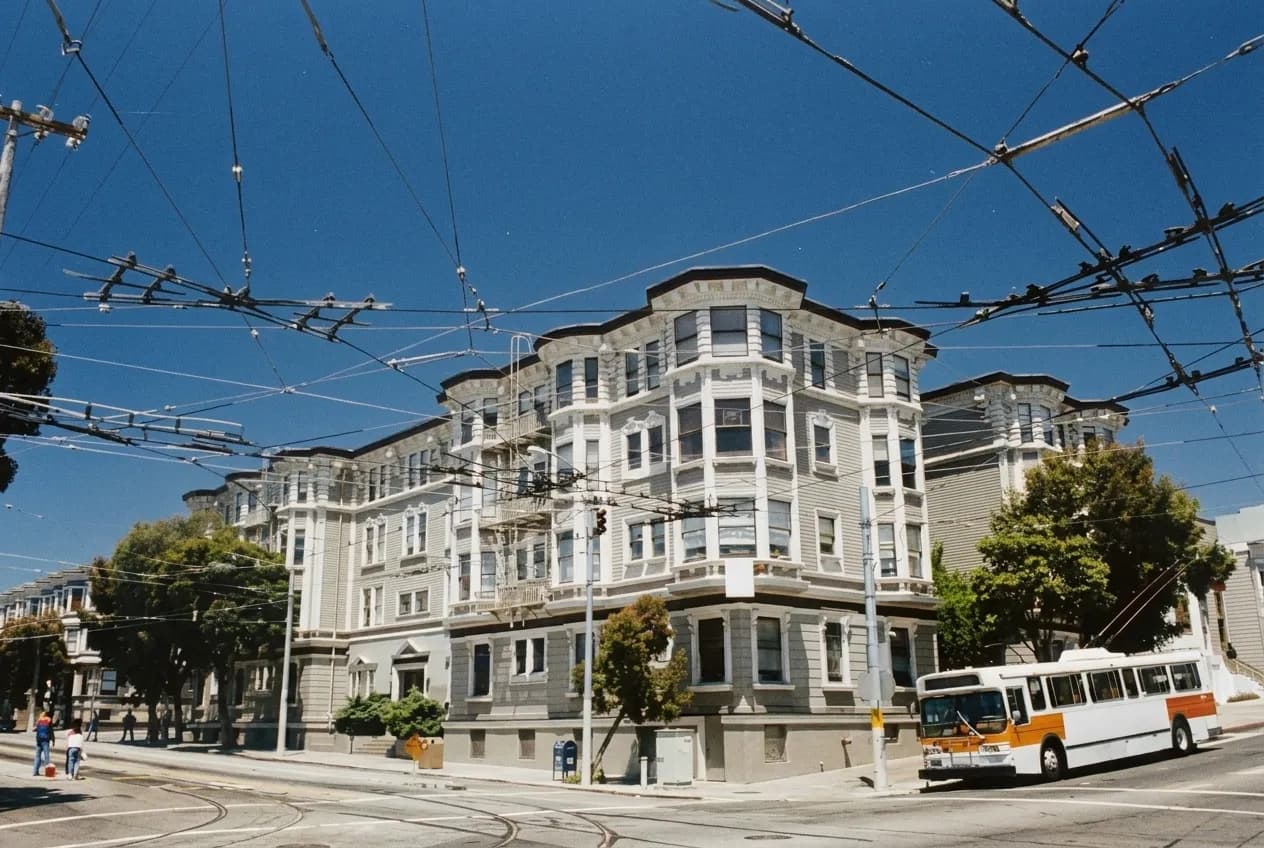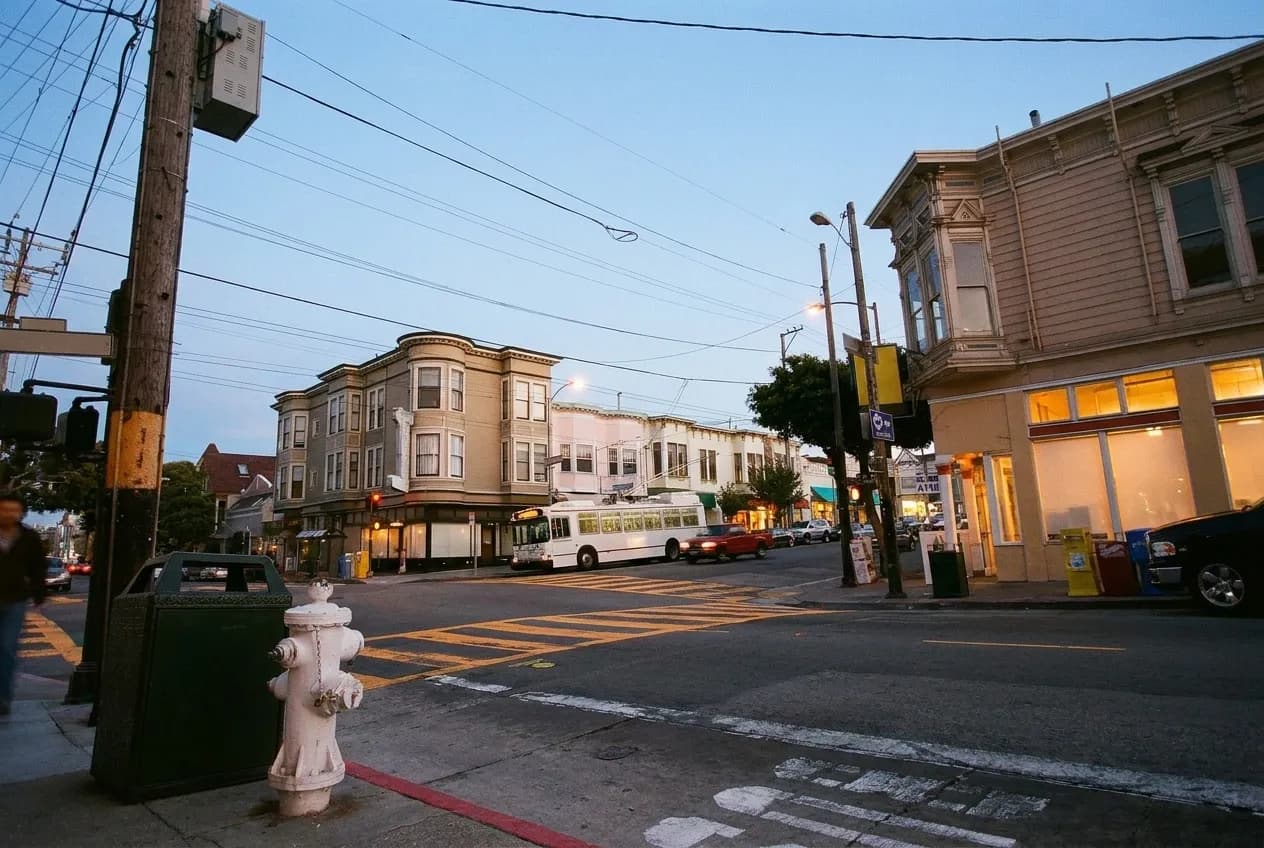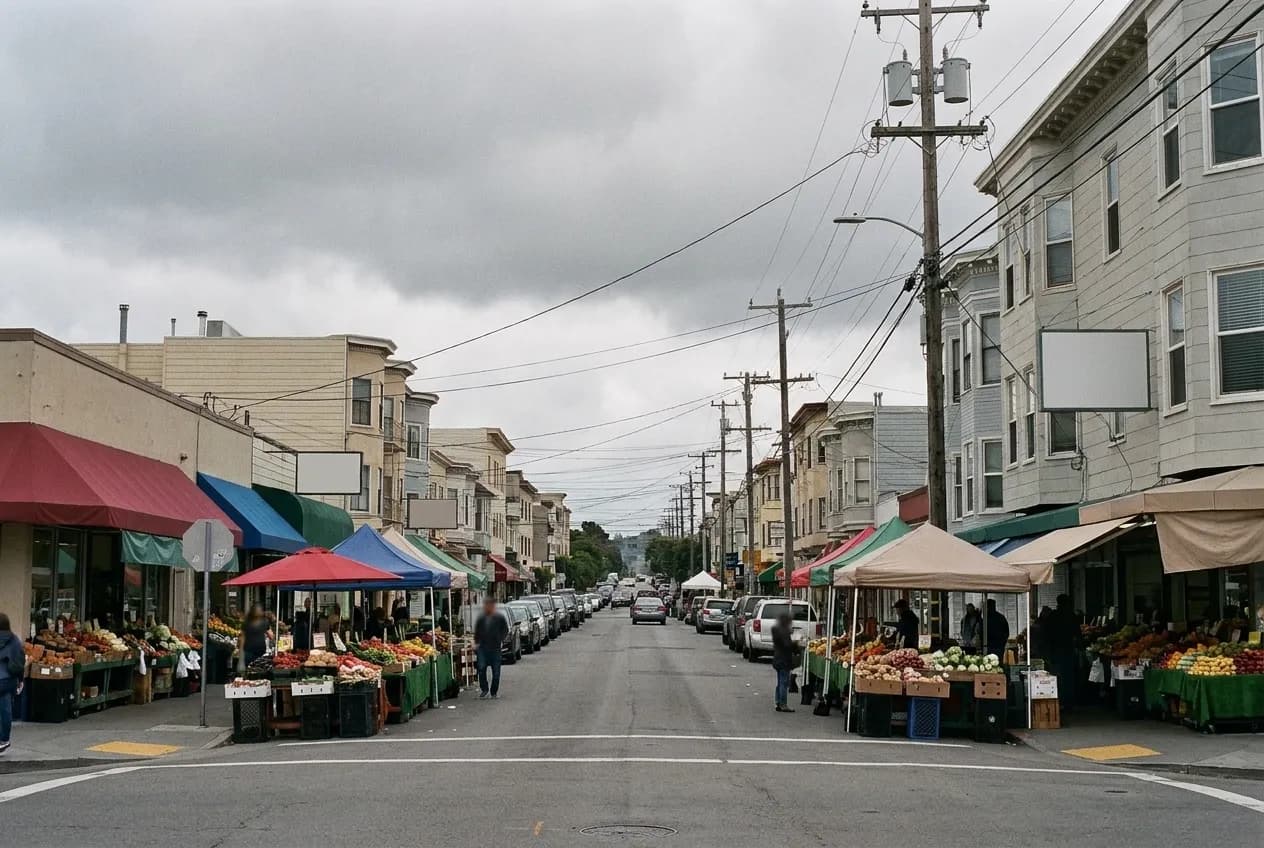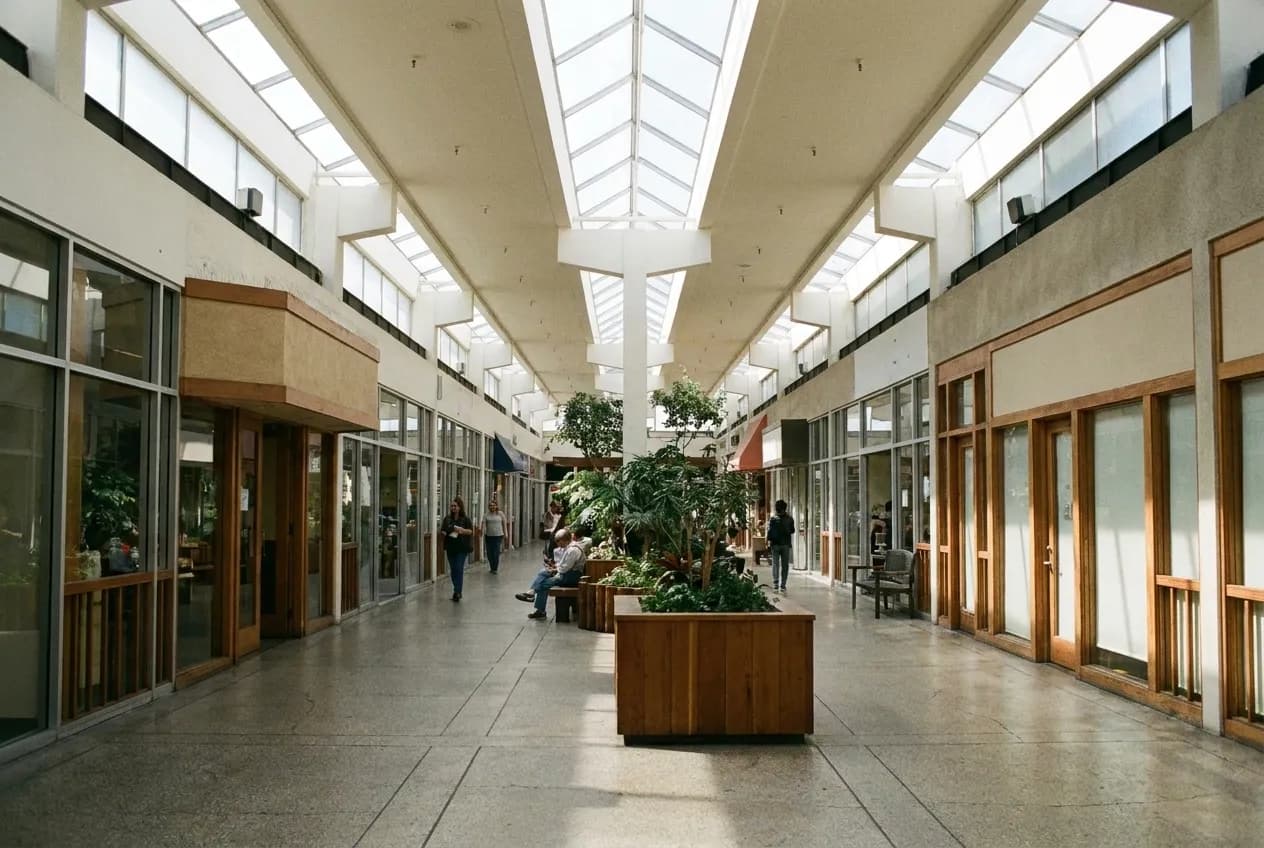
There are three Japantowns left in the United States and San Francisco has one of them. That is a genuinely unusual asset - a standing commercial district with Japanese restaurants, grocers, bookshops and a covered mall complex, continuously in place since long before ramen became an American food trend. It gives this city's ramen a centre of gravity that most American cities do not have, and it means the category here behaves less like a trend and more like a neighbourhood cuisine.
Ramen shops here close earlier than almost anyone expects and the Japantown rooms follow mall hours. Tell Karpo when you want to eat.
Japantown, and what it actually is
The district sits around Post and Buchanan in the Western Addition, centred on the Japan Center - a covered complex of malls connected across Webster Street by a pedestrian bridge, containing restaurants, a cinema, shops and the Peace Plaza with its pagoda. It is not large; you can walk the whole thing in twenty minutes. It is also the densest concentration of Japanese food in Northern California outside a handful of blocks in San Jose.
For ramen specifically this matters because the shops here are aimed at a community as well as at visitors, which tends to produce more conventional and less experimental bowls - a good thing when you are trying to learn what a style is supposed to taste like. The one practical catch is hours: the mall-based rooms follow mall hours, which means they close earlier than a standalone restaurant would, frequently by eight or nine.
Reading a menu: broth first
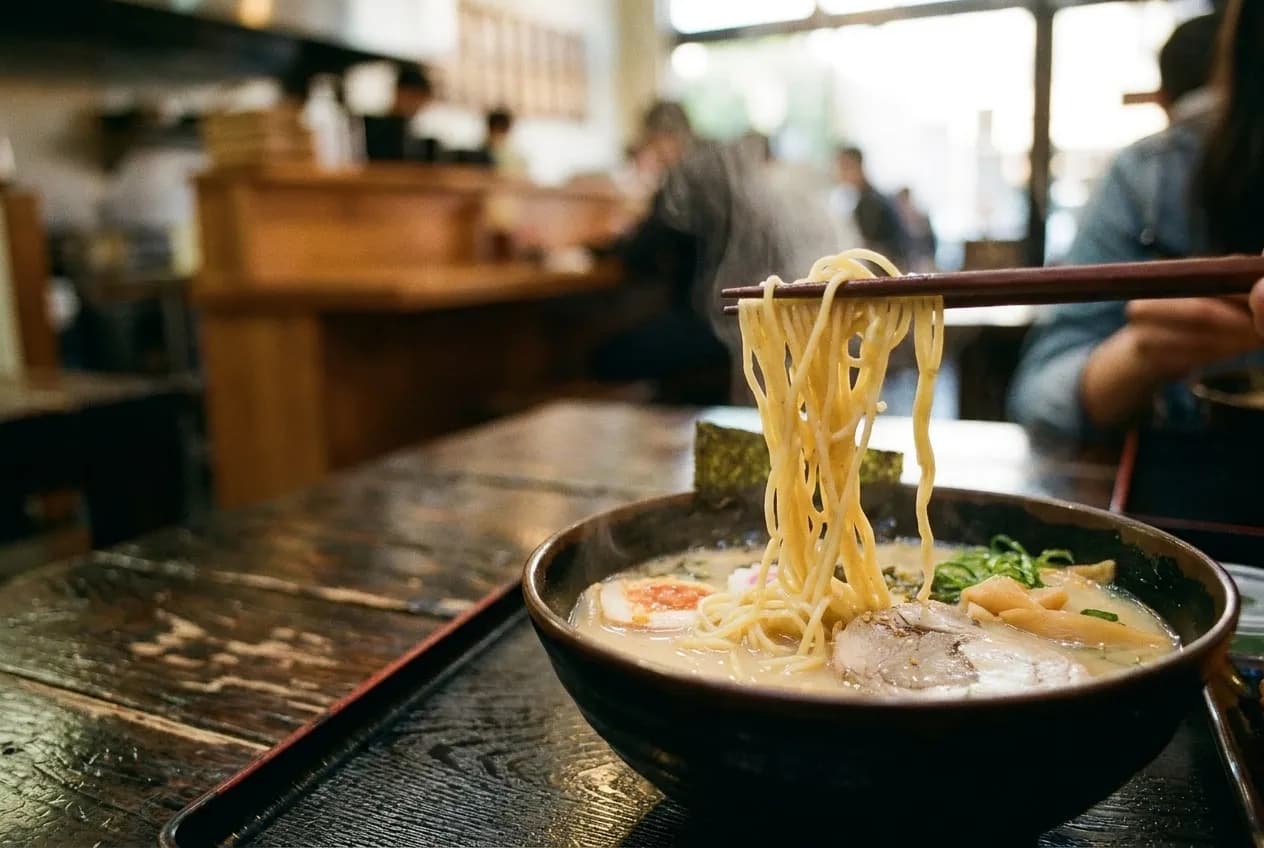
Tonkotsu is pork bone broth boiled hard for hours until the collagen and fat emulsify, turning it opaque, white and thick enough to coat a spoon. It is the richest style and the one most people mean by ramen. Chintan is the clear-broth family - chicken, pork or both, simmered gently so nothing emulsifies - lighter, cleaner and much harder to make well, because there is nothing to hide behind.
The common error is treating tonkotsu as a flavour when it is a texture and a base. A tonkotsu broth can carry any seasoning; so can a chicken broth. A shop that lists broth and seasoning as separate choices is telling you it understands the distinction, which is a useful signal before you have tasted anything.
Then the tare
Tare is the concentrated seasoning ladled into the empty bowl before the broth, and it is where most of the flavour and all of the salt come from. Shio is salt-based, the lightest and most delicate, and it exposes the broth completely. Shoyu is soy-based, deeper and the most common. Miso is fermented soybean paste, heaviest and sweetest, and it stands up to a rich broth better than the other two.
So the ordering heuristic is a grid. To judge a kitchen, order the lightest thing on the menu - a clear broth with shio tare - because richness is easy and delicacy is not. To eat well without thinking, order the shoyu. And in cold weather, which in this city is most of the year after four in the afternoon, miso with a rich broth is the correct answer.
The components that tell you the rest
Noodles should be firm and springy, never soft, and a shop that makes its own will say so. If kaedama is offered - an extra portion of noodles added to your remaining broth - take it as a sign the noodles are cooked to order rather than in advance. The egg is the fastest check available: ajitsuke tamago should have a set white, a jammy centre still liquid at the core, and visible marinade penetrating a few millimetres into the white.
Chashu, the rolled and braised pork, should fall apart under chopsticks and taste of the braise rather than just of pork. And the whole bowl should be eaten quickly: the noodles keep cooking in hot broth from the moment it is assembled, so a bowl left for fifteen minutes while you talk is a materially worse bowl. Taste the broth first with the spoon, eat the noodles early, and do not stir everything at the start - the tare sits at the bottom and the fat at the top, and that gradient is deliberate.
Outward from Japantown
Beyond the district, ramen is spread across the eastern half of the city - the Mission, SoMa, the Marina, downtown - and out into the Richmond and Sunset, where the neighbourhood Japanese restaurants are and where prices are lower. The Richmond in particular has good, unglamorous rooms serving people who eat there weekly rather than occasionally, which is generally where the better value sits.
The one thing San Francisco does not have is a late-night ramen culture. Most shops here close by nine or ten, in line with the rest of the city's kitchens, and the two-in-the-morning ramen that exists in New York, Los Angeles and Tokyo has never established itself. If you want a bowl at midnight the honest answer is that you mostly cannot, and the Mission's taquerias are what this city offers instead.
Practical notes
Prices: eighteen to twenty-six dollars a bowl, more with extras. Order the lightest bowl to judge a kitchen. Taste the broth before adding anything or stirring. Eat the noodles early. Ask about kaedama. Judge the egg on a jammy yolk and marinade penetrating the white. Japantown is around Post and Buchanan; the mall-based rooms follow mall hours and can close by eight or nine. Most SF ramen shops are done by nine or ten, so this is a dinner-before-nine category. Parking in Japantown is a garage under the complex and is easier than most of the city. And the Richmond and Sunset run cheaper for equivalent bowls.
Tags: #BestRamenInSanFrancisco #Japantown #SanFrancisco #Tonkotsu #ShoyuRamen #ShioRamen #MisoRamen #Tare #Chashu #Ajitama #JapanCenter #InnerRichmond #SFEats #JapaneseFood
All trademarks are the property of their respective owners.
Ask Karpo first
Ramen here closes early and the Japantown rooms close earlier still. Ask Karpo which shops near you are open at the hour you want, which make their own noodles, and whether the Japantown cluster or a Richmond neighbourhood room is the better bowl tonight.