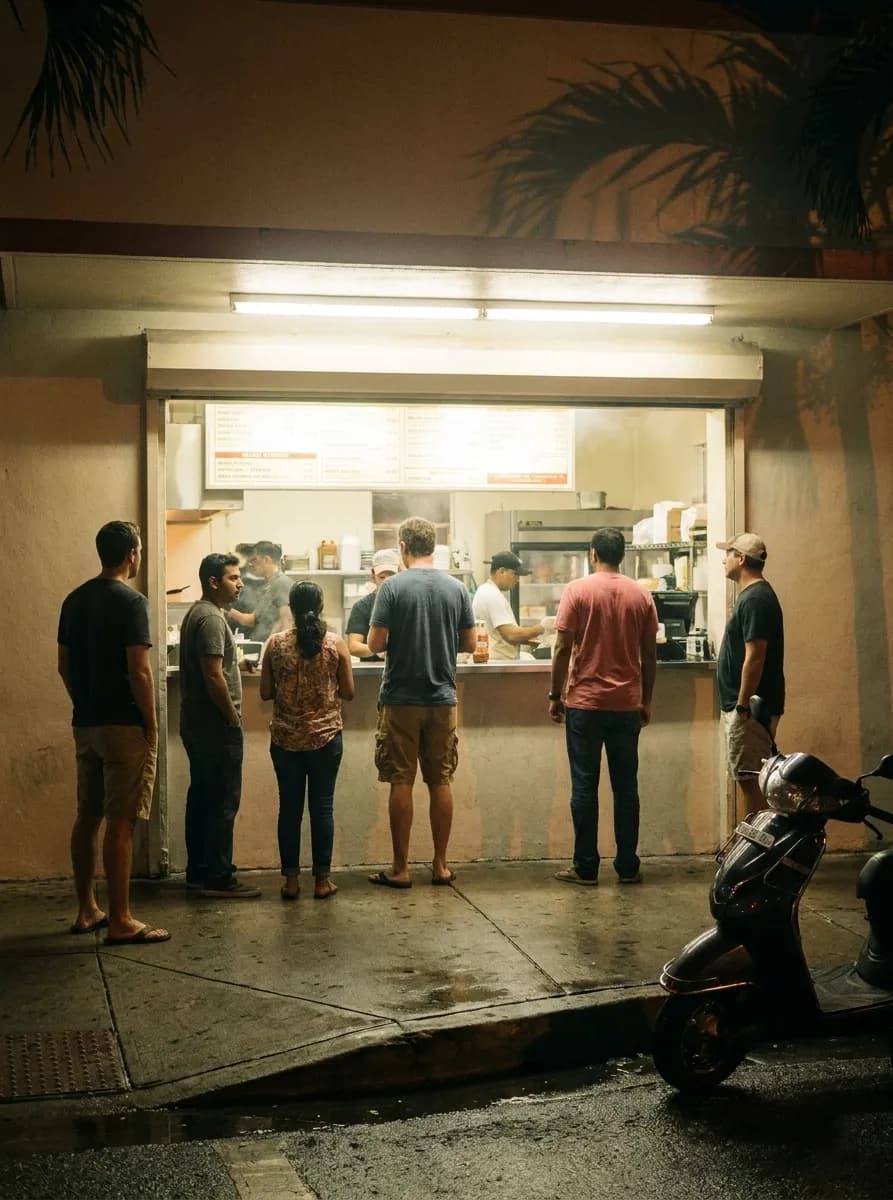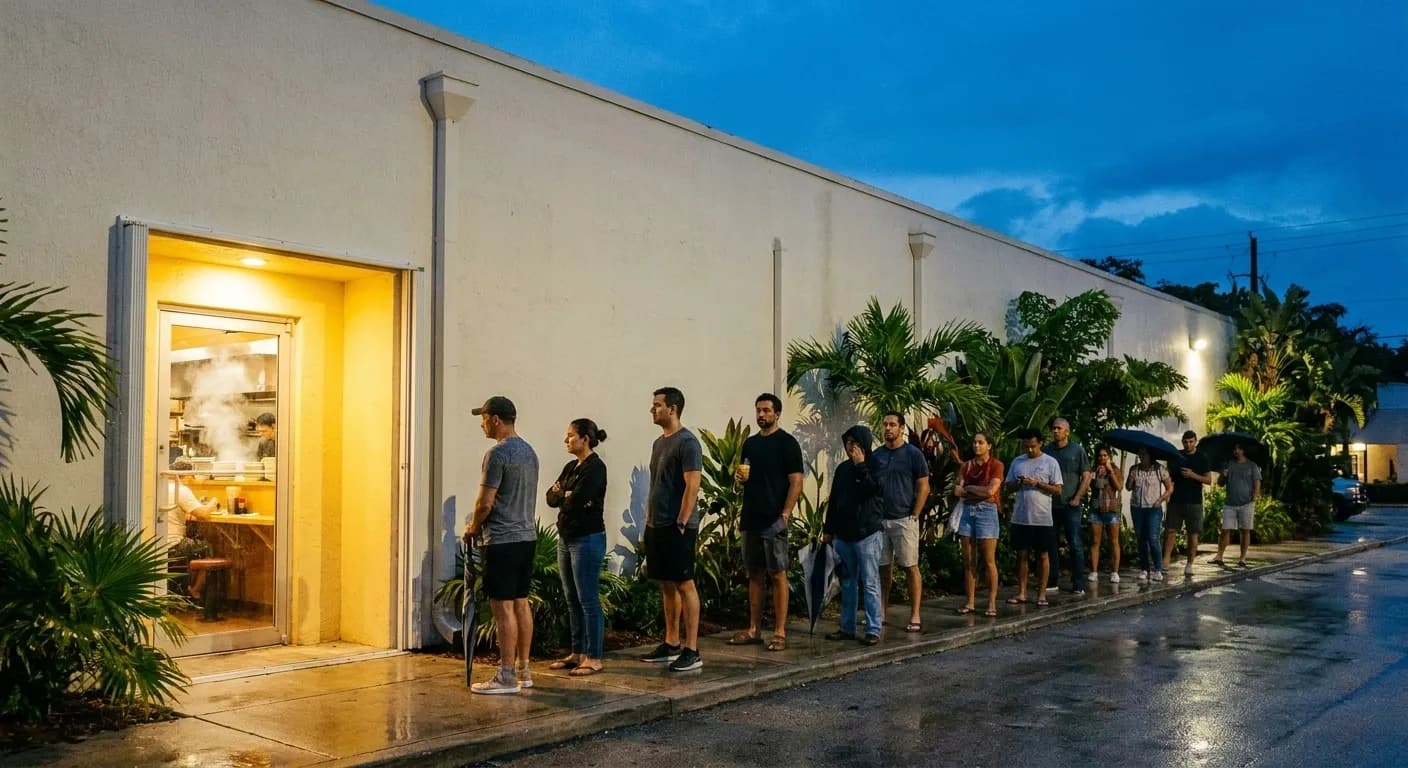
Miami is not a ramen city in the way New York or Los Angeles is, and pretending otherwise leads people to some disappointing bowls. What it does have is a small number of specialists doing the work properly — making noodles, simmering broth for the better part of a day — surrounded by a much larger number of general restaurants that list ramen because it sells. The gap between the two categories is enormous, and it is visible before you order if you know what to look at.
Ramen is one of the few dishes where the queue is genuinely informative — a shop that makes its own noodles runs out, and a shop that does not never has to. Text Karpo where you are in Miami and get the ramen counters actually worth the drive right now, how long the wait tends to be at that hour, and what else is nearby if the door is already shut.
Momi Ramen, Brickell — the reference point
Momi Ramen in Brickell is the shop the rest of the city is measured against. It is owner-operated, the noodles are made fresh daily with flour imported from Japan, and the tonkotsu broth simmers for eighteen hours. The price point runs steep for noodles by any standard, and the argument for paying it is craft and portion depth rather than convenience — which is exactly the trade a specialist should be asking you to make.
Go with the expectation of a counter meal rather than a night out. The room is small, the turnover matters to the economics, and the correct order is a straightforward tonkotsu on a first visit rather than the most elaborate thing on the menu. If the queue is out the door at 7pm, that is the signal you came for, not a reason to leave.
Ichimi, and the house-noodle test
Ichimi Ramen & Bar built its reputation on house-made noodles and slow-cooked tonkotsu, and it is the clearest example in the city of the single test worth applying anywhere: does the shop make its own noodles, and will it tell you? Shops that do, advertise it, because the labour is the expensive part. Shops that buy noodles in never mention noodles at all and describe only the broth.
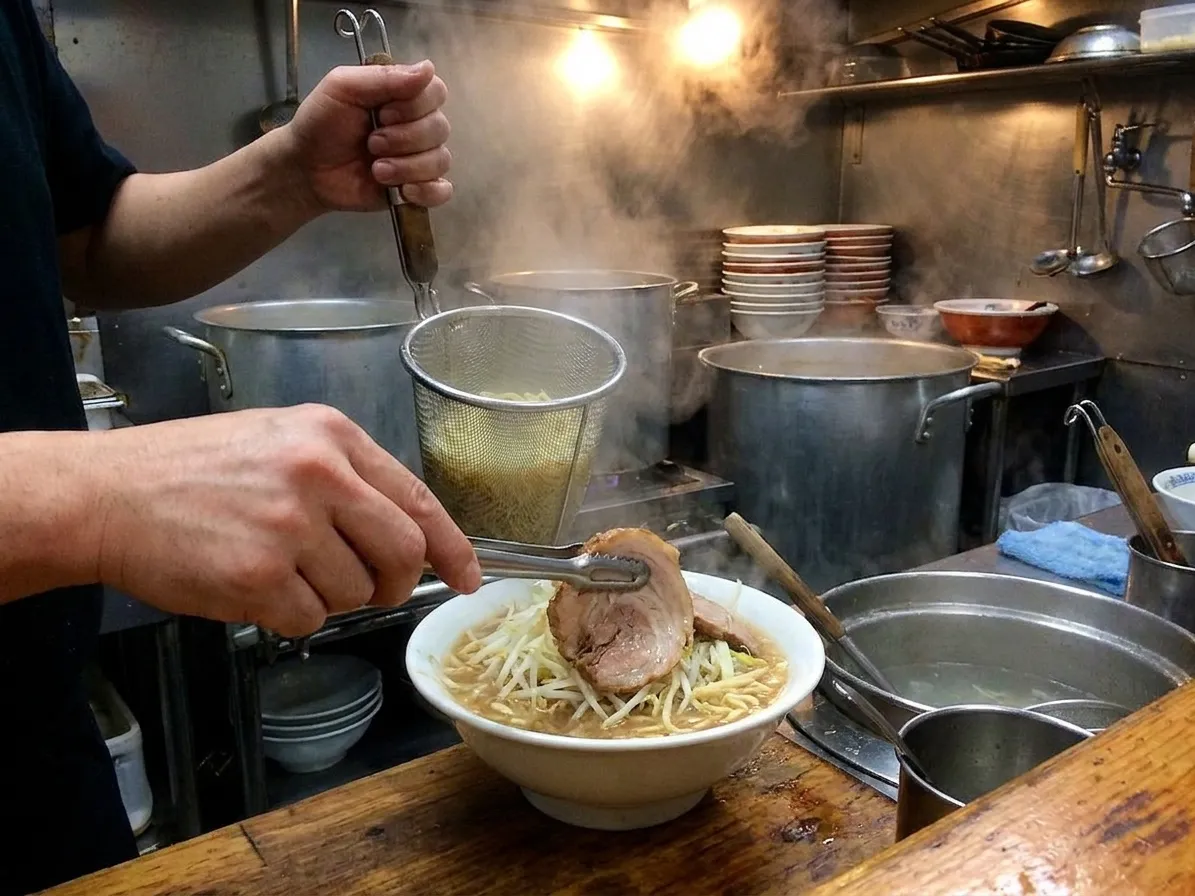
That test sorts a menu faster than any review. A house-noodle shop will also usually have a short ramen list — four to six bowls — because each one is a real production. A twenty-item ramen section inside a forty-item Asian menu is telling you, politely, that ramen is not what the kitchen is for.
The second tier is genuinely fine
Beyond the specialists, Miami has a working set of dependable shops — the names that recur on local lists include Z Ramen, Shimuja and Naruto 88 — and they serve a purpose the specialists cannot. They are open more conveniently, they seat groups without an hour of standing, and they are the right answer on a Tuesday when you want noodles rather than an event.
Order differently in these rooms. Skip the elaborate tonkotsu, which is where the gap in broth time shows most, and take the shoyu, the miso or a tsukemen if they have one — lighter broths hide fewer shortcuts and travel better across a range of kitchens. It is the same principle as ordering the simplest thing in an unfamiliar restaurant.
Timing, in a city that eats late
Ramen counters in Miami keep shorter hours than the neighbourhoods around them, which catches people out constantly: the bars nearby are running until two and the noodle shop closed at ten. The specialists in particular close when they run out, not when the clock says to, so a Friday at half past nine is a genuine gamble and a Wednesday at seven is not.
If you are eating with more than four people, call. Small counters do not take large parties and will not split them across two sittings, and turning up as a group of six is how you end up in the general Asian restaurant next door — which is a fine meal, but not the one you drove for.
What a good bowl looks like here
Three things to check when it lands. The noodles should have visible bite and sit high in the bowl rather than drowning; if they are soft on arrival they were cooked ahead. The broth should coat the spoon slightly on a tonkotsu — that body is what eighteen hours buys — and should not taste primarily of salt. And the chashu should be tender enough to break with chopsticks. If all three hold, you found a specialist. If none do, you found a restaurant that sells ramen, and the useful response is simply to order something else there next time.
Tags: #bestrameninmiami #ramenmiami #momiramen #ichimiramen #brickell #miamifood #japanesefoodmiami #tonkotsu #noodles #miamirestaurants #miamieats #counterdining #wynwood #downtownmiami
All trademarks are the property of their respective owners.
Ask Karpo first
Miami's ramen is concentrated in a few counters and diluted across a lot of general Asian restaurants that also happen to list it. Ask Karpo which ramen near you is made in-house, what the wait is at the time you would go, and whether it is a proper counter or a table-service room before you drive across the city for it.