Here is the honest starting position: the best ramen in Miami for anyone not eating meat is not served in a vegan restaurant, because the city does not have a dedicated plant-based ramen shop. What it has instead is a set of Japanese kitchens that keep a real vegetable broth on the menu alongside the pork one, a couple of plant kitchens that run noodles as a rotating dish, and a large number of places that will tell you the bowl is vegetarian when it is built on fish stock. Knowing which is which is most of the job, so start with where the actual bowls are and finish with the question to ask.
A vegetable broth on the menu and a vegan bowl in the kitchen are not always the same thing, and you usually find out after it arrives. Tell Karpo how strict you need it to be and where you are eating, and it can work out which kitchens will actually swap the broth before you sit down.
Downtown and Doral: the widest menu
Shimuja runs about eleven ramen preparations across its rooms, and it is the rare shop here that treats the lighter broths as a category rather than an apology — vegan and vegetarian bowls are on the menu rather than something the kitchen improvises. The Flagler Street room downtown, at 200 East Flagler, is the convenient one; the Doral branch on Northwest 41st Street is the one with parking. Its Miami Beach presence is the part to be careful about: listings for the Beach location are inconsistent, with one address showing as closed and another still trading, so call before you cross a causeway for it.
Kendall: the vegetable broth that tastes like it was cooked, not thinned
Z Ramen, out on Mills Drive in the south of the county, keeps a vegetable-broth bowl loaded with zucchini, spinach, bean sprouts, scallion and bamboo — enough in the bowl that it eats like a full dinner rather than a soup with garnish. This is the strip-plaza tier, which is where most of the honest cooking in Miami noodles happens: no design, no queue, a fair price, and a kitchen that will talk to you about substitutions instead of sending a manager.
Coral Gables and Midtown: the mushroom route
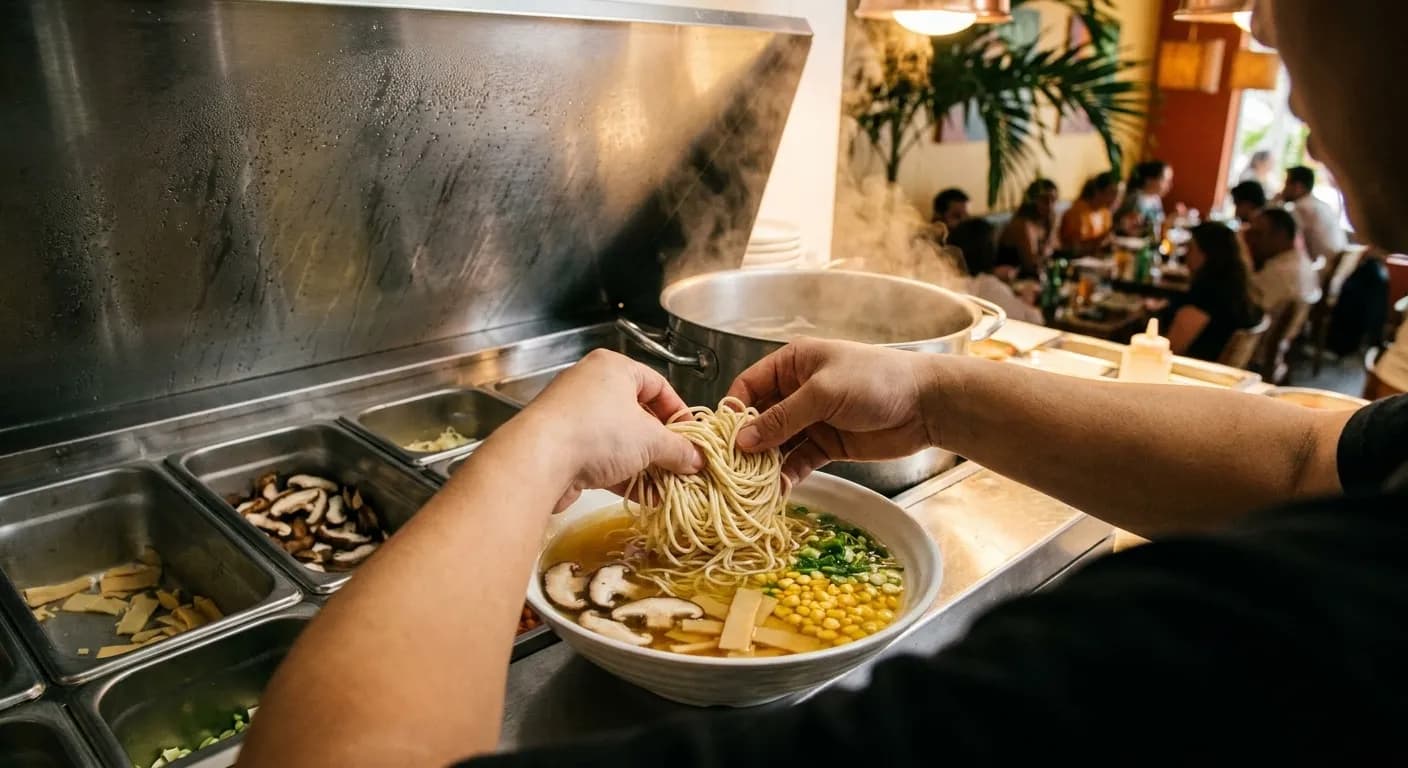
Ichimi keeps a vegetarian bowl built on mushrooms with dried chilli, which is the most interesting non-meat bowl in the city's mid-tier Japanese rooms — mushroom does the savoury work that pork bone normally does, and the chilli covers the gap where the fat would be. Order it with an extra portion of vegetables rather than the standard toppings menu, which is where the price climbs fastest. If the room is full, the same principle applies anywhere: a mushroom-forward broth is the one that survives the loss of animal fat.
Wynwood: the plant kitchen with a noodle habit
Love Life Café on Northwest 26th Street is the established plant-based kitchen in Wynwood — fully vegan, certified kosher, and broad enough that it feeds people who are not looking for a vegan restaurant at all. Its ramen shows up through an associated noodle pop-up rather than as a permanent fixture on the main menu: a mushroom-driven bowl with a crisp cutlet in it. That is the caveat and the appeal in one line. It is the most interesting vegan bowl in Miami when it is running, and it is not running every night, so check what is on before you go.
The dashi question, which decides everything
The single most useful thing to know is that vegetarian in a Japanese kitchen frequently means no meat, not no animal. A great many broths described as vegetable are finished with dashi made from bonito flakes — dried, smoked fish — and the kitchen will not think to mention it because it is not meat in the way they mean the word. Ask specifically: is the broth made with bonito or kombu. Kombu is seaweed and is fine. The follow-ups worth memorising: the marinated soft egg is not vegan and is usually in the bowl by default, the chilli oil sometimes contains dried shrimp, and menma, corn, sweetcorn butter, nori and spring onion are always safe. Say the word bonito out loud and you will get a straight answer within seconds.
One place not to drive to
The Wynwood outpost of a well-known ramen brand shows as temporarily closed on current listings, and it is still the first result a lot of people get when they search for a vegan miso bowl in that neighborhood. Do not plan an evening around it without calling. This is a recurring Miami problem rather than a one-off: noodle shops here open and shut faster than almost any other restaurant category, and the listings lag by months.
How to order well, wherever you land
Choose shio or miso over anything advertised as creamy, because a vegetable broth pretending to be tonkotsu is nearly always thickened rather than built. Ask for extra aromatics — ginger, garlic, scallion, chilli — since a meat-free bowl carries less fat and needs more top notes to stay interesting to the last mouthful. Add a side of edamame or a seaweed salad rather than a second bowl if you are still hungry, which costs less than upgrading. And go at lunch where the shop runs a lunch set, which is where the pricing in this city has always been most reasonable. Miami is not a great ramen town for vegans yet. It is a perfectly good one if you know the four places that mean it and the one question that sorts the rest.
Tags: #bestrameninmiami #veganramen #vegetarianramen #miamivegan #plantbased #wynwood #doral #downtownmiami #miamifood #veganmiami #noodles #miamirestaurants #meatfree
All trademarks are the property of their respective owners.
Ask Karpo first
Plant-based ramen in Miami depends entirely on which kitchen is willing to make the swap that night, and menus rarely say. Ask Karpo before you go and it can check what is actually vegan on the menu rather than what looks like it should be.