Ramen menus are written as though everyone already knows the vocabulary, which is why so many people order the same bowl every time. In fact the dish varies along two independent axes, and once you can see both, any menu becomes legible in half a minute. The first is the broth - what the liquid is made from. The second is the tare, the concentrated seasoning that goes into the bowl before the broth does and that actually determines what it tastes of. Most people confuse the two, and most menus encourage them to.
Miami's ramen shops are scattered and several sell out of their best bowls before closing. Tell Karpo where you are and when, and get one still serving.
Axis one: the broth
Tonkotsu is pork bone broth boiled hard for many hours until the collagen and fat emulsify into the liquid, turning it opaque, white and thick enough to coat a spoon. It is the richest style and the one most people mean when they say ramen. Chintan is the clear-broth family - chicken, pork or a combination, simmered gently so nothing emulsifies - lighter, cleaner and considerably harder to make well because there is nothing to hide behind.
The confusion is that people treat tonkotsu as a flavour when it is a texture and a base. A tonkotsu broth can be seasoned with any tare. So can a chicken broth. The menu item 'tonkotsu ramen' usually means pork broth with shoyu tare, but that is a convention rather than a rule, and a shop that lists broth and tare separately is telling you it takes the distinction seriously.
Axis two: the tare
Tare is a small amount of intensely concentrated seasoning ladled into the empty bowl before the broth. It is where the salt comes from and it is the largest single influence on flavour. Shio is salt-based, the lightest and most delicate, and it exposes the broth completely - order it to judge a kitchen. Shoyu is soy-based, darker, deeper, the most common. Miso is fermented soybean paste, the heaviest and sweetest, and it stands up to a rich broth better than the other two.
So the useful ordering framework is a grid rather than a list. Light broth with shio is the most delicate bowl on any menu and the one that shows off technique. Rich pork broth with miso is the heaviest. Rich broth with shoyu is the default and the safest. If you want to know whether a Miami ramen shop is any good, order the lightest thing on the menu, not the richest - richness is easy and delicacy is not.
The other components, and what they tell you
Noodles: they should be firm, springy and slightly wavy or straight depending on the style, and they should never be soft. A shop that makes its own will say so. Ask for kaedama - an extra portion of noodles added to your remaining broth - if it is offered; it means the noodles are cooked to order rather than in advance.
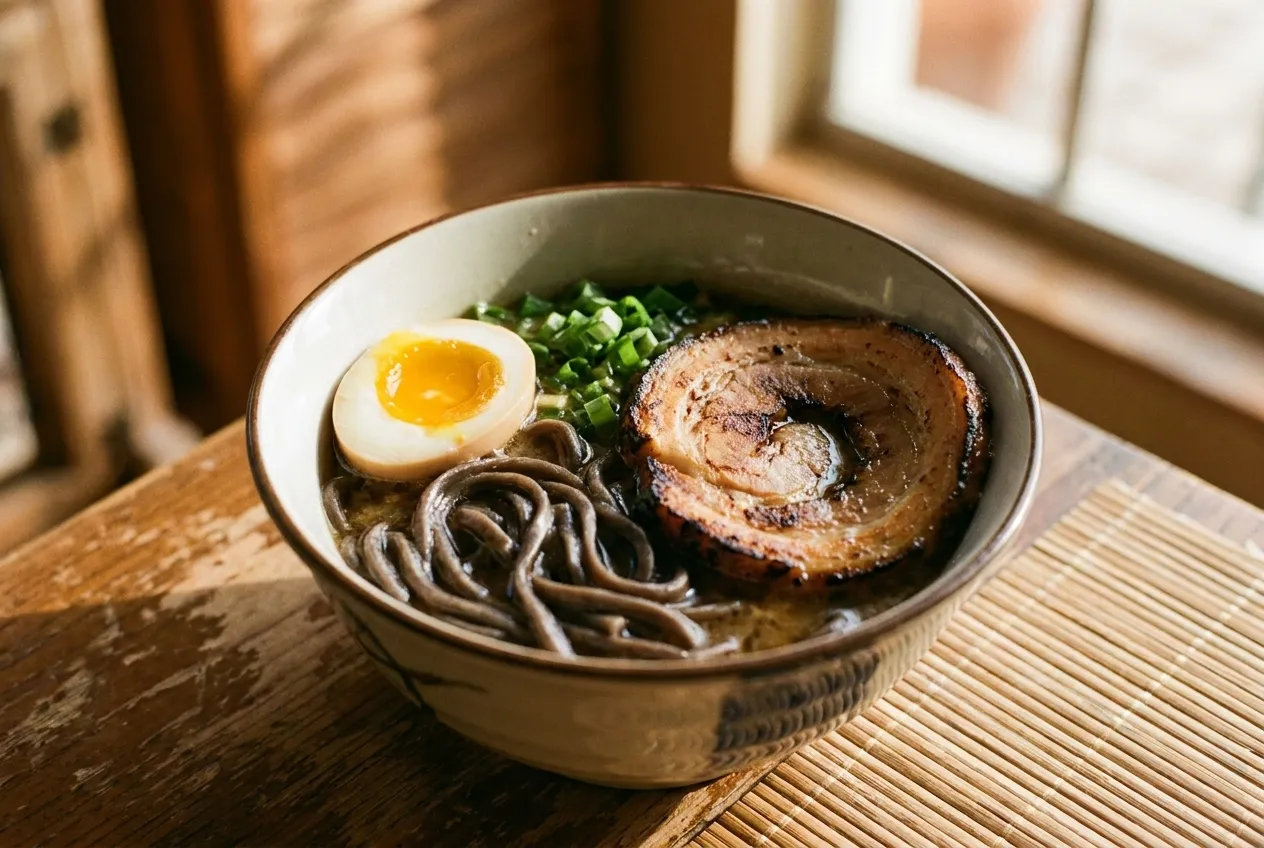
The egg is the fastest quality check available. Ajitsuke tamago is marinated in soy and mirin, and it should have a set white, a jammy orange centre that is liquid at the core, and visible seasoning penetrating a few millimetres into the white. A hard yolk means it was overcooked or made too far ahead. The chashu - rolled and braised pork belly or shoulder - should be tender enough to fall apart under chopsticks and should taste of the braise rather than just of pork.
How to eat it, since timing matters
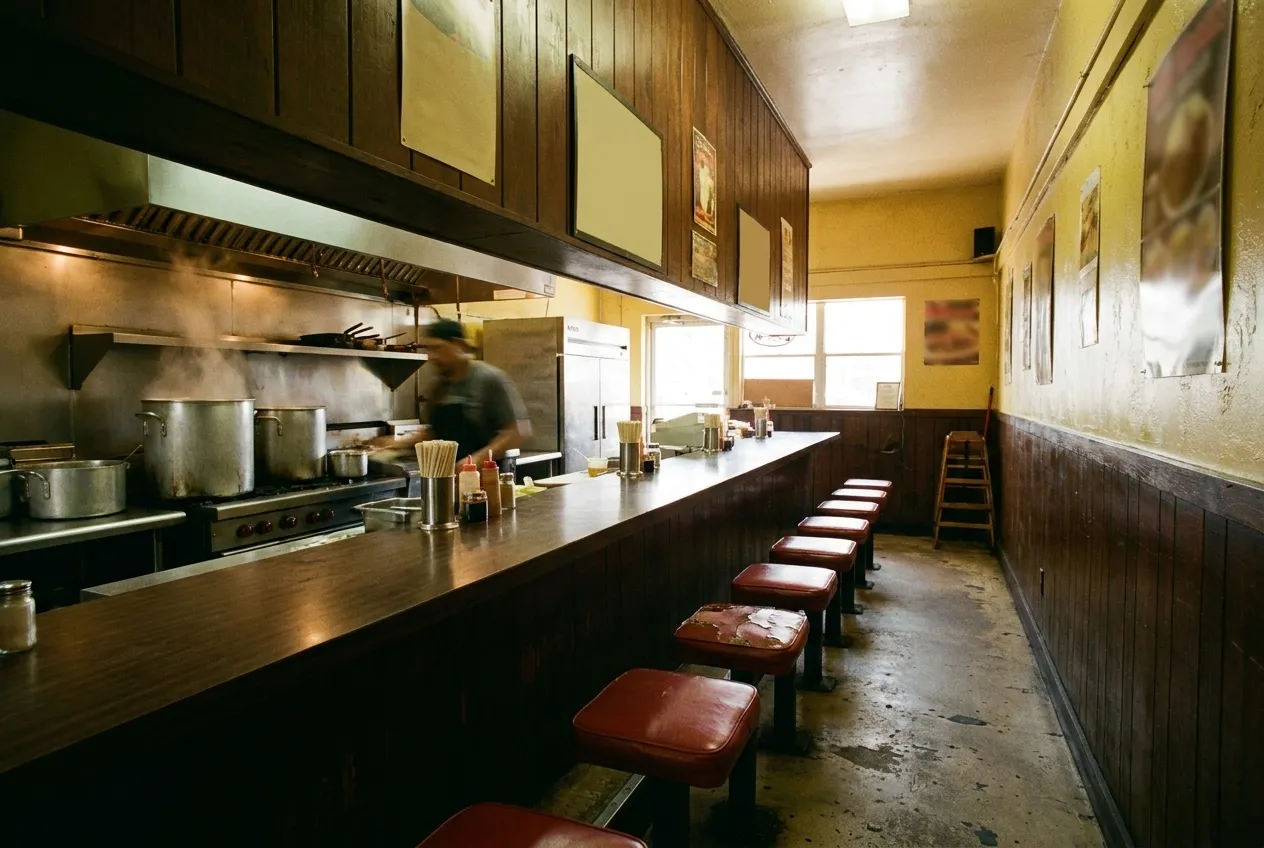
Ramen has a short life. The noodles keep cooking in the hot broth from the moment the bowl is assembled, and a bowl left for fifteen minutes while you talk is a materially worse bowl - soft noodles, cooled broth, congealed fat. This is why ramen shops are counter-heavy and turn tables fast, and why the etiquette in Japan is to eat quickly and leave.
Practically: taste the broth first with the spoon before disturbing anything. Eat the noodles early while they still have bite. Save the egg for the middle. Do not stir the whole bowl at the start - the tare sits at the bottom and the fat at the top, and the gradient is intentional. And do not take a photograph for three minutes; that is genuinely long enough to change the dish.
Where it is in Miami
Miami's ramen supply is dispersed and relatively young. The concentration is in the central and eastern neighbourhoods - Brickell, downtown, Wynwood, the Design District and Midtown - aimed at a lunch and early-dinner trade, with a second scattering in the south-west toward Kendall and out west where the older Japanese and pan-Asian restaurants are.
Two practical consequences. The central rooms are convenient and priced accordingly, and they are at their best at lunch when the broth is early in its service life. The outer ones are cheaper and often more specific. And most ramen shops in this city close by ten - the late-night ramen culture that exists in New York and Los Angeles has not really landed here, so if you want a bowl at midnight the honest answer is that you mostly cannot.
Practical notes
Prices: sixteen to twenty-four dollars a bowl, more with extras. Order the lightest bowl on the menu to judge a kitchen, not the richest. Taste the broth before adding anything or stirring. Eat the noodles early. Ask about kaedama. Judge the egg on whether the yolk is jammy and the seasoning has penetrated the white. Most Miami ramen shops close by around ten, and lunch is when the broth is freshest. This is a driving category with rooms scattered from Brickell to Kendall. And a shop that lists broth and tare as separate choices is signalling that it knows the difference, which is a good sign before you have tasted anything.
Tags: #BestRamenInMiami #Miami #Tonkotsu #ShoyuRamen #ShioRamen #MisoRamen #Tare #Chashu #Ajitama #Brickell #Wynwood #Kendall #MiamiEats #JapaneseFoodMiami
All trademarks are the property of their respective owners.
Ask Karpo first
Ramen rewards arriving early in a shop's service and punishes arriving late. Ask Karpo which ramen counters near you are open at the hour you want, which make their own noodles, and whether the one you had in mind is worth the drive rather than the nearest.