Fifteen dollars used to be a soft ceiling for lunch in San Francisco and is now a hard one. Sit-down lunch service in most of the city clears twenty before tax the moment a server is involved, which means the interesting question is not where the cheap food is but which service formats have structurally resisted the drift. The answer is consistent: counters, windows, steam tables and anywhere the transaction ends before you sit down.
Prices move faster than lists do. Ask Karpo what a full lunch actually costs at the counters nearest you right now.
The formats that have held the line
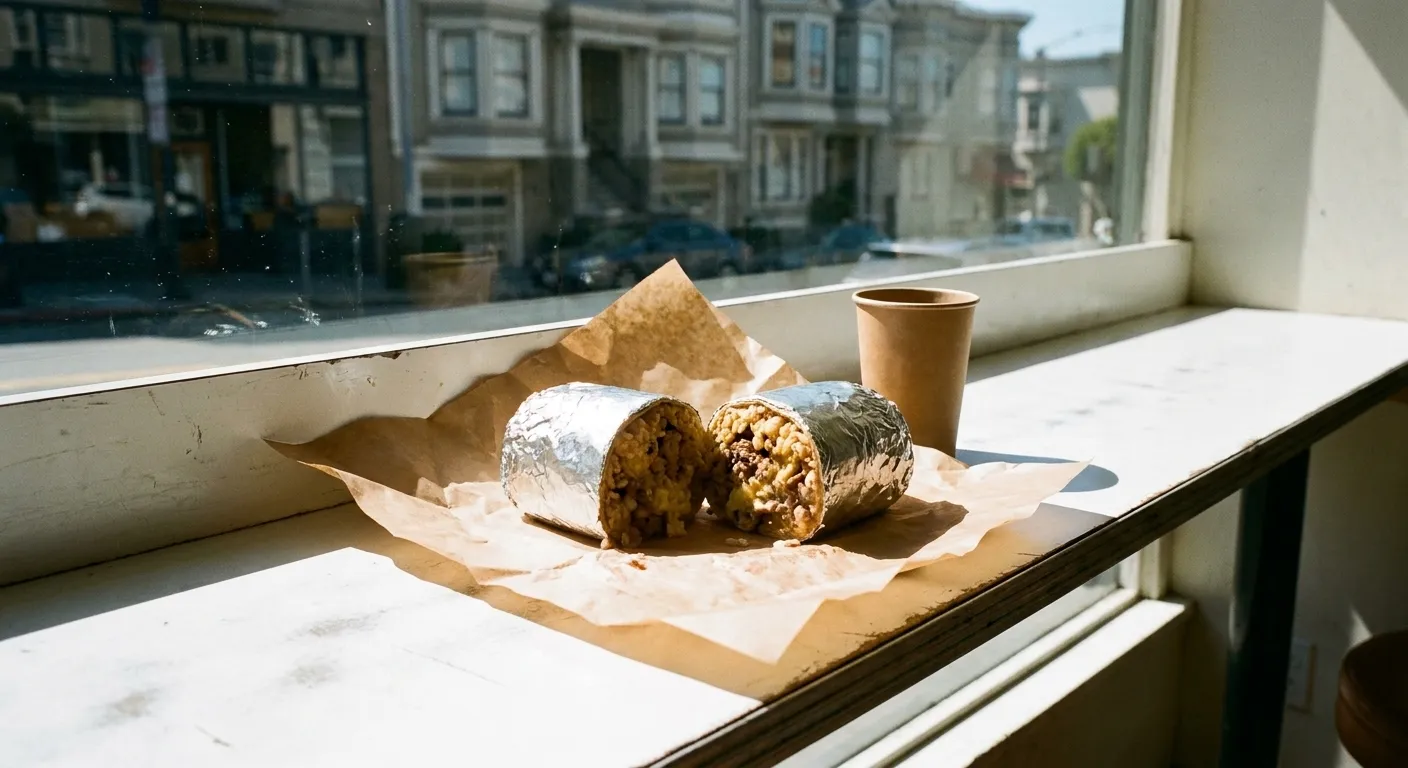
Taquerias are the obvious one, and the Mission burrito remains the single best calorie-per-dollar transaction in the city — but the pricing has moved and a super burrito with everything now sits close to the ceiling rather than comfortably under it. The move, if you are counting, is to order the regular rather than the super and skip the add-ons. The regular is not a smaller portion so much as a less padded one.
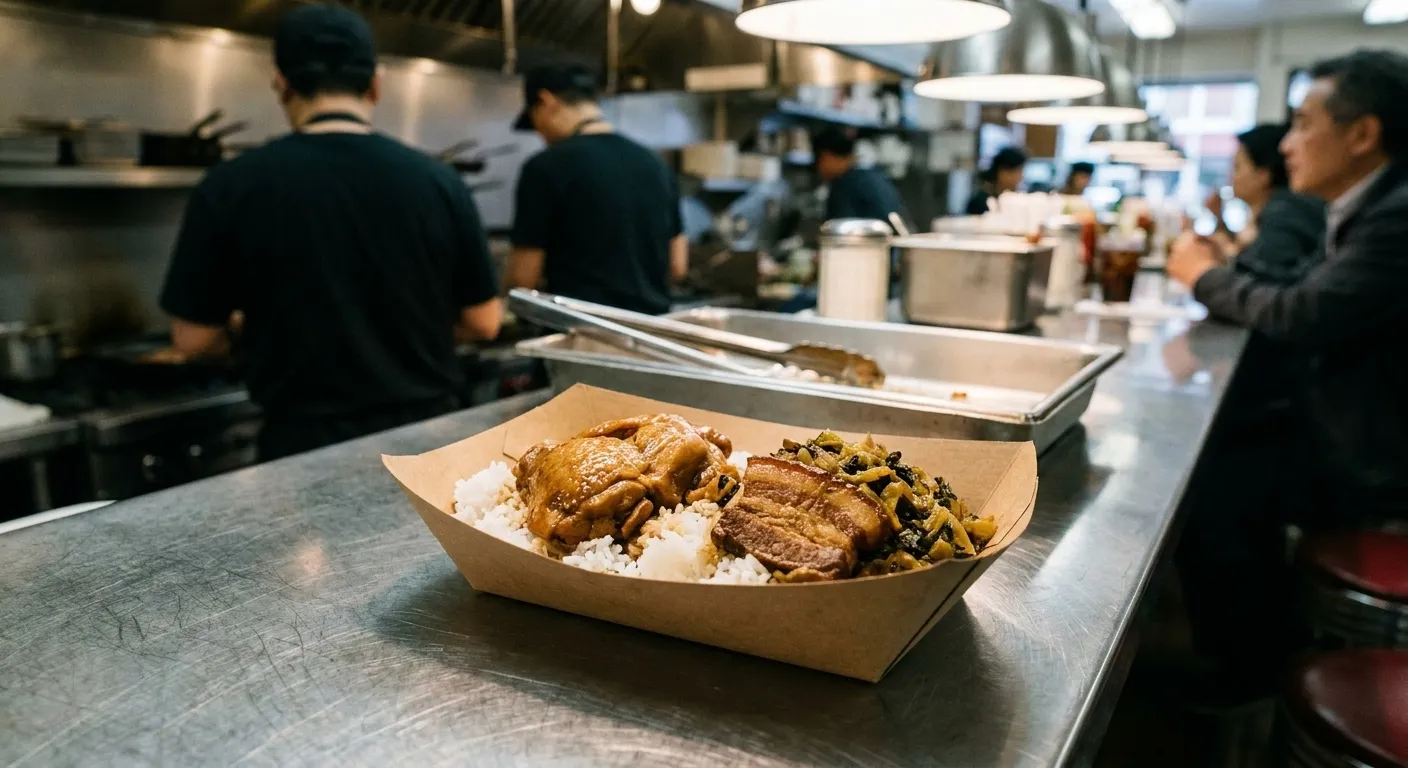
Vietnamese and Chinese lunch counters in the Tenderloin, along Larkin Street and up through the Richmond, are the other durable category. A bowl of pho or a plate of rice with two items from a steam table is reliably under the line and often well under it. The Richmond's Clement Street corridor is dense enough that you can walk two blocks and compare five options, which is not true of most of the city any more.
The Financial District problem
Downtown has the opposite economics. Rents are high, the lunch rush is a ninety-minute window, and a lot of the fast-casual chains that filled the ground floors are priced for expense accounts. The offsetting factor is that the same density supports food halls and basement counters that survive on volume. If you work downtown, the useful habit is to walk two or three blocks away from Montgomery before you start looking — the price gradient over that distance is steeper than anywhere else in the city.
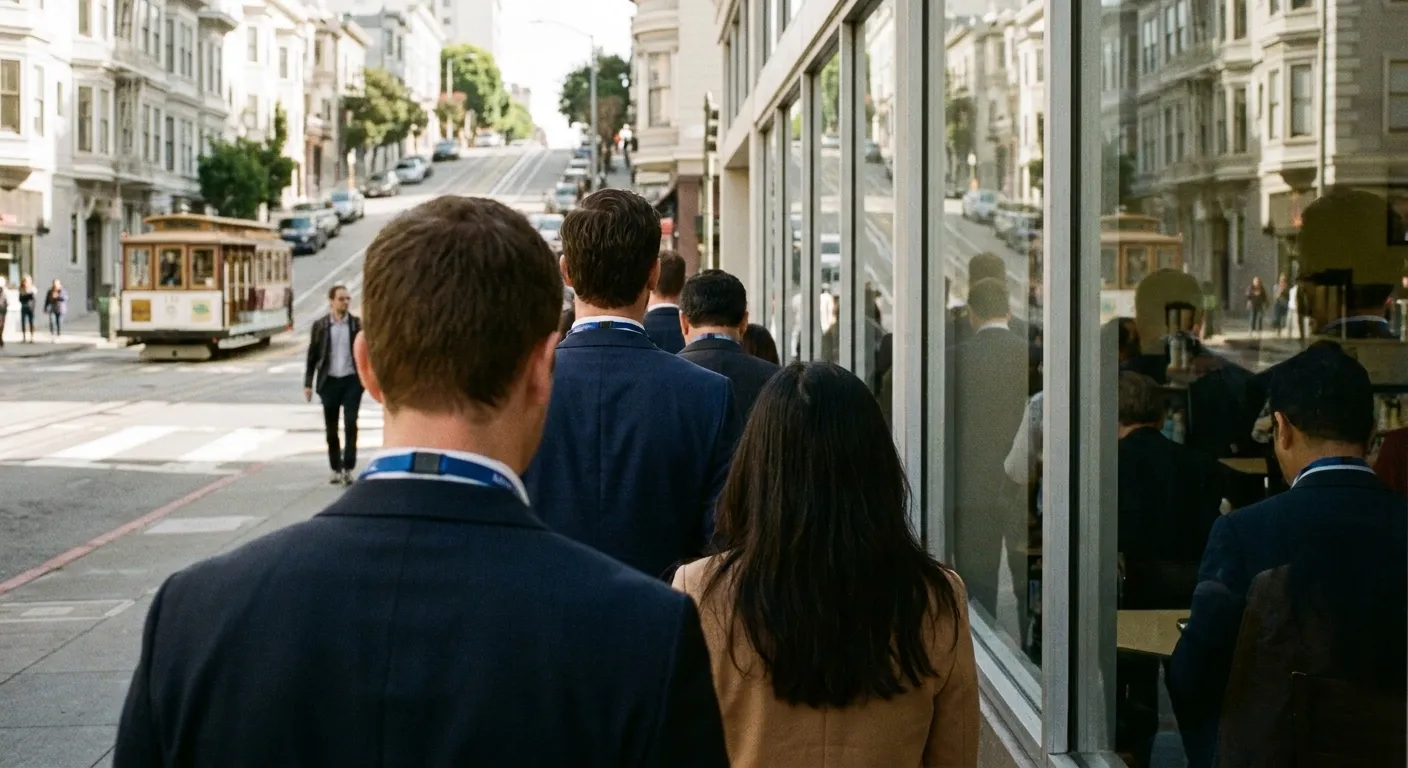
The other downtown-specific thing worth knowing is that the post-pandemic weekday rhythm has not fully returned. Tuesday through Thursday remain busy and Monday and Friday are noticeably quieter, which means some counters near the office towers have shifted to a four-day week. Checking before you walk over is not paranoia, it is just what the market looks like now.
Delis, and the sandwich arithmetic
A serious sandwich in San Francisco is fourteen to eighteen dollars, and the ones at the bottom of that range are usually at Italian delis rather than at anything describing itself as a sandwich shop. The distinction matters: a deli makes its margin on the case and treats the sandwich as a way to move product, so the fillings are generous and the bread is bought in. A sandwich shop makes its margin on the sandwich.
The practical version of this is to look for places with a refrigerated case of cured meat and cheese behind the counter. If they will slice to order, the sandwich is going to be better and cheaper than the equivalent at a place with a chalkboard menu and named creations.
Where the format breaks down
Two categories are worth avoiding if fifteen dollars is a real ceiling rather than a preference. The first is anything describing itself as a bowl concept, where the base is cheap and every component that makes it a meal is a surcharge. The second is salad-forward fast casual, which in this city has drifted to eighteen or nineteen dollars for something that leaves you hungry by three. Neither is bad food. Both are badly priced against the alternatives two doors down.
Most published guides to the best lunch spots in San Francisco quietly assume you are willing to spend twenty-five, which is why their recommendations feel unhelpful when you are not. Filtering for counters, windows and steam tables removes about eighty per cent of those lists and leaves the part that still works on a budget.
What to do about drinks
This is where budgets quietly break. A sandwich at thirteen plus a canned drink at four plus tax is over the line before you have thought about it. Almost every counter in the city has a water station, and a surprising number of the Asian lunch counters include tea or soup with a rice plate. Ordering as though the drink is optional rather than automatic is the single easiest way to keep lunch genuinely under fifteen, and it is more effective than switching restaurants.
Neighbourhood by neighbourhood, briefly
The Mission and the Tenderloin are the two neighbourhoods where fifteen dollars still buys a full, satisfying meal without any strategy at all. Chinatown and the Richmond are close behind, and Chinatown in particular is the one place where the ceiling has barely moved in a decade. Hayes Valley, the Marina and Cow Hollow require actual effort. The Financial District requires walking. North Beach is bimodal — the sit-down Italian places are expensive and the focaccia and slice windows are not.
One habit is worth more than any list: eat lunch at the counters that serve the people who work in the neighbourhood rather than the people who visit it. That is not a romantic point about authenticity. It is a pricing observation. Restaurants serving a daily customer base cannot move prices the way restaurants serving a weekly one can, because their customers notice.
Tags: #SanFrancisco #SFLunch #CheapEatsSF #LunchUnder15 #MissionBurrito #Tenderloin #ClementStreet #FinancialDistrict #SFEats #BudgetSF #DeliSandwich #BayArea #LunchGuide
All trademarks are the property of their respective owners.
Ask Karpo first
Ask Karpo which lunch counters near you in San Francisco are open right now, what a full plate costs there today, and whether the queue is worth the walk.