Los Angeles has the largest Hawaiian and Pacific Islander population of any mainland metro, concentrated in the South Bay and pockets of Orange County, and that is the single most important fact about eating poke here. It means the original version - fish marinated before you arrive, sold by weight out of a case, often at a market rather than a restaurant - actually exists in this city, alongside the build-your-own salad-bar model that took over the country around 2016. Both are on offer. Only one of them is the dish.
The real ones are mostly in the South Bay and the assembly counters are everywhere, which means the default nearest option is usually the wrong one. Tell Karpo where you are and how far you will go, and it will tell you which is which.
The original is a marinated dish
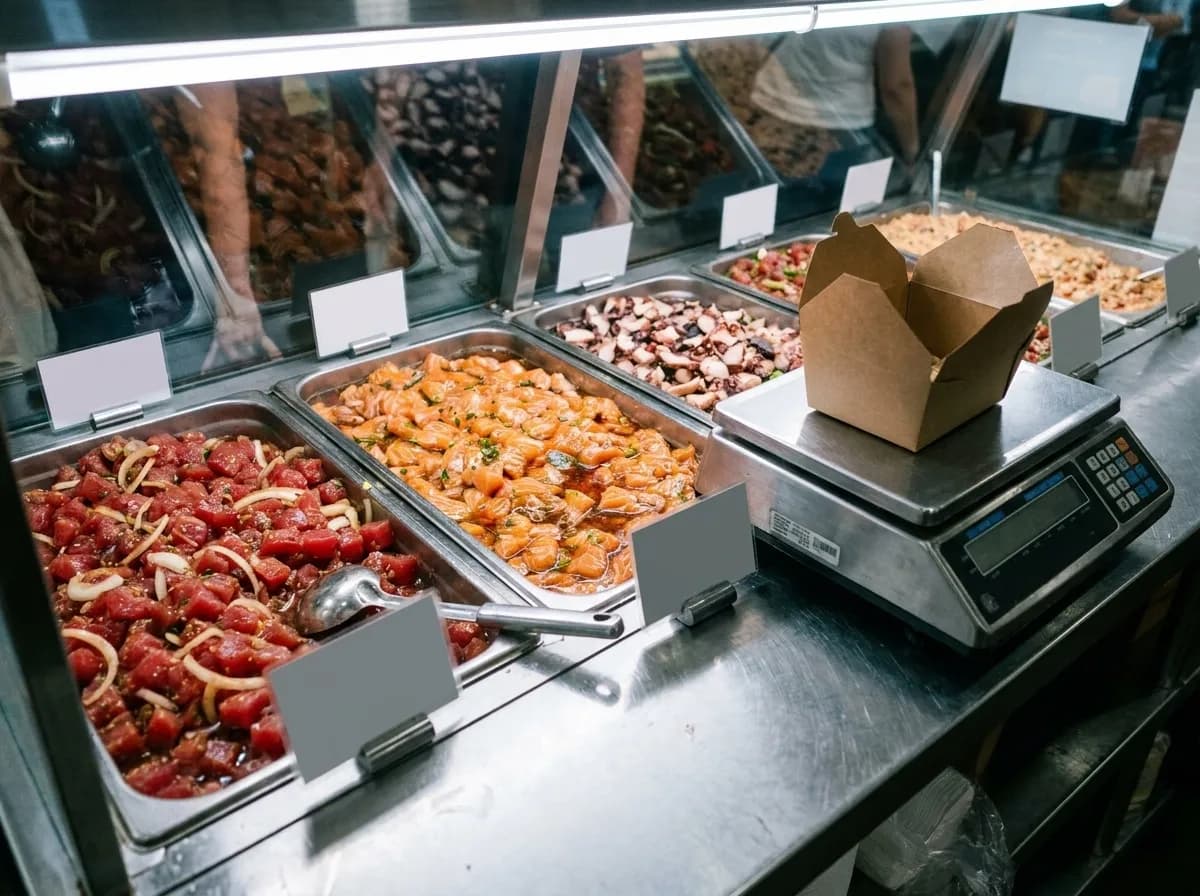
Poke in Hawaii means cut fish that has been sitting in shoyu, sesame oil, limu seaweed, sweet Maui onion and sometimes inamona or chilli for long enough to take it on. It is sold by weight from a refrigerated case, frequently in a supermarket or a fish market, and eaten as is or over rice.
The mainland build-your-own model inverts this completely. Undressed cubes sit in a cold well, you pick a sauce, the sauce goes on last and never penetrates anything. What you get is raw fish with dressing on it, and the texture difference is obvious the moment you have had the other version.
Look for the case, not the counter
This is the fastest test in Los Angeles. A place selling real poke has a refrigerated deli case with several finished preparations in trays - shoyu ahi, spicy ahi, a limu version, maybe tako or salmon - priced by the pound. You point, they weigh, you leave.
A place selling the assembly version has a line of undressed inserts and twenty-six toppings behind a sneeze guard. Neither format is hidden; they look completely different from the door, and knowing which you are looking at takes about two seconds once you know to look.
The South Bay is where to go
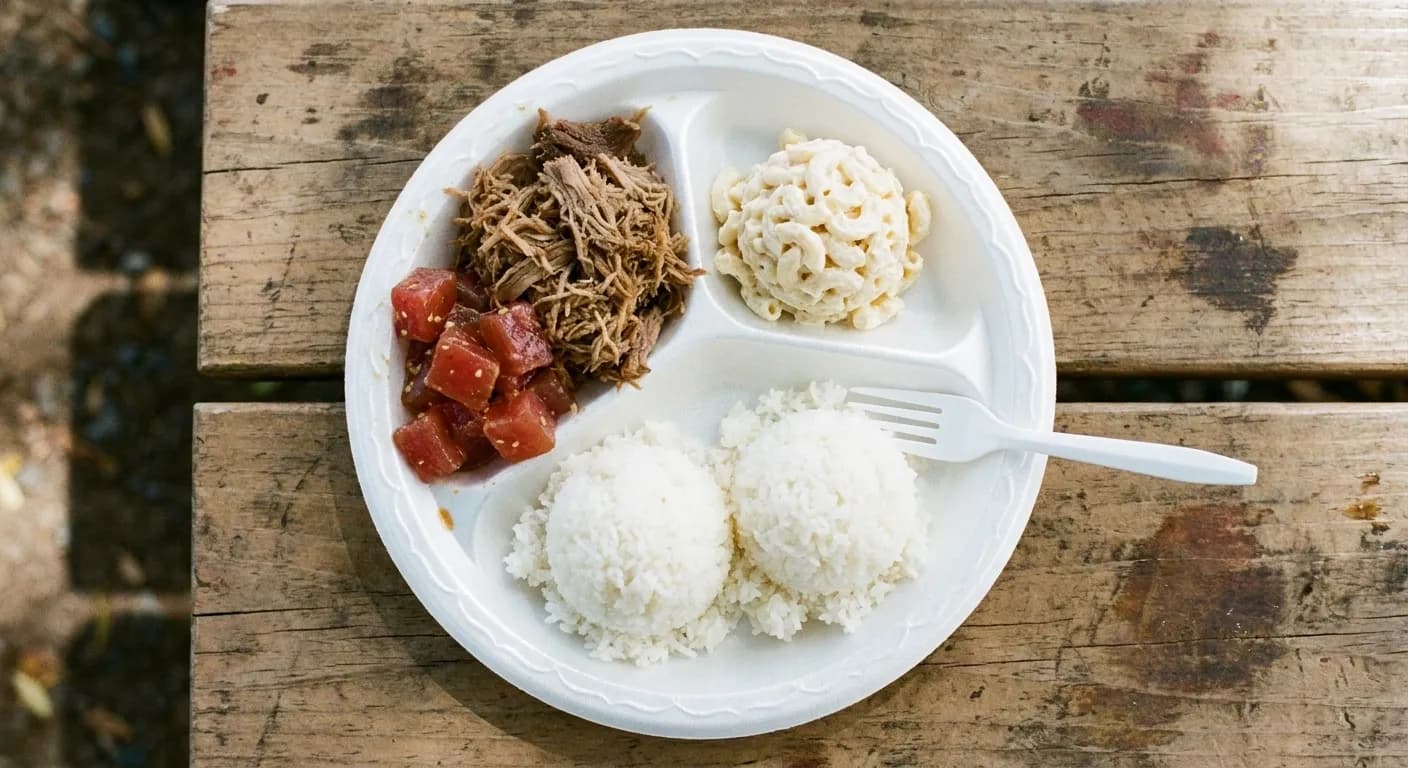
Torrance, Gardena, Carson and the surrounding cities hold the mainland's densest Hawaiian and Japanese-American communities, and the poke there is sold the way it is sold in Honolulu - out of markets and small counters, by weight, with no build-your-own option offered.
This is also where the rest of the plate lunch tradition lives: kalua pork, lau lau, lomi salmon, macaroni salad, two scoops of rice. If you are driving down for poke it is worth eating the surrounding cuisine at the same time, and a mixed plate is usually cheaper than a designer bowl on the Westside.
Judging the fish
Cubes should be roughly two centimetres with clean flat faces, not torn. Ahi should be a deep translucent red going darker where the marinade has worked in, rather than a uniform bright pink - uniform bright pink usually means gas-treated to hold colour, which is legal, common, and tells you the fish is older than it looks.
Being a port city with a large Japanese-American population, Los Angeles has genuinely good access to tuna, and the ceiling here is higher than in most of the country. That makes the gap between the good and the mediocre wider rather than narrower.
The rice question
In Hawaii the rice is usually plain short-grain, warm, no vinegar - a plate-lunch base rather than a sushi base. On the mainland many places use seasoned sushi rice, and a good number use cold brown rice because it holds better through a lunch service.
Warm rice against cold fish is a large part of why the dish works, and cold hard rice sinks an otherwise decent bowl. If there is a rice warmer behind the counter, that is a good sign. If the rice comes out of a fridge, adjust expectations.
If you are at an assembly counter anyway
Restraint is the technique. One fish, warm rice, a shoyu-based sauce, seaweed salad, sweet onion, scallion, sesame. Stop. That approximates the original and costs the same as the version with mango, corn and crispy garlic on it.
Decline the mayonnaise-heavy sauces unless that is specifically what you want, and decline anything crunchy added at the end - it goes soft in four minutes and it is there for the photograph. Nothing about this is a criticism of the format; it is just that the format will let you build something worse if you let it.
The seasonal and practical notes
This is warm-weather food and Los Angeles extends that season further than most places, comfortably through October. It also travels better than most raw fish preparations, because it was designed to be sold from a case and eaten somewhere else - which makes it one of the better beach lunches available.
Prices run roughly fifteen to twenty-two dollars for a designer bowl on the Westside and noticeably less per pound in the South Bay markets, where you are also buying more fish. If you are going to drive, drive south.
What to order beyond the bowl
If you have driven to the South Bay for this, the mixed plate is the thing to add. Kalua pork, lomi salmon, a scoop of macaroni salad and two scoops of rice is the plate lunch as it is actually eaten, and the macaroni salad is not a joke - it is deliberately plain and starchy because it is there to balance salt and fat, and it works.
Lau lau, if a place makes it, is the one to try once: pork and butterfish wrapped in taro leaf and steamed for hours until the leaf goes silky. It is not available in many places on the mainland and almost none outside this part of the county.
Tags: #BestPokeBowlsInLosAngeles #PokeNearMe #LosAngeles #LAFood #HawaiianFood #SouthBay #Torrance #PokeBowl #PlateLunch #LAEats
All trademarks are the property of their respective owners.
Ask Karpo first
Los Angeles is the mainland city where the real version is actually findable, and it is mostly south of the airport. Ask Karpo which counters near you sell by weight from a case and which are assembly lines.