What Is Manhattanhenge and When to Watch in 2026
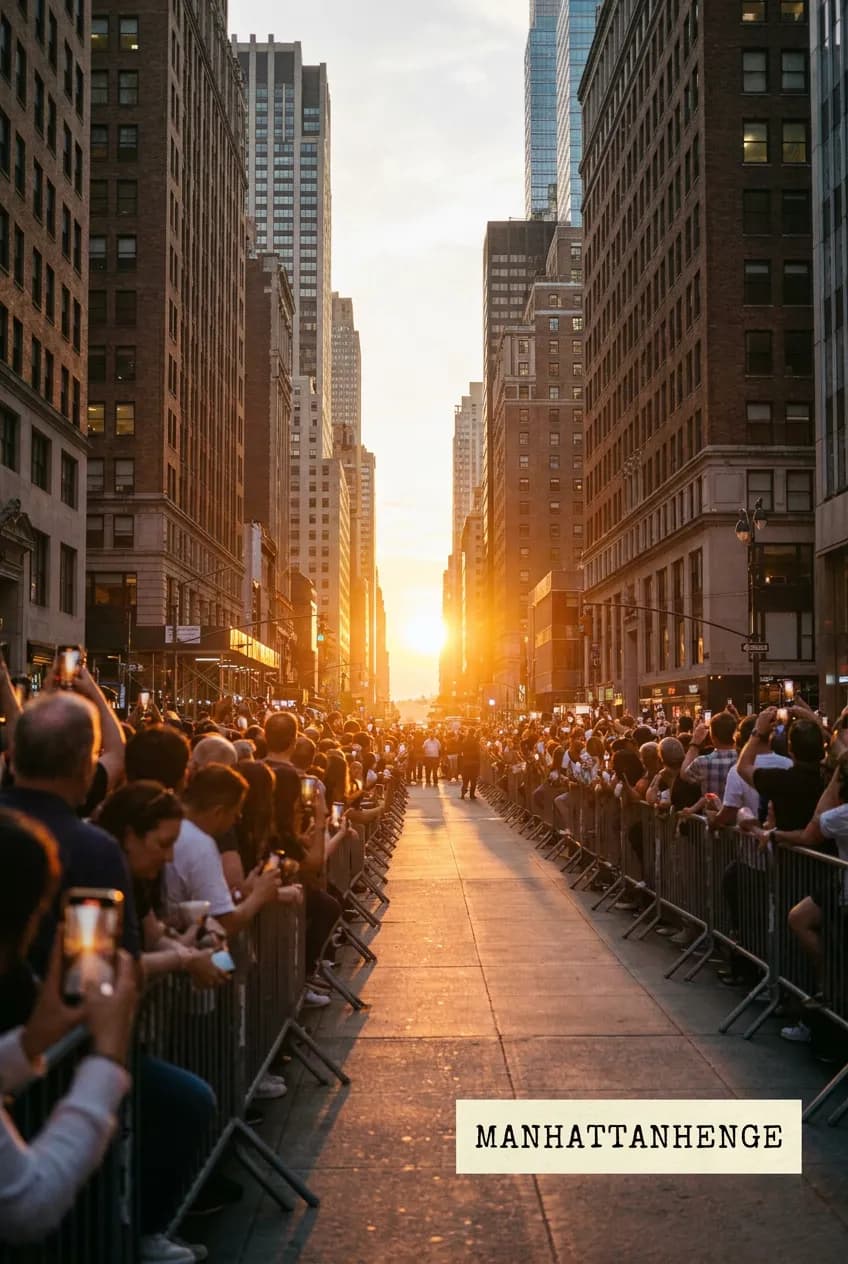
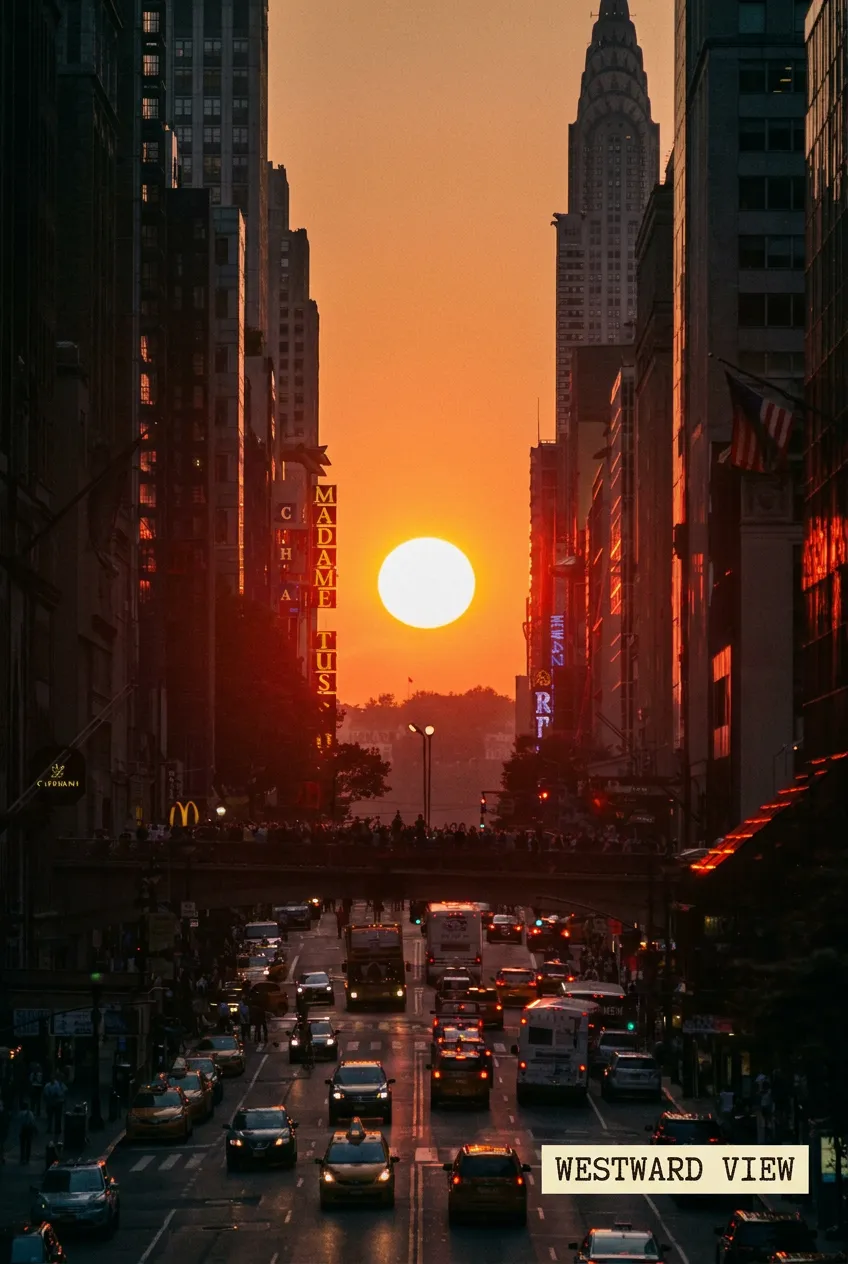
Manhattanhenge is the twice-yearly phenomenon when the setting sun aligns perfectly with Manhattan's east-west street grid, creating a dramatic view down the cross-streets toward New Jersey. The term, coined by astrophysicist Neil deGrasse Tyson at the American Museum of Natural History's Hayden Planetarium, references England's Stonehenge and its own solar alignment. For summer 2026, the key dates are July 11 at 8:20 p.m. EDT when the full sun sits on the horizon, and July 12 at 8:21 p.m. EDT when half the sun remains visible during sunset.
Not sure which street or exactly when to catch it? Ask Karpo for the best Manhattanhenge viewing spot and timing near you.
The effect depends on Manhattan's street grid running roughly 29 degrees off true east-west, which creates two brief windows each year when the sunset geometry works. May dates have already passed, making these July evenings the final opportunity until the cycle repeats in winter. Weather, atmospheric haze, and construction can all affect visibility, so checking forecasts and arriving with time to spare increases your chances of catching the alignment under clear skies.
The Best Cross-Streets for Manhattanhenge Viewing
Space.com identifies five major east-west corridors known for optimal Manhattanhenge views: 14th Street, 23rd Street, 34th Street, 42nd Street, and 57th Street. These wide thoroughfares offer long sightlines toward the Hudson River and New Jersey, with minimal tall buildings blocking the western horizon. Each street brings different crowd dynamics and urban backdrops, from the residential stretch of 14th Street to the iconic Times Square backdrop on 42nd Street and the Midtown canyon of 57th Street near Carnegie Hall.
The Hayden Planetarium's guidance emphasizes choosing a spot with an unobstructed view west and enough sidewalk space to set up safely. Avoid standing in roadways or bike lanes, as traffic continues during the event and enforcement is active. Arriving at least 30 minutes early secures better vantage points before crowds gather, and scouting your chosen cross-street in advance helps identify construction zones, scaffolding, or other obstacles that might have appeared since last year.
Navigating Crowds and Staying Safe on Sidewalks
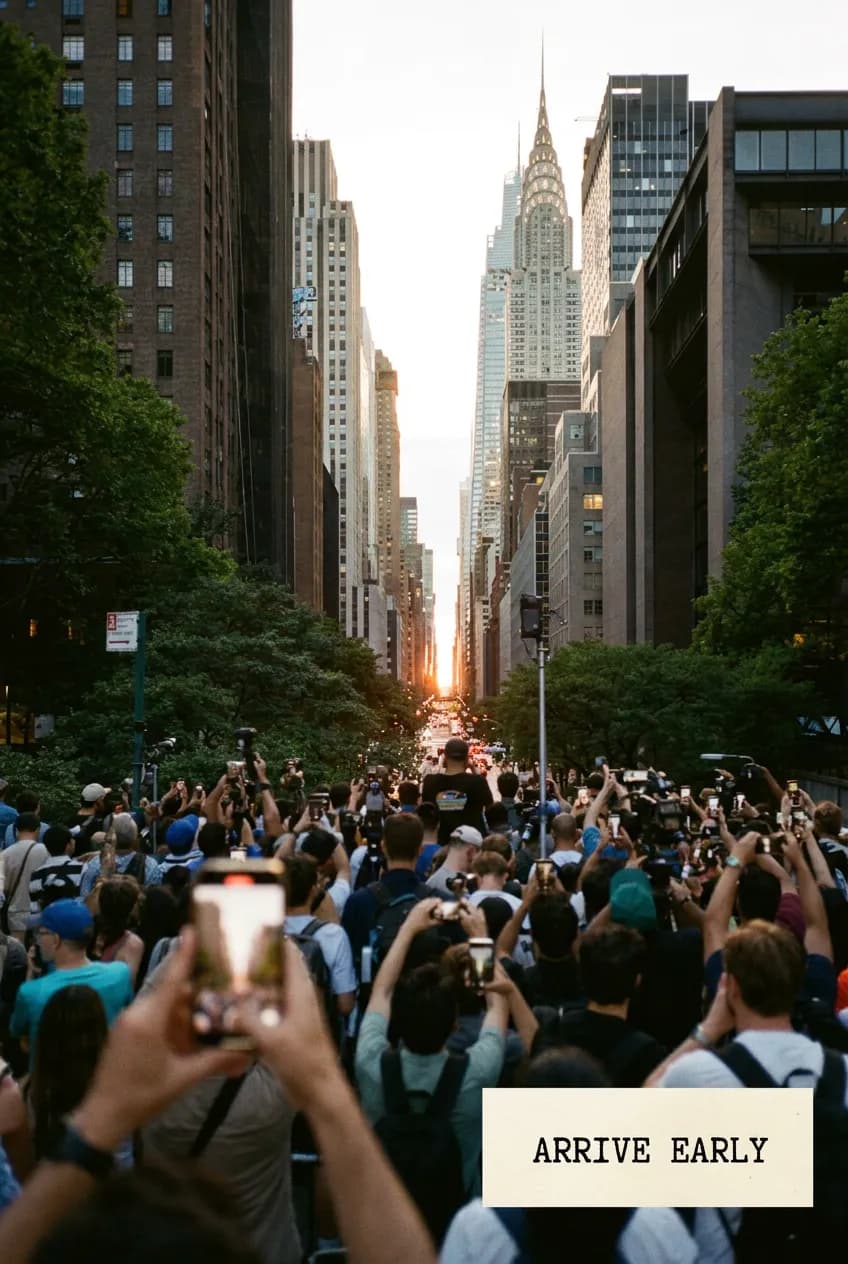
Manhattanhenge draws thousands of New Yorkers and visitors to the same handful of blocks, turning normally busy sidewalks into dense viewing galleries. NYC Parks promotes the event as a citywide public skywatching opportunity, which means expect shoulder-to-shoulder conditions on the most popular streets during the 20 minutes surrounding sunset. Photographers with tripods, families with children, and casual spectators all compete for curb space, so patience and courtesy make the experience better for everyone.
Stay on sidewalks at all times and follow any instructions from NYPD or traffic agents managing intersections. Stepping into the street for a better angle is both illegal and dangerous, as vehicle and bicycle traffic does not stop for the event. If your first-choice location is too crowded, walking one or two blocks north or south often reveals quieter cross-streets with nearly identical sightlines. Confirm before going that your planned street actually runs east-west and has a clear view toward the Hudson, as not every numbered street in Manhattan follows the grid perfectly.
What to Bring and How to Photograph the Sunset
Bring a camera or smartphone with a clean lens, but remember that the bright sun can overwhelm sensors and create lens flare. Photographers often use narrow apertures and lower ISO settings to capture detail in both the sun and surrounding buildings, though automatic modes on most phones handle the high contrast reasonably well. A small tripod or stable surface helps with longer exposures as the light fades, and arriving early gives you time to test settings before the critical moment.
Sunglasses protect your eyes during the minutes before the sun touches the horizon, and a hat helps reduce glare. Water and a small snack are useful if you plan to stake out a spot early, as leaving to find refreshments means losing your place. Dress for summer heat and humidity, and check the weather forecast for any chance of thunderstorms that could obscure the sunset or make standing outdoors unpleasant. If clouds roll in, the spectacle may be diminished or invisible, so have a backup plan for your evening.
Alternative Viewing Spots Beyond the Famous Streets
While 42nd and 34th Streets draw the largest crowds, many other cross-streets offer equally good sightlines with fewer spectators. Residential blocks in the West 20s and 30s, or the quieter stretches of the East 50s, provide the same east-west alignment without the tourist density. The key is finding a street that runs straight toward the Hudson with minimal tall buildings blocking the western horizon, then walking west as far as practical to get closer to the river.
Some viewers prefer the elevated perspective from pedestrian overpasses or wide plazas, though these locations fill quickly. Avoid attempting to access private rooftops or restricted areas, as building management and security actively patrol during Manhattanhenge. NYC Parks encourages public viewing from street level, which remains the most accessible and legal option. If you discover a favorite quiet block, consider keeping it as your personal tradition rather than broadcasting it widely, preserving the low-key atmosphere for future years.
What Happens After the Sun Sets
Once the sun dips below the horizon, the crowds disperse rapidly, and the cross-streets return to normal within 15 minutes. The afterglow can be beautiful, with orange and pink light lingering in the western sky, but the main event is over. Many viewers head to nearby restaurants or bars to continue their evening, so expect busy waits at popular spots in Midtown and Chelsea immediately after sunset.
If you miss the July dates or clouds spoil your view, Manhattanhenge repeats in late May and early July each year, and the winter version occurs in December and January with sunrise alignments looking east. The Hayden Planetarium updates its Manhattanhenge page annually with precise times, and NYC Parks typically posts reminders a few days before each event. Mark your calendar now for 2027 if you want to plan ahead, and remember that the magic depends as much on clear skies and good timing as it does on choosing the right street.
Practical notes
- Arrive at your chosen cross-street at least 30 minutes before the listed sunset time to secure a good sidewalk spot before crowds gather.
- Stay on sidewalks and obey all traffic signals; stepping into the street for photos is illegal and dangerous as vehicle traffic continues during the event.
- Check weather forecasts on the day of the event, as clouds, haze, or thunderstorms can completely obscure the sunset alignment.
- Bring sunglasses, water, and a hat for comfort, and test your camera settings early to handle the bright sun and high contrast.
- Confirm your planned viewing street actually runs east-west with a clear view toward New Jersey, as not every Manhattan cross-street follows the grid perfectly.
Tags: #Manhattanhenge #NYCsunset #freethingstodoNYC #Manhattanevents #NYCsummer #sunsetviewing #astrophotography #NYCstreets #HaydenPlanetarium #urbanskywatching #NYCParks #Midtownsunset #NYCphotography #summerevenings #cityguideNYC
Sources consulted: AMNH Hayden Planetarium · NYC Parks Manhattanhenge · Space.com 2026 guide · ABC7 New York
All trademarks are the property of their respective owners.
Ask Karpo first
Which Manhattanhenge viewing street has the best balance of clear sightlines and manageable crowds for first-time visitors?