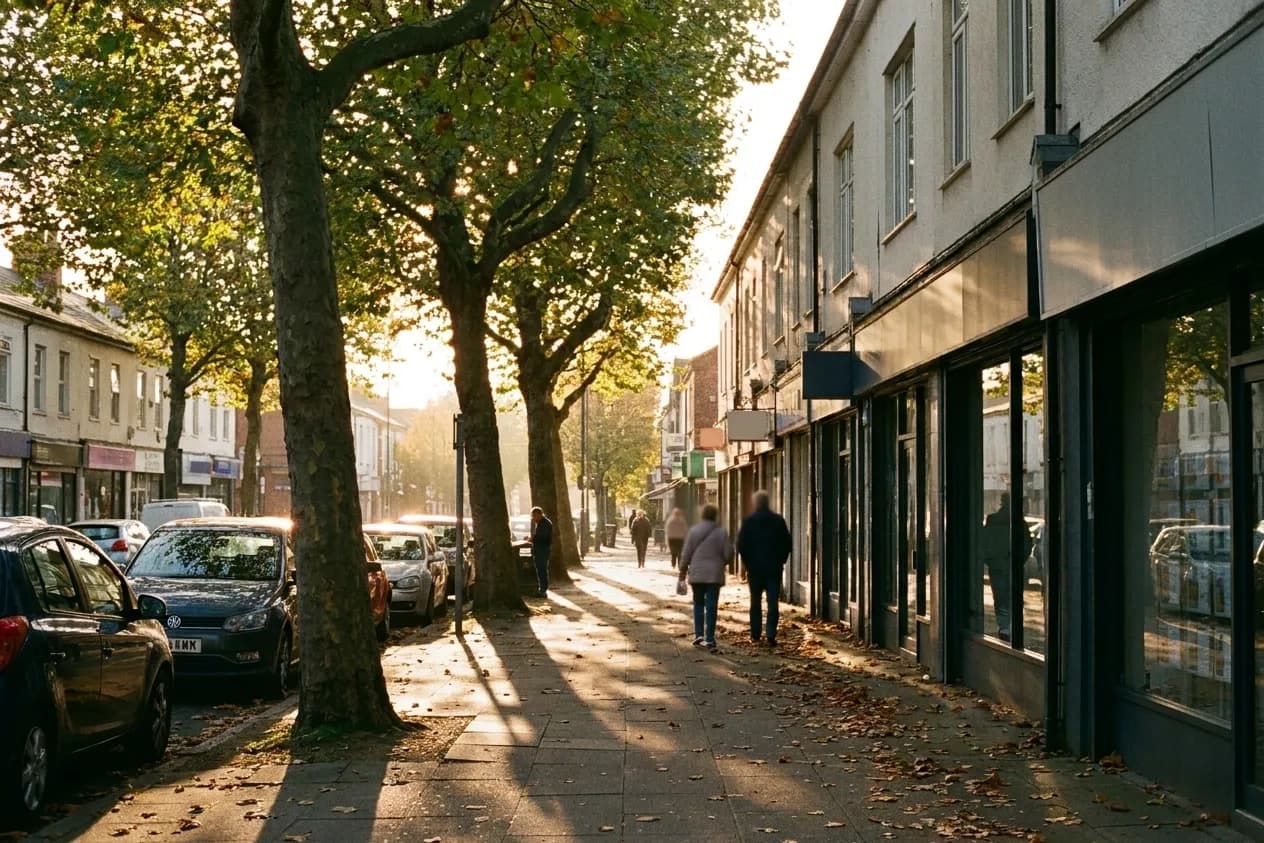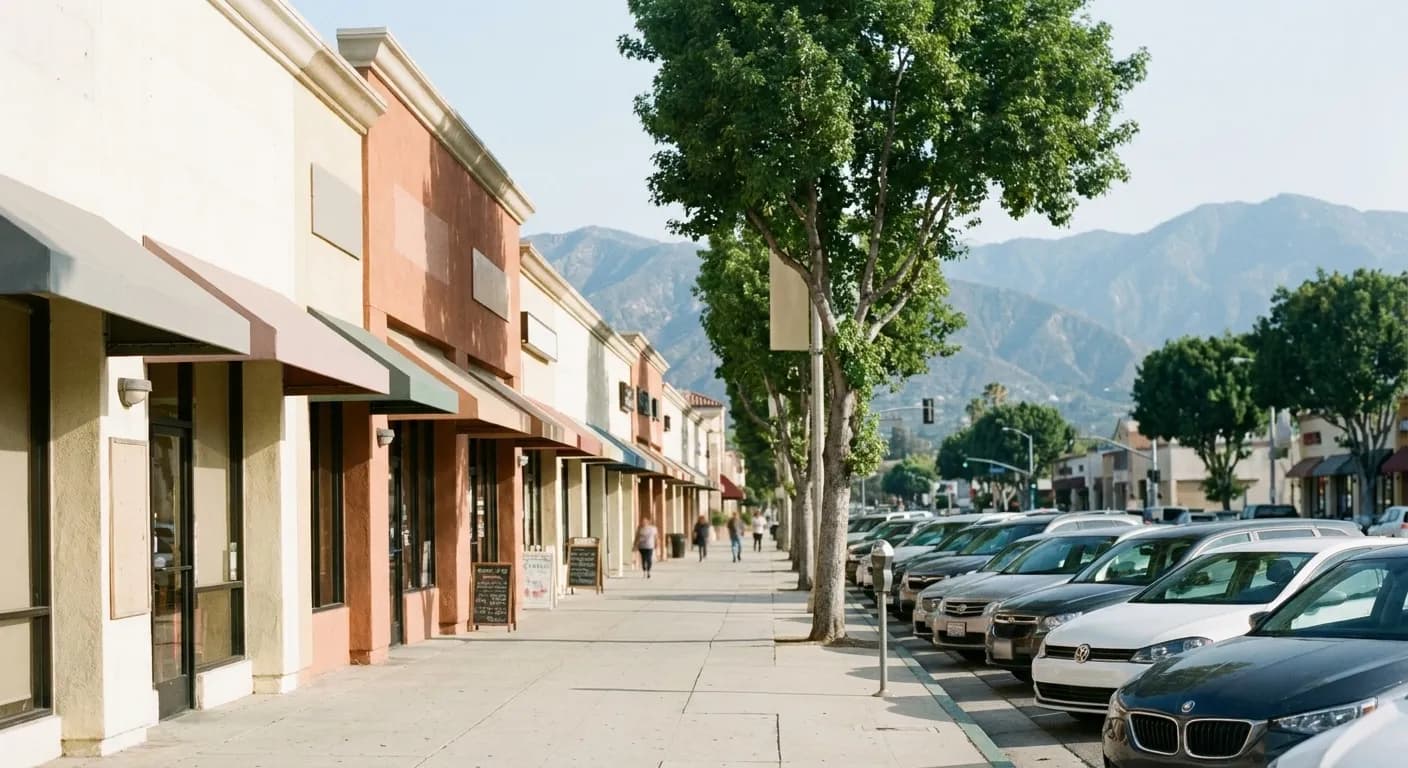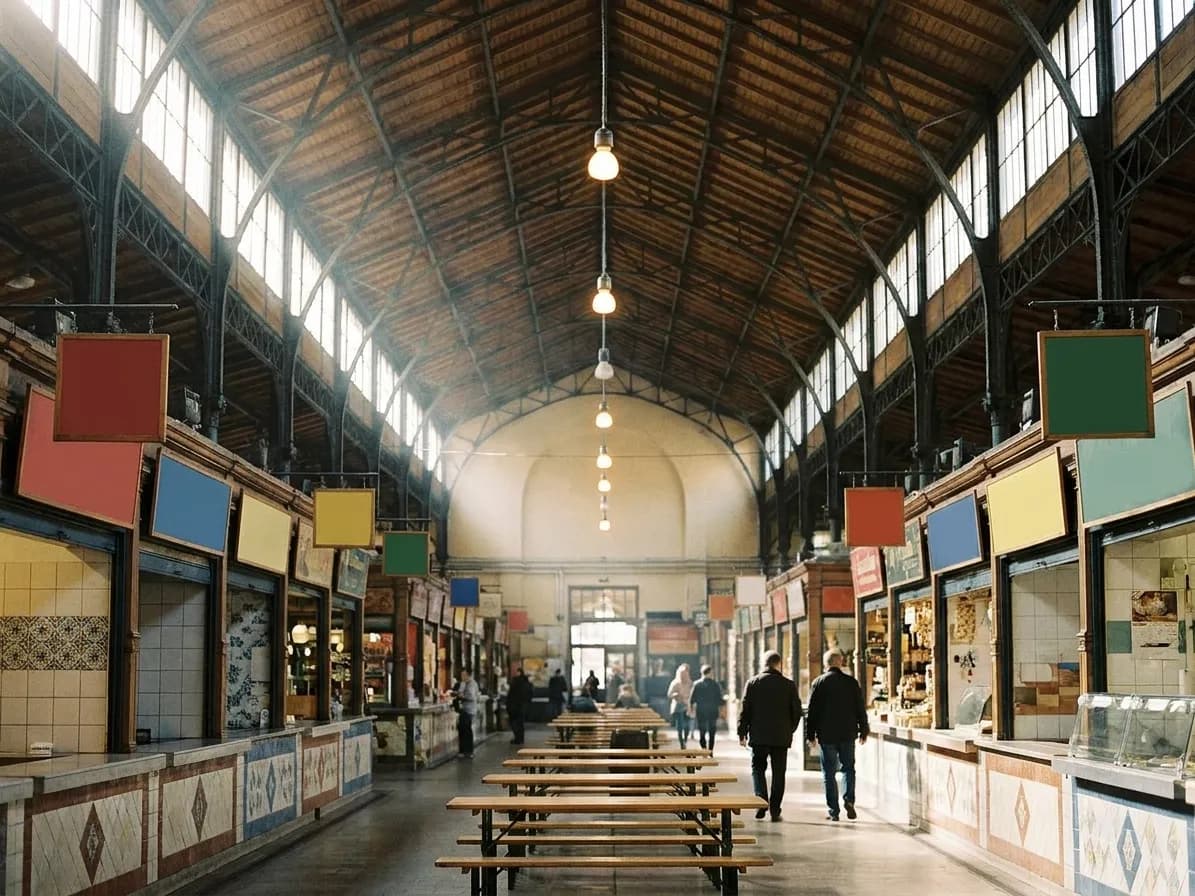
Downtown Los Angeles is the exception to almost everything else about eating in this city. It is dense, it is walkable, it was largely built before the automobile reorganised everything, and it has a concentration of counters, markets and stalls that do not take bookings and do not need to. On any given evening you can arrive in DTLA with no plan at all and eat extremely well within a ten-minute walk, which is close to impossible in most of Los Angeles. Here is how the walk-in city is laid out.
Downtown's hours are uneven - a lot of it is built around office workers and closes at three, and a separate set of places only comes alive at nine. Tell Karpo what time it is and which block you are on, and it will tell you what is actually open.
Start with the markets
The historic market halls are the backbone of walk-in downtown - a hall of independent stalls under one roof, each doing one thing, with shared seating and no reservations anywhere. You can eat Salvadoran pupusas, a breakfast sandwich and a bowl of noodles from three different operators at the same counter.
The best strategy in one of these is the same as in a Flushing food court: walk the entire loop before buying anything, then split the order across stalls. Going at an off hour matters here - the lunch rush between noon and two fills every seat, and at half past two the same hall is calm.
The historic core counters
The blocks around Broadway and Spring have a layer of old lunch counters, cafeterias and small storefronts that predate the neighbourhood's recent reinvention and mostly still run the same way: order at the counter, sit where there is space, cash preferred at several.
This is also where downtown is cheapest. A full meal in this stretch runs ten to fifteen dollars, against thirty or more four blocks west in the newer developments, and the cooking is frequently better. The buildings are worth looking at on their own account - the old theatre district on Broadway has some of the most extravagant interiors in the country behind fairly plain doors.
Little Tokyo and Chinatown are walk-in by default
Both are a short walk from the centre of downtown and both operate largely without reservations. Little Tokyo has ramen counters, izakaya and a dense run of small places along First Street and in the plazas off it. Chinatown is quieter, cheaper and has been changing fast, with a mix of old banquet halls and newer small kitchens.
The practical note for both: they close earlier than you would expect. Little Tokyo's counters mostly stop around ten and Chinatown earlier still, so these are the answer for an eight o'clock walk-in rather than an eleven o'clock one.
The Arts District, with a caveat
East of Alameda the Arts District has the newest and most photographed food downtown, and it is the one part of this walk where you may well need a booking. The bakeries, breweries and casual counters remain walk-in; the sit-down restaurants largely do not.
It is also the most spread out and the least pleasant to walk between - long blocks, few crossings, and industrial frontages with nothing at street level. If the plan is to turn up and see what happens, the historic core is a considerably better bet and the Arts District is where to go when you have booked something.
The late window
Downtown after ten splits in two. Most of the daytime economy shuts completely, and a separate set of places - bar kitchens, a handful of late counters, and the taco stands that set up on the corners - takes over. It is thinner than Koreatown's late scene but it exists and it is walkable.
If you are downtown for an event at one of the venues and coming out at half past ten, the realistic options are a bar kitchen or a stand rather than a restaurant. Both are fine; the mistake is assuming a neighbourhood that was heaving at seven will still be serving at eleven.
Parking, transit and the walk itself
Downtown is the one part of Los Angeles where leaving the car is straightforwardly better. Metro rail converges here from six directions, the historic core is genuinely walkable, and evening parking rates in the structures are reasonable if you do drive - considerably cheaper than the event rates near the arenas.
The walk between the market halls, the historic core and Little Tokyo is ten to fifteen minutes end to end. That is the single largest advantage downtown has over anywhere else in this city, and it is why a no-plan evening works here and nowhere else.
How to run a walk-in evening
Arrive around six, start with something small at a market stall, walk fifteen minutes east into Little Tokyo, eat properly there, then finish with a drink back in the historic core. Three stops, no bookings, about forty minutes of total walking and no driving in between.
The version that fails is picking one restaurant, driving to it, finding a ninety-minute wait, and then having to get back in the car. Downtown punishes that approach and rewards the opposite one, which is the reverse of how the rest of Los Angeles behaves.
Tags: #DTLA #DowntownLA #LosAngeles #LAFood #NoReservation #GrandCentralMarket #LittleTokyo #WalkIn #LALunch #LAEats
All trademarks are the property of their respective owners.
Ask Karpo first
Downtown is the only part of Los Angeles where showing up without a plan is the better plan. Ask Karpo what is open near you right now and how far the next stop actually is on foot.