There is a version of this argument that happens over cheap slices, and it is not this one. The Miami pizza argument that actually gets heated is about whole pies — about whether a properly leopard-spotted Neapolitan crust beats a New York pie made by a transplanted institution, and whether the city's most photographed pizzeria is a genuine contender or a very good gimmick. Four rooms carry the whole debate, they represent four different ideas of what pizza is, and none of them is trying to be the others. Here is the case for each.
The four rooms people argue about in Miami are all whole-pie restaurants with completely different waiting rules — one takes no bookings at all, one has two outposts on opposite sides of the city. Text Karpo which side of the argument you are on and get the closest one to you that can actually seat you tonight, and roughly how long the wait runs.
The Neapolitan case: La Leggenda, Española Way
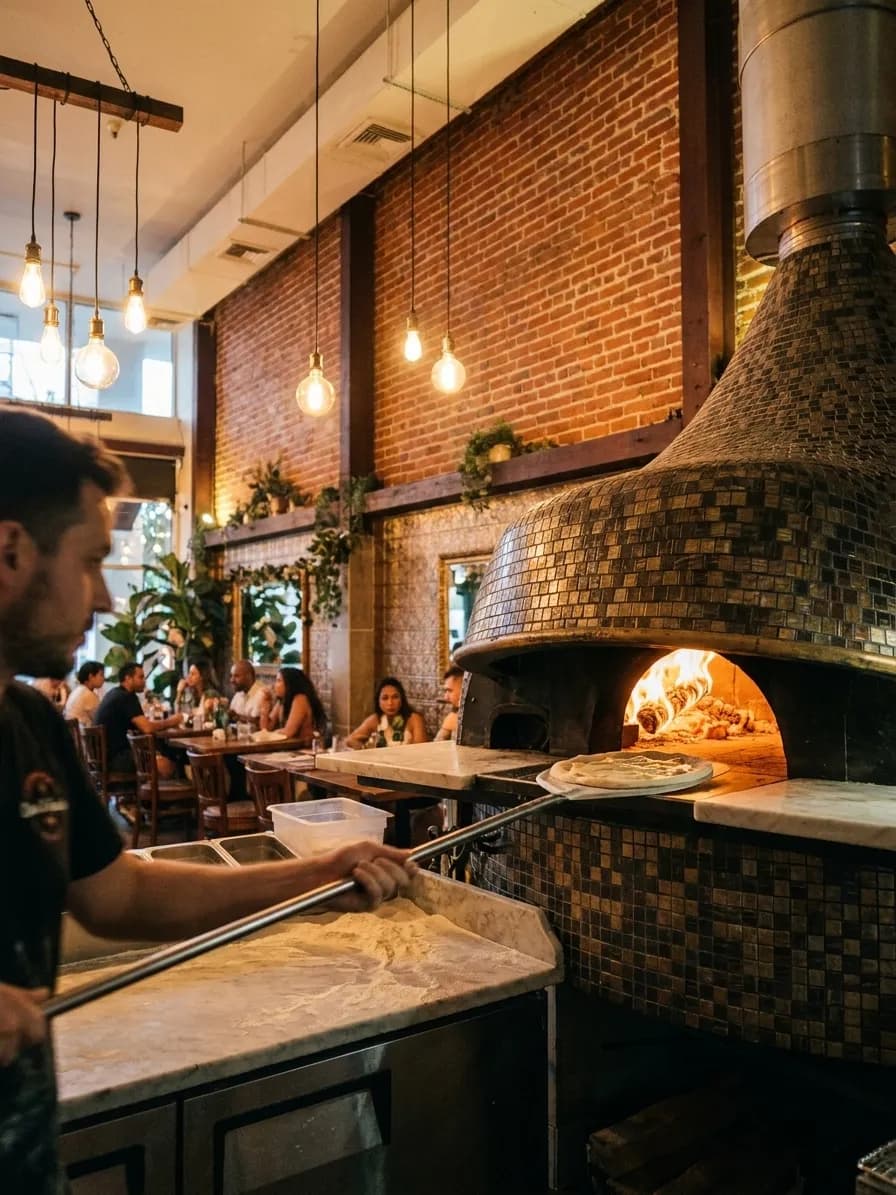
La Leggenda Pizzeria on Española Way in Miami Beach was ranked joint tenth in the United States on the 50 Top Pizza 2025 list, which is a serious placement in a serious ranking and not a local-blog award. It is run by Giovanni Gagliardi, a Naples-born pizzaiolo, and it does wood-fired Neapolitan pies to the specification that word is supposed to mean — a soft, blistered, slightly wet centre that is meant to be eaten with a knife and fork rather than folded.
That last detail is where most of the disagreement starts. People who grew up on New York pizza encounter a proper Neapolitan crust, find the middle soupy, and conclude it is undercooked. It is not undercooked; it is a different food with a different target. If you have never had the argument explained that way, this is the room to have it in.
The technical case: 'O Munaciello, MiMo and Coral Way
'O Munaciello also placed joint tenth on the same 2025 list, moving up to get there, and it runs two Miami outposts — one in MiMo and one on Coral Way. The kitchen ferments its dough for seventy-two hours and imports ingredients from Italy weekly, which is the sort of claim that is easy to make and expensive to actually do.
Seventy-two hours is the thing to taste for. A long cold ferment produces a crust that is lighter than it looks, digests differently and carries a faint sourness underneath the char. If you order one pie at La Leggenda and one here in the same week, the difference is not subtle, and the argument about which is better stops being abstract.
The New York case: Lucali, Miami Beach
Lucali is a Brooklyn institution that is routinely named among the best pizza in New York, and its only other branch anywhere in the world is in Miami Beach. That fact does a lot of work in this argument. It is not a licensee or a lookalike; it is the same operation, which means Miami has genuine access to a pie most people have to queue in Carroll Gardens for.
It also has the celebrity problem — the name travels with a list of famous regulars attached, and that pulls in a crowd that would come regardless of what came out of the oven. Ignore all of that. The relevant question is whether a thin, charred New York-style pie made by that kitchen is better than a Neapolitan pie made by a Naples pizzaiolo, and reasonable people in this city genuinely disagree.
The outlier: Mister O1
Mister O1 was voted Miami's best pizza spot by Axios readers, which is the closest thing to a popular vote the city has run, and it has grown from Miami Beach into a multi-location operation. Chef Renato Viola's pies use dough made from flour his family ships directly from Italy, and the signature is the Star Luca — a star-shaped pizza whose folded points are filled with San Marzano sauce, ricotta, Calabrese salami and basil.
Purists dismiss it as a shape rather than a pizza. That is unfair but not baseless: the star is a stuffed-crust idea executed well, and it photographs so well that it has arguably overshadowed the ordinary round pies coming out of the same oven, which are good. Order a plain margherita alongside the star and judge the kitchen on that.
How to actually run the comparison
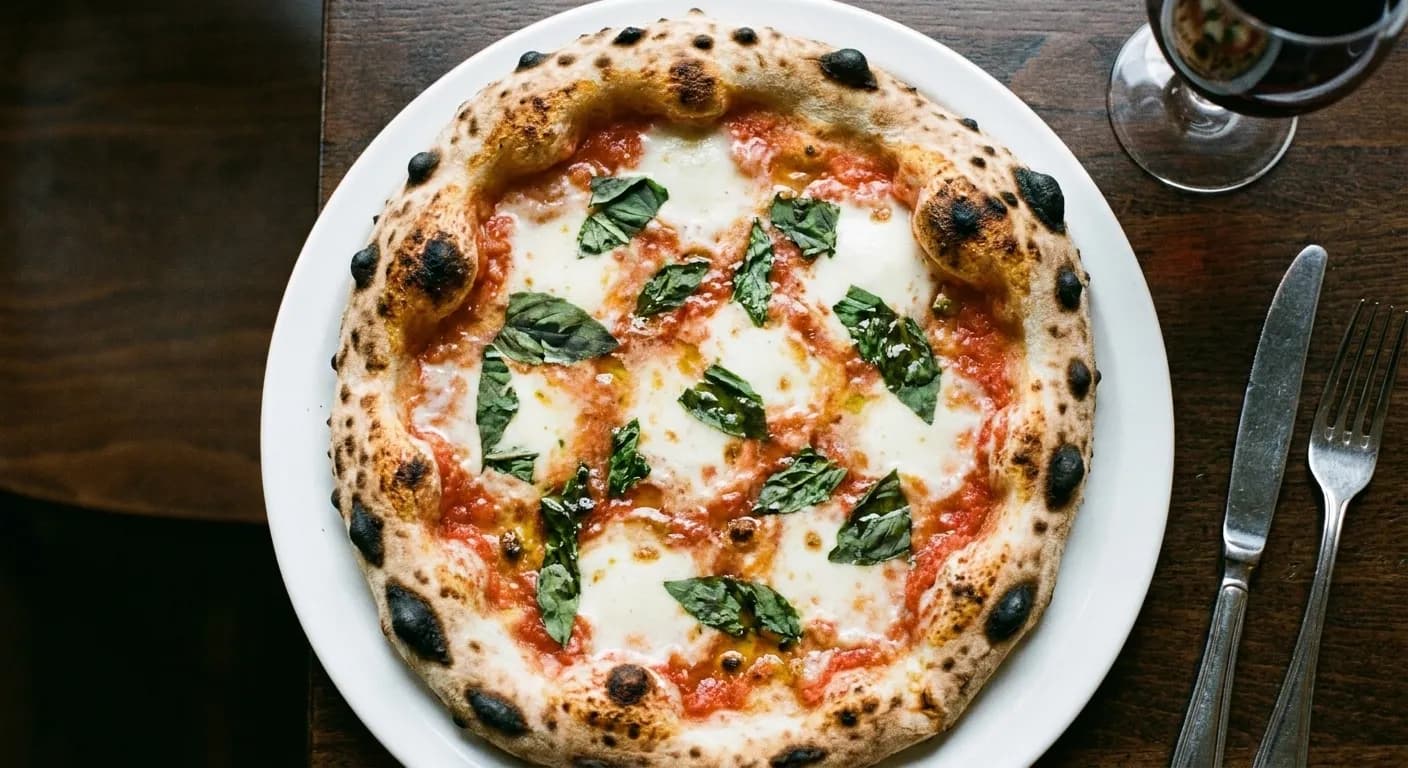
Order the same pizza at each — a margherita, nothing else on it. Toppings hide crust, and crust is the entire disagreement. Eat the first slice without cutting it, then look at the underside: Neapolitan should be spotted black in irregular patches from a very hot floor, New York style should be evenly tan and rigid enough to hold its own weight. Neither is a fault. They are the fingerprints of two different ovens.
Then check the fold. A New York pie folds cleanly and stays folded. A Neapolitan pie will not, and being annoyed about that is exactly the argument this city keeps having.
The honest conclusion
Miami is, at this point, genuinely a pizza city, and the evidence is not that any single pie is the best in the country — it is that two of its restaurants landed in the same national top ten in the same year while working in different traditions. A city with one great pizzeria has a great pizzeria. A city with four that disagree with each other has a pizza culture.
If you want a position to hold at a table: the Neapolitan rooms are better pizza and the New York-style pie is a better dinner, because it survives the drive home and the second reheat. Everyone will tell you that is a cop-out. They will also finish the box.
Tags: #bestpizzainmiami #miamipizza #neapolitanpizza #laleggenda #omunaciello #lucali #mistero1 #miamibeach #espanolaway #mimo #coralway #wynwood #miamifood #pizzanight
All trademarks are the property of their respective owners.
Ask Karpo first
Miami's best pizza rooms fill on completely different schedules, and three of the four are not where visitors look. Ask Karpo which of them is closest to you tonight, whether it takes a booking or runs on a list at the door, and what the realistic wait is if you turn up at eight.