The Getty and LACMA and the Broad have the reputation, the queues and the gift shops that stay open until close. They also have the scale that turns a visit into a commitment. You block the day, you budget for parking, you accept that fatigue will win somewhere around gallery twelve. The small museums scattered across LA work differently. They close earlier, they operate on university schedules or donor-funded hours, and they reward the visitor who shows up with lower expectations and more attention. Ninety minutes is often exactly right.
The Karpo app tells you which small museums are open right now, how long the drive actually takes from wherever you are, and what closes early on the day you want to go.
The house museum and the archive room operate on human scale
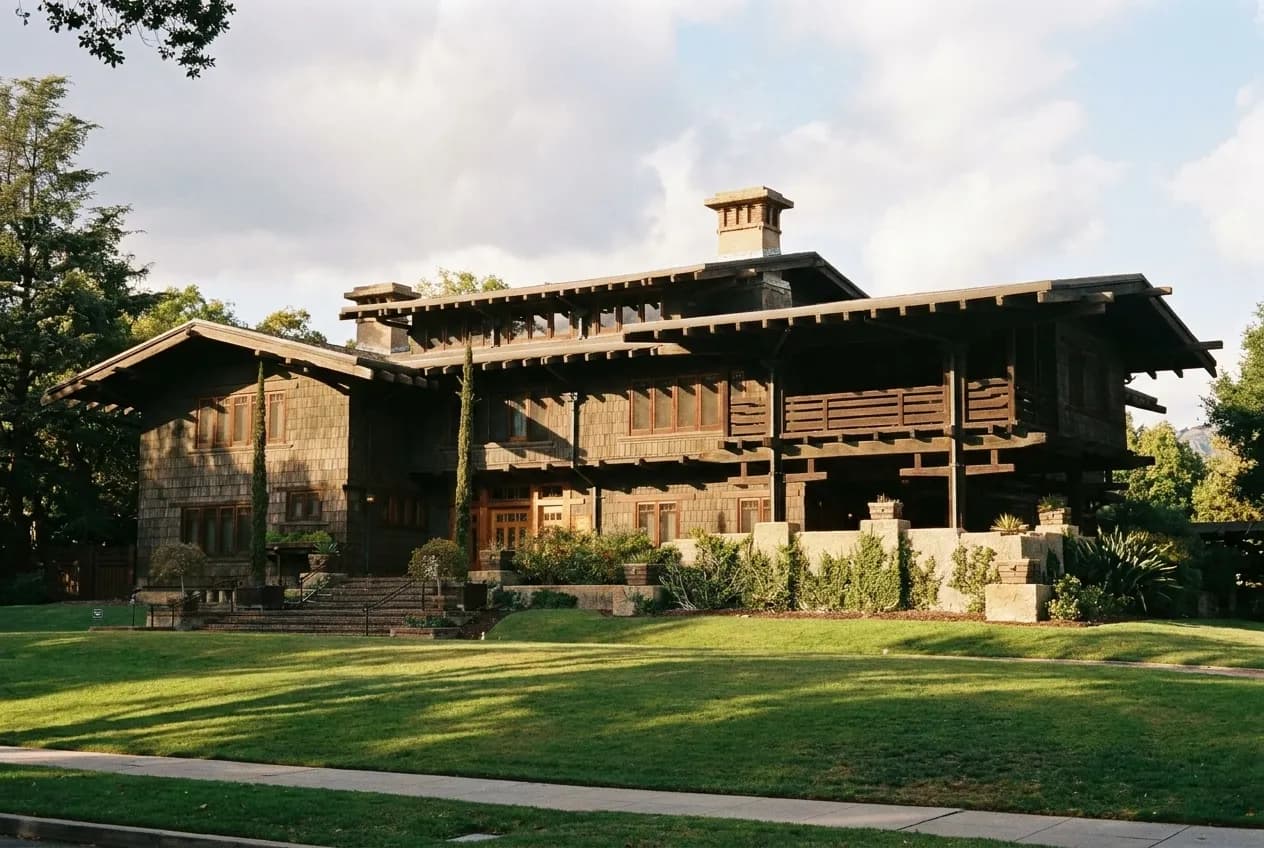
House museums—the Gamble House in Pasadena, the Eames House in Pacific Palisades, the Schindler House on Kings Road—let you see how someone actually arranged a life inside the architecture that now carries their name. The rooms are small enough that you notice the door hardware and the built-in seating. The tours, when required, run short. You are done in an hour, and the neighborhood outside is usually the reason the house got built there in the first place.
The Gamble House runs tours every fifteen minutes Thursday through Sunday, and the last tour leaves at three. That means you need to arrive by two-thirty if you want the full experience, and earlier on weekends when tour groups book multiple slots. The Schindler House operates as a gallery space with self-guided access, which gives you more control over timing but also means you are responsible for reading the context yourself. The Eames House requires advance reservations and runs tours only on weekdays, which makes it harder to visit but also guarantees you will not be fighting a crowd.
Archives with public viewing rooms work the same way. The Huntington in San Marino is large and famous, but its manuscript room is a separate, quieter experience. Smaller institutions—university special collections, the ONE Archives in West Hollywood, neighborhood historical societies with rotating displays—open a few days a week and expect you to look closely at a small number of objects. The point is depth, not coverage. A single medieval manuscript under glass, properly lit, holds attention longer than a wall of framed prints.
These institutions close early, often by four or five, and many operate Thursday through Sunday only. Calling ahead or checking the website the morning of your visit is not optional. The staff is small, and closures for private events or conservation work happen without much warning. The upside is that when they are open, they are never crowded. You can take a second lap through the galleries without fighting for sightlines, and the guards will answer questions if you ask. The ONE Archives, for instance, closes at five and operates Friday through Sunday only, which means a weekday visit is impossible and a Sunday visit needs to start by three if you want time to see the rotating exhibitions in addition to the permanent collection.
Single-subject collections assume you care about the subject
The Museum of Jurassic Technology in Culver City, the Nethercutt Collection in Sylmar, the Museum of Neon Art in Glendale—these are built for the visitor who wants to spend an hour and a half inside one category of object. The curation is idiosyncratic, the wall text is often extensive, and the experience depends on whether the subject catches you. If it does, the visit is memorable. If it does not, you are out the door in forty minutes and that is fine.
Single-subject museums also tend to occupy strange real estate. A former bank building, a warehouse behind a strip mall, a mansion in a residential neighborhood that does not otherwise attract foot traffic. This means parking is easier and the surrounding blocks are usually worth a walk. The Nethercutt is near the San Fernando Mission and sits in a part of Sylmar where street parking is abundant and free. The Museum of Jurassic Technology is a short drive from the galleries and coffee shops on Washington Boulevard in Culver City, and the museum itself has a small lot behind the building that almost never fills. The neon museum sits in a part of Glendale that has good Armenian lunch spots within two blocks, and metered street parking that turns over quickly because most visitors are there for an hour or less.
The smaller the collection, the more the visit rewards a slow second pass. You will not remember twelve galleries of impressionist paintings, but you will remember the room of carved ivory at the Nethercutt or the dioramas at the Museum of Jurassic Technology. Taking a lap, sitting for ten minutes, then taking another lap is a better use of the space than trying to see everything once. The museums are small enough that this approach does not add much time, and the second pass is when you notice what the curator was actually doing.
Timing matters more at single-subject museums than at the majors because the buildings are often older and lack climate control in every room. Summer afternoons can be uncomfortable, and winter mornings can be cold until the heating catches up. The Museum of Jurassic Technology, in particular, keeps the lighting low for conservation reasons, which makes it a better afternoon visit when your eyes have time to adjust. The Nethercutt opens at ten and closes at four-thirty, and the best window is late morning when the light through the skylights is strong enough to see the detail work on the cars without glare.
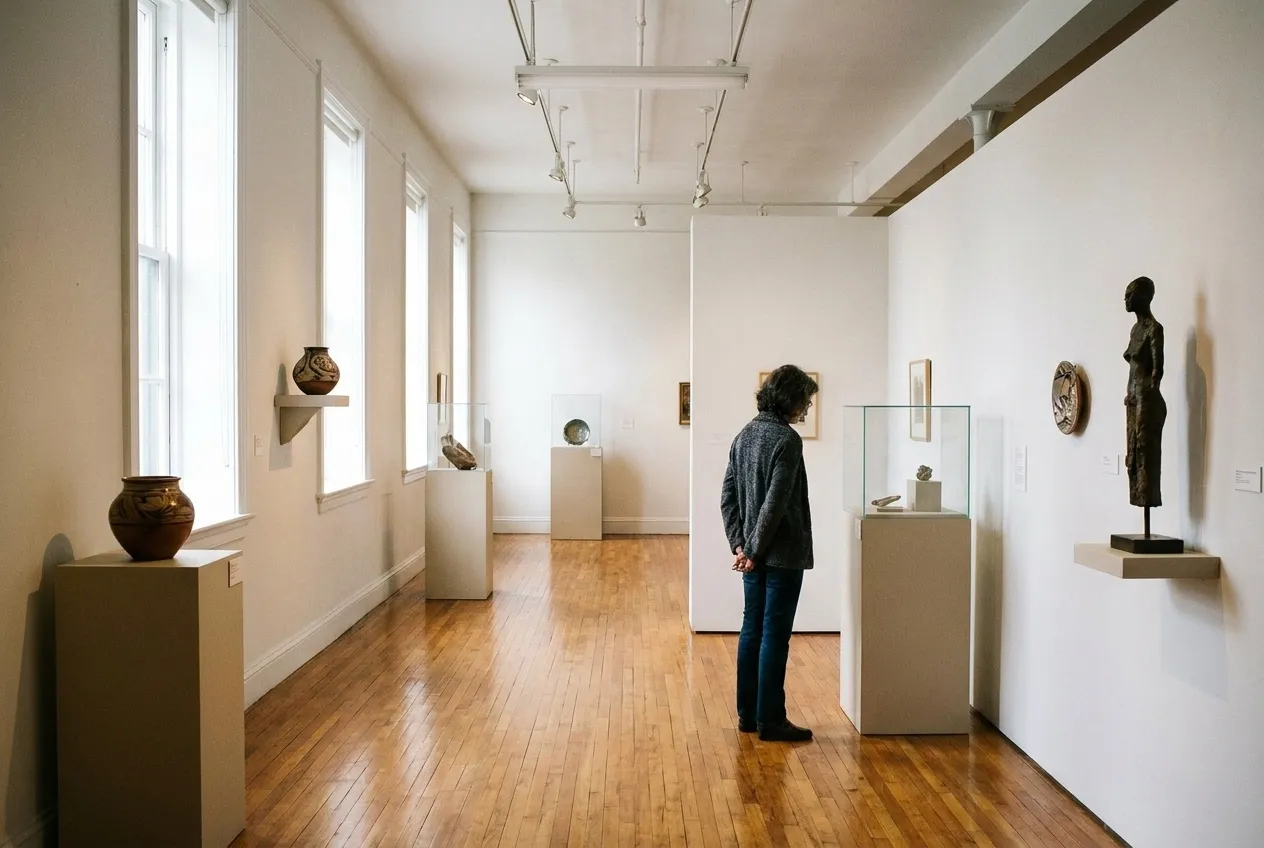
University galleries keep academic hours and academic holidays
The Hammer Museum at UCLA, the USC Fisher Museum, the galleries at Occidental and Pepperdine—these operate on the university calendar, which means they close during winter break, they close during summer session, and they sometimes close between exhibitions with less advance notice than a commercial gallery would give. The quality of the shows is often high, the admission is usually free, and the hours are shaped around the academic day. Expect to find them open Tuesday through Saturday, closed Sundays and Mondays, with evening hours one or two nights a week during the semester.
The Hammer stays open until eight on Thursdays, which makes it one of the few small museums in LA where an after-work visit is possible. The Fisher at USC keeps shorter hours and closes at five, but it also opens at noon, which means a lunch-hour visit works if you are already on campus. Smaller university galleries—the ones at Occidental in Eagle Rock, the Pepperdine galleries in Malibu—often keep even more restricted hours, opening only Wednesday through Saturday and closing by four. Checking the calendar before you drive is essential, because a dark gallery after a forty-minute drive is a waste of the afternoon.
University museums also assume a level of familiarity with the subject matter. The wall text is written for students and faculty, not tourists. If you do not know the context, you will spend more time reading than looking. If you do know the context, the exhibitions can be more adventurous than what the major museums program. Emerging artists, experimental media, academic loan shows that pull from multiple institutions—these are the kinds of exhibitions that fill university galleries during the semester.
Parking on a university campus is its own problem. Visitor lots fill early, meters are aggressively enforced, and permit-only restrictions apply in every structure. The Hammer has a paid lot underneath the building that charges by the hour and fills by noon on weekdays. USC validates at the Fisher, but only if you remember to bring your ticket into the museum and ask at the desk. Smaller campuses expect you to park on the street in the surrounding neighborhood and walk in. Arriving on a weekday afternoon means dealing with student traffic and competing for the few metered spots near the gallery entrance. Weekend mornings are quieter, but weekend hours are shorter and some university galleries close entirely on Saturdays.
Pairing a small museum with its neighborhood is the actual afternoon
A ninety-minute museum visit leaves time for the neighborhood, and the neighborhood is usually why you drove there. The Schindler House puts you on Kings Road in West Hollywood, which has coffee shops, vintage stores, and a few galleries within a three-block walk. The Gamble House is near Old Pasadena, where you can eat lunch before or after and where the bookstores and cafes on Colorado Boulevard stay open later than the museum does. The Museum of Jurassic Technology is close enough to the galleries on Washington Boulevard in Culver City that you can see both in one afternoon, and the coffee shops on that stretch stay open until six.
This approach works better than trying to see two museums in one day. Two small museums back-to-back is too much looking, and the second one suffers. One museum, a walk, a meal, maybe a bookstore or a park—that is a functional afternoon. The museum gives the trip a shape, and the neighborhood gives it a reason to linger. The Eames House, for instance, sits in a meadow above Pacific Coast Highway, and the beach access at Temescal Canyon is a ten-minute drive south. The Nethercutt is near the San Fernando Mission, and the mission grounds are open until five, which gives you a second historical site to visit if the car collection does not hold your attention for the full ninety minutes.
The best small museums also have outdoor space or nearby parks that work as a buffer between the gallery and the car. The Huntington has gardens that are larger than the museum, and most visitors spend more time outside than in the galleries. The Eames House sits in a meadow above Pacific Coast Highway, and the walk down to the house from the parking area is part of the experience. The Hammer opens onto the UCLA sculpture garden, which is free and accessible even when the museum is closed. Using that outdoor space—even for fifteen minutes—makes the visit feel less rushed and gives you time to decide where to go next.
Westside and Pasadena museums pair better with long walks than Valley or Eastside museums, which tend to sit in car-dependent neighborhoods where the blocks between destinations are longer and less pedestrian-friendly. The Nethercutt in Sylmar is a good museum in a part of the city where you will drive to the next stop. The Museum of Jurassic Technology in Culver City is a good museum in a neighborhood where you can park once and walk for an hour. That difference shapes the afternoon more than the museum itself does.
Next weekend, pick one small museum you have been meaning to visit, check the hours that morning, and plan to arrive an hour after opening. Spend ninety minutes inside, then walk the neighborhood for another hour. Do not try to see everything in the collection, do not rush to beat traffic, and do not skip the second lap through the galleries. The small museums work when you let them work on their own scale, and that scale is almost always smaller and slower than you think you want. Most of the time, it turns out to be exactly right.
Tags: #LosAngelesMuseums #SmallMuseums #HiddenGemsLA #HouseMuseums #UniversityGalleries #MuseumOfJurassicTechnology #GambleHouse #EamesHouse #SchindlerHouse #HammerMuseum #PasadenaMuseums #CulverCityMuseums #LAArchives #QuietAfternoons #MuseumDetours
All trademarks are the property of their respective owners.
Ask Karpo first
Ask Karpo which small museums are open this afternoon, how long the drive takes from your current location, and whether the parking lot closes before the galleries do. The app tracks live hours and closures for the house museums, university galleries, and single-subject collections that do not show up in a regular search.