Every guide to lunch in Miami lists restaurants. Almost nobody eats lunch in a restaurant here. The actual midday economy of this city runs on counters — walk-up windows, bakery cases, standing-room ledges — where the transaction takes four minutes, costs under fifteen dollars, and has been operating the same way since the seventies. If you want to eat where the city eats rather than where it takes visitors, this is the map, and the queue is the point rather than the problem.
Counter lunch in Miami runs on windows of about forty minutes, and hitting one at the wrong time means twenty minutes in a queue for the same croqueta. Tell Karpo where you are and it can find the counter nearby that is not currently at its peak.
The ventanita, explained
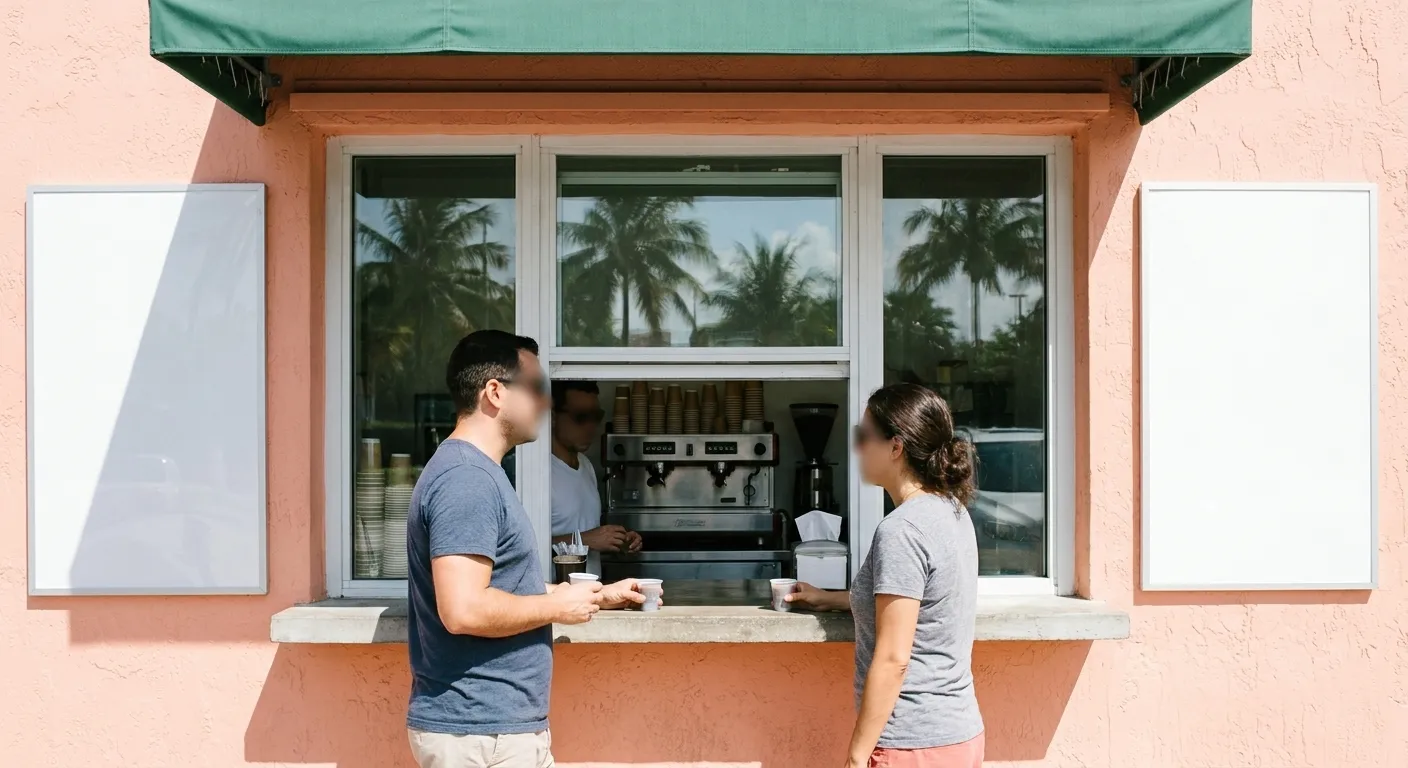
A ventanita is a small service window cut into the exterior wall of a bakery, restaurant or cafe, and there are hundreds across the county. The format was popularized by Versailles in Little Havana, whose founder Felipe Valls Sr is widely credited with establishing the walk-up window as a Miami institution after the restaurant opened in 1971. What happens at one is not just coffee: colada to share, cortadito, croquetas, pastelitos, and a running conversation about politics, baseball and whatever happened yesterday. It is the most genuinely local thing in the city and it costs about three dollars.
Calle Ocho, and when to avoid it
Versailles and La Carreta — sister operations under the same family, with La Carreta locations on Calle Ocho, Bird Road, Kendall, Fontainebleau and at the airport — are the famous ones, and they are genuinely good. The local caveat is the lunch rush: between noon and one on a weekday the Calle Ocho rooms are heaving and the counter queue is long. Locals go at 11:15am or after 2pm, or they use one of the dozens of less famous windows on the same street. Nobody who lives here waits forty minutes at the most photographed ventanita in the city.
The bakery counter tier
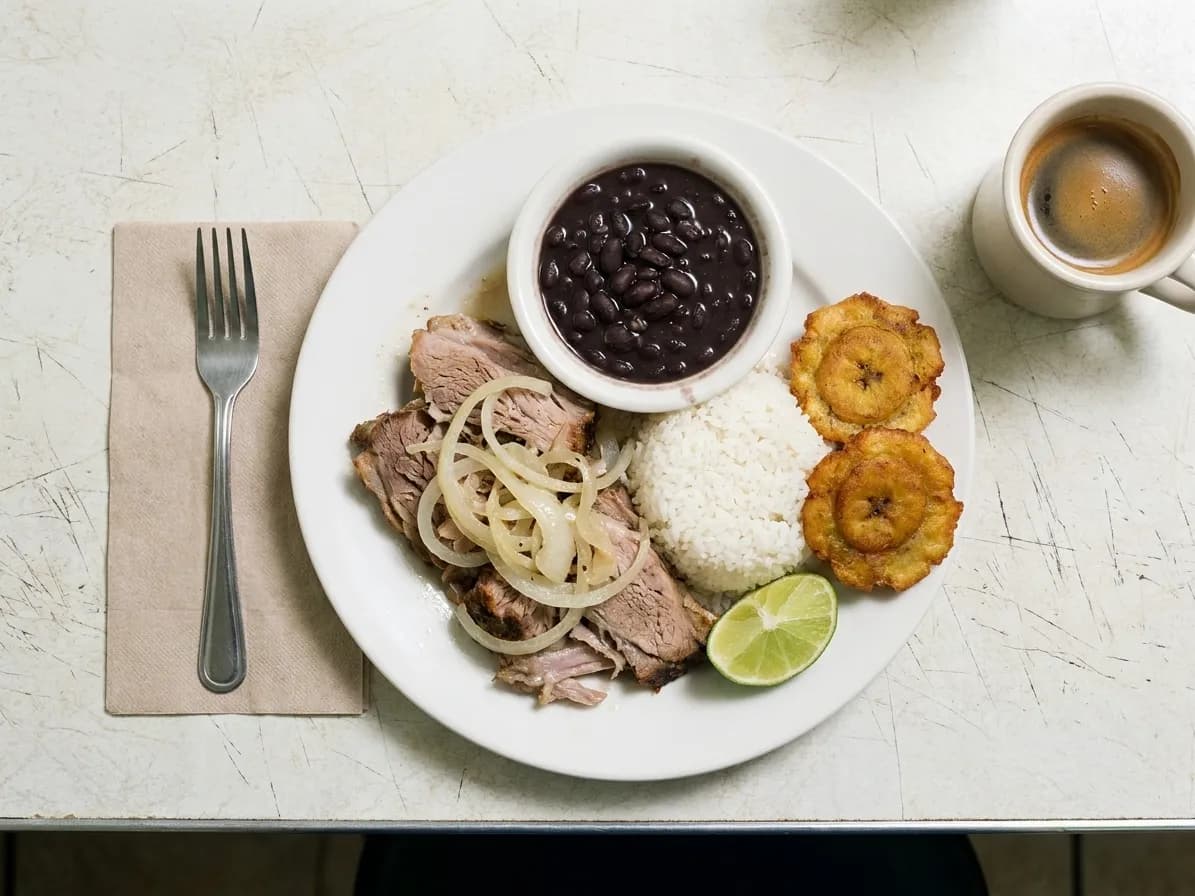
The panadería is the underrated version of the same idea and it is where the cheapest good lunch in Miami lives. A Cuban bakery at midday sells pan con lechon, medianoches, croquetas by the piece, and a case of pastelitos filled with guava, cheese or meat, most of it priced in single digits. There is one in essentially every neighborhood with a Cuban population, which is to say most of them. Order at the case, point at what you want, eat standing up. This is also the correct way to feed a group cheaply: a tray of pastelitos and a thermos of colada costs less than two coffees at a specialty cafe.
Beyond Cuban: Doral, Kendall and the Boulevard
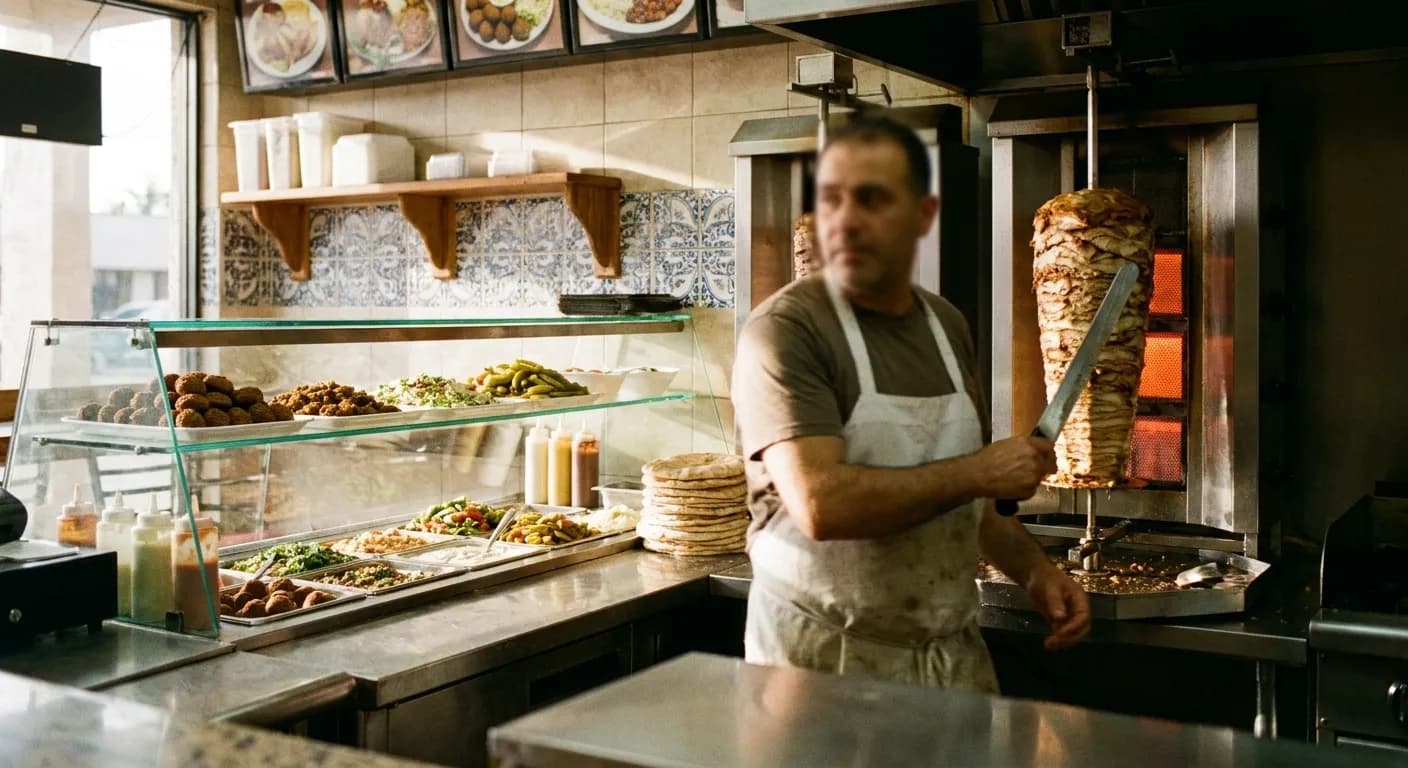
Miami's counter culture is not only Cuban and the rest of it is where the newest good food is. Doral runs the Venezuelan arepa and empanada windows, where lunch is two arepas and a papelón for under twelve dollars. Kendall and Sweetwater carry the Nicaraguan and Honduran counters. Along Biscayne Boulevard and into Little Haiti, the Haitian lunch counters serve griot, rice with djon djon and pikliz, and they are among the best value plates in the county. None of these will appear on a list of Miami restaurants. All of them are full at one o'clock.
How to order at a counter without hesitating
The etiquette is speed and specificity. Know what you want before you reach the window, because the person behind it is serving forty people an hour and the queue behind you knows it. Coffee first: a colada is a large shot with small cups to share, a cortadito is espresso with steamed milk, a café con leche is the breakfast one. Food second: at a bakery, point. Cash is faster than card at the smaller windows and some are still cash-only. Spanish helps but is not required anywhere on this list — pointing has worked in this city for fifty years.
The timing that makes all of it easy
The Miami counter rush is sharper and shorter than a northern lunch hour. It builds around 11:45am, peaks hard from noon to 1pm, and is largely done by 1:30pm. Twenty minutes either side of that window you get the same food with no wait. The 3pm cafecito break is its own institution and worth participating in at least once — it is when the ventanitas fill up a second time, entirely with people who are not eating, and it explains more about how this city works than any restaurant meal will.
Why this tier beats the restaurant tier
Three reasons, all practical. It is fast, which matters more at lunch than anything else. It is cheap enough to do daily rather than occasionally, which is the actual test of a lunch spot. And it is the food this city genuinely makes better than anywhere else in the country — the Cuban, Venezuelan, Nicaraguan and Haitian counters are not a lesser version of Miami dining, they are the part of it that is worth flying in for. The tower restaurants are competing with New York. The counters are not competing with anybody.
What to order if you have never done this
A safe first order at any Cuban counter: a medianoche or a pan con lechon, a croqueta or two, and a cortadito. That is under twelve dollars in most of the county and it is a complete lunch. At a Venezuelan window, two arepas — one reina pepiada, one with cheese — and a papelón con limón. At a Haitian counter, griot with rice and a spoonful of pikliz, and be careful with the pikliz the first time. In each case the correct amount of deliberation is roughly ten seconds, and nobody behind the counter has ever minded being asked what is good today.
Individual counters keep their own hours and several close on Sundays or in the afternoon, so if you are traveling for a specific window it is worth checking before you go.
Tags: #bestlunchmiami #ventanita #cubanfood #littlehavana #calleocho #versailles #lacarreta #doral #kendall #miamifood #cafecito #croquetas #miamieats
All trademarks are the property of their respective owners.
Ask Karpo first
Counters here peak hard between noon and one and are calm twenty minutes either side. Ask Karpo before you walk over and it can tell you where the line is shortest right now.