Any list of the best lunch spots in San Francisco written before 2020 is describing a city that no longer exists. The weekday lunch trade downtown used to be five roughly equal days. It is now a sharp Tuesday-to-Thursday peak with two soft days on either side, and the businesses that survived did so by reorganising around that shape. Knowing which day you are eating on now matters more than knowing which street you are on.
Midweek and Monday are different cities for lunch. Ask Karpo what is actually open near your office today.
The three-day week is the whole story
Tuesday, Wednesday and Thursday now carry something close to the old five-day volume compressed into three. The result downtown is a rush that is more intense than it ever was pre-pandemic, over a shorter window, with fewer shops absorbing it. A queue that used to be eight people is now fifteen, and it clears twenty minutes later than it used to.
Monday and Friday are the reverse. Many places downtown now close on Fridays entirely, several do not open Mondays, and the ones that stay open are quiet enough that a table is trivial. This produces the strange situation where the two easiest days to get a good lunch are also the two days with the fewest options, and the trick is knowing which of your shortlist is actually trading.
Who adapted and who did not
The businesses that came through are the ones with a second revenue stream — a catering arm, a dinner service, a retail counter, or a location that also serves residents rather than only workers. Pure office-lunch operations with a twelve-to-two window and no evening trade were the most exposed and are the ones that mostly went.
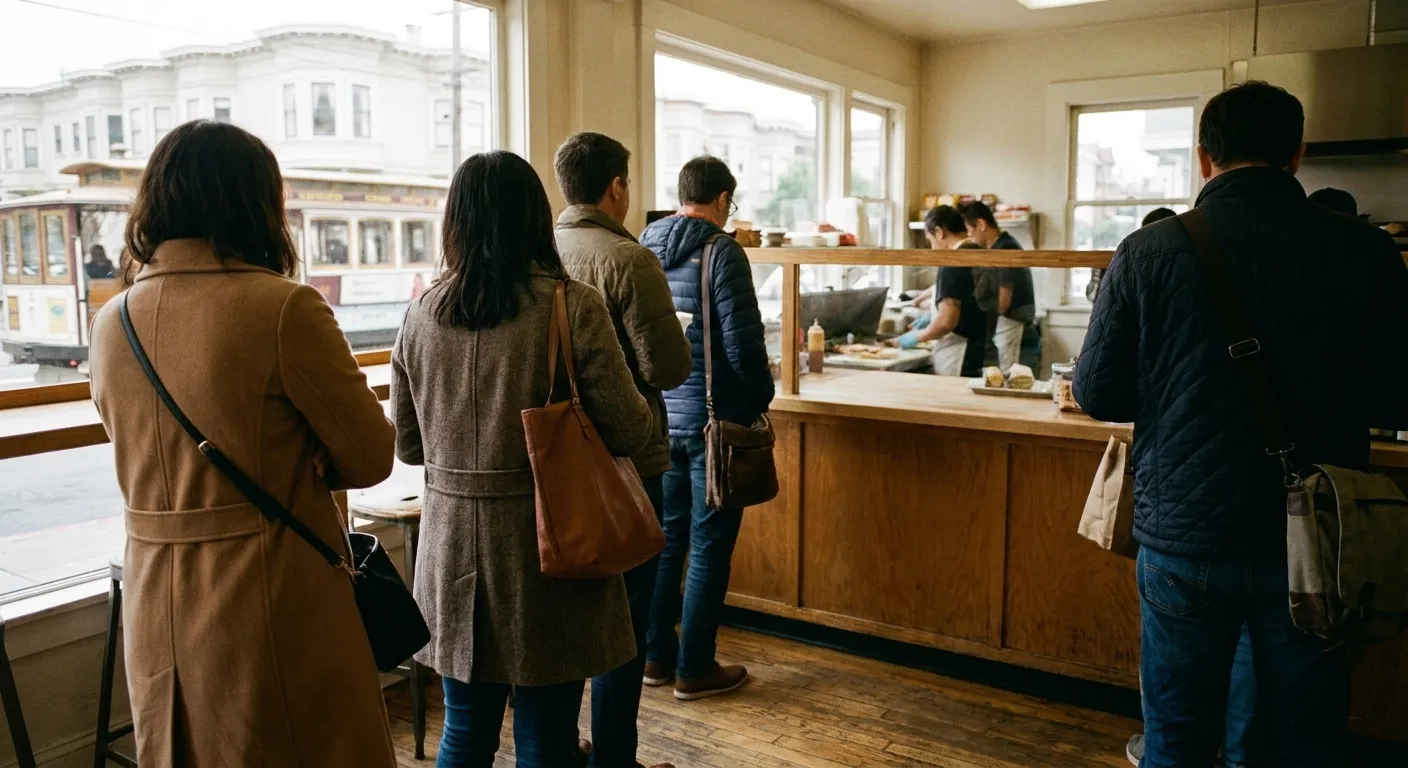
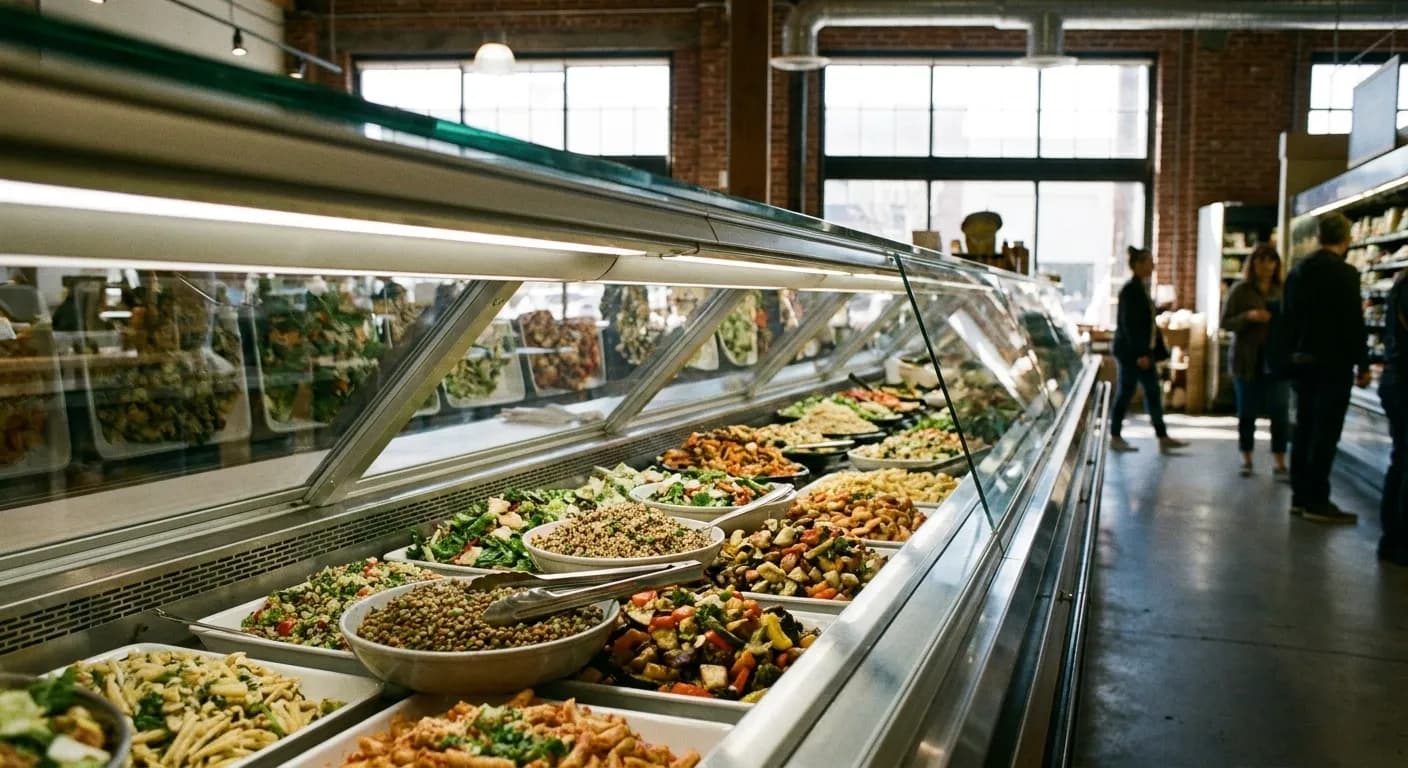
The practical consequence is that the good remaining options downtown skew toward places that are not primarily lunch places: bakeries that do savoury at midday, restaurants doing a limited lunch service to keep staff on, grocery counters, and the food halls that spread their fixed costs across a dozen tenants. The standalone lunch shop is now the rarer format.
Where the density moved
The Financial District and the north end of SoMa lost the most and are still the thinnest, particularly on the blocks that were entirely dependent on one or two large employers. Meanwhile the neighbourhoods with a resident base — Hayes Valley, the Mission, Nob Hill, the edges of Chinatown — kept their lunch trade intact, because those shops were never only feeding offices.
If your office is downtown, this argues for a ten-minute walk rather than a three-minute one. The blocks at the boundary between commercial and residential are where the survivors cluster, and they are consistently better and cheaper than what is left in the core. That walk is also the only exercise most desk days contain, which is a separate argument for the same behaviour.
Timing inside the rush
The peak has compressed as well as intensified. It now runs roughly twelve fifteen to one, tighter than the old twelve-to-two spread, because meetings cluster differently when half the team is remote. Going at eleven forty-five is genuinely a different experience, and going after one fifteen risks the good things being gone rather than the queue being long.
The other change is that ordering ahead now works properly. Most counters that survived built a pickup system during the closures and kept it, and the pickup shelf is frequently empty while the queue is fifteen deep. Ordering twenty minutes out from a desk is the single highest-leverage habit available downtown, and a surprising number of people still stand in the line instead.
The Monday and Friday playbook
Check before you walk. The most common failure on those days is arriving at a closed shutter, and the closures are not always posted anywhere obvious — a place may be open Monday and shut Friday, or the reverse, and the pattern changes seasonally. Two minutes of checking prevents the twenty-minute round trip that ends in a supermarket sandwich.
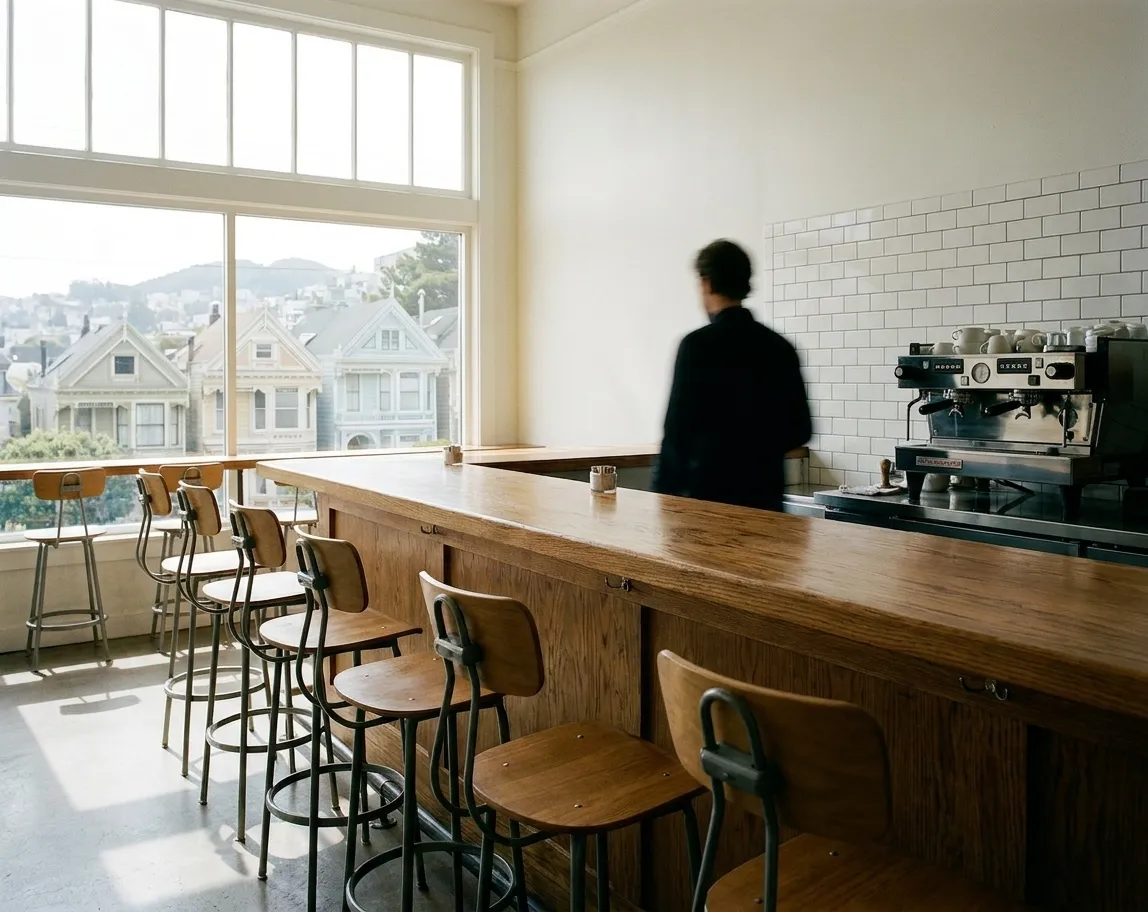
On the days it is quiet, use it. A Monday lunch is the one time in the week you can sit down at a decent restaurant downtown without a booking, eat properly in forty minutes and get a table by the window. The restaurants are glad to have you and the service is unhurried in a way it never is on a Wednesday. It is the best-value hour in the working week and almost nobody takes it.
What this means for a fixed budget
The compressed week has pushed prices up in the core and left them roughly flat at the edges, which widens a gap that was already there. Fifteen dollars near the towers buys a modest sandwich; the same money four blocks out buys a full plate with a side. Over three office days a week that difference compounds to a meaningful amount across a year, for a better meal.
The other budget lever is buying for two days at once from a grocery counter, which the neighbourhoods at the edges support well and the core does not. It is unglamorous and it works, and it is what a lot of people who have been doing this a while quietly do on the days they are in.
Worth adding that the office-lunch economy is still settling rather than settled. Shops are opening again downtown, but they are opening with different hours and different formats than the ones they replaced, and the pattern of which days are viable is being renegotiated season by season. Anything you learn about a block this autumn is worth rechecking in the spring.
Tags: #SanFrancisco #LunchSF #OfficeLunch #FinancialDistrict #SoMa #HybridWork #SFEats #DowntownSF #QuickLunch #HayesValley #BayArea #WorkdayFood #SFFood
All trademarks are the property of their respective owners.
Ask Karpo first
Ask Karpo which lunch spots near your office in San Francisco are open today, how long the wait is, and whether ordering ahead is faster.