The constraint on office lunch in Los Angeles is not money or choice. It is the car. If eating somewhere means moving the vehicle, you have spent your break on parking twice, and the best lunch spots in Los Angeles become irrelevant to you the moment they are more than a walk away. That single fact explains why the lunch landscape here organises itself into a small number of walkable clusters and a lot of empty space between them.
Walkability decides this more than the menu does. Ask Karpo what is within a ten-minute walk of you right now.
The clusters that work
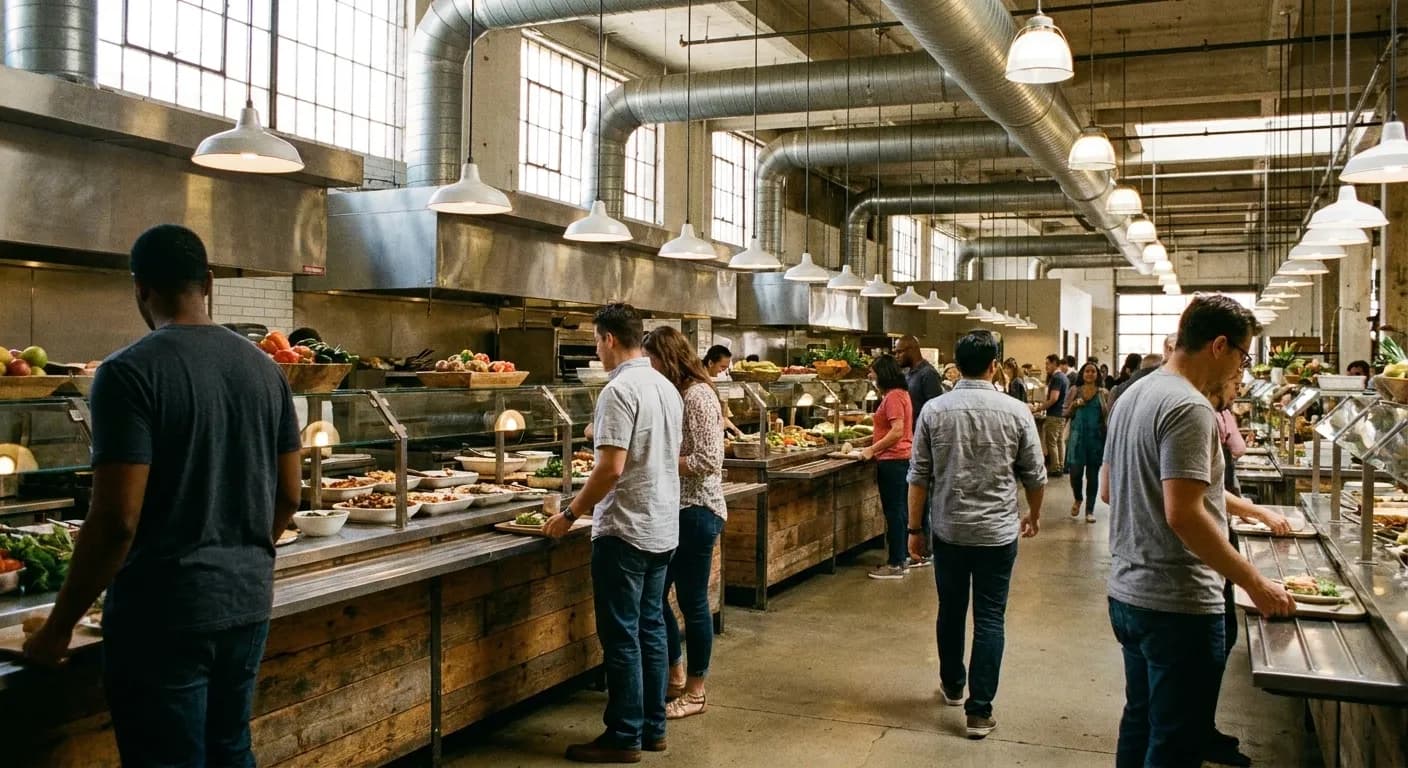
Downtown is the strongest, and it is not close. The historic core, the financial district and the blocks around the markets have genuine density — food halls, counters, taco stands, Japanese lunch sets and a full range of price points inside a fifteen-minute walk of most office buildings. If your office is downtown, you have the best lunch situation in the county and probably do not appreciate it.
Culver City is the second, with a compact walkable centre and a high concentration of counters serving the studios and offices around it. Century City has an unusually good mall food operation, which sounds like a compromise and is in fact a serious collection of restaurants. Santa Monica and the coastal office corridors are walkable and expensive.
Where it breaks down
The valley office parks, the Westside business corridors along the boulevards, and the campus-style workplaces scattered across the county all share the same problem: they were built around driving, and there is nothing within a walk. The realistic options there are the on-site canteen, a delivery order, or accepting that lunch involves the car.
If that is your situation, the highest-value adjustment is to batch it — do the drive once a week for something good, and handle the other four days with something brought from home or delivered. Driving fifteen minutes each way for a mediocre sandwich is the worst of both options and it is what most people default to.
The formats that fit an hour
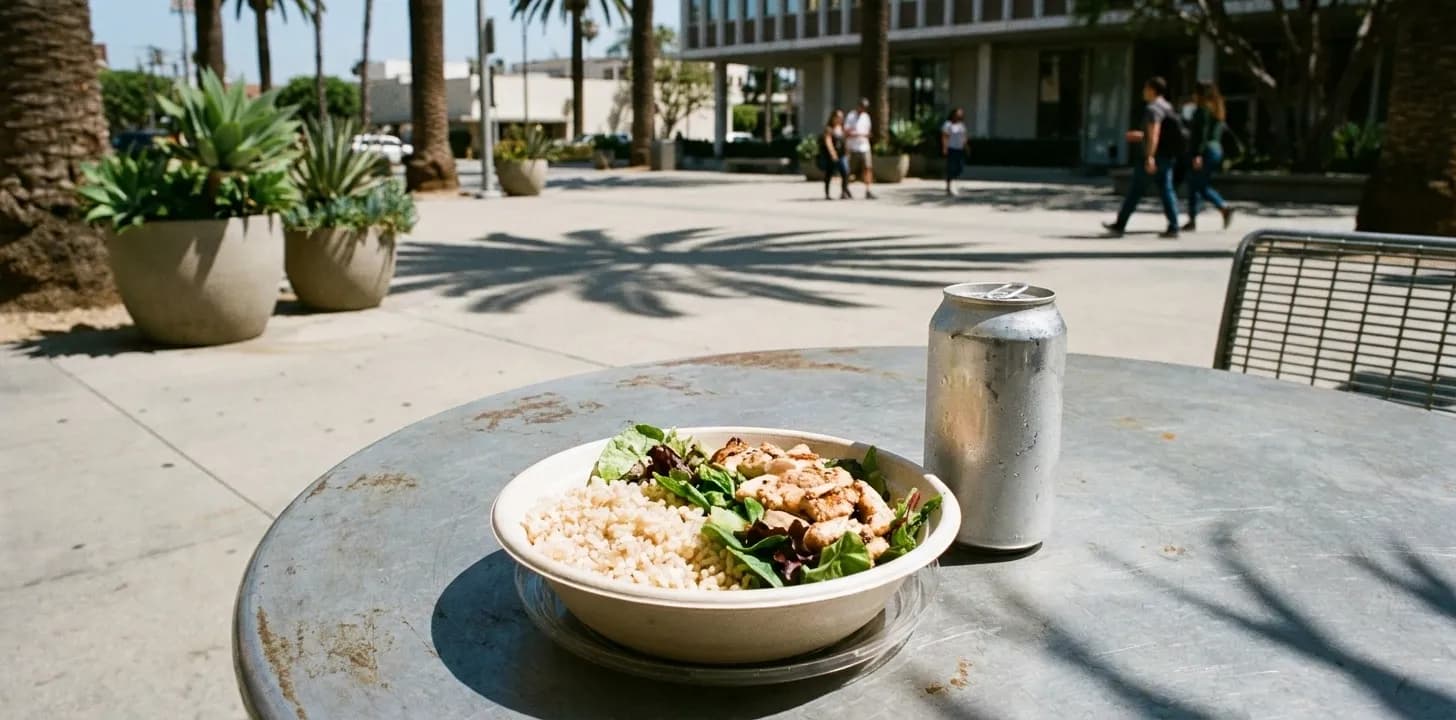
Counter service, obviously. Japanese and Korean lunch sets, which are designed around a fixed price and a fast turnaround and are consistently the best value in this category. Taco stands and trucks, which are the fastest food in the city and among the best. Food halls, which solve the problem of a group that cannot agree. And the salad-and-bowl chains, which are fine and are now priced at eighteen to twenty-two dollars, which is worth knowing before you assume they are the cheap option.
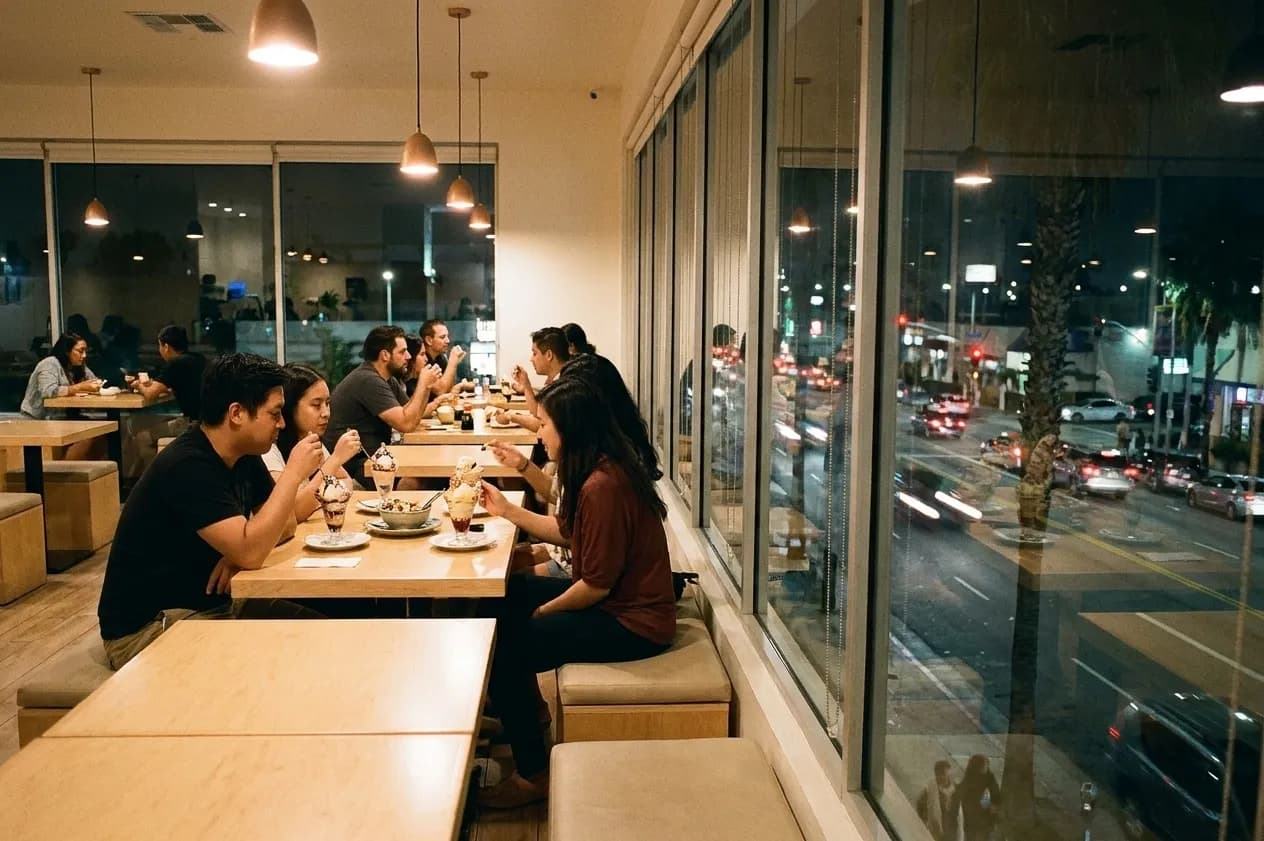
What does not fit is table service. A sit-down restaurant lunch in Los Angeles takes seventy-five minutes minimum once you account for waiting to be seated and waiting for the bill, and it is a good idea only if the lunch is the point rather than an interruption.
The truck rotation
A lot of office parks and coworking buildings in this city have a lunch truck rotation — different vendors on different days, parked in the lot or on the street outside. This is genuinely the best solution to the walkability problem and it is under-used, mostly because people do not know the schedule.
Finding out is a matter of asking the building manager or watching for a week. Once you know that Tuesday is the Oaxacan truck and Thursday is the Thai one, the lunch problem is solved for two days without moving the car at all.
Timing and the twelve o'clock crush
Los Angeles takes lunch between twelve and one, more uniformly than most cities, which means every counter within walking distance of an office district has a twenty-minute queue in that window and none at eleven-forty or one-fifteen. Shifting by twenty minutes in either direction removes the queue entirely and gets you back with time to spare.
The other timing lever is the pre-order. Almost every counter in this city now takes an order ahead through an app or by phone, and picking up a bag that is already waiting converts a forty-minute lunch into a fifteen-minute one. In a walkable cluster that is the difference between eating properly and eating at your desk.
The coworking angle
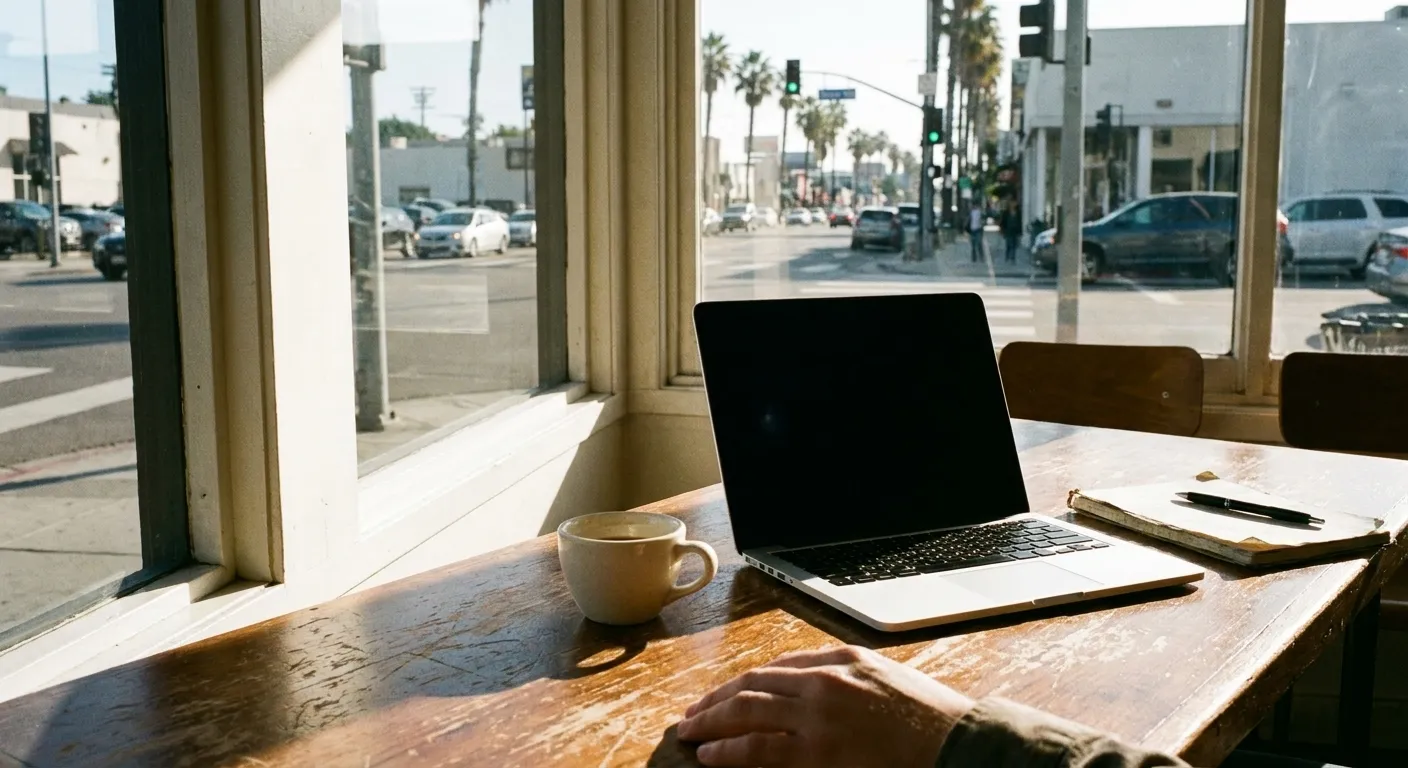
Anyone choosing a coworking space in this city should weigh the lunch situation more heavily than the desk. Two spaces at the same price, one in a walkable downtown block and one in a Westside office park, produce completely different working lives — the first gives you a genuine break in the middle of the day, the second gives you a fridge and a microwave.
Several of the larger coworking operators are located deliberately in dense blocks for exactly this reason, and the ones in food-hall buildings or above ground-floor retail are worth a premium. It sounds like a trivial criterion and it turns out to be the thing people notice after a month.
A rough rule
Ten minutes walking, twenty minutes eating, ten minutes back. That is the shape of a good office lunch here and it rules out anything requiring the car, which is a harder constraint in Los Angeles than anywhere else and the reason so many people give up and order delivery. The clusters that support it are worth knowing about when you choose where to work, not just where to eat.
And if none of it applies because there is genuinely nothing within a walk, the best available move is to stop fighting it. Eat something quick at your desk four days a week and take a proper hour on the fifth, somewhere worth the drive. That is a better week than five compromised lunches, and it is what most people here eventually settle into.
Tags: #LosAngeles #LALunch #OfficeLunch #DTLA #CulverCity #CenturyCity #FoodHall #LunchSpots #WorkLunch #LAEats #SoCal #Coworking #LunchBreak
All trademarks are the property of their respective owners.
Ask Karpo first
Ask Karpo which lunch spots near you in Los Angeles are within a ten-minute walk, what they cost, and whether they take orders ahead.