The weekday lunch economy in San Francisco is stranger than it used to be, and the strangeness is exploitable. Office attendance in this city concentrated hard into Tuesday, Wednesday and Thursday, which means the same restaurant sees three busy days and two very quiet ones. Some of the best lunch spots in San Francisco responded by discounting the quiet days, changing their hours, or building set menus designed to move volume in a ninety-minute window. Knowing which of those applies where is worth real money.
Weekday lunch pricing changes by the day of the week here. Ask Karpo what the set menus near you cost today.
The Monday and Friday discount
A meaningful number of downtown and SoMa restaurants now run a cheaper lunch on the two slow days, either explicitly as a special or implicitly through a smaller, cheaper menu. Some have simply stopped opening on Monday and Friday altogether, which is the other half of the same adjustment. Both are worth checking rather than assuming, because the pattern is not consistent across the city and a place that closes Mondays this quarter may not next.
The counterintuitive consequence is that Tuesday to Thursday is the worst value and the longest queue, and Monday is the best day to eat well downtown for less. If your own schedule is flexible, moving your in-office days is a lunch strategy as well as a commute one.
Set menus are the real deal
The clearest value in this city at lunch is the fixed-price set: a starter and a main, or a main and a drink, at a price that would not cover the main alone at dinner. Japanese lunch sets, Korean lunch specials, Indian thalis and the prix-fixe lunches at otherwise expensive restaurants all work this way, and the discount versus the same kitchen's evening pricing is frequently forty per cent.
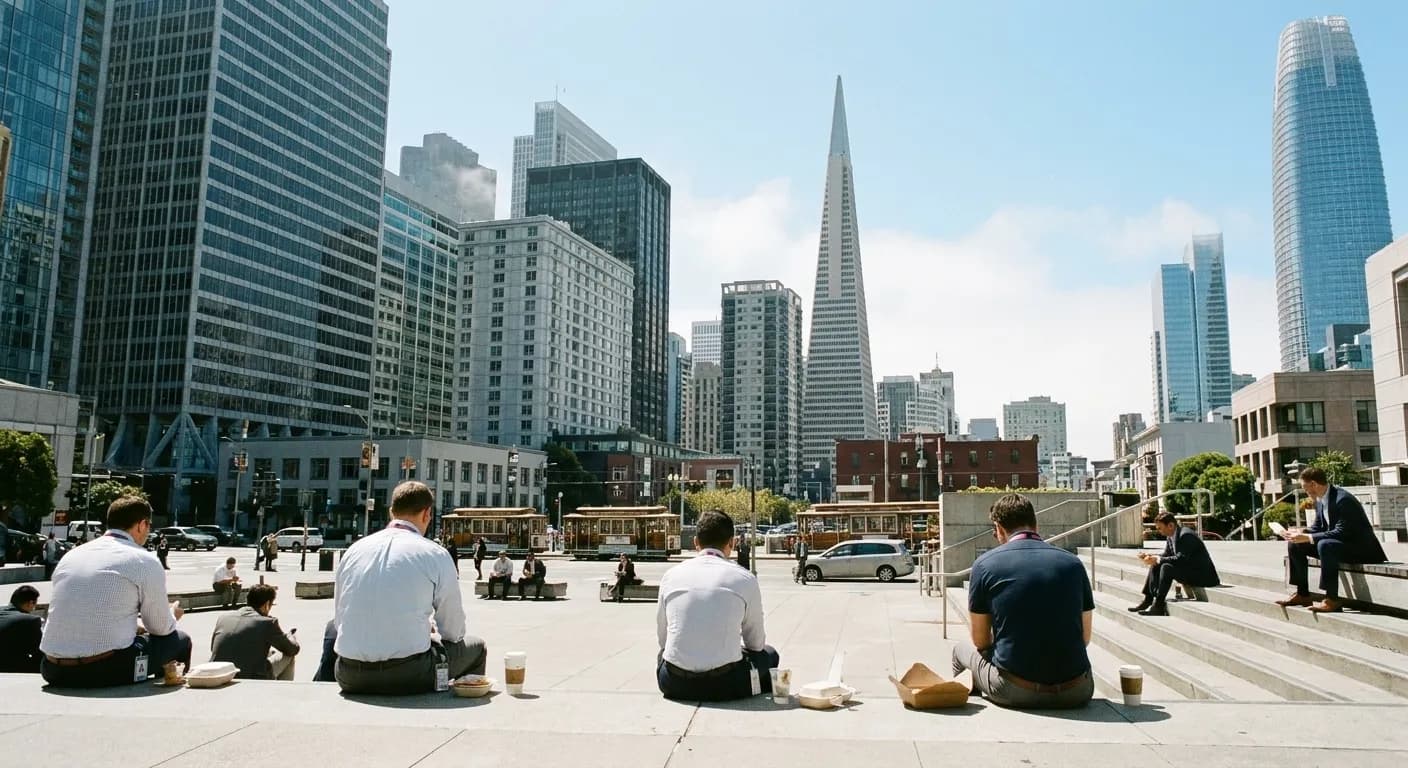
The mechanism is straightforward: lunch is a fixed-cost problem. The kitchen is staffed, the rent is paid, the room is empty. Anything that fills a seat between twelve and one-thirty is worth doing at a margin that would be unacceptable at dinner. Restaurants that understand this offer genuinely good deals; ones that do not simply serve the dinner menu at lunch and stay empty.
The two-block rule downtown
Price falls sharply with distance from the office towers. Two or three blocks from the busiest corners of the Financial District, the same category of food drops several dollars, and the drop is steeper here than in any other part of the city. Walking five extra minutes is the highest-return decision available in a downtown lunch break, and almost nobody makes it because the queue at the nearest place feels like the fast option.
The other downtown lever is the basement and upper-floor counters that most people never see. Food halls, building lobbies and second-floor spaces carry lower rent and pass some of it on. They are invisible from the street, which is exactly why they are cheaper.
The formats that never got expensive
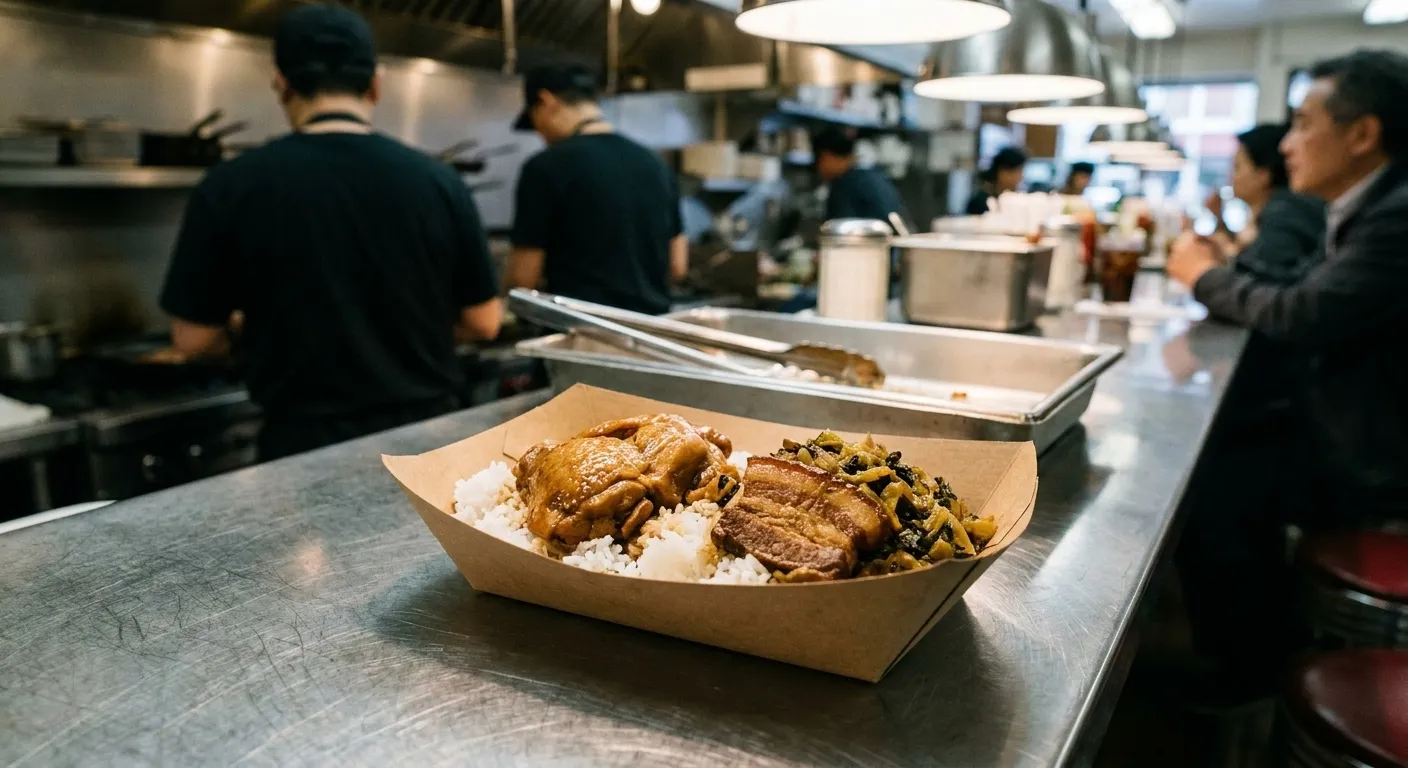
Steam-table rice plates, pho, bánh mì, taquerias and the Chinese lunch counters in Chinatown and the Richmond have all held their pricing far better than fast-casual chains have. Fifteen dollars still buys a full, filling meal in every one of those categories, and in Chinatown it buys one comfortably with change.
What has drifted upward is anything with a build-your-own bowl format, most salad-forward chains, and the newer sandwich shops. None of them are bad; all of them now cost eighteen to twenty-two dollars for lunch, which puts them in a different bracket to the one people remember.
Small habits that hold the line
Skip the drink — it is the single biggest silent addition to a lunch bill, and almost every counter has water. Order the standard size rather than the large. Take advantage of the loyalty cards at places you go to weekly, which in this category are unusually generous because the margins depend on regulars. And if a place offers a slightly cheaper takeaway price, take it and eat outside; the plazas downtown are pleasant at midday for most of the year.
Neighbourhood value, ranked
Chinatown remains the best value lunch in San Francisco by a clear margin, and it is the one part of the city where the ceiling has barely moved in a decade. The Richmond along Clement and Geary is second, with the added benefit of enough density that you can compare five options in two blocks. The Tenderloin and lower Polk are third and are the strongest for Vietnamese and Korean lunch specifically.
SoMa and the Mission are mid-table: good options exist and you have to know them. Hayes Valley, the Marina and the Embarcadero are where a fifteen-dollar lunch has essentially stopped existing, and no amount of strategy fixes that. If you work in one of those areas and care about the number, the answer is bringing lunch two days a week and eating out on the other three.
The final habit is the least obvious. Eat at half past eleven or half past one rather than at noon. The queue disappears, several places discount the last twenty minutes of service to clear the line, and the food is exactly the same. Shifting lunch by thirty minutes is the easiest saving available in this city and it costs nothing at all, which is more than can be said for most advice about eating in San Francisco on a budget.
Tags: #SanFrancisco #SFLunch #LunchDeals #CheapEatsSF #FinancialDistrict #SoMa #Chinatown #WorkLunch #SFEats #BudgetSF #SetMenu #BayArea #WeekdayLunch
All trademarks are the property of their respective owners.
Ask Karpo first
Ask Karpo which lunch spots near you in San Francisco have a set menu today, what it costs, and how long the queue is right now.