 Best Trick or Treating Neighborhoods Near Me: West Portal
Neighborhood Guides
Best Food Near San Francisco Landmarks Without Tourist Traps
San Francisco’s famous sights are spread far enough apart that eating near them can either make a day feel effortless or turn it into a chain of expensive, forgettable stops. The better plan is to pair each landmark with
Turn sightseeing into a sequence of good meals
San Francisco’s famous sights are spread far enough apart that eating near them can either make a day feel effortless or turn it into a chain of expensive, forgettable stops. The better plan is to pair each landmark with a nearby neighborhood where locals already have a reason to eat. Think of the route as three short chapters: the Ferry Building and Embarcadero, Chinatown and North Beach, then Golden Gate Park and the Inner Sunset. You get the postcard views, but the meal is chosen for the district rather than for the view alone.
The landmark pairing also helps with decision fatigue. Instead of asking where to eat in the entire city, ask a smaller question: what is good within a ten-minute walk of the next sight? That frame produces better choices and makes it easier to abandon a bad queue. A neighborhood bakery, noodle counter, or market stall can be more useful than a restaurant with a famous view if it protects the timing of the day.
Ferry Building: shop inside, then eat outside
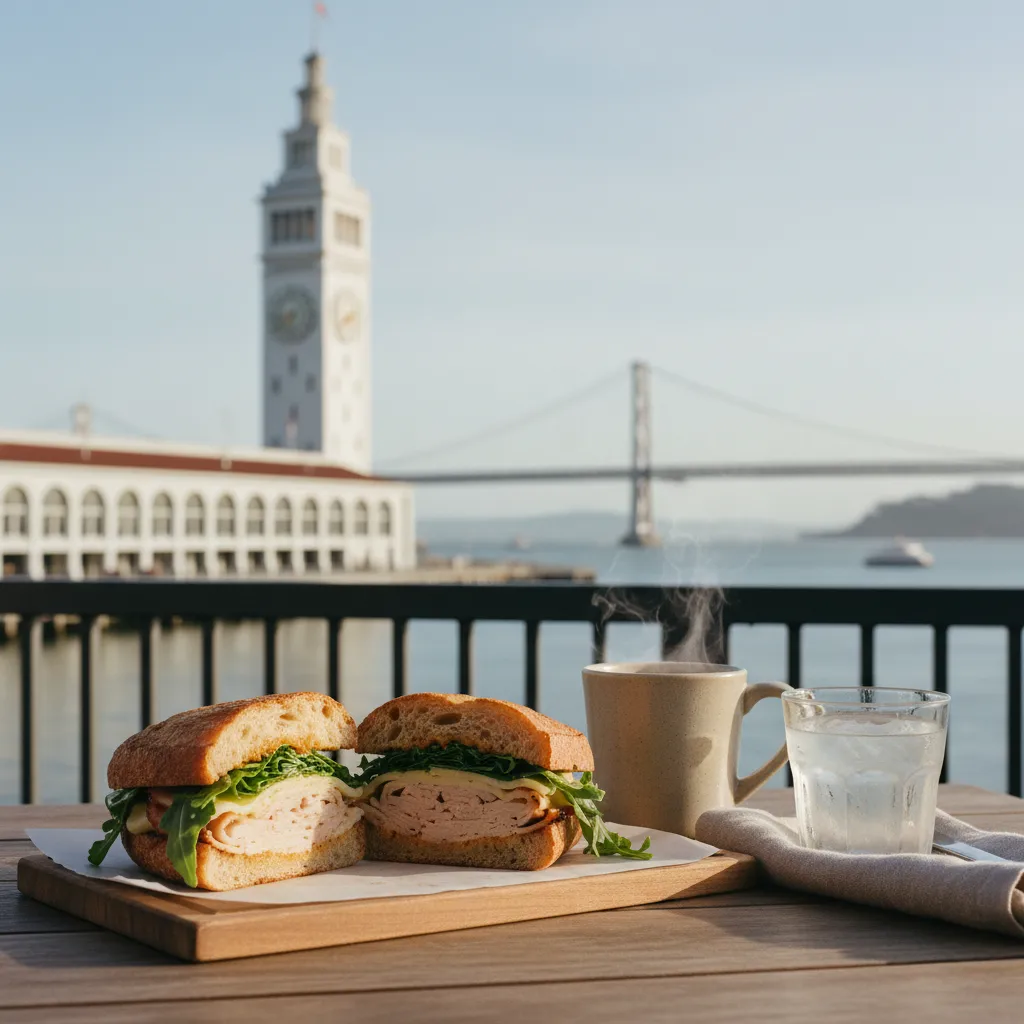
Begin at the Ferry Building in the morning, when the interior is easier to browse and the waterfront light is at its best. Instead of committing to the first sit-down restaurant you see, scan the market for a portable breakfast or lunch: a pastry, a sandwich, fresh fruit, or a small prepared dish. Buy only what you can comfortably carry, then walk outside toward the Embarcadero. The practical move is to separate ordering from sightseeing; one person can hold the food while another finds a bench. The Bay Bridge view is the backdrop, not the menu, so choose the item that looks freshest rather than the one with the longest tourist queue.
Families should confirm restroom access and seating before ordering a large spread. Solo visitors can choose half portions or one-item counters and keep moving. Groups with different budgets can share a market meal, then split for coffee or dessert. These are not compromises; they are ways to keep the route responsive when the weather, energy level, or museum schedule changes.
Chinatown and North Beach: go one block off the postcard route
From the waterfront, head toward Chinatown and North Beach. The dragon gate is worth seeing, but the most useful food stops are often just beyond the photo-op streets. Good Mong Kok Bakery is ideal for a quick dim sum-style snack; order a small mix and eat it soon, because steamed items lose their best texture in a bag. If you prefer a longer pause, North Beach offers Italian-American cafes and bakeries where an espresso and a pastry reset the day. At busy counters, have a backup choice ready. The line is part of the city’s rhythm, but waiting twenty minutes for a snack you do not actually want is not a landmark experience.
A good food-near-landmark plan has one anchor meal, one flexible snack, and one scenic pause. The anchor is where you spend time and money; the snack fills the gap without a reservation; the scenic pause lets the group reset. This structure is far less stressful than scheduling three formal meals around attractions, especially in a city where transit delays and hills are part of the experience.
Golden Gate Park: pack something worth carrying
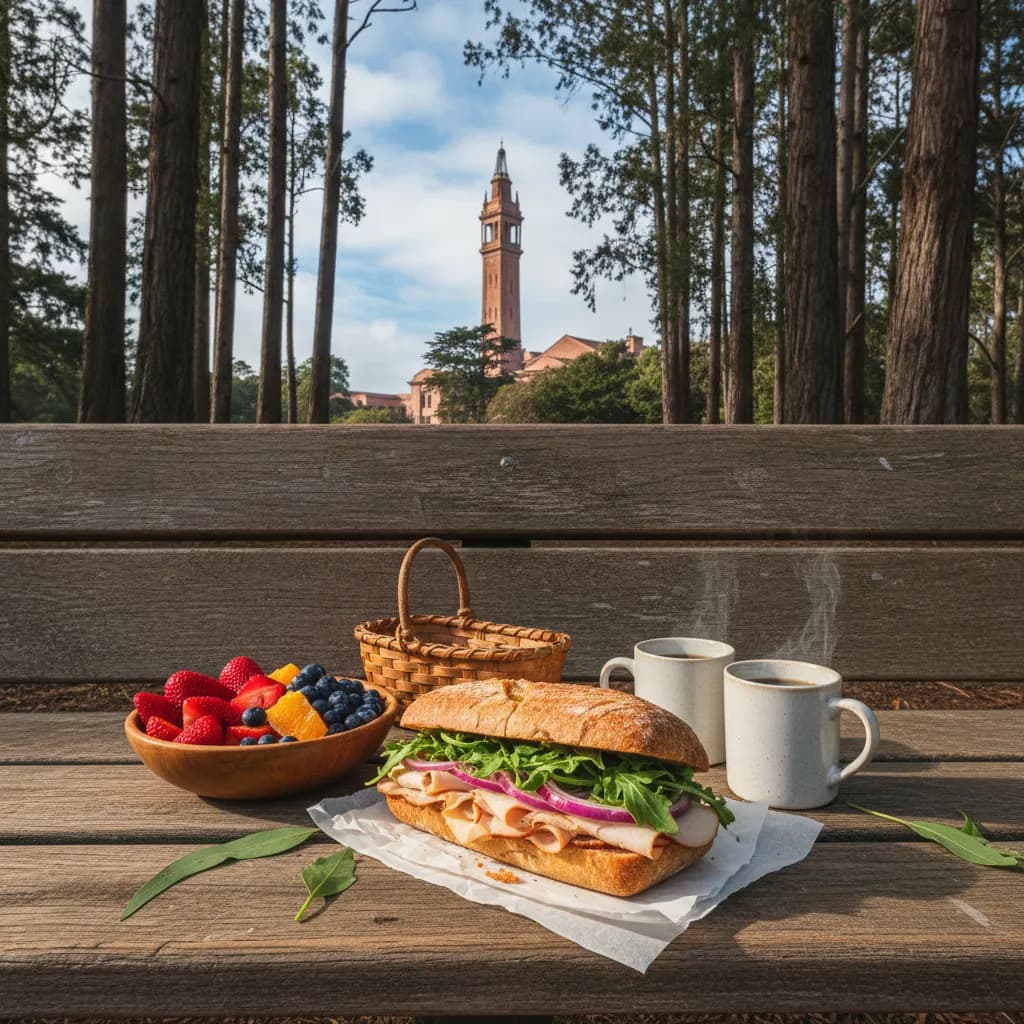
Golden Gate Park rewards a picnic more than a rushed restaurant reservation. Pick up sandwiches or prepared food in the Inner Sunset, then walk toward the Conservatory of Flowers, de Young Museum, or the Japanese Tea Garden. A sturdy sandwich, fruit, and a drink travel better than anything delicate with a sauce-heavy finish. The park’s distances are deceptive, so eat before you are exhausted and keep water in the bag. If you are visiting a museum, confirm its entry window first; the best food plan is the one that does not make you sprint across the park because a table ran late.
Keep the final stop deliberately easy. A bakery, tea shop, or counter-service dessert gives everyone a chance to choose at their own pace and does not punish a late museum exit. It also means the group can end near transit instead of adding another cross-city transfer. Landmark days feel longer than they look on a map, so the best food plan finishes with energy left for the walk home. Build in ten quiet minutes for the group to compare notes and choose the last bite together.
Match the stop to the energy of the group
Families usually do better with a market or bakery stop where everyone can choose separately. Couples may prefer the Ferry Building waterfront followed by a slower North Beach coffee break. A solo traveler can make the day more flexible by using counter-service spots and eating at a park bench, which avoids the awkwardness of a full reservation between timed attractions. The food route should also reflect weather: foggy afternoons favor warm noodles, soup, or a bakery stop, while a sunny day makes the Embarcadero and park picnic the obvious pairings.
Practical notes
Start with the landmark that has the strictest timing, then build food around it. Wear layers: the waterfront, Chinatown hills, and Golden Gate Park can feel like three different climates on one day. Use public transit between districts and walk locally rather than trying to park at every sight. For a low-stress itinerary, budget $15–$25 per person per meal and keep one flexible snack stop in reserve. Check current hours and museum entry requirements the morning of the visit. If a landmark-area restaurant looks packed with tour groups, ask Karpo APP for the nearest neighborhood counter with the same cuisine, a shorter queue, and seating that fits your schedule.
Ask Karpo for more information.
Keep reading
- Best Trick or Treating Neighborhoods Near Me: West Portal
 Best Trick or Treating Neighborhoods Near Me: Noe Valley
 Best Trick or Treating Neighborhoods Near Me: Bernal Heights