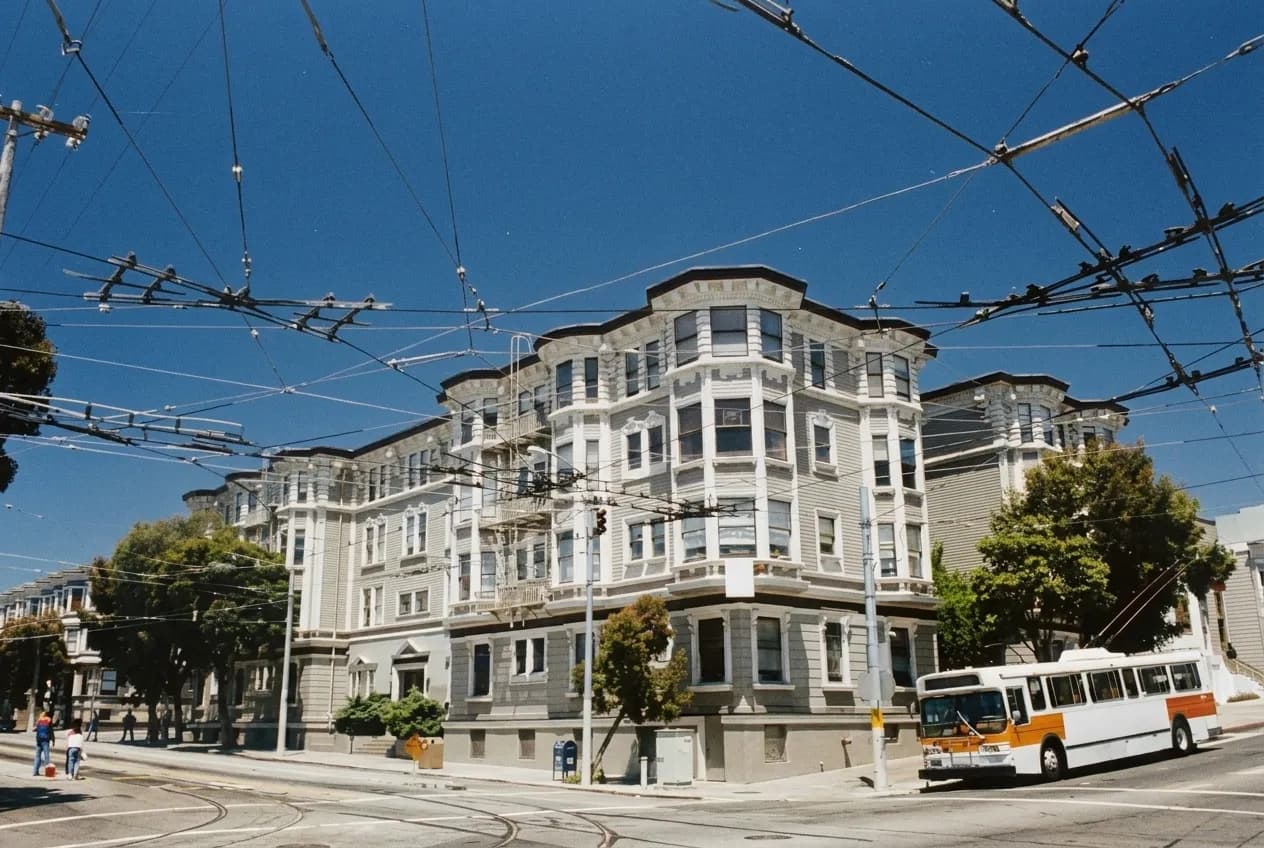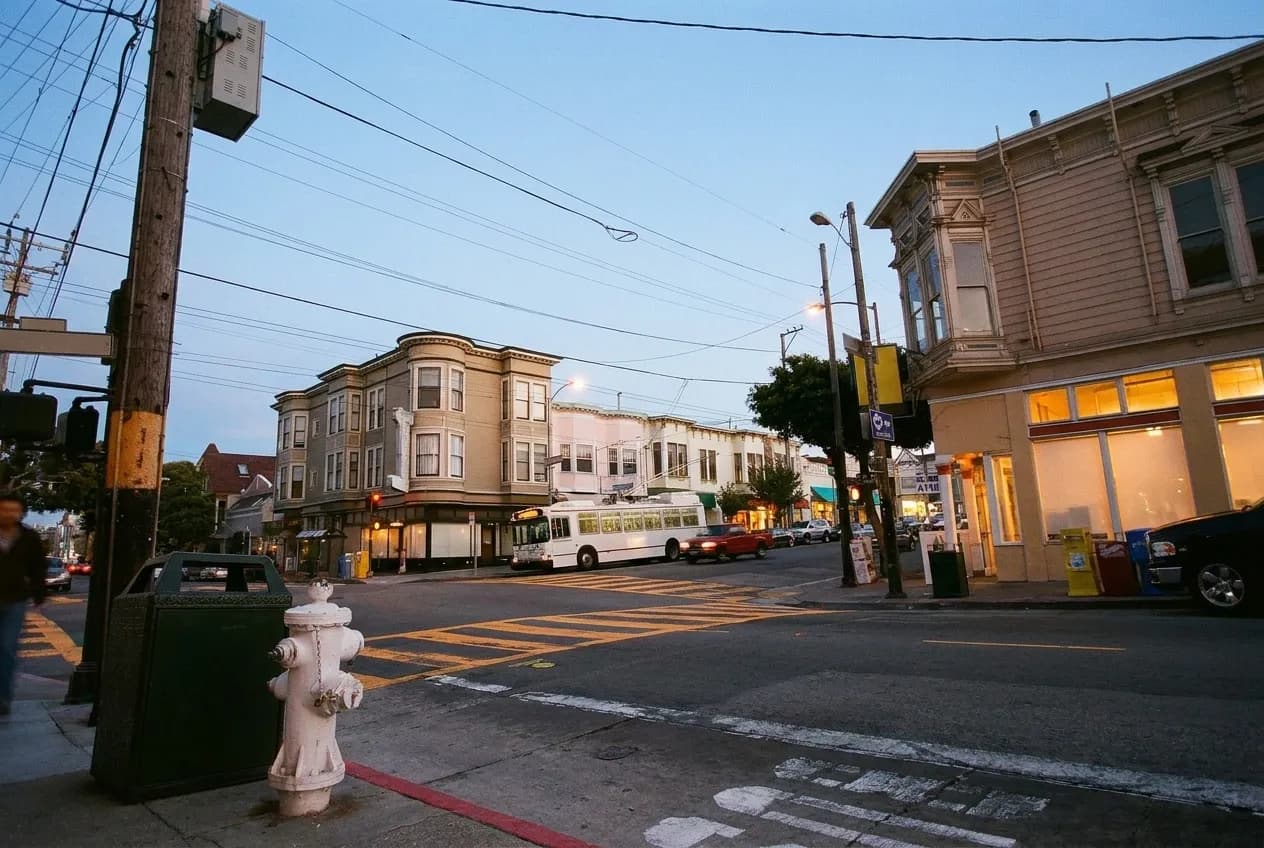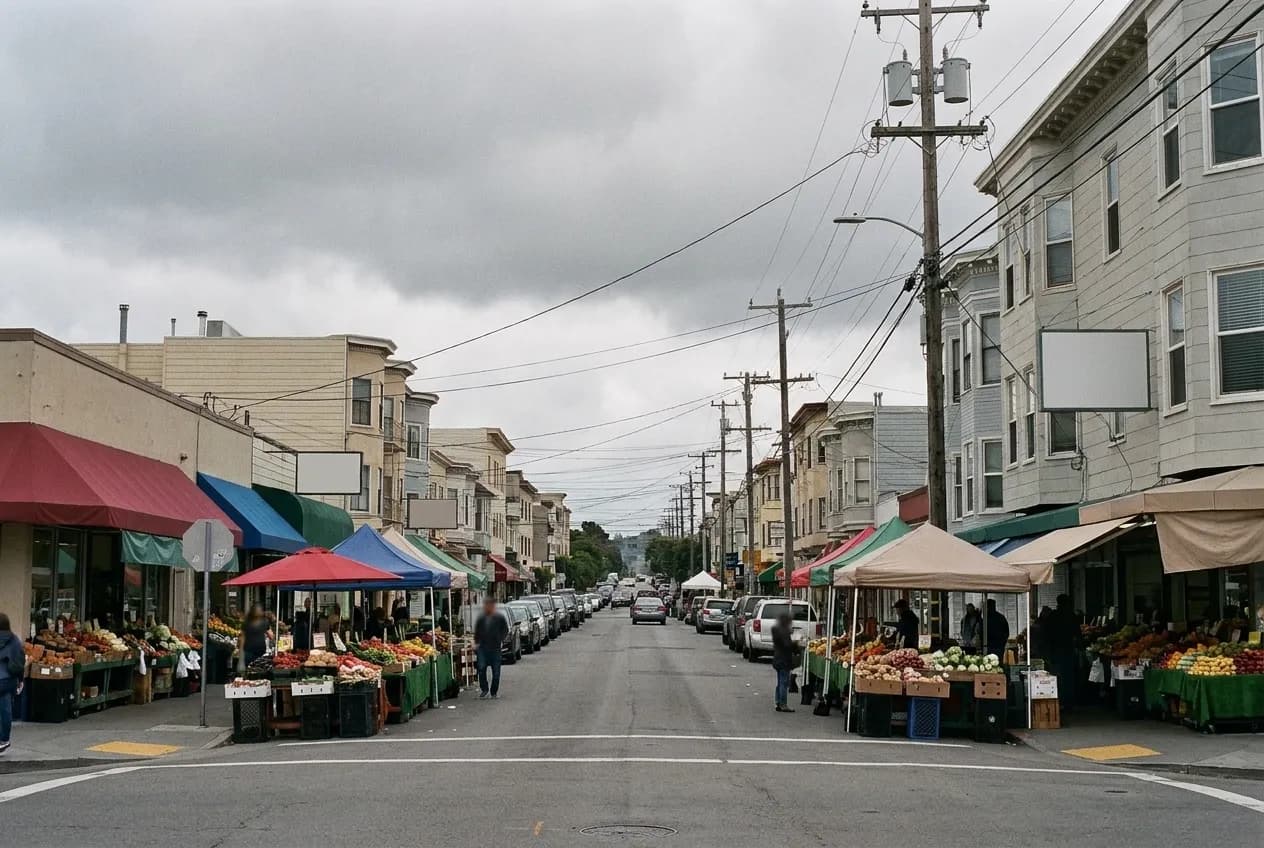
San Francisco has one of the deepest dumpling supplies in the United States and it is distributed across three neighbourhoods that operate on completely different models. Chinatown is a takeaway counter economy - queue, cash, paper bag, eat in the square. The Inner Richmond around Clement Street is a sit-down economy with fuller menus and lower prices than the centre. The Sunset is where the newer regional kitchens went, and it is the least visited and frequently the most interesting. Knowing which model you are walking into decides what you should order.
Dim sum service, counter hours and the weekend trolley rush all run on different clocks in these three districts. Tell Karpo when and where, and get the room that suits.
Chinatown: the counter model
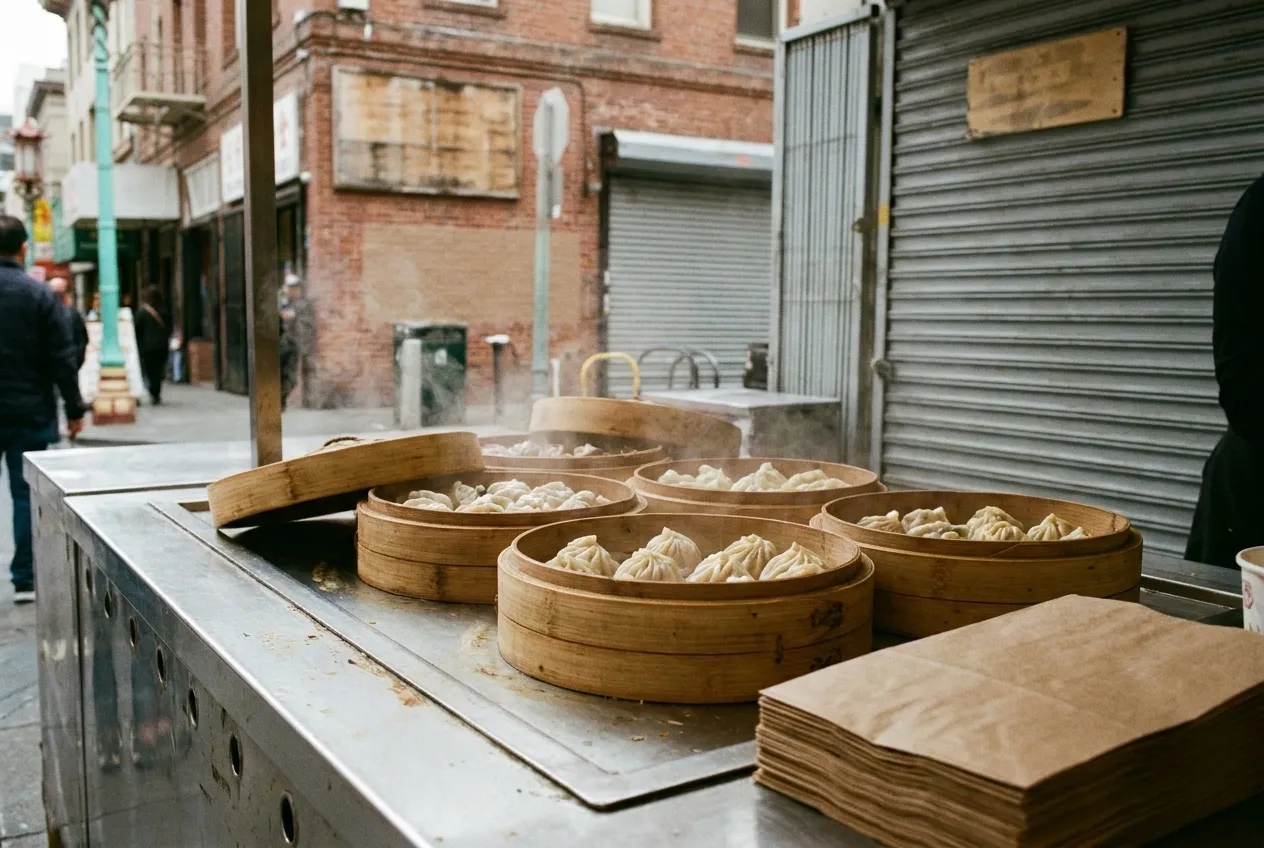
Chinatown's defining format is the takeaway dim sum counter, and Good Mong Kok on Stockton Street is the archetype - a narrow shop, a permanent queue, a counter, cash, and dim sum handed over in a paper bag within about thirty seconds of ordering. Har gow, siu mai, char siu bao and sticky rice in lotus leaf are the standing order, at a couple of dollars a piece.
The queue is the thing that puts people off and it should not: it is a counter queue, not a table queue, so twenty people is a ten-minute wait. Portsmouth Square, the neighbourhood's main open space, is a couple of minutes away and is where you eat. Six or seven pieces will cost under ten dollars and take about fifteen minutes end to end, which makes this the most time-efficient good meal in San Francisco.
The Richmond: the sit-down model
Clement Street and the avenues around it hold the city's strongest concentration of full-service Chinese restaurants, and the dumpling offering there is a proper menu rather than a counter. This is where to go for a sit-down dim sum lunch, for xiao long bao that arrive in a steamer at your table, and for the longer, more varied menus that a counter cannot support.
Prices out here are meaningfully lower than in the centre for equivalent cooking, because these rooms are feeding the neighbourhood rather than visitors. The 38 Geary connects the whole corridor to downtown in twenty-five to thirty-five minutes. This is also the district where the weekend trolley-service dim sum rooms are at their best, and where the practical rule applies hardest: go before noon if you want the full range rather than what is left.
The Sunset: the regional model
Irving and Noriega in the Sunset are where the newer and more regionally specific kitchens have concentrated, and it is the least-visited of the three districts by anyone who does not live there. What that means for dumplings is more variety in style - northern Chinese boiled jiaozi, Shanghainese pan-fried sheng jian bao, hand-folded wrappers - and rooms that are doing one thing properly rather than a broad menu.
It is also the cheapest of the three. The N Judah takes forty to fifty minutes from downtown, which is the main cost, but parking is genuinely easy out here in a way it is nowhere else in the city. If you care enough about dumplings to travel for them, this is the district that rewards it most, and the hot soup and noodle culture around it suits the weather - the Sunset is the foggiest, coldest part of San Francisco and its food evolved accordingly.
What to order to judge a kitchen
Two items tell you almost everything. Har gow, the prawn dumpling, uses a wheat starch wrapper that goes translucent when steamed - you should be able to see the pink of the prawn through the skin, and it should hold together on chopsticks but yield instantly when bitten. A thick, opaque, gummy har gow means the kitchen is buying rather than making.
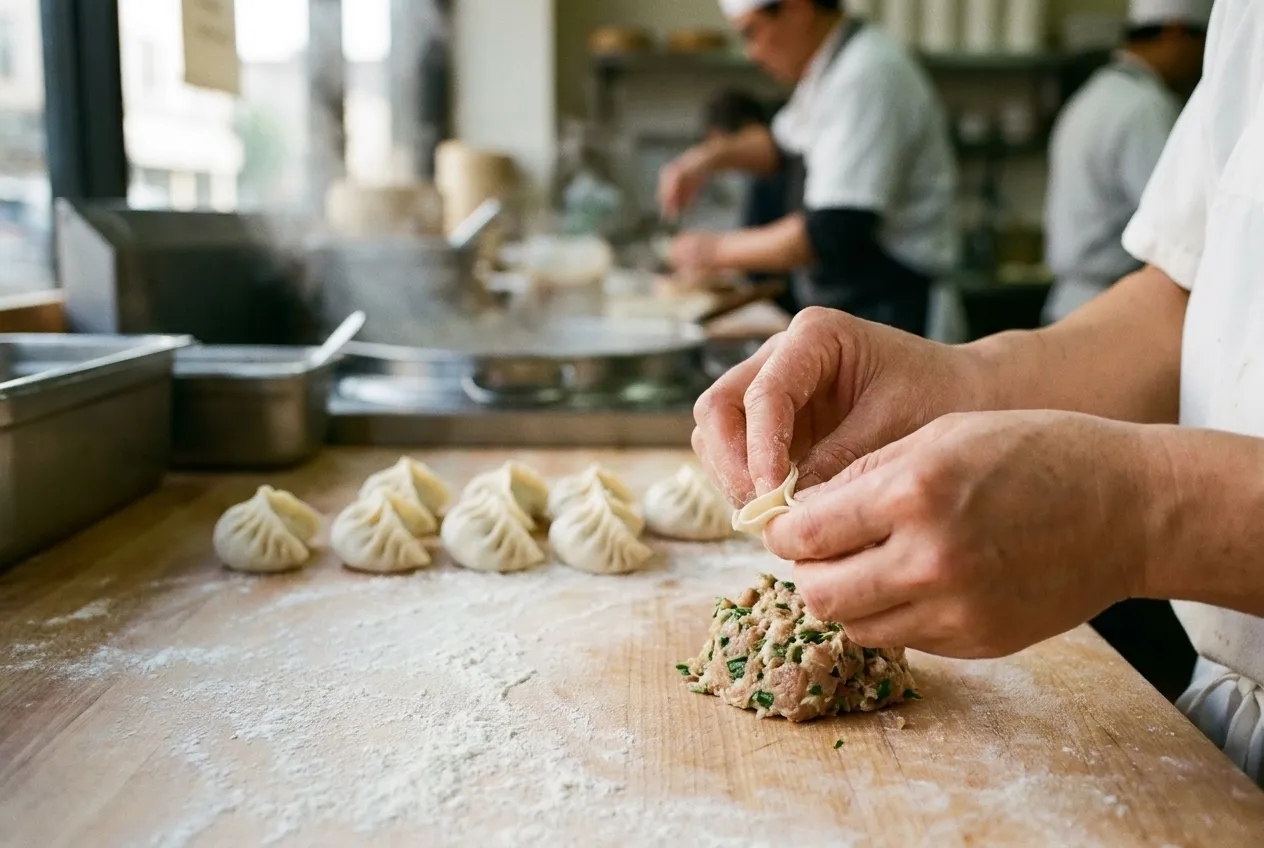
Xiao long bao is the other. The soup inside comes from aspic folded into the filling cold, which melts during steaming, so it must be steamed to order. Look at the pleats - eighteen or more indicates a skilled folder - and check that the base does not tear when you lift it. Order shumai because you want to eat it, not to judge anywhere: it is the sturdiest thing in any steamer and it hides everything.
Timing across all three
Dim sum is a morning and early-afternoon business everywhere in this city. Trolley service at weekends runs from mid-morning to about one, and going after that means the range has thinned. Counter operations in Chinatown open early and start selling out of the popular items by mid-afternoon. Weekday a la carte service in the Richmond and the Sunset is often the better food, because everything is made to order rather than circulating on a cart.
The general San Francisco clock applies too: these are early neighbourhoods and most of these kitchens are finished by nine or half past. If you want dumplings at ten at night, the honest answer is that you mostly cannot, and the Mission's taquerias are what the city offers instead.
Practical notes
Prices: a couple of dollars per piece at Chinatown counters, ten to sixteen dollars a plate or basket in sit-down rooms, and the Richmond and Sunset run noticeably cheaper than the centre. Cash still moves faster at counters. Getting there: Chinatown on foot from downtown or North Beach; the 38 Geary to Clement, twenty-five to thirty-five minutes; the N Judah to Irving, forty to fifty. Parking is hopeless in Chinatown, difficult in the Richmond and easy in the Sunset. Weekend trolley dim sum runs mid-morning to about one - go early. Judge a kitchen on har gow and xiao long bao. And eat soup dumplings within two minutes of them arriving; they have the shortest window of anything on the table.
Tags: #BestDumplings #SanFrancisco #Chinatown #InnerRichmond #ClementStreet #OuterSunset #DimSum #HarGow #XiaoLongBao #GoodMongKok #IrvingStreet #SFEats #ChineseFoodSF #PortsmouthSquare
All trademarks are the property of their respective owners.
Ask Karpo first
Three districts, three models and a dim sum clock that ends at one in the afternoon. Ask Karpo which rooms near you are serving at the hour you are asking, whether the trolley service is still running this morning, and which of the three districts is worth the ride today.