A Cuban menu in Miami looks intimidating the first time - forty or fifty items, mostly in Spanish, with no obvious organising principle. It is in fact one of the most systematic menus in any cuisine, built from a small number of components recombined. Once you can see the grammar, ordering becomes trivial and you stop defaulting to the two dishes you have heard of. The structure is: choose a protein, choose a starch, choose a plantain. Everything else on the page is a variation on one of those three.
The specials rotate daily and the best value is only on at lunch, which is not printed anywhere. Tell Karpo when you are eating and where, and get the counter that is running the dish you want today.
The proteins, and how they differ
Six or seven proteins carry the whole cuisine. Ropa vieja is beef - usually flank or skirt - simmered until it shreds, then finished in a sofrito of onion, pepper, garlic and tomato. It is soft, saucy and the most forgiving thing on the menu. Vaca frita starts the same way but then the shredded beef is pressed onto a hot pan with lime and onion until the edges are crisp and browned, which makes it a completely different dish: drier, sharper, more texture. If you only order one beef dish, order this one - it is the more technically demanding and the more distinctive.
Lechon asado is roast pork with mojo - garlic, sour orange, oregano - and is the backbone of everything. Pollo asado is roast chicken with the same treatment. Bistec de palomilla is a thin, pounded steak cooked fast with onions, which is the everyday order. Masas de puerco are fried pork chunks. Picadillo is minced beef with olives and raisins, sweet and salty at once, and the most underordered thing on any Cuban menu. Rabo encendido, oxtail in a red wine sauce, is the weekend special worth asking about.
The starches
White rice and black beans are the default, served either separately - arroz blanco with frijoles negros poured over or beside - or cooked together as congri or moros y cristianos, where the rice takes on the colour and flavour of the beans. Ordering them together rather than separately is generally the better call: the combined version has more going on and it does not sit in a puddle.
The alternative starch is yuca - cassava - boiled until soft and dressed with mojo, garlic and onion. It is denser than potato and slightly stringy in the middle, and the mojo is what makes it. Yuca frita, the fried version, is the chip equivalent. Arroz con pollo, rice cooked with chicken and often beer and annatto until it turns yellow, is a one-dish meal rather than a component and is the right order when you cannot decide.
The plantain decision, which is the one people get wrong
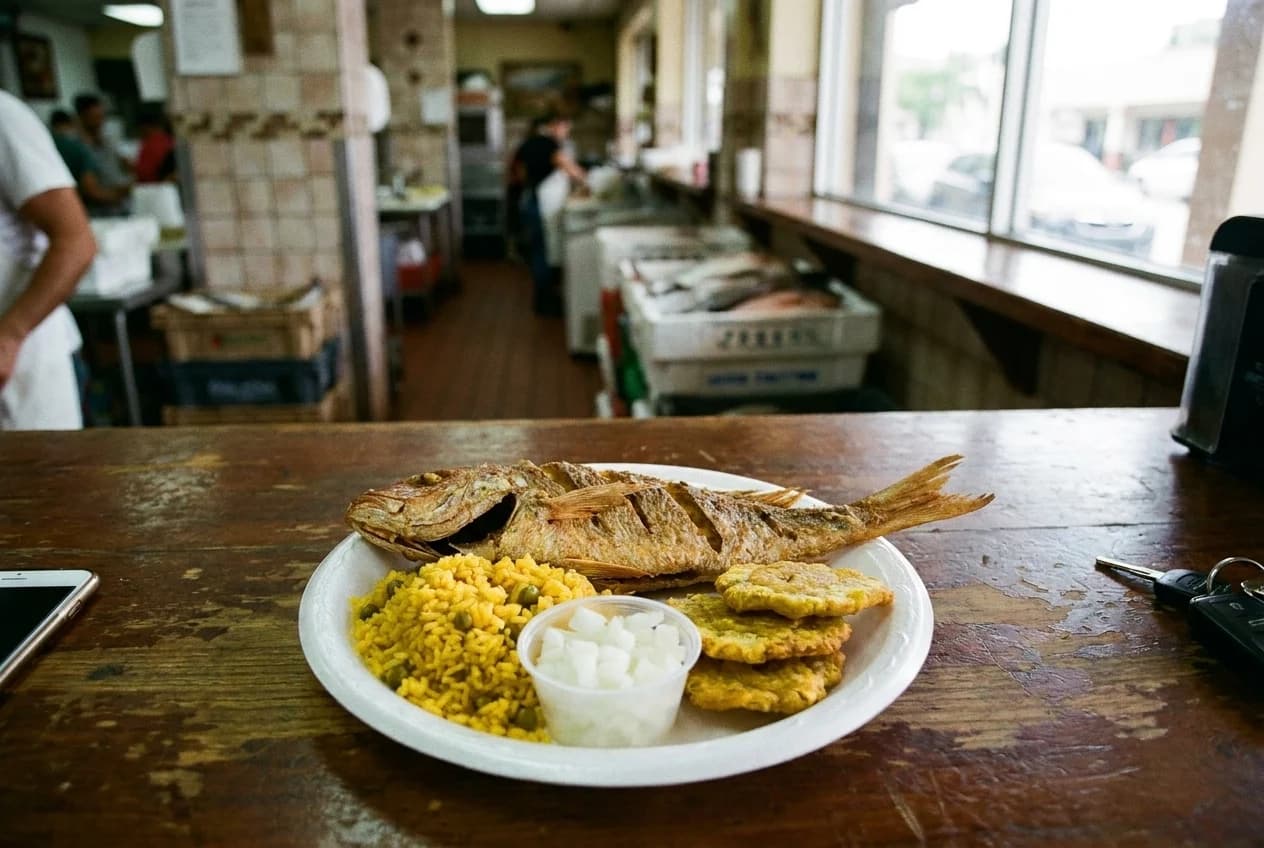
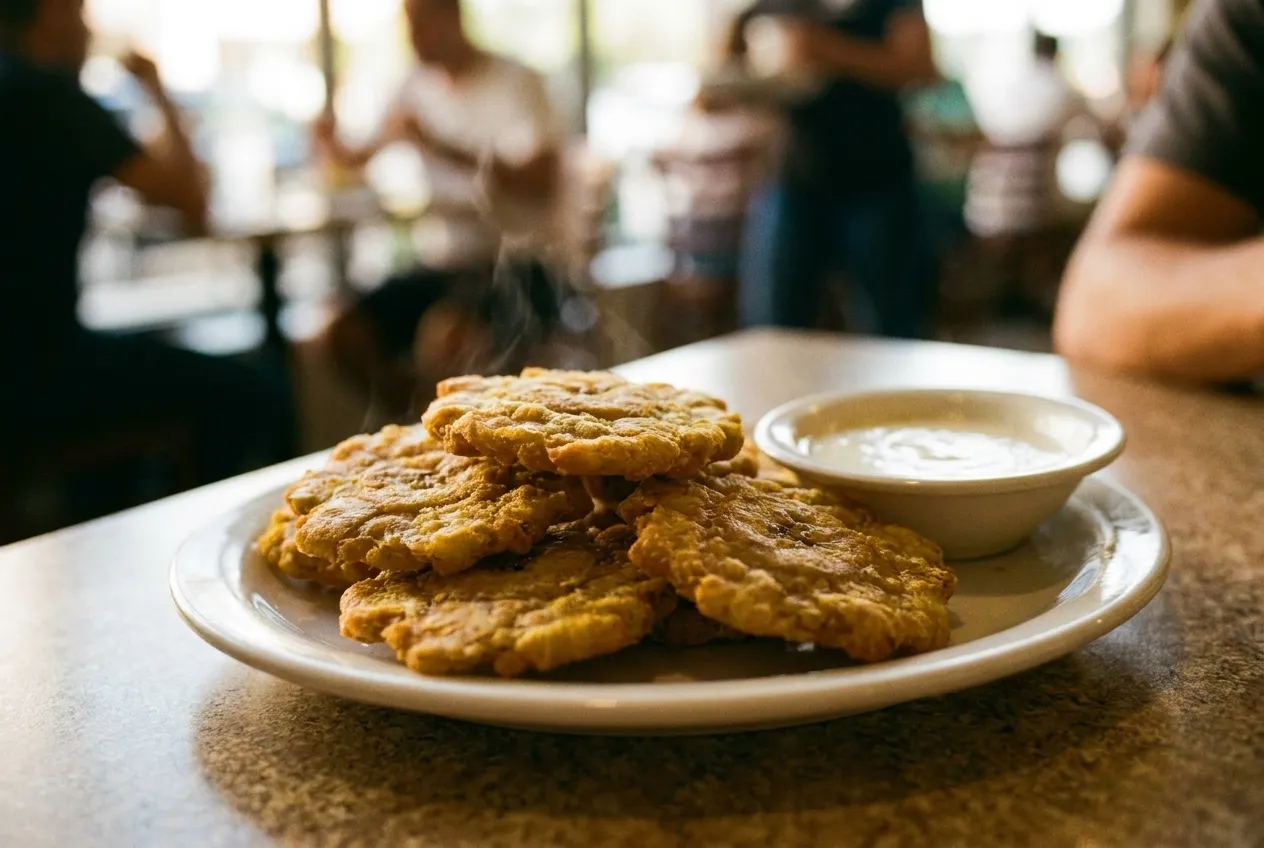
Every plate comes with plantain and there are two kinds, and they are not interchangeable. Tostones are green plantains cut thick, fried, flattened, and fried again - starchy, salty, savoury, essentially a chip, and the correct choice with anything saucy because they hold up. Maduros are ripe plantains, sliced on the diagonal and fried until the sugars caramelise - sweet, soft, almost dessert-like, and the correct choice with anything salty and dry.
The rule that works: saucy dish, take tostones. Dry or crisp dish - vaca frita, masas de puerco - take maduros, because the sweetness is the counterweight. If you cannot decide, ask for half and half; nearly every kitchen will do it and nobody considers it a strange request. Mariquitas, thin plantain crisps, are a third thing and are a starter rather than a side.
The fritura layer
Underneath the plates sits an entire category of fried snacks that most first-timers skip and that residents eat constantly. Croquetas de jamon are the emblem: small, bechamel-heavy, breadcrumbed and fried, eaten three or four at a time, usually under two dollars each. They are a snack, a starter, and at a ventanita a breakfast. Papa rellena is a ball of mashed potato stuffed with picadillo and deep-fried. Empanadas are the handheld version.
Frituras de malanga, made from grated root vegetable, and bacalaitos, salt cod fritters, appear at the older counters. The whole category is cheap, fast and designed to be eaten standing up, which is why it clusters around the coffee windows rather than the dining rooms. Ordering two croquetas with a cortadito is the single most authentically local thing you can do in Miami and it costs about five dollars.
The daily special, which is where the value is
Nearly every Cuban counter in Miami runs an almuerzo especial - a rotating daily plate at a substantially lower price than the same food carries at dinner. It typically runs from around eleven to two or three, it changes by day of the week, and it is often only advertised on a board or a slip of paper by the till. Friday is commonly fish; midweek rotates through the beef and chicken dishes; weekends bring out the slower things like rabo encendido.
This is the single most useful thing to know about eating Cuban food in this city. The same plate that costs twenty-two dollars at seven in the evening is thirteen at noon, and the portion is if anything larger. If you have any flexibility about when you eat, eat Cuban at lunch and something else at dinner.
Practical notes
Ordering shorthand: a plate is protein plus rice and beans plus plantain, and you choose all three. Say tostones or maduros - the kitchen will otherwise pick for you. Coffee comes after the meal, not with it: a cortadito or a colada, and a colada is meant to be shared. Portions are large and sharing one plate between two with an extra side is completely normal. Prices run twelve to eighteen dollars for a full plate at lunch, more at dinner, and a couple of dollars per fritura. Cash is still smoothest at the oldest counters. And ask what the special is rather than reading the menu - it is the best thing in the kitchen that day and it is frequently not printed anywhere.
Tags: #BestCubanFood #Miami #VacaFrita #RopaVieja #Picadillo #Tostones #Maduros #Croquetas #LechonAsado #CalleOcho #LittleHavana #Cortadito #MiamiEats #CubanFood
All trademarks are the property of their respective owners.
Ask Karpo first
Once you know how the menu is built, the only thing left to find out is what today's special is and which counter is still running it. Ask Karpo which Cuban kitchens near you are serving their almuerzo right now, what is on the board today, and whether the room you were heading to has already moved onto dinner prices.