Vaca frita is the most instructive dish on a Cuban menu, because it is the one most often served wrong and the error is entirely visible on the plate. The name means fried cow, and the dish is defined by a second cooking stage: beef is first simmered until it shreds, and then - this is the whole point - the shredded meat is pressed onto a very hot surface with lime and onion until the strands brown and crisp at the edges. A kitchen that skips that stage is serving you ropa vieja with a lime wedge, which is a different, softer, saucier dish that happens to share ingredients.
The Brickell rooms serving this well are podium-level and keep tower hours, which is not the same thing as restaurant hours. Tell Karpo when you want to eat and get the ones actually open and cooking.
The two stages, and why the second one gets dropped
Stage one is a long, wet cook. Flank or skirt beef goes into a pot with onion, pepper, garlic, bay and water or stock and simmers for two or three hours until the muscle fibres separate and it shreds under a fork. This stage is identical to the beginning of ropa vieja and can be done in advance in large batches, which is exactly why kitchens like it.
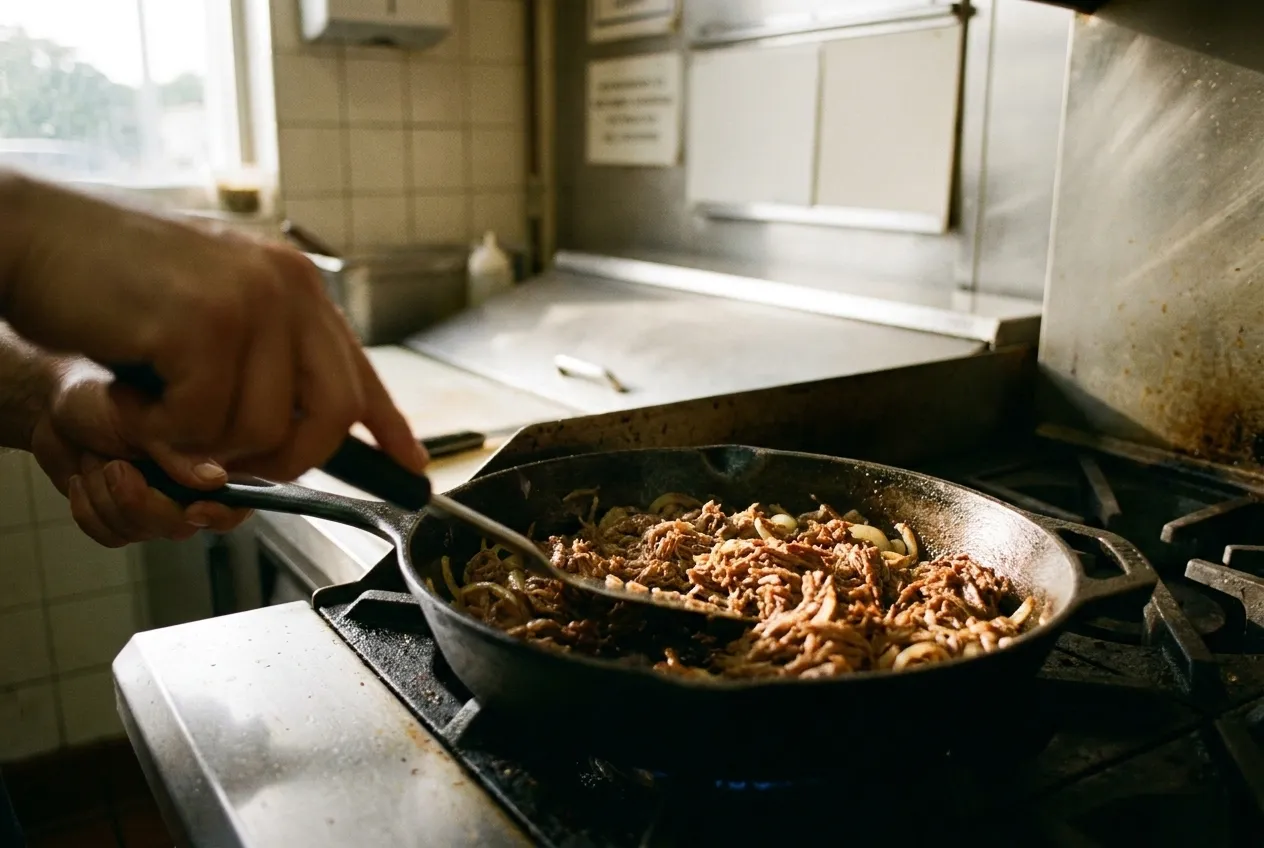
Stage two is fast, hot and cannot be batched. The shredded beef, drained and dried, hits a screaming pan or plancha with a little fat, gets pressed down and left alone long enough to catch, then turned, with sliced onion and a substantial amount of lime going in near the end. It takes a few minutes per order and it demands a cook standing at a hot surface. In a busy kitchen at eight o'clock, that is the stage that gets shortened - meat goes on, gets tossed, comes off pale.
Reading the plate
Four things tell you whether stage two happened properly. First, colour variation: real vaca frita is not uniformly brown, it is a mix of deep browned strands, pale strands and everything between, because the pieces touching the pan cook differently from the ones above them. A uniform colour means it was stirred rather than seared. Second, dryness: this dish should be dry to slightly oily, never sitting in liquid. A pool on the plate means the meat went on wet and steamed.
Third, texture: some strands should be genuinely crisp, snapping rather than bending. If every forkful is soft, the pan was not hot enough. Fourth, the onion: it should be softened and browned at the edges rather than raw and translucent, because it went into the same pan. And the lime should be sharp and present - vaca frita is an acidic dish, and a version that tastes only of beef has been underdressed.
Why Brickell is an interesting test case
Brickell is a neighbourhood of towers over a small grid of retail podiums, feeding a large weekday working population and a resident population that eats out constantly. That produces a specific kind of Cuban restaurant: podium-level, higher-priced than Calle Ocho, aimed at a lunch rush and an after-work crowd, and under real pressure to turn tables quickly. That pressure is exactly what makes stage two vulnerable.
It also produces good versions, because the competition is dense and the customers eat the same dishes weekly and notice. The pattern that emerges is that Brickell's Cuban food is at its most reliable at lunch, when the kitchens are geared for volume of a specific kind and the plancha is running continuously, and most variable at eight on a Thursday when the room is full and the kitchen is behind.
How to order it well
Ask for it crispy. Nearly every Cuban kitchen in Miami will understand 'bien tostada' or simply 'crispy please', and it costs them nothing to leave it on the plancha thirty seconds longer. This single request improves the dish more than choosing between restaurants does. If a kitchen cannot or will not do it, that is itself useful information.
Order maduros rather than tostones with it. This is the case where the sweet ripe plantain is clearly correct: the dish is dry, salty and acidic, and it wants the sweetness beside it rather than more starch. Congri - rice cooked with the beans rather than beside them - is the better rice here for the same reason, since plain white rice adds nothing to a dish this dry. And there is a chicken version, vaca frita de pollo, which is genuinely good and uses the same technique.
Where else to test it
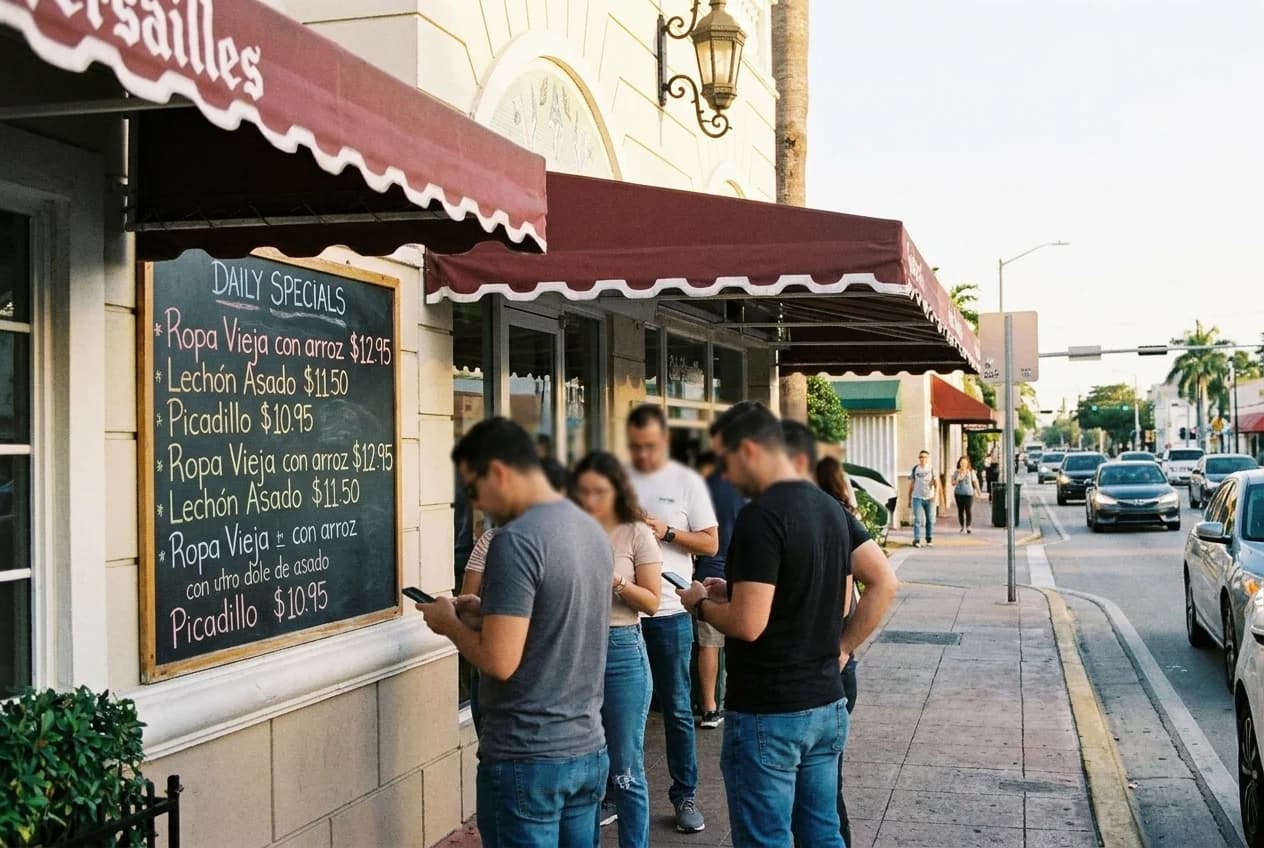
Brickell is a fine place to eat this but it is not where the dish is best, and the honest comparison is fifteen minutes west. The counters along SW 8th Street in Little Havana cook it at half the price with a plancha that has been running since eleven in the morning, and the older places have been making it the same way for decades. El Palacio de los Jugos and the supermarket counters do a version at lunch prices that embarrasses a lot of sit-down rooms.
The most useful exercise, if you care about the dish, is to order it at a Brickell restaurant at dinner and at a Calle Ocho counter at lunch within a couple of days of each other. The difference is not subtle, it is not always in the direction you would expect, and it teaches you more about how Miami's Cuban food actually works than any list of restaurant names.
Practical notes
Ask for it crispy - 'bien tostada' - every time. Order maduros and congri with it rather than tostones and white rice. Lunch is more reliable than dinner for this dish, in Brickell especially. Prices: eighteen to twenty-six dollars in a Brickell dining room, twelve to sixteen at a Calle Ocho counter, and the counter version is frequently better. There is a chicken version worth trying. Parking in Brickell means a garage, and Brickell City Centre and Mary Brickell Village both validate; the free Metromover is the better answer if you are coming from downtown. And if it arrives pale and sitting in liquid, it is ropa vieja - perfectly nice, but not what you ordered.
Tags: #BestCubanFood #VacaFrita #Brickell #Miami #RopaVieja #Congri #Maduros #Plancha #CalleOcho #LittleHavana #CubanFood #MiamiEats #HiddenGems #Metromover
All trademarks are the property of their respective owners.
Ask Karpo first
Knowing what a proper sear looks like only helps if you are in front of a kitchen willing to do it. Ask Karpo which Cuban rooms near you are serving at the hour you want, which are running a lunch special today, and whether it is worth the fifteen minutes west to eat the counter version instead.