Somewhere in the last few years the default price of a coffee in San Francisco crossed a line. A drip at a good shop is now routinely over four dollars and a latte is comfortably over six, and the city has largely stopped noticing. Which makes it genuinely surprising that the sub-five-dollar cup is not just alive here but available at three quite different price points, one of which is two dollars.
Cheap coffee in this city is concentrated in specific shops rather than spread evenly, so the nearest cafe is rarely the cheapest one. Ask Karpo what is within a few blocks of you and what it actually charges.
Two dollars is the real floor
Latte Express operates three locations in San Francisco and prices like it is still a different decade: $1.75 for an espresso shot and $2 for a drip coffee, hot or iced. That is not a loss-leader on a single item — that is the menu. For anyone doing the arithmetic on a daily habit, the gap between this and a four-dollar cup is roughly five hundred dollars a year, which is a real number rather than a rhetorical one.
The trade is what you would expect: these are functional counters rather than destinations, and nobody is going to talk to you about the farm. If what you want is caffeine on the way somewhere, that is not a compromise. If what you want is a cup worth sitting down with, keep reading — the point of knowing this tier exists is that it frees up your money for the days when the coffee is the event.

The refill rule at Automat
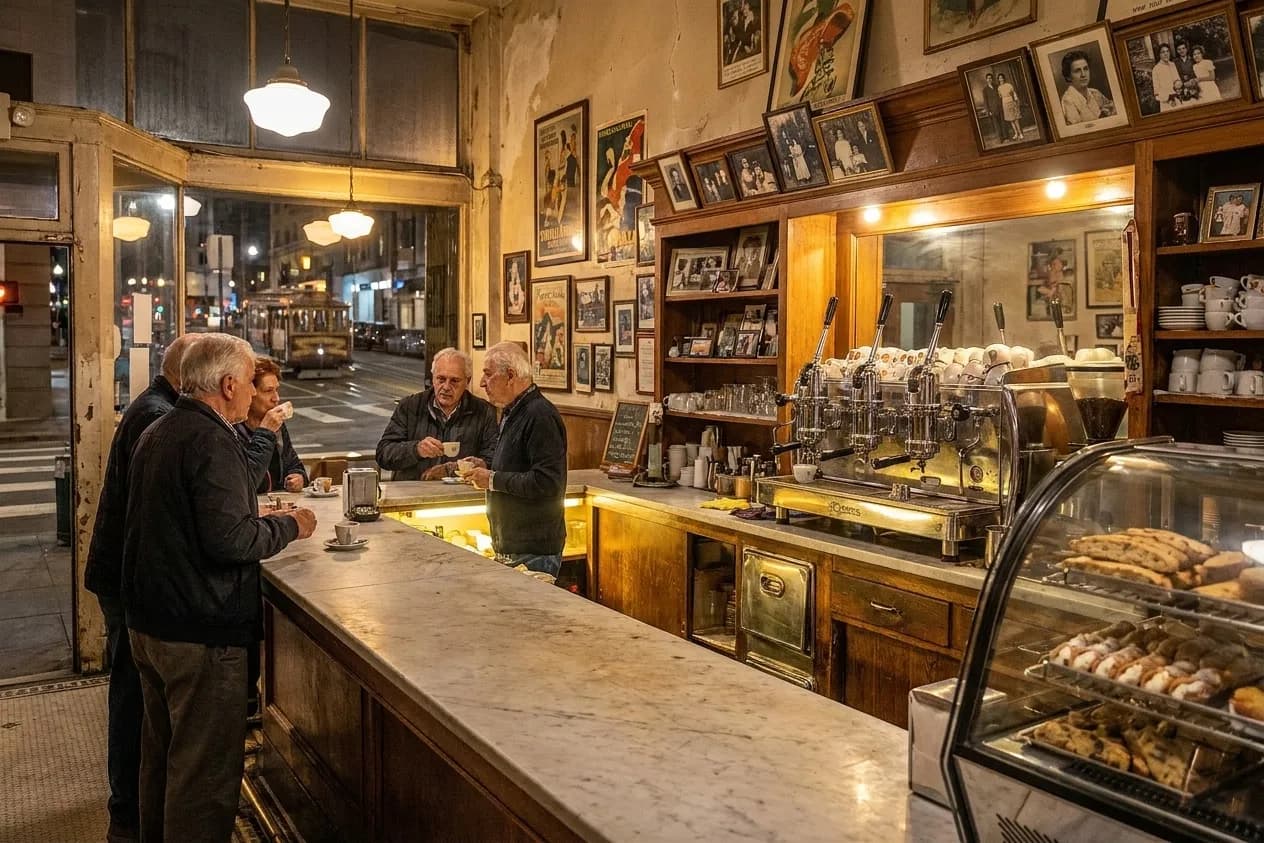
Automat charges $4.50 for an in-house coffee and then refills the drip for free. That single policy changes what you are buying. At four-fifty a cup, Automat looks like a normal-priced shop; at four-fifty for an afternoon of coffee it is the cheapest place to work in the city that is not a library. The economics only make sense if you stay, which is presumably the point — it is a pricing structure designed to fill chairs rather than move queues.
Use it accordingly. If you are stopping for ten minutes it is an ordinary four-fifty coffee and there are cheaper ones. If you have three hours of work and would otherwise buy two cups elsewhere plus feel guilty about the table, this is the correct address and it is not close.
The espresso loophole at the good shops
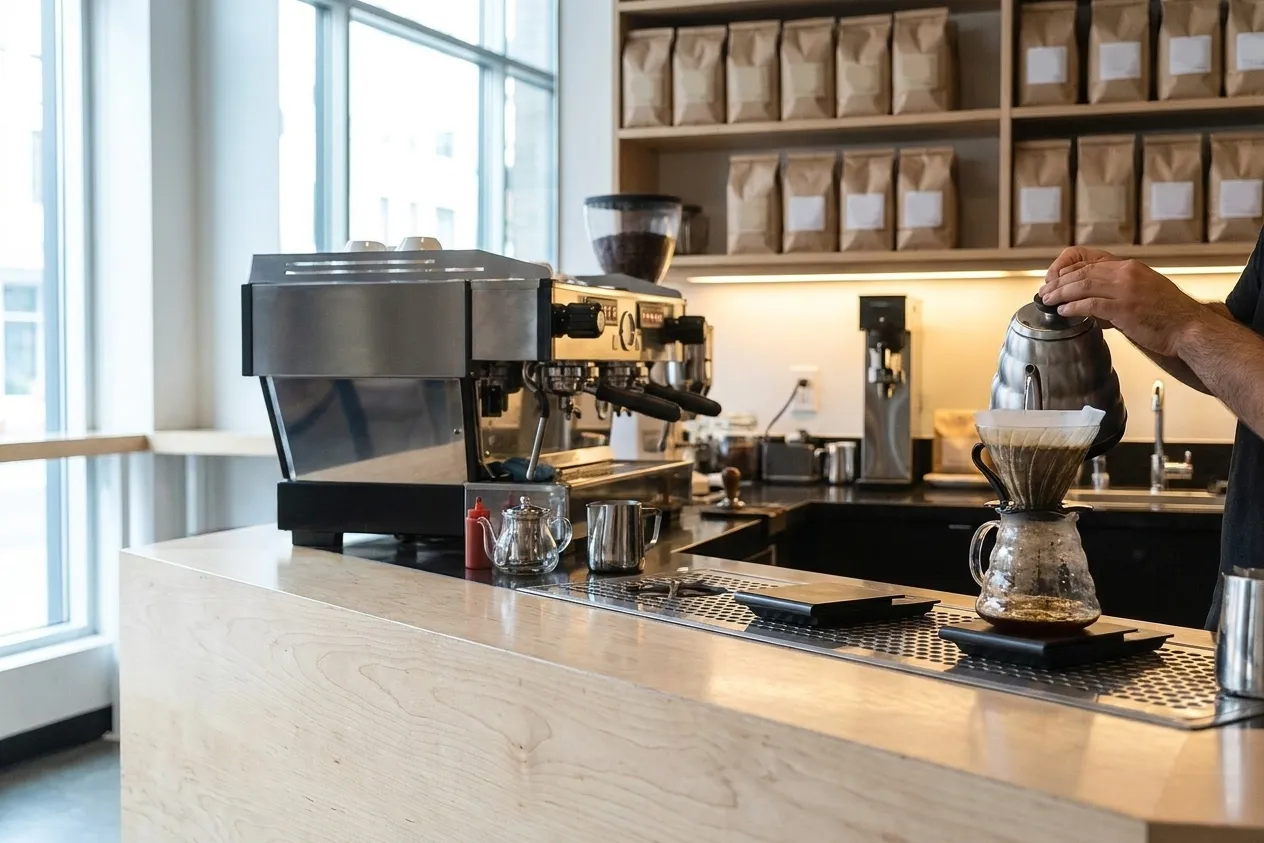
Here is the most useful thing on this page for people who do not want to trade down on quality. At Saint Frank an espresso is $4.00 — comfortably under five dollars, at one of the roasters people cross the city for. The reason is structural: what makes a specialty coffee expensive is mostly the milk, the cup size and the labour of steaming, not the beans. A double shot is the cheapest item on almost every serious menu in San Francisco, and it is also the one the shop is proudest of.
So the sub-five-dollar map is not only the budget counters. It also includes every excellent roaster in the city, provided you order espresso, macchiato or a small cortado rather than a twelve-ounce latte. This is the order that gets you the best coffee in San Francisco for under five dollars in the most literal sense, and most people never try it because the menu puts it last.
Where the cheap cups are, geographically
Cheap coffee in San Francisco is not evenly distributed and the pattern is legible once you see it. The low-price counters sit where there is foot traffic but not destination traffic — transit corridors, the edges of commercial strips, blocks with offices above and no weekend crowd. The four-dollar-plus shops sit where people go on purpose: the Mission, Hayes Valley, the pretty half of the Marina, anywhere a queue is part of the atmosphere.
The practical consequence is that walking one block off a main strip frequently halves the price for a cup that is perfectly good. It is worth doing this once in your own neighbourhood as an experiment — most people never discover the cheaper counter two hundred metres from the one they have used for years, because it does not look like a coffee shop from outside.
The rest of the under-five list
Castro Coffee Company, The Coffee Movement, Uncle Benny's Donut and Bagel and the Capital One Café all belong on a cheap-coffee map for different reasons — the first two on quality relative to price, Uncle Benny's because a coffee and a bagel together still land close to the price of one drink elsewhere, and the bank café because it is exactly what it sounds like and the coffee is genuinely fine.
A note on how to read prices when you get there: the number on the board is rarely the number you pay. An oat milk substitution is frequently seventy-five cents to a dollar, a large is another dollar, and the tip prompt on the tablet starts at eighteen percent. A $4.25 drip can leave the counter as a $6 transaction without anyone lying to you. If you are trying to stay under five, order a small, take the house milk, and decide about the tip on purpose rather than by reflex.
Practical notes
Latte Express sets the floor at $2 for drip and $1.75 for espresso across three locations. Automat is $4.50 with free drip refills, which makes it an afternoon rather than a cup. Saint Frank's $4.00 espresso is the cheapest route into a top-tier roaster, and the same logic applies at most serious shops in the city. Castro Coffee Company, The Coffee Movement, Uncle Benny's and the Capital One Café round out the list. And check the board rather than an old listing — coffee prices in San Francisco have moved a lot and generally in one direction.
Tags: #SanFrancisco #SFCoffee #CheapEats #CoffeeUnder5 #BestCoffeeSF #SpecialtyCoffee #Espresso #CastroSF #SFMornings #BudgetSF #CoffeeGuide #BayArea #SFEats #WorkFromCafe
All trademarks are the property of their respective owners.
Ask Karpo first
Trying to keep a coffee habit under five dollars in San Francisco? Ask Karpo which counters near you are under that line today, which ones refill for free, and where the cheapest espresso at a serious roaster is.