Almost every guide to the best coffee in Los Angeles is really a guide to interiors. That is not entirely cynical — this is a city where the room genuinely is part of the product — but it produces a strange result, which is that people keep going to celebrated cafes and finding the coffee merely fine. The fix is to sort the city by what each roaster is actually trying to do with a bean, and then order accordingly.
If you want the short version for wherever you happen to be parked, ask Karpo for the nearest roaster and what to order there specifically — the answer changes by neighbourhood.
The competition-grade end
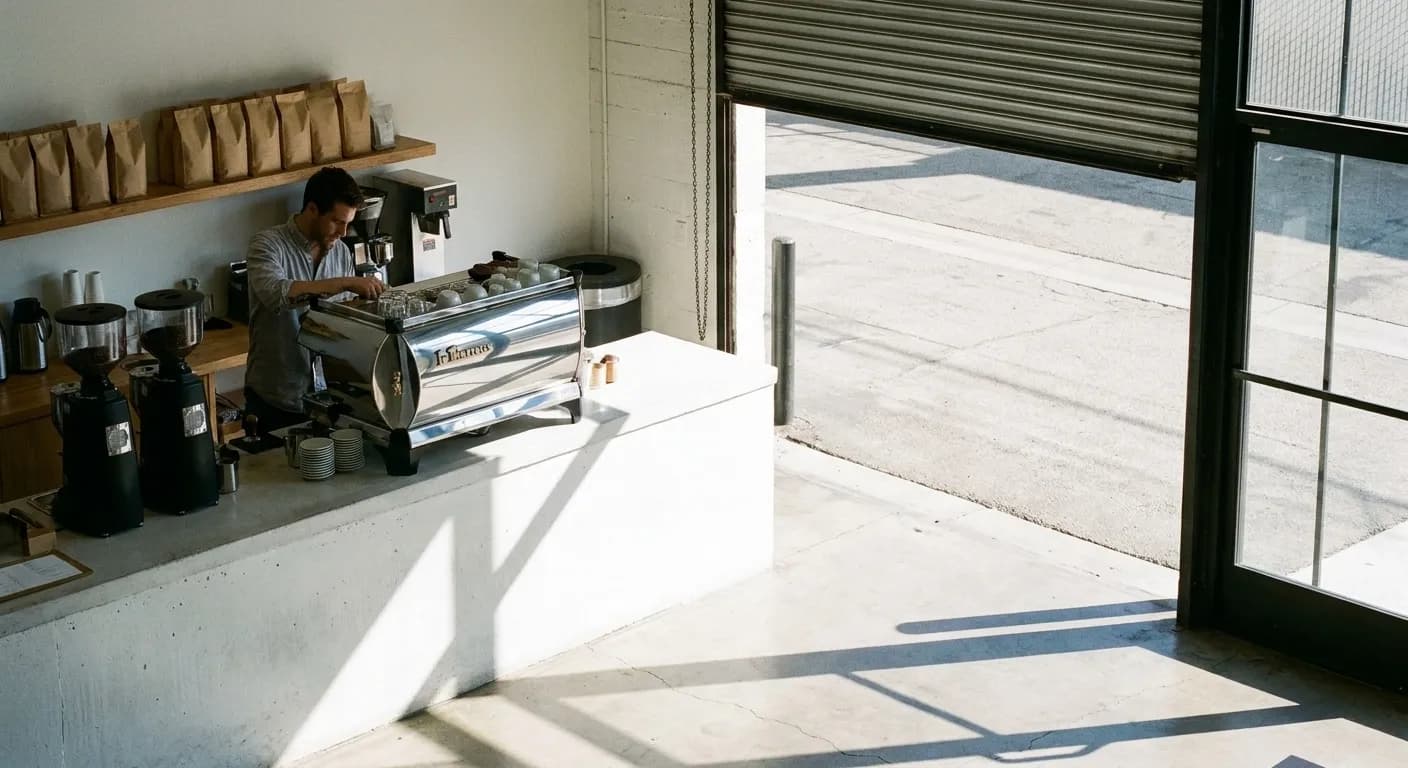
A small number of LA rooms are run by people who compete seriously, and it shows in the espresso rather than the milk drinks. Be Bright on Melrose is the clearest example: its owner Frank La took the US Barista Championship in 2024, and the bar is set up the way a competitor sets up a bar — tight, fast, and unforgiving about extraction. Order the espresso straight, or a cortado at most. Ordering a large flavoured latte here is not wrong, but it is a bit like buying a sports car to sit in traffic.
The tell for this category is the menu length. If the espresso options run to three lines and the syrup list runs to twelve, you are in a different kind of business.
The Latin American specialists
The most interesting through-line in LA coffee right now is roasters working closely with Latin American producers, which in this city is a cultural position as much as a sourcing one. Civil Coffee in Highland Park roasts Mexican coffees in a city with a deep Mexican population and treats that as the main event rather than a seasonal guest slot. Picaresca roasts weekly and sources predominantly from Latin America, and opened a second location in 2026 on the strength of it.
These are the rooms where asking what is on filter today is worth doing, because the answer changes and the staff will actually have an opinion about it. Coffee from these roasters tends to reward being drunk black; a lot of it is roasted light enough that milk flattens the thing you are paying for.
The out-of-town arrivals
Los Angeles has spent the past few years importing roasters from elsewhere in the Southwest, and they bring a noticeably different palate — generally a bit darker, a bit more caramel, better suited to milk. Cartel, which is Arizona-based, opened in Beverly Grove and is a good example of the type. If you have been finding LA's lighter roasts thin or sour, this is the category you have been looking for, and it is worth knowing that your objection is a real difference in roast profile rather than a failure of taste.
The neighbourhood roasters that just roast well
Below the level of the famous names sit a large number of roasters doing consistent, unshowy work — The Boy & The Bear across several locations, Jones Coffee Roasters, Stereoscope, Steve's. These are the rooms to default to when you do not want to think about it. They will not produce a transcendent cup and they will also never produce a bad one, which over the course of a normal week is worth considerably more.
Reading a bag before you buy it
The retail shelf tells you more about a roaster than the menu board does, and it takes about ten seconds to read. Look for a roast date rather than a best-before date; a roaster confident in its turnover prints the day it roasted, and anything more than three or four weeks old on the shelf tells you the room is not selling much of it. Look at how much detail the label gives about the producer — a farm name and an elevation means someone in that business cares about sourcing, whereas a country and a tasting note means they are buying whatever the importer had that month. And look at the price spread. A shelf where every bag costs the same is a shelf of blends; a shelf with a twenty-dollar bag next to a forty-dollar one means there is a competition lot in the building, and that is the room to come back to.
This also solves the most common LA coffee problem, which is that you liked something once and cannot reproduce it. Buy the bag in the room where you liked the cup, on the same visit, and ask what grind and dose they pulled it at. Nearly everyone will tell you, and it converts one good cup into a month of them.
The practical version
Sorted this way, the decision becomes easy. If you want to taste what a roaster can do, go to a competition room and order espresso. If you want something with a point of view, go to one of the Latin American specialists and drink it black. If you want a genuinely excellent latte, go to one of the darker-roasting arrivals, because that is what those beans are built for. And if you just want a reliable cup near where you already are, the neighbourhood roasters have quietly made that easy almost everywhere in this city. The worst outcome — driving forty minutes to a famous room and ordering the one drink it is not set up for — is also the most common one.
Tags: #LosAngeles #LACoffee #BestCoffeeLA #SpecialtyCoffee #CoffeeRoasters #HighlandPark #Melrose #BeverlyGrove #Espresso #SingleOrigin #LAEats #CoffeeGuide #ThirdWaveCoffee #LAGuide #DrinkBlack
All trademarks are the property of their respective owners.
Ask Karpo first
Ask Karpo which roasters are near you in Los Angeles, what each one specialises in, and what to order so you are drinking the thing they are actually good at rather than the thing on the poster.