Coffee in New York has quietly crossed a line. Standard latte and cappuccino pricing on posted menus now clusters in the mid-five to low-six dollar range, a café near Times Square or Grand Central can charge eight or nine before tip, and a pour-over at a third-wave roaster in Williamsburg or the West Village runs five and a half to seven. Meanwhile a coffee regular at any corner bodega is two to three dollars, and the cheapest is around a dollar fifty. The five-dollar cup has not disappeared. It has just moved, and it requires ordering differently.
The price of the same drink varies more by postcode than by quality in this city — a cortado is three dollars on one avenue and seven two stops away, and the expensive one is frequently the worse one. Text Karpo where you are and get the shops near you where a good cup lands under five, what to order there to stay under it, and which block to avoid entirely at that hour.
The bodega regular is still the floor
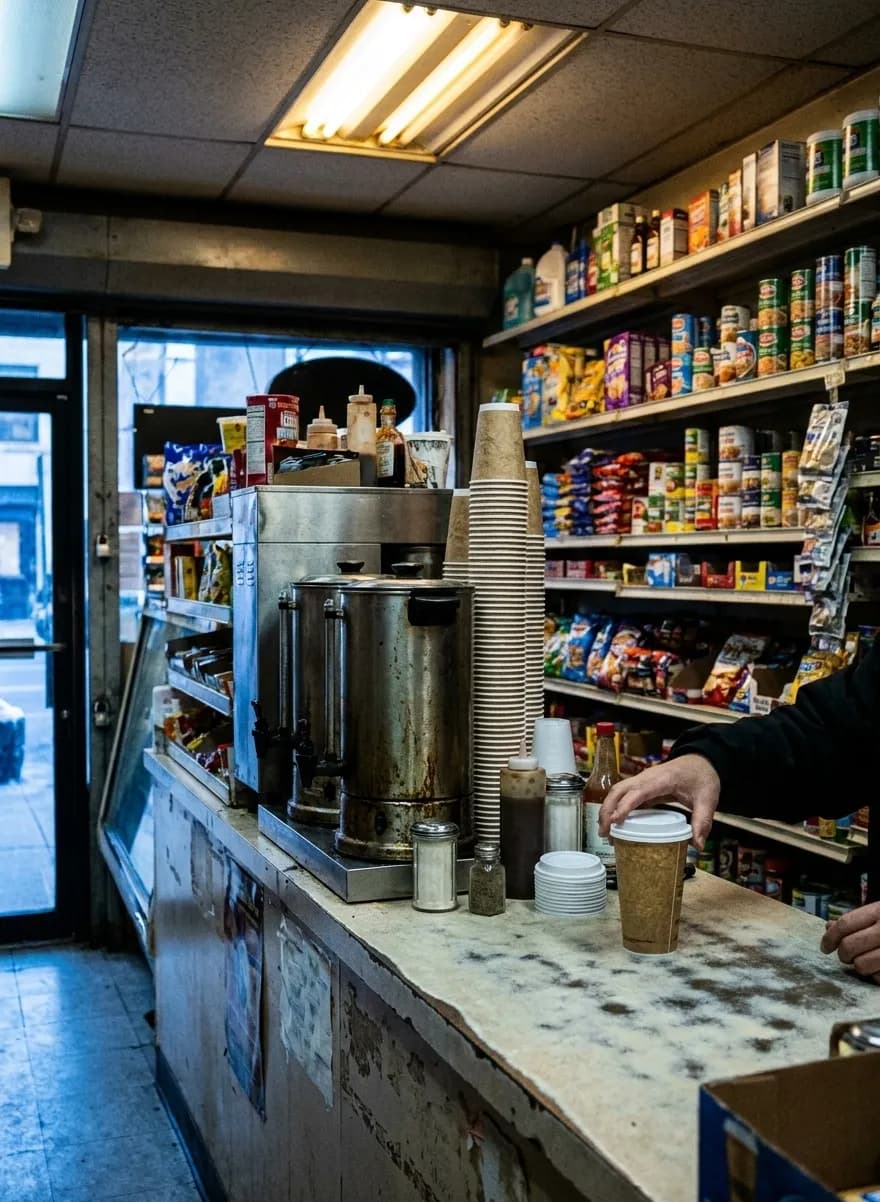
A coffee regular — drip with milk and sugar, poured into a paper cup by someone who did not ask you to specify anything — costs two to three dollars at delis and bodegas across all five boroughs, and it is the last genuinely cheap prepared drink in New York. It is not specialty coffee and does not pretend to be. What it is, is hot, immediate and available within two blocks of wherever you are standing at seven in the morning.
Say regular if you want milk and sugar, black if you do not, and light and sweet if you want considerably more of both than you expected. The vocabulary matters because the transaction is designed to take eleven seconds, and specifying a preparation the counter does not have a word for is how a two-dollar coffee becomes a four-minute negotiation.
At specialty shops, order down the menu
The five-dollar ceiling is very achievable at good roasters, but only if you stop ordering the drink at the top of the price list. A single espresso, a macchiato, a cortado or a drip coffee from the batch brew will almost always land between three and four fifty at a shop where the latte is six. That is the same coffee, from the same roast, made by the same person.
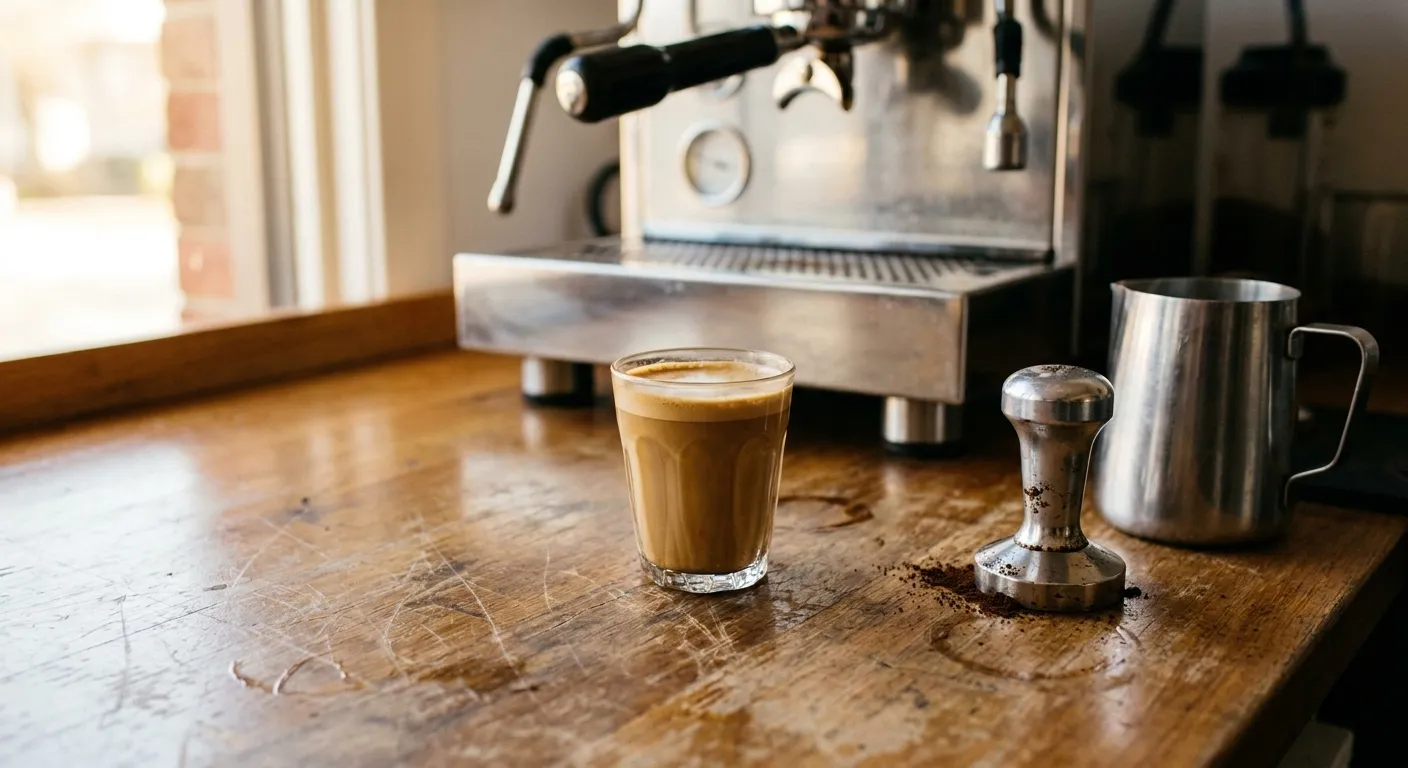
Milk volume is the entire price gradient. You are paying for twelve ounces of steamed dairy and the ninety seconds of labour that go with it, not for better beans. If you like milk drinks, the cortado is the value order everywhere in this city: espresso, a small amount of milk, and typically two dollars less than a latte from the same machine.
Where five dollars goes furthest
Geography decides more than quality does. Midtown around the transport hubs is the worst value in the city, because the customer base is captive and in a hurry. The best value clusters in neighbourhoods with dense residential populations and old commercial strips — upper Manhattan, most of Queens, deep Brooklyn — where a café serving locals every day cannot charge terminal prices.
The other reliable cheap category is the Latin counter. A café con leche or a cortadito from a Dominican, Cuban or Puerto Rican counter costs a fraction of a specialty latte, comes in a smaller and considerably stronger format, and exists in numbers across Washington Heights, the Bronx, Bushwick and Sunset Park. It is the single most underrated coffee value in New York and it is not on any best-of list, because those lists are written about the shops that advertise.
The refill and the second cup
Two structural things keep the daily cost down and almost nobody uses them. Diners and old-school luncheonettes still refill drip coffee, often free or for a nominal amount, which makes a sit-down breakfast with two cups cheaper than one takeaway latte. And many specialty shops sell a bag of beans for roughly the price of three lattes, which is a fortnight of coffee if you own anything to brew it with.
The arithmetic is worth doing once. At six dollars a day, five days a week, a habit costs about fifteen hundred dollars a year. Moving three of those five days to a bodega regular or a home brew and keeping two as the good cup you actually enjoy saves most of that without turning coffee into a chore.
What to skip
Avoid cafés whose menu leads with cold foam, syrups and seasonal specials; those drinks are priced at seven and up and the base coffee is rarely the point. Avoid anything inside a station, an airport terminal or a hotel lobby unless you have no alternative. And treat a queue as information rather than validation — a long line at 8:15am on a commuter route means location, not quality, and you can usually find the same roaster's beans served faster and cheaper a block off the main avenue.
One last habit worth forming: bring a cup. A number of shops discount for reusable cups, usually twenty-five to fifty cents, which is small in isolation and meaningful over a year of daily coffee. In a city where the drink itself has gone up by more than a dollar in a few years, the discounts nobody claims are one of the few levers left.
Tags: #bestcoffeeinnyc #cheapcoffeenyc #bodegacoffee #coffeeunder5 #nyccoffee #cafeconleche #espresso #manhattan #brooklyn #queens #nycfood #budgetnyc #coffeeshops #morningnyc
All trademarks are the property of their respective owners.
Ask Karpo first
Coffee pricing in New York is a geography problem: the same drink swings four dollars between neighbourhoods, and the cheap version is often the better one. Ask Karpo where to get a good cup under five dollars near where you are standing, what that shop does best, and whether there is somewhere to sit or it is a window and a pavement.